Table of Contents >> Show >> Hide
- What “Bonded Pair” Actually Means (And Why Shelters Take It Seriously)
- 15 Shelter Sweethearts You Should Keep Together
- 1) The Sibling Kittens Who Sleep in a Perfect Yin-Yang
- 2) The “Eight Paws, One Plan” Kitten Duo
- 3) The Senior Dogs Who Walk Like a Two-Car Parade
- 4) The Shy Cat + Brave Cat “Confidence Subscription”
- 5) The “Grooming Salon” Best Friends
- 6) The Dogs Who Play, Then Check In Like “You Good?”
- 7) The Littermates Who Need You to Train Them Separately
- 8) The Cat Pair That Eats Better Side-by-Side
- 9) The Duo That “Talks” With Body Language, Not Noise
- 10) The Pair That Plays Hard So Your Sofa Survives
- 11) The “We’ve Been Through It” Duo After an Owner Loss
- 12) The Pair That Settles Faster in a New Home
- 13) The Duo With “Double the Love” Energy
- 14) The Cat Friends Shelters Mark as “Must Adopt Together”
- 15) The Rare Mixed Trio That Refuses to Split Up
- 13 Odd-Couple Friendships That Make Your Brain Do a Happy Somersault
- 16) The Dog + Cat Duo That Shares Sunbeams Like a Treaty
- 17) The Rabbit + Guinea Pig “Roommates” (With Supervision)
- 18) The Parrot Pair That Coordinates Mischief
- 19) The Horse + Donkey “Security Team”
- 20) The “Emotional Support Buddy” Duo
- 21) The Two Cats Who Greet You as a Single Entity
- 22) The “We Eat Together or Not at All” Pair
- 23) The Bat Buddies Who Share and Remember
- 24) The Bird Friends Who Babysit Each Other’s Kids
- 25) The Dolphin-Style “Long Friendship” Energy
- 26) The Cat Pair That Uses “Nose Touch” as a Love Language
- 27) The Shelter Duo That Makes You Laugh Daily
- 28) The Pair That Calms Down When the Other Is Near
- 13 Wild Pair-Bonders That Prove Romance (and Teamwork) Isn’t Just a Human Plotline
- 29) Prairie Voles: The Poster Children of Pair Bonding
- 30) Swans: The Classic “Team for the Season (or Longer)”
- 31) Bald Eagles: Co-Parents With Serious Construction Skills
- 32) Penguins: Courtship That Looks Like a Tiny Formal Dance
- 33) Gibbons: Pair-Living Primates With Big “Duet” Energy
- 34) Beavers: DIY Architects Who Do Better Together
- 35) Wolves (in Stable Packs): Bonds That Show Up in Cooperation
- 36) Coyotes: Coordinated Parenting in a Tough World
- 37) Foxes (in Some Species): Seasonal Duos With a Plan
- 38) Albatrosses: Long-Haul Commitment With Frequent-Flyer Miles
- 39) Owls: Quiet Partners With Loud Opinions About Intruders
- 40) Frogs in Amplexus: The “Longest Hug” in the Animal Kingdom
- 41) “Social Monogamy” in Birds: A Pair Bond With Real-World Complexity
- How to Keep Bonded Pets Happy at Home (Without Losing Your Mind)
- 500+ Words of Real-World “Bonded Pair” Experiences You’ll Recognize
- Conclusion: Two Hearts, Four Paws, One Very Good Decision
If you’ve ever watched two animals move through the world like a tiny, fuzzy two-person marching bandalways in sync, always attachedyou already get it.
Some pairs are littermates who grew up sharing one food bowl and one brain cell. Others are “odd-couple” friendships that make you say, “Nature… explain yourself.”
And then there are the wild pairs who basically invented the concept of “we’re a team now.”
This list celebrates bonded animals in all forms: shelter besties who should stay together, interspecies pals who refuse to read the rulebook,
and classic pair-bonders in the animal kingdom. Along the way, you’ll get practical, real-world tips for anyone considering adopting a bonded pair
(yes, it’s double the paws, but also double the emotional support).
What “Bonded Pair” Actually Means (And Why Shelters Take It Seriously)
In adoption terms, a bonded pair is typically two companion animalsoften cats or dogswho rely on each other for comfort and stability.
Shelter staff don’t slap the label on every duo that arrived in the same carrier. They’re looking for consistent signs: distress when separated, seeking each other
out for reassurance, grooming/cuddling together, and navigating new situations as a unit.
For cats, bonding can be especially visible through affiliative behaviors like grooming, rubbing, nose-touching, and choosing to rest close together.
(Yes, cats can lovesometimes intenselydespite their reputation for being tiny landlords who tolerate you for rent.) When the relationship is healthy,
the pair often adjusts to a new home faster because they bring familiarity with them.
One important nuance: “bonded” doesn’t always mean “should never be separated under any circumstance,” and it definitely doesn’t mean “adopt two puppies at once
and hope they raise each other like a Disney montage.” With very young dogs, raising two same-age puppies together can sometimes backfire without careful management
the pups may bond more to each other than to humans, and behavior issues can crop up unless you do plenty of separate training and enrichment.
15 Shelter Sweethearts You Should Keep Together
These are the pairs that shelter teams cross their fingers forbecause it takes a special adopter to say, “Yes, I’ll take the combo meal.”
The payoff is huge: the animals comfort each other, stay engaged, and often settle in with fewer “panic spirals” during the transition.
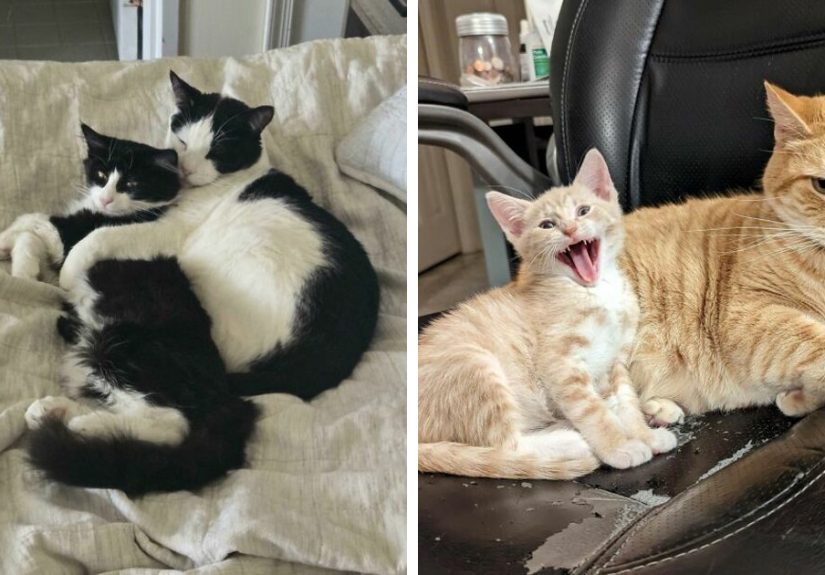
1) The Sibling Kittens Who Sleep in a Perfect Yin-Yang
They arrived as a single fluff ball with four ears. They leave as a bonded duo who naps like a minimalist logo. Their superpower: calming each other down
when the vacuum monster attacks.
2) The “Eight Paws, One Plan” Kitten Duo
Some shelters tell real stories of bonded kittens who were adopted together after medical carebecause they clearly functioned as a team.
Translation: separating them would’ve been like splitting up a buddy-cop movie right before the sequel.
3) The Senior Dogs Who Walk Like a Two-Car Parade
Older bonded dogs often developed their relationship over yearsshared routines, shared couch spots, shared opinions about squirrels.
They may show real stress or shutdown behavior when separated, so staying together is the kindest option.
4) The Shy Cat + Brave Cat “Confidence Subscription”
One cat is the spokesperson. The other is the quietly anxious intern. Together, they manage the terrifying task of… existing in a new living room.
This pairing often thrives because bravery is contagious.
5) The “Grooming Salon” Best Friends
If you see two cats constantly allogrooming (mutual grooming), it’s not just hygieneit can be social bonding.
Many bonded pairs soothe each other this way, especially in stressful environments.
6) The Dogs Who Play, Then Check In Like “You Good?”
Bonded dogs often communicate with quick glances and proximitylike an unspoken group chat.
When one is uncertain, the other offers a calm presence instead of escalating the drama.
7) The Littermates Who Need You to Train Them Separately
Yes, two puppies can be adorable togetherbut trainers and veterinarians warn that same-age puppies may need intentional solo time to build independence.
Think: separate walks, separate training, separate confidence-building adventures.
8) The Cat Pair That Eats Better Side-by-Side
In a new home, appetite can drop from stress. A bonded buddy can help: they’ll approach the bowl together, model calm behavior, and turn “dinner” into
something familiar instead of suspicious.
9) The Duo That “Talks” With Body Language, Not Noise
Cats regulate social interactions using distance, scent-marking, rubbing, and groomingoften subtle, but meaningful.
A bonded pair tends to choose closeness rather than avoid each other like awkward coworkers at a holiday party.
10) The Pair That Plays Hard So Your Sofa Survives
Bored animals are creative. And their art medium is your curtains. Bonded pairs frequently keep each other entertained, which can reduce nuisance behaviors
born from loneliness and under-stimulation.
11) The “We’ve Been Through It” Duo After an Owner Loss
Bonded pairs often enter shelters after a major life changean owner’s illness, move, or death.
Keeping them together can preserve the one stable thing they have left: each other.
12) The Pair That Settles Faster in a New Home
Many adoption counselors note that bonded pets can transition more smoothly because they aren’t facing change alone.
One explores; the other follows; then they regroup in the same safe spot like it’s their meeting point.
13) The Duo With “Double the Love” Energy
Two pets means more food bowls and more vet visitsbut also more comedy, more cuddles, and more moments where you realize you’ve been outvoted by a committee
of adorable faces.
14) The Cat Friends Shelters Mark as “Must Adopt Together”
Some adoption centers explicitly label bonded pairs because staff observed consistent comfort-seeking and stress responses when separated.
It’s not salesmanshipit’s welfare.
15) The Rare Mixed Trio That Refuses to Split Up
Every so often, shelters report a bonded grouplike two dogs and a cat traveling togetherand the dynamic is so clear that separating them changes everything.
When reunited, the withdrawn one often “comes back online.”
13 Odd-Couple Friendships That Make Your Brain Do a Happy Somersault
Some bonds aren’t about romance or relativesthey’re about companionship, cooperation, and “you’re my safe person, even if you’re a different species.”
Science increasingly recognizes that long-term, stable social relationships show up across many animals, especially in social species.
16) The Dog + Cat Duo That Shares Sunbeams Like a Treaty
Coexisting peacefully is one thing. Choosing to nap together is another.
Many households report amicable cat-dog relationships when introductions and environment are handled well.
17) The Rabbit + Guinea Pig “Roommates” (With Supervision)
Sometimes small animals bond across species, but safe co-housing requires careful oversight, space, and matching temperaments.
The wholesome part: they’ll often graze near each other like tiny lawn ornaments that feel feelings.
18) The Parrot Pair That Coordinates Mischief
Birds can be intensely social. A bonded pair may preen each other, vocalize back-and-forth, and show obvious distress when separated.
Also: they will unionize against you if snack access is delayed.
19) The Horse + Donkey “Security Team”
Equines and donkeys can form strong attachments. You’ll see it in how they stand close, mirror movement, and call when the other is out of sight.
It’s giving “ride-or-die,” literally.
20) The “Emotional Support Buddy” Duo
Some bonded pairs have complementary needs: one provides guidance or confidence; the other provides calm or routine.
Shelters sometimes see pairs where each animal’s well-being clearly improves with the other present.
21) The Two Cats Who Greet You as a Single Entity
Open the door and you get the Welcome Committee: two cats arriving shoulder-to-shoulder like bouncers at a VIP lounge.
Bonded cats often synchronize routinessleep, play, and “supervise your chores.”
22) The “We Eat Together or Not at All” Pair
Some duos coordinate mealtimes so tightly that one won’t start until the other is present.
It’s sweetuntil you realize you’re being trained.
23) The Bat Buddies Who Share and Remember
Social animals can form preferred partnerships that last.
In the broader animal kingdom, long-term social relationships can involve repeated cooperation and recognition of specific partners over time.
24) The Bird Friends Who Babysit Each Other’s Kids
Researchers have documented birds forming stable, reciprocal helping relationshipssupporting particular partners across seasons.
It’s basically “I covered your shift last spring, you cover mine this spring,” but with feathers.
25) The Dolphin-Style “Long Friendship” Energy
Long-term studies of highly social mammals show that bonds between non-relatives can persist for years.
Translation: animal friendship isn’t always a cute accidentit can be a durable social strategy.
26) The Cat Pair That Uses “Nose Touch” as a Love Language
Nose touching, gentle rubbing, and mutual grooming are among affiliative behaviors linked with positive cat relationships.
If you see these regularly, it’s basically a signed friendship contract.
27) The Shelter Duo That Makes You Laugh Daily
Many adopters report that bonded pairs bring out each other’s silly sidechasing, wrestling, playing “who can fit in the smallest box.”
Entertainment value: elite.
28) The Pair That Calms Down When the Other Is Near
Stress can change behaviorappetite, grooming, activity levels. A familiar companion can buffer stress responses during transitions.
When you see the anxious one relax once their buddy is present, it’s hard not to get emotional.
13 Wild Pair-Bonders That Prove Romance (and Teamwork) Isn’t Just a Human Plotline
In the wild, pair bonds range from seasonal partnerships to long-term bonds that can last years.
Also important: “pair-bonded” doesn’t always mean exclusive forevermany species show social monogamy while still having occasional outside matings.
Nature loves nuance.
29) Prairie Voles: The Poster Children of Pair Bonding
Prairie voles are famous in neuroscience because they form strong social bonds, build nests, and raise young together.
They’ve become a key model for studying the biology of attachment.
30) Swans: The Classic “Team for the Season (or Longer)”
Many bird species form lasting pair bonds, often cooperating to nest and raise chicks.
The wholesome part is the coordination: shared duties, shared territory defense, shared “don’t come near our babies” energy.
31) Bald Eagles: Co-Parents With Serious Construction Skills
Eagle pairs often cooperate around nestingbuilding, defending, and raising young.
Watching a duo operate like a well-practiced crew is basically a nature documentary version of a home renovation show.
32) Penguins: Courtship That Looks Like a Tiny Formal Dance
Many penguin species form strong partnerships during breeding, coordinating incubation and chick care.
It’s all teamwork, waddles, and the occasional dramatic pebble negotiation.
33) Gibbons: Pair-Living Primates With Big “Duet” Energy
Some primates live in pairs and maintain strong social bonds.
When you see a duo coordinating territory and family life, it’s less “cute couple” and more “joint venture with great PR.”
34) Beavers: DIY Architects Who Do Better Together
In species where survival depends on building and defending a home base, partnership can be practical as well as social.
Two sets of teeth move more sticks than one. That’s just math.
35) Wolves (in Stable Packs): Bonds That Show Up in Cooperation
Social carnivores often depend on cooperationhunting, territory, raising young.
While “bonded pair” language fits shelters more than ecology, the underlying theme is the same: relationships can be survival infrastructure.
36) Coyotes: Coordinated Parenting in a Tough World
In environments where raising young is hard, a stable partnership can increase success.
Wild pair bonds often come with shared responsibilitiesguarding, provisioning, teaching.
37) Foxes (in Some Species): Seasonal Duos With a Plan
Depending on the species, fox partnerships may form around breeding and rearing.
The heart-melt moment is seeing coordinated careone forages while the other keeps watch.
38) Albatrosses: Long-Haul Commitment With Frequent-Flyer Miles
Seabirds known for long lifespans often form enduring pair bonds, coordinating nesting across years.
If you’ve ever tried syncing calendars with one other human, you’ll appreciate the logistical excellence here.
39) Owls: Quiet Partners With Loud Opinions About Intruders
Many owl species form breeding pairs that coordinate nesting and defense.
They may be silent most of the time, but the partnership is obvious when it matters: home, food, and safety.
40) Frogs in Amplexus: The “Longest Hug” in the Animal Kingdom
Not all bonding is long-term pair bondingsometimes it’s a literal extended embrace during mating.
Still, if you’re ranking wholesome animal behavior, “commitment to the hug” deserves a nomination.
41) “Social Monogamy” in Birds: A Pair Bond With Real-World Complexity
Scientists distinguish between social monogamy (pairing, nesting, raising young together) and strict sexual exclusivity.
Either way, the visible bondshared space, shared work, shared defenseis unmistakably couple-coded.
How to Keep Bonded Pets Happy at Home (Without Losing Your Mind)
Set up the environment for “togetherness” and “breathing room”
Bonded doesn’t mean fused. Provide shared cozy spots (a big bed, a sunny window perch) plus duplicates of key resources so nobody has to compete:
two litter boxes (or more), multiple water stations, two feeding setups if needed, and enough toys to prevent jealousy.
Build human bonds, too
Especially with dogsand with puppies in particularmake sure each animal gets one-on-one time with you: training, walks, play sessions,
calm cuddle time. This helps prevent over-dependence and supports confident, healthy individuals within the duo.
Plan for “double” in the budget, but not necessarily double the work
Expect twice the routine costs: food, preventive care, parasite control, and emergency savings.
The daily workload can feel surprisingly manageable because bonded pairs often entertain and regulate each otherone reason many shelters encourage keeping them together.
Respect the relationship during transitions
If you’re moving, introducing new pets, or changing routines, treat the pair like a small team.
Keep their schedules consistent, offer safe retreats, and avoid sudden forced separation “to see what happens.”
(Spoiler: what happens is stress.)
500+ Words of Real-World “Bonded Pair” Experiences You’ll Recognize
If you’ve never lived with a bonded duo, here’s what people often discover after they bring home two animals who genuinely rely on each other:
the relationship changes the entire vibe of the house. Not in a dramatic “your home is now a zoo” way (though… sometimes),
but in a steady, quietly reassuring way. You’ll notice it during the first weekwhen everything is new and a little scary.
Day one usually looks like this: you set up the “welcome home” room, you place the carriers down, you open the doors, and you hold your breath.
One animal steps out first (there is always a designated brave one, even if they’re only brave in comparison). The other stays half-in, half-out,
as if they’re waiting for legal counsel. Then the brave one circles backnot to explore more, but to check in. They return to the carrier,
touch noses, sit close, or simply position their body like a warm wall of support. You can almost see the message: “We’re okay. We’re still together.”
Over the next few days, bonded pairs often create a routine faster than single pets do. They eat at the same times, nap in the same spots,
and patrol the house like a two-member neighborhood watch. If one hears a suspicious noise (a cabinet closing, a delivery truck, a neighbor existing),
the other appears immediately like it was summoned by Bluetooth. When you’re not home, they’re less likely to spiral into boredom because they have
built-in enrichment: play, grooming, and companionship.
Then come the moments that make you laugh out loudbecause bonded pairs are frequently funny. They will coordinate chaos.
They will tag-team a toy like it’s the championship finals. They will sit side-by-side and stare at you with synchronized judgment when dinner is late.
And you’ll catch them doing tiny rituals that feel oddly intimate: a short grooming session before sleep, a shared window perch, a little “touch base”
after someone gets startled.
The practical reality is also real: two animals means more planning. You’ll buy the bigger bag of food, schedule two sets of vaccinations,
and realize that “just one more cat toy” is now a monthly subscription. But many adopters say the emotional math still works out,
because the animals’ bond reduces transition stress and brings a sense of calm to the household. When one animal is uneasy, the other can help regulate
the momentoften faster than humans can.
The biggest surprise? How the bond expands to include you. When you respect their relationshipby keeping them together, giving them both attention,
and letting them move at their own pacethey frequently start treating you like a trusted third member of the unit. The shy one learns that your presence
is safe because their buddy is safe with you. The outgoing one learns that affection doesn’t end when the other is nearby. Eventually, you’ll find yourself
on the couch with two animals leaning against you from both sides like you’re the filling in the world’s cutest sandwich. And yesyour heart will melt.
Repeatedly. Daily. Possibly forever.
Conclusion: Two Hearts, Four Paws, One Very Good Decision
Bonded pairs aren’t just a cute marketing label. In shelters, the designation often reflects a real welfare need: two animals who navigate life better together.
In the wild, pair bonds and long-term friendships show that social connection can be biologically powerfulsometimes essential.
If you have the space, time, and budget, adopting a bonded duo can be one of the most rewarding “double yes” decisions you ever make.