Table of Contents >> Show >> Hide
- Quick Context: What Happened (Without Turning It Into a Disaster Movie)
- Ranking #1: The Most Influential “Root Causes” (From Technical to Cultural)
- Cold-Compromised O-ring Performance in the SRB Field Joint (The Trigger)
- A Design That Was “Too Sensitive” to Real-World Conditions (The Setup)
- Normalization of Deviance (The Slow-Boil Problem)
- Communication Failures Between Engineers and Decision-Makers (The Plot Twist)
- Schedule Pressure and Institutional Momentum (The Invisible Hand on the Calendar)
- Ranking #2: The Biggest Misconceptions People Still Repeat
- Ranking #3: The Most Important Lessons Challenger Left Behind
- Opinions: How People “Rank” Responsibility (and Why That’s Tricky)
- A Ranked “Timeline of Meaning” (Not Just a Timeline of Minutes)
- Specific Examples of Challenger Lessons in the Real World
- What the Teacher in Space Angle Changed (and Why It Still Matters)
- Conclusion: The Most Useful Way to “Rank” Challenger Today
- Experiences and Reflections (Extra )
The Space Shuttle Challenger disaster is one of those historical moments that feels like it happened to “everyone,” even if you weren’t alive yet.
It’s not just because the launch was televised (and watched in schools), but because it sits at the intersection of big dreams and small decisions
the kind of “tiny detail” that turns out to be the whole story.
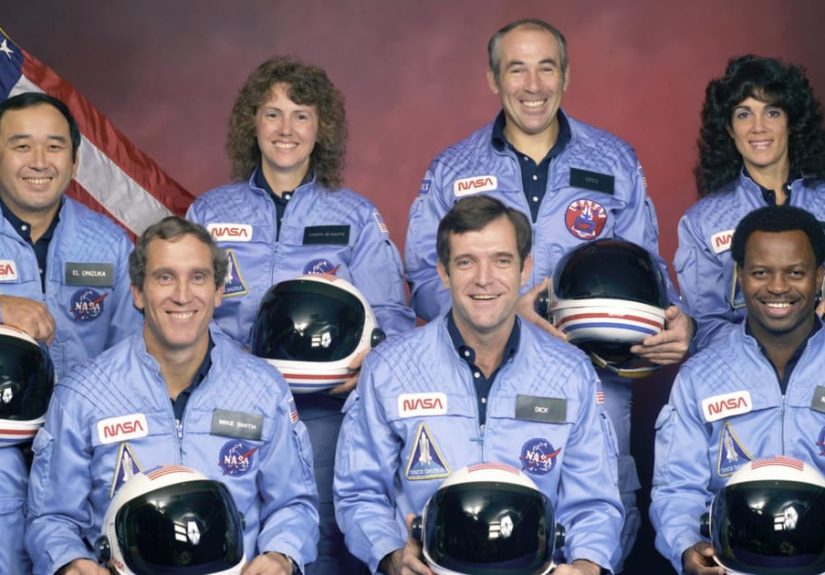
On January 28, 1986, Challenger’s mission STS-51-L ended 73 seconds after liftoff, and the loss of all seven crew members stunned the United States.
The investigation that followed didn’t just point to hardware; it pointed to habitshow organizations interpret risk, how warnings get “handled,”
and how schedule pressure can quietly become a decision-maker with its own office and parking spot.
This article blends well-established facts with structured rankings and clear opinionsbecause “what happened” matters, but “how people think about what happened”
is the reason Challenger still shows up in engineering classes, leadership trainings, and conversations about safety culture.
Quick Context: What Happened (Without Turning It Into a Disaster Movie)
Challenger (STS-51-L) launched from Kennedy Space Center on a notably cold Florida morning. A failure in the sealing system (O-rings) in the right Solid Rocket Booster
jointmade worse by low temperaturesallowed hot gases to escape, leading to structural breakup of the vehicle.
President Reagan created the Rogers Commission to investigate the accident, and the Commission’s findings reshaped NASA’s approach to safety and decision-making.
The mission had unusually high public attention because it included the Teacher in Space Project participant, Christa McAuliffeintended to inspire students and broaden
public engagement with spaceflight. The heartbreak was national, and the lessons became permanent.
Ranking #1: The Most Influential “Root Causes” (From Technical to Cultural)
If you ask ten people what caused the Challenger disaster, you might get ten answersand most will be “right,” but incomplete. Here’s a ranked view of
the factors that show up again and again in primary investigations and serious retrospectives.
-
Cold-Compromised O-ring Performance in the SRB Field Joint (The Trigger)
The immediate technical failure involved seals in the right booster joint not doing their job under unusually cold conditions.
It’s the part of the story that fits on a bumper sticker, and it’s realbut it’s not the full plot. -
A Design That Was “Too Sensitive” to Real-World Conditions (The Setup)
The joint design was vulnerable to temperature, movement, and manufacturing realities. When a system works only when everything goes “just so,”
it’s not robustit’s lucky. -
Normalization of Deviance (The Slow-Boil Problem)
This is the fancy term for a very human pattern: a warning sign appears, nothing terrible happens (this time), and the organization mentally files it under
“apparently fine.” Repeat long enough, and “deviant” becomes “normal.” Challenger became a defining example of that phenomenon in safety culture discussions. -
Communication Failures Between Engineers and Decision-Makers (The Plot Twist)
Warnings existed, concerns were raised, but decision pathways and meeting dynamics didn’t convert concern into a halt. The Rogers Commission highlighted how
information was presented, filtered, and interpreted across levels. -
Schedule Pressure and Institutional Momentum (The Invisible Hand on the Calendar)
Launch schedules create a psychological “default”: proceed unless a problem is proven beyond doubt. But safety decisions don’t work well when the burden of proof
is “convince the room the sky is falling.” Sometimes the sky doesn’t have to fallit just has to be colder than your rubber likes.
Ranking #2: The Biggest Misconceptions People Still Repeat
Challenger has been summarized so often that some summaries have turned into myths. Here are the most common misconceptionsranked by how much they distort the lesson.
-
“It was just a technical failure.”
The technical failure was real, but the investigation emphasized that organizational decision-making and communication problems were deeply involved.
Reducing it to “a part broke” is like blaming a car crash entirely on the last raindrop. -
“Engineers didn’t know.”
Many engineers did know there was significant concern about the joint seals and low-temperature performance. The harder question is why that concern didn’t
stop the launch. -
“Someone had to be a cartoon villain.”
Real disasters often don’t come with a twirling mustache. They come with rushed meetings, unclear criteria, social pressure, and people trying to be “reasonable”
while reality refuses to negotiate. -
“Florida isn’t ‘cold,’ so the temperature point is overblown.”
“Cold” is not a vibe. It’s a number. Materials respond to temperatures, not geography trivia. Rubber doesn’t care that you’re wearing shorts in the parking lot.
-
“The lesson is: Don’t take risks.”
Spaceflight involves risk. The real lesson is: don’t confuse managed risk with misunderstood riskand don’t let “we’ve gotten away with it before”
become your safety plan.
Ranking #3: The Most Important Lessons Challenger Left Behind
If Challenger is a cautionary tale, these are the chapters people keep re-readingespecially in engineering, aviation, medicine, software reliability,
and any workplace where “small failure” can become “big day.”
-
Define Clear “No-Go” Rules Before You Need Them
When launch-day decisions depend on improvised persuasion, the loudest voice can win. Clear criteriaagreed to ahead of timeare a safety feature.
-
Create Paths for Bad News to Travel Fast (and Safely)
The hardest message to deliver is often the most important one: “Stop.” Organizations need psychological safety and formal mechanisms so concerns don’t get
sanded down into polite ambiguity. -
Respect Data… and Respect What You Don’t Have Data For
One of the ugliest patterns in failure analysis is “absence of evidence” being treated as “evidence of absence.” If you don’t have data for cold conditions,
that’s not comfortit’s uncertainty. -
Beware the “Prove It’s Unsafe” Trap
When the decision framework becomes “launch unless you can prove catastrophe,” you’ve flipped the question. High-stakes systems often need the opposite:
“don’t launch unless you can show acceptable safety margins.” -
Public Relations Can’t Repeal Physics
Richard Feynman’s famous lineoften paraphrasedlands because it’s true: nature can’t be fooled. The Challenger story is a reminder that confidence
is not the same thing as capability. -
Turn Lessons Into Systems, Not Posters
After an accident, organizations love slogans. Slogans don’t redesign joints, update procedures, or empower engineers. Systems do.
Opinions: How People “Rank” Responsibility (and Why That’s Tricky)
When people talk about Challenger, “responsibility” tends to get ranked in one of three ways. None is perfect, but each highlights something useful.
Opinion Set A: “Hardware Did It”
This viewpoint ranks the physical design and material limitations as the core cause. It’s appealing because it’s concrete, testable, and fixable.
The danger is thinking that a redesigned part automatically upgrades decision-making.
Opinion Set B: “Management Did It”
This viewpoint emphasizes schedule pressure, risk communication, and leadership accountability. It’s also grounded in the investigation record.
The danger is oversimplifying the system into “bad people” rather than “bad incentives and weak processes.”
Opinion Set C: “Culture Did It”
This viewpoint ranks organizational culturewhat gets rewarded, what gets ignored, how dissent feelsas the deepest cause.
The danger is making “culture” sound like fog: everywhere and nowhere, so nobody has to change anything specific.
A balanced take: Challenger wasn’t a single-point moral failure or a single-point engineering failure. It was a chaintechnical vulnerability plus organizational
decision patterns that failed to interrupt that chain.
A Ranked “Timeline of Meaning” (Not Just a Timeline of Minutes)
You can list times and events, but the more useful timeline is the one that explains why each phase mattered.
-
Before Launch: Known Concerns Become “Manageable”
Evidence and prior observations about seal performance existed well before launch day. Over time, worrying signs can become “background noise”
unless an organization treats them as signals. -
Night Before Launch: The Argument Happens
A key moment in many serious accounts is the pre-launch discussion about low temperatures and risk.
This is where engineering concern meets managerial decision structure. -
Launch Morning: Conditions and Constraints Collide
The day-of environment wasn’t just “cold.” It added operational complexity and created pressure to proceedbecause backing out is visible, expensive,
and reputationally loud. -
Post-Accident: Investigation Becomes a Mirror
The Rogers Commission didn’t merely document a failure; it exposed patternshow risk was assessed, communicated, and accepted.
That’s why the report has lasted longer than most headlines. -
Long After: Challenger Becomes a Case Study Template
“Challenger” became shorthand for organizational failure under pressure. That’s a heavy legacybut it has helped other fields notice warning signs sooner.
Specific Examples of Challenger Lessons in the Real World
Challenger’s lessons show up far outside spaceflight. Here are a few examples that mirror the same risk dynamicswithout needing a launch pad.
Example 1: Medicine and “Workarounds”
When staff repeatedly bypass a protocol because “it’s faster,” and nothing bad happens, the workaround can become normal.
That’s normalization of deviancejust wearing scrubs instead of flight suits.
Example 2: Software Reliability and “Known Bugs”
Teams sometimes ship with known critical issues because “it didn’t crash last time” or “we’ll patch after release.”
Challenger warns that past survival can be a misleading metric if the underlying risk hasn’t been reduced.
Example 3: Aviation, Maintenance, and “Deferred Fixes”
Deferred maintenance isn’t automatically recklesssometimes it’s managed. But Challenger reminds us that deferral can become habit, and habit can become policy,
and policy can become the thing that breaks you.
What the Teacher in Space Angle Changed (and Why It Still Matters)
Challenger wasn’t the first space tragedy, but it was uniquely public. The Teacher in Space Project was designed to make spaceflight feel reachable and educational.
NASA’s own historical materials describe how the program drew thousands of applicants and finalists and aimed to bring lessons back to classrooms.
That public-facing mission amplified the emotional shock when the accident happened, especially for students watching live.
This matters for “rankings and opinions” because it explains why Challenger became a national memory, not just an aerospace event. People didn’t only lose a spacecraft;
they lost a shared sense of certainty about how safe the Space Shuttle had become.
Conclusion: The Most Useful Way to “Rank” Challenger Today
The best ranking isn’t “who messed up the most.” It’s “which lessons prevent the next tragedy.”
Challenger is a story about a real technical vulnerability and a real human system that failed to treat that vulnerability as launch-stopping.
If you remember only one idea, make it this: high-stakes organizations don’t fail only because parts fail. They fail when signals get softened into suggestions,
uncertainty gets treated like comfort, and “we’ve been fine so far” gets promoted to a strategy.
Challenger’s legacy isn’t just sorrowit’s a blueprint for building systems that welcome bad news early, treat doubts seriously, and protect the people who say,
“Hold on. This doesn’t feel right.”
Experiences and Reflections (Extra )
“Experiences” around Challenger often come in wavespersonal, professional, and educationalbecause the event lives in multiple worlds at once.
For many Americans, the most commonly reported experience is the shared memory of watching the broadcast (or hearing about it moments later) and feeling the room
change: excitement turning into confusion, then silence, then grief. In schools, especially, the emotional whiplash was profound because the Teacher in Space Project
was designed for students. Teachers had framed the launch as a celebration of curiosity and possibility, and suddenly they had to guide kids through shock and sadness.
That combinationpublic viewing plus a classroom missionhelped make Challenger a “where were you?” moment in U.S. culture.
In engineering and technical fields, the experience tends to be different: Challenger is often encountered as a case study before it’s understood as a national trauma.
Students meet it in charts, memos, and discussions about decision thresholds. Over time, many describe a shift: first seeing it as a problem of seals and temperatures,
then realizing the deeper discomforthow easy it can be for intelligent, hardworking people to talk themselves into proceeding. That’s why Challenger shows up in
ethics courses and leadership trainings: it’s not a story about ignorance; it’s a story about systems that make it hard for knowledge to win.
Leaders and managers often report another kind of experience: Challenger becomes a mirror held up to everyday meetings. People recognize the patterns:
the rushed agenda, the “can you prove it?” question, the way uncertainty gets reframed as confidence, the subtle pressure to be a team player.
Even in low-stakes workplaces, those dynamics exist. Challenger is a reminder that culture is built one meeting at a timeby what gets rewarded, what gets dismissed,
and what people learn is “safe” to say.
There’s also the experience of remembrance and legacy. Many communities and organizations mark anniversaries with ceremonies, educational programs, and tributes.
The Challenger crew’s names remain widely known, and the event continues to inspire efforts that promote STEM education, safety awareness, and thoughtful risk management.
For some, engaging with Challenger is a way to honor exploration without romanticizing riskholding both truths at once: that spaceflight advances human knowledge, and that
preventable failures must be confronted without excuses.
Finally, there’s the “experience of applying the lesson.” This is the most hopeful one: teams that pause a launch (literal or metaphorical) because a junior person raised a concern,
organizations that redesign reporting lines so technical voices are heard, and workplaces that treat “near-misses” as urgent datanot as proof that luck is reliable.
Challenger’s lasting value is that it gives people languagenormalization of deviance, psychological safety, flawed decision framesto describe problems before those problems
become headlines.