Table of Contents >> Show >> Hide
- Why Storage & Organization Matter
- The First Rule: Declutter Before You Organize
- Smart Storage Principles That Actually Work
- Room-by-Room Storage & Organization Ideas
- Entryway: Create a Controlled Drop Zone
- Kitchen and Pantry: Function Wins
- Bathroom: Edit Aggressively
- Bedroom and Closet: Organize for Your Actual Routine
- Living Room: Hide the Necessary, Showcase the Meaningful
- Garage, Laundry Room, and Utility Spaces: Think Zones, Not Piles
- Home Office: Reduce Paper Drama
- Common Mistakes That Sabotage Organization
- How to Keep It Organized for Good
- What to Do About Sentimental Clutter
- Conclusion
- Extended Experiences: What Storage & Organization Feel Like in Real Life
- SEO Tags
If your home has ever felt like it was slowly being swallowed by charging cords, mystery lids, lonely socks, and a coffee mug collection with main-character energy, welcome. You are among friends. Storage and organization are often treated like the glamorous cousins of cleaning, but they are really the systems that keep daily life from turning into a scavenger hunt. When your space works, mornings move faster, groceries fit where they should, and nobody has to wrestle a tower of plastic containers just to find the cumin.
The truth is that great storage and organization are not about making your home look like a catalog where no one has ever lived, eaten crackers, or misplaced a tape measure. They are about creating practical systems that make life easier. A well-organized home saves time, reduces stress, cuts down on duplicate buying, and makes even small spaces feel more generous. In other words, it is less about perfection and more about sanity. That is a trade worth making.
Why Storage & Organization Matter
Good organization does more than make a room look tidy for five glorious minutes before real life resumes. It supports routines. It helps you find what you own, use what you buy, and avoid stuffing perfectly useful square footage with random clutter. When items have clear homes, cleanup gets faster because decisions get easier. When storage is intentional, even compact homes can feel calmer and more functional.
There is also a money angle here, and it is not a small one. Disorganization tends to create waste. People buy duplicate batteries because they cannot find the batteries they already have. They forget pantry items in the back of a shelf and buy more pasta even though three boxes are quietly aging in the shadows. They purchase more bins, baskets, and miracle gadgets when the real problem is not a lack of containers but a lack of editing. The organized home is not the one with the most storage products. It is the one where the storage matches the stuff, the space, and the way the household actually lives.
The First Rule: Declutter Before You Organize
This is the part nobody wants to hear because buying cute baskets is much more fun than facing a drawer full of expired coupons, dead pens, and a phone charger from a device last seen during the Obama administration. Still, decluttering comes first. Organizing items you do not need is basically giving clutter a prettier zip code.
Start Small So You Actually Start
The fastest way to get overwhelmed is to announce that you are going to organize the entire house this weekend. That is how people end up sitting on the floor at 9:45 p.m., emotionally attached to a broken candle holder. Instead, start with one drawer, one shelf, one category, or one landing zone. Small wins build momentum. They also prevent that dramatic “everything is out and now somehow the room is worse” stage from taking over your whole day.
Use a Simple Sorting Method
One of the most effective approaches is brutally simple: keep, donate, toss. If something is useful and used, keep it. If it is still good but no longer serves you, donate it. If it is broken, expired, stained, or otherwise living on borrowed time, toss or recycle it responsibly. This method keeps decisions moving and helps reduce the emotional traffic jam that often stalls organizing projects.
Buy Organizers Last, Not First
Storage products should support your system, not become the system. Measure shelves, drawers, closets, and cabinets before purchasing anything. Then buy only what the edited collection requires. Otherwise, it is easy to end up with a stack of bins that do not fit, a drawer insert that wastes space, or three acrylic organizers that looked fabulous online and now hold exactly four paper clips and your regret.
Smart Storage Principles That Actually Work
Give Every Item a Home
The phrase sounds annoyingly simple because it is. A home for every item means keys go in one place, extra light bulbs live together, gift wrap has a zone, and scissors stop wandering through the house like they pay rent. The less often you have to decide where something belongs, the more likely it is to be put away properly.
Group Like With Like
Store similar items together. Keep all baking supplies in one area, all batteries in one container, all pet supplies in one bin, and all office basics in one station. This cuts down on searching, makes inventory visible, and prevents the classic household mystery of owning six tape rolls but never finding one when you need it.
Store by Frequency of Use
Prime real estate should go to the items you use most. Everyday dishes, toiletries, cleaning tools, and pantry staples should be the easiest things to reach. Seasonal decor, backup paper towels, specialty serving platters, and once-a-year gadgets can live higher up, farther back, or in less convenient spots. Organization works best when convenience is built into the map.
Use Vertical Space Like It Owes You Money
Walls, doors, shelf height, and the backs of cabinets are hardworking opportunities in disguise. Floating shelves, hooks, pegboards, over-the-door racks, and stackable bins make use of airspace that usually gets ignored. In smaller homes especially, vertical storage can create breathing room without stealing floor space.
Keep Some Empty Space
Not every drawer, closet, or cabinet needs to be packed to the brim. In fact, that is usually a sign the system is headed for trouble. Empty space is not wasted space. It is flexibility. It leaves room for daily movement, new purchases, seasonal shifts, and the very normal reality that homes are living environments, not frozen museum exhibits.
Make It Visible or Label It Clearly
Clear containers work well when you want instant visibility, especially in pantries, utility areas, or supply closets. If the container is opaque, label it. Labels help everyone in the household find things and, more importantly, return them. A label is not decorative fluff. It is a boundary, a reminder, and occasionally a polite form of domestic law.
Room-by-Room Storage & Organization Ideas
Entryway: Create a Controlled Drop Zone
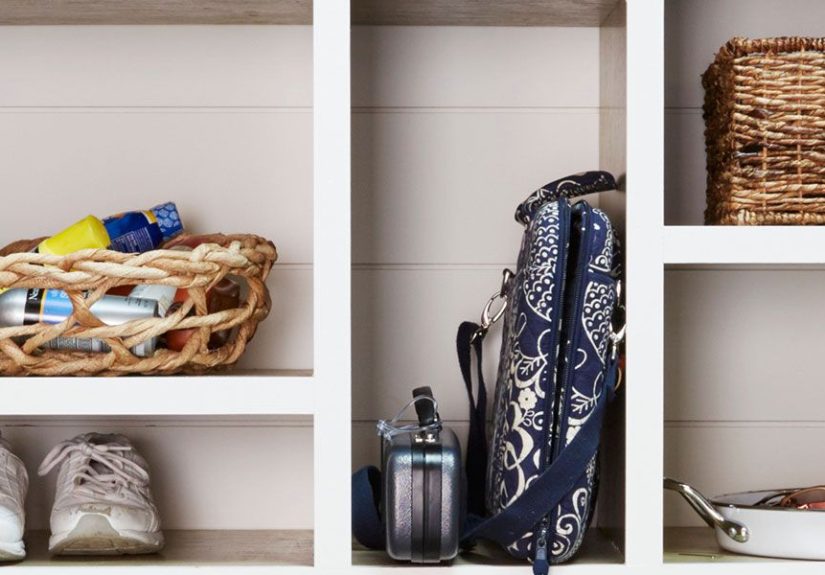
The entryway is where clutter likes to sprint in and dump its backpack. A small bench, a tray for keys, hooks for bags, a basket for shoes, and a narrow bin for mail can stop chaos at the front door. The goal is not a perfect foyer. The goal is a landing strip that can absorb real life without immediately looking like a lost-and-found box exploded.
Kitchen and Pantry: Function Wins
The kitchen works hardest when zones are clear. Store cooking tools near the stove, prep tools near prep space, and everyday dishes near the dishwasher or sink for faster unloading. In the pantry, corral similar foods together: breakfast, snacks, baking, canned goods, grains, and lunchbox items. Use risers, turntables, shelf dividers, and bins to keep things visible. Put the most-used foods front and center. The six specialty sauces you swear you will use “someday” can sit farther back and think about what they have done.
Bathroom: Edit Aggressively
Bathrooms collect clutter at an almost supernatural rate. Half-used products, hotel toiletries, expired medications, and duplicates multiply fast. Clear out what is old or unused, then divide what remains into daily use, backups, grooming tools, and linens. Drawer dividers, under-sink bins, and over-the-toilet storage can help, but only after the edit. A bathroom should support a fast morning, not behave like a tiny beauty supply warehouse.
Bedroom and Closet: Organize for Your Actual Routine
Closets are easier to maintain when they reflect how you get dressed. Keep your current season in the easiest spots. Use matching hangers if possible for visual calm and better spacing. Add shelf dividers for sweaters, bins for accessories, and drawer organizers for socks or undergarments. Under-bed storage can be useful for off-season clothing, extra bedding, or shoes. The bedroom should feel restorative, not like a retail clearance rack with emotional baggage.
Living Room: Hide the Necessary, Showcase the Meaningful
Living rooms often need to do too many jobs at once: lounging, entertaining, screen time, reading, toy storage, maybe even work. Baskets, media cabinets, storage ottomans, and low-profile bins can contain the practical stuff without turning the space into a utility closet. Keep surfaces edited. Display the pieces you love. Hide the remote graveyard, charging cables, game controllers, and random objects that seem to drift in from other rooms.
Garage, Laundry Room, and Utility Spaces: Think Zones, Not Piles
These hardworking areas thrive on categories. Group tools with tools, automotive items with automotive items, sports gear with sports gear, and cleaning products with cleaning products. Use heavy-duty shelving, hooks, wall tracks, and labeled totes. Keep dangerous items elevated or secured if children are in the home. In laundry spaces, create designated spots for detergent, stain treatment, extra hangers, and stray socks. Yes, the sock basket is a real thing, and yes, it may save a marriage.
Home Office: Reduce Paper Drama
Paper clutter has a special talent for looking urgent while being mostly useless. Use a simple filing setup for truly important documents, a tray for active paperwork, and a shred-or-recycle routine for the rest. Store everyday tools like chargers, pens, sticky notes, and notebooks in one contained station. Cords should be managed, not allowed to recreate jungle vines beneath the desk.
Common Mistakes That Sabotage Organization
Many organizing systems fail for predictable reasons. The first is overbuying products before making decisions. The second is creating systems that are too complicated to maintain. If putting something away takes six steps, it is not going away. Another mistake is ignoring the household’s real habits. If everyone drops shoes by the front door, the solution is probably not yelling into the void. It is adding a shoe basket by the front door.
Another common mistake is storing items far from where they are used. If extra toilet paper lives in the garage and the bathroom is upstairs, that system is not efficient. If school supplies are tucked in a distant closet but homework happens at the kitchen table, clutter will gather on the table. Organization gets easier when storage follows behavior instead of fighting it.
How to Keep It Organized for Good
Maintenance matters more than marathon cleanups. Ten minutes a day can do more for a home than an occasional six-hour organizing spree powered by iced coffee and unrealistic optimism. A quick evening reset, a weekly paper sort, a monthly donation run, and a seasonal review can keep systems functioning without constant drama.
It also helps to set limits. Keep a donation bin in a closet or laundry area. Follow a one-in, one-out rule for categories that grow quickly, such as clothing, mugs, toys, or beauty products. Revisit clutter hot spots before they become clutter neighborhoods. A working system is one you can reset without a motivational speech.
What to Do About Sentimental Clutter
This is where storage and organization stop being purely practical and start getting emotional. Sentimental items are difficult because they often carry memory, identity, and guilt all at once. The answer is not to become cold-hearted and throw away every childhood drawing or family keepsake. It is to curate thoughtfully.
Keep the best of the best. Choose a memory box for each person or a clearly defined container for family keepsakes. Display meaningful items when possible instead of burying them in the back of a closet. Photograph bulky items that matter emotionally but not functionally. Organization should preserve meaning, not erase it. The point is to make room for memories you can actually enjoy rather than storing them in dusty mystery tubs labeled “important maybe.”
Conclusion
At its best, storage and organization are not about spotless perfection or social media bragging rights. They are about making a home easier to live in. A successful system helps you cook dinner faster, get out the door without panic, find what you need, and enjoy the rooms you already have. It lets your space support your life instead of bossing it around.
So if you are starting from scratch, begin small. Clear the junk drawer. Set up the entryway. Edit the bathroom cabinet. Label the pantry bin. Leave a little breathing room on the shelf. Storage and organization are built one practical decision at a time, and every good system starts with the same humble goal: make it easier to live here.
Extended Experiences: What Storage & Organization Feel Like in Real Life
In real homes, storage and organization are rarely dramatic before-and-after moments with background music and suspiciously empty countertops. They are small experiences that change the tone of a day. It feels different when you open a closet and can actually see your clothes. It feels different when school papers have a tray, the keys land in a bowl every night, and the blender is not buried behind five things you forgot you owned. The home does not become perfect. It becomes cooperative.
One of the most noticeable experiences is mental quiet. Clutter is noisy, even when it is not making a sound. A packed counter, a chaotic entryway, or an overstuffed drawer keeps asking for attention. Once those spaces are edited and assigned simple systems, they stop nagging at you. You walk past them without that low-grade feeling that you should really deal with it soon. That shift is subtle, but powerful.
Another experience is speed. Organized homes save minutes in dozens of tiny ways. You are not hunting for the good scissors, the matching lid, the dog leash, the tax document, or the one black T-shirt that fits just right. Meals come together faster because ingredients are visible. Laundry moves faster because hangers are ready and drawers close properly. Guests popping by feels less like a personal attack and more like a manageable event.
There is also a surprising emotional effect. Many people assume organizing is about discipline, but often it feels more like relief. Letting go of duplicates, broken items, and aspirational clutter can make a space feel lighter almost immediately. That bread maker you have not used in four years is not just taking up shelf space. It is quietly reminding you of a hobby you did not keep. Releasing it can feel less like failure and more like honesty. That is a useful kind of freedom.
Families often notice that organization reduces friction. When everyone knows where backpacks go, where chargers live, and where the extra trash bags are stored, there are fewer tiny arguments. Shared spaces work better because expectations become visible. Labels help kids, partners, roommates, and even the chronically distracted person in the household who swears they put the tape “somewhere safe.” Organization does not eliminate conflict, but it does remove a lot of unnecessary scavenger-hunt energy from the house.
Perhaps the best experience is that organized storage makes a home feel more generous, even if no square footage has changed. A small apartment can feel bigger when shelves are not overloaded and the floor is not doing the job of a closet. A modest kitchen can feel highly functional when zones are clear and tools are easy to reach. A compact bedroom can feel restful when surfaces are edited and under-bed space is used well. Good organization does not magically create more room, but it does reveal the room you already had.