Table of Contents >> Show >> Hide
- Quick Snapshot: What You’re Actually Buying
- The Design Story: A Bed That Acts Like a “Soft Wall”
- Materials and Craft: Why This Bed Feels Different Over Time
- Sizes and Fit: Real Numbers You Can Measure With a Tape
- How to Style the Companions Bed Without Turning Your Bedroom Into a Catalog
- The “Companions” Ecosystem: Bedside Tables and a Writing Desk That Actually Make Sense
- Who This Bed Is For (and Who Might Prefer Another Option)
- Buying Tips and Care: How to Keep It Beautiful Without Babysitting It
- Conclusion
- Extra: of Real-Life Experiences With the Companions Bed
If you’ve ever tried to make a bedroom feel “finished” and ended up with a space that looks like a furniture showroom pretending to be a home, you already understand the problem the StudioIlse Companions Bed is trying to solve. It’s not just a platform bed with a nice headboard. It’s a bed designed like a small piece of architectureone that quietly shapes your nightly routine, your morning reset, and the way a room feels when you walk in with a basket of laundry and big plans (that may or may not happen).
Designed by Ilse Crawford and her London-based team at Studioilse, and made by De La Espada, the Companions Bed sits at the intersection of craft, comfort, and “this is why I’m calmer in here.” It’s reassuringly familiarwood, spindles, honest materialsbut it’s also packed with subtle decisions that make it behave differently from most modern bed frames.
Quick Snapshot: What You’re Actually Buying
- A solid-wood platform bed with a signature wraparound spindle headboard.
- Copper feet that lift the whole piece visually (and keep it from feeling heavy).
- Multiple wood species and finishes (oak, walnut, ash; oil finishes and options like oxidized oak depending on the maker/retailer).
- Made in Portugal, typically to order, with lead times measured in weeks/months rather than “arrives Tuesday.”
- A design that works as a room divider, so the bed can sit away from the wall and still look intentional.
The Design Story: A Bed That Acts Like a “Soft Wall”
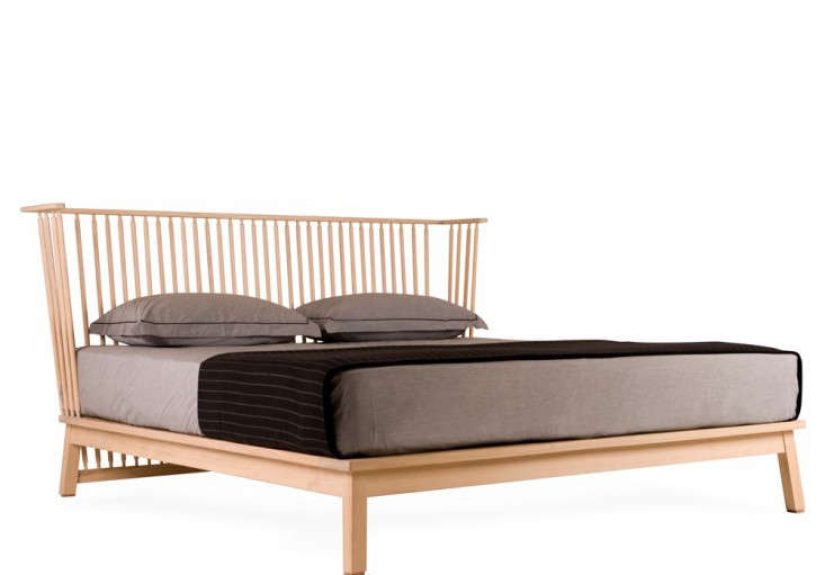
The Companions Bed is part of a broader “Companions” family meant to support daily lifebed, bedside tables, a writing deskrather than a one-off statement piece that demands a museum label. The bed’s standout move is the wraparound headboard: it doesn’t stop at the width of the mattress. It turns the corners, creating a gentle boundary around your sleeping zone, like a hug that respects personal space.
Wraparound Headboard: Cocoon Without the Clutter
Most headboards do one job: keep pillows from migrating into the void. This one does at least three. First, it gives you a cocooning effecta sense of enclosure without feeling boxed in. Second, because it wraps around, it creates a visual “frame” for the bed, even when the bedding is in full, chaotic reality mode. Thirdand this is the sneaky architectural partit functions as an attractive room divider, which is why the Companions Bed can sit in the middle of a room and still look finished, not like you forgot to push it back against the wall.
Spindles With a Familiar Reference (But Not a Costume)
The spindles are where the bed earns its name. They read like companions: a repeating rhythm of vertical elements that are comforting, orderly, and quietly human. Design writers have noted that the spindles nod to the language of a Windsor chairnot in a themed way, but as a reference to craft and familiarity. The effect is warm minimalism with personality: calm, but not blank; simple, but not sterile.
Copper Feet: The “Jewelry” That Keeps It Light
Let’s talk about the copper feet. They’re small, but they matter. Copper adds a soft glow that reads less like “look at me” metal and more like “this is a thing that’s been thoughtfully finished.” Practically, the feet lift the bed just enough to keep a large solid-wood piece from feeling visually grounded like a boulder. Emotionally, they’re the punchline to the bed’s seriousnesslike the design equivalent of wearing sneakers with a tailored suit and somehow looking more put-together.
Materials and Craft: Why This Bed Feels Different Over Time
At a glance, you might think: “It’s a wood bed. Great. My uncle can make that.” Then you live with a well-made solid-wood piece and realize the difference is in the details you don’t notice until they’re missing: stability, joinery, surfaces that age well, and finishes that don’t punish you for being a person who occasionally bumps a nightstand with a vacuum.
Solid Wood With Repairability Built In
De La Espada emphasizes sustainable solid wood sources and long-term repairabilitymeaning the surface can be refreshed over time rather than replaced when life happens. Many of the finishes are oil-based and designed as renewable surfaces, which is a fancy way of saying: this bed expects you to live like a human, not an art handler in white gloves.
Traditional Joinery Meets Modern Engineering
The Companions Bed is crafted in De La Espada’s Portugal factory, combining modern production with handcraft. The brand describes traditional wood joinery bonded with wood glue for structural integrity, along with non-toxic finishes applied by hand, sprayed, or rubbed. This matters most in the long run: a bed frame shouldn’t develop a personality trait called “mysterious creak” after six months.
A Platform That Breathes (Literally)
The bed base uses multiple timber slats set roughly 2 inches (about 5 cm) apart. That spacing encourages airflowhelpful for many mattress typesthough it also means you should check your mattress brand’s requirements if you’re using certain foam or latex mattresses that prefer tighter slat spacing. The good news: if you ever need a closer surface, it’s usually solvable with a bunkie board or additional slatsno drama required.
Sizes and Fit: Real Numbers You Can Measure With a Tape
One of the best things about this bed is that it’s not vague about dimensions. In the U.S. sizing options commonly offered, you’ll typically see Queen, King, and California King.
Common U.S. Dimensions (Approximate)
- Queen: about 67 7/8" W × 85 7/8" L × 43 1/3" H (fits a 60" × 80" mattress)
- King: about 83 7/8" W × 85 7/8" L × 43 1/3" H (fits a 76" × 80" mattress)
- California King: about 79 7/8" W × 89 7/8" L × 43 1/3" H (fits a 72" × 84" mattress)
The platform height is roughly 12 3/5 inches, which tends to land in a comfortable zone: not so low that you feel like you’re camping on a stylish raft, and not so high that you need a running start to climb in.
How to Style the Companions Bed Without Turning Your Bedroom Into a Catalog
The Companions Bed is friendly to a lot of styles, but it shines in rooms that prioritize texture, calm, and thoughtful objects over loud “trend” signals. Here are a few styling approaches that feel true to the bed’s design language.
1) Warm Minimalism (a.k.a. “Calm, But With Soul”)
Think natural bedding, layered neutrals, and a couple of materials that look better the more you touch them: linen, wool, leather, matte ceramics. If you want a real-world proof point, Remodelista’s coverage of Studioilse’s “The Apartment” styling shows the Companions Bed anchoring a bedroom alongside iconic design pieces and a task lampminimal, but not cold.
2) Modern Craft / New Traditional
The spindle headboard is your bridge to traditional forms without feeling antique. Pair it with a simple wool rug, a vintage stool as a bedside perch, and lighting that’s more “soft glow” than “interrogation beam.” The bed does well with rooms that respect craftsmanshipwhere you’d rather have one excellent wooden chair than three plastic ones you secretly hate.
3) Airy Contemporary
If you love clean lines but don’t want your room to feel like it’s waiting for a tech product launch, this bed is a cheat code. Choose lighter finishes (ash or pale oak), keep the walls soft white, and bring in contrast through textiles: a deep-toned throw, a charcoal pillow, a muted pattern. The spindles add visual interest without adding visual noise.
The “Companions” Ecosystem: Bedside Tables and a Writing Desk That Actually Make Sense
The Companions Bed isn’t meant to be an only child. The family includes a writing desk and bedside tables in two heights, and the bedside design is a good clue to Studioilse’s priorities: useful details that make daily life smoother.
Bedside Tables With a Small Genius Move
The Companions bedside table includes a removable cork bowl hanging belowstorage for the small stuff you’d rather not display like a museum of modern anxieties (earplugs, lip balm, random coins, that one hair tie). De La Espada also calls out a wedge tenon detail at the top, which is the kind of construction choice you might not notice immediately, but you’ll feel in the overall sturdiness and finish.
Who This Bed Is For (and Who Might Prefer Another Option)
This bed is a great fit if:
- You want a bed that looks good from every angleespecially if your room layout puts the bed away from the wall.
- You like design that’s quiet but deeply considered.
- You care about solid wood, longevity, and surfaces that can be refreshed rather than replaced.
- You’re building a bedroom around calm routines (reading, winding down, slow mornings).
You might choose something else if:
- You want an upholstered headboard for leaning back for hours (the spindles are beautiful, but not pillow-soft).
- You need built-in storage drawers under the bed (this is more “breathing space” than “storage machine”).
- You need something instantly available and shipped tomorrowthis bed typically lives in made-to-order land.
Buying Tips and Care: How to Keep It Beautiful Without Babysitting It
Expect a Real Lead Time
Depending on where you purchase, lead times can vary. Some retailers list lead times in the “several months” range. Translation: plan like an adult, not like someone ordering a phone case at midnight and expecting it by breakfast.
Plan Placement Early
If you want to float the bed in the center of a room, measure your clearancesespecially around the wraparound headboard corners. The bed is designed for that placement, but your nightstand plan and walking space should support the idea.
Care Is More “Refresh” Than “Panic”
Oil finishes are often described as renewable, and De La Espada notes they can be repaired with relative ease by reapplying wax or oil as needed. In practical terms: you can keep the bed looking good with a simple care routine and a little consistency, rather than resorting to heroic refinishing projects.
Conclusion
The StudioIlse Companions Bed is a rare thing: a designer bed that doesn’t act like it’s too important for real life. It’s crafted, thoughtful, and quietly architectural. The wraparound headboard creates a sense of shelter; the spindles bring rhythm and familiarity; the copper feet add warmth without shouting. And perhaps the biggest compliment is this: it doesn’t just fill a bedroom. It helps the room behavelike a calmer version of you is more likely to show up there.
Extra: of Real-Life Experiences With the Companions Bed
Living with the Companions Bed is less about “owning a design object” and more about noticing how a few smart decisions change your everyday habits. The first thing people tend to comment on is the headboardbecause it’s not a flat panel, it’s a whole presence. When you sit on the bed to put on socks or answer a text you promised you wouldn’t answer in bed (sure), the wraparound corners make the space feel defined. It’s subtle, but it shifts the mood from “mattress in a room” to “sleeping area,” like the bed is politely reminding you that rest is an activity worth protecting.
If you place the bed away from the wall, the experience gets even better. Most beds look awkward when floatedlike you’re waiting for movers to finish. This one is designed to be seen from the back, so it actually helps your room layout. In open-plan bedrooms or spaces where the bed shares real estate with a desk, a reading nook, or even just a wide walkway, that room-divider effect keeps the bed from feeling exposed. You get privacy without building anything, which is honestly the dream: architectural benefit, zero drywall dust.
The spindles also create a funny psychological effect: they add detail, but they don’t add chaos. In a world where bedroom design can spiral into “twelve throw pillows and a bench that never gets sat on,” the Companions Bed gives you interest without requiring you to decorate harder. A simple duvet, a couple of textured pillows, maybe one great blanketand the bed still looks complete. It’s like the frame is carrying some of the visual workload for you, which is the kind of support we all deserve.
Over time, you’ll likely appreciate the material honesty. Solid wood ages in a way that’s more forgiving than glossy finishes that show every fingerprint like evidence. With an oil finish, small scuffs don’t feel like tragediesthey feel like proof of life. The copper feet do something similar: they pick up a gentle patina that makes the bed feel warmer and more personal, not “brand-new forever.” It’s not a fragile kind of luxury; it’s the kind that gets better when you stop tiptoeing around it.
There are practical moments too. The platform height tends to feel comfortable day-to-dayeasy enough to get in and out of, substantial enough to feel grounded. And because the bed base uses spaced slats, the mattress can breathe, which is one of those unglamorous benefits you only think about after you’ve lived with something for a while. The only “real life” note is mattress compatibility: if your mattress prefers tighter slat spacing, adding a supportive layer is a simple fix. The bed isn’t precious; it’s adaptable.
Ultimately, the Companions Bed has a way of nudging you toward better bedroom behavior. It invites you to keep the space calm, to choose fewer but better pieces, and to treat rest like a daily ritual instead of an afterthought. And if a bed can do that without lecturing youjust by being well designedthat’s a pretty good companion.