Table of Contents >> Show >> Hide
- Introduction: The Mystery Signal in the Noise
- What Supercon 2024 Taught About Radio Transmission Hunting
- Step One: Verify the Signal Is Real
- Common Sources of Mystery Radio Transmissions
- How To Identify a Radio Signal Before Tracking It
- Essential Gear for Tracking Radio Transmissions
- Practical Method: From Mystery Signal to Likely Source
- Advanced Technique: Multilateration
- Legal and Ethical Considerations
- Why Fox Hunting Is the Perfect Training Ground
- Experience Section: Lessons From Tracking Radio Transmissions in the Real World
- Conclusion: The Spectrum Is Talking, But Listen Carefully
Note: This article is written as publication-ready HTML and synthesizes real public information from Supercon 2024 coverage, amateur radio direction-finding resources, SDR documentation, FCC interference guidance, and practical radio-signal identification materials. Source links are intentionally omitted for clean web publishing.
Introduction: The Mystery Signal in the Noise
You tune across the radio spectrum, expecting a tidy little universe where every signal politely wears a name tag. Instead, your software-defined radio coughs up a strange spike, a fuzzy smear, or a stubborn carrier that sits there like it owns the place. Is it a real transmitter? A bad power supply? A neighbor’s garage door remote? A cheap LED lamp screaming into the ether? Or is your own receiver lying to you with the confidence of a magician in a lab coat?
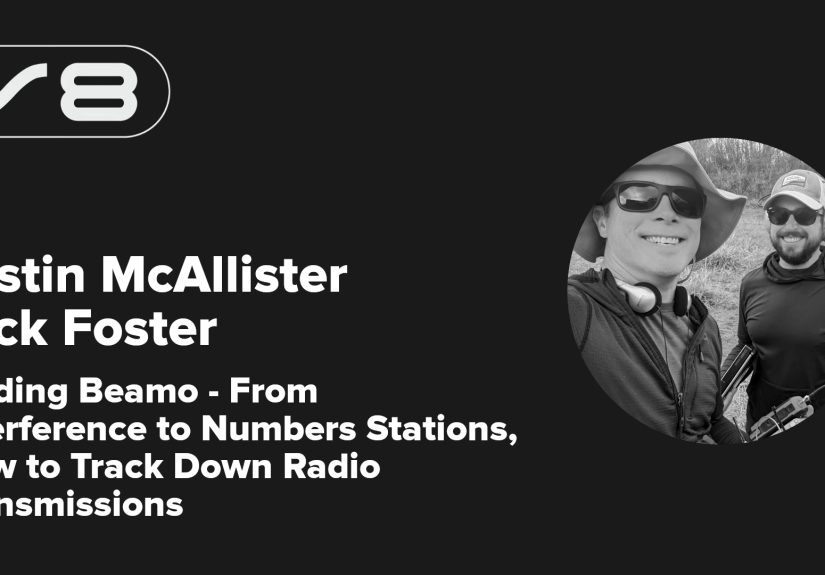
That was the delightful rabbit hole explored at Supercon 2024 in the talk “How To Track Down Radio Transmissions,” presented by Justin McAllister and Nick Foster. The big lesson is simple but sneaky: before you track down a radio transmission, you must prove the signal is real. In radio direction finding, the first suspect is often not the transmitter. It is your antenna, your SDR front end, your gain settings, your USB cable, your laptop charger, or that one bargain-bin switching supply you bought because it was “basically the same thing.” Spoiler: it was not.
This guide explains how radio hunters identify, verify, and locate mystery RF signals using software-defined radios, directional antennas, filters, observation, and a little detective work. It is part science, part fieldcraft, and part “turn things off until the monster disappears.”
What Supercon 2024 Taught About Radio Transmission Hunting
The Supercon talk focused on a problem every radio hobbyist eventually meets: seeing something on a waterfall display and not knowing whether it is an actual transmission or electronic nonsense. Modern SDRs are powerful because they expose wide chunks of spectrum at once. That same openness can also make them vulnerable to overload, images, birdies, intermodulation, and other artifacts that look suspiciously like real signals.
In practical terms, “tracking down radio transmissions” is not just walking around with a Yagi antenna like a wizard holding a metal fork. It starts with classification. What frequency is the signal on? Is it narrowband or wideband? Does it have modulation? Does it appear at regular times? Does it move? Does it vanish when the antenna is disconnected? Does it get stronger outdoors? Does it follow a known band plan? Does it look like a communication signal, a digital burst, a control channel, or random electrical noise?
The talk highlighted an important truth: radio hardware lies in specific ways. SDRs with wide-open front ends can show signals where none exist. Strong local transmitters can overload a receiver and create ghost signals across the spectrum. Internal oscillator artifacts can produce steady tones. Household devices can radiate broadband trash that looks alarming until you unplug the offending charger and suddenly the spectrum becomes peaceful again.
Step One: Verify the Signal Is Real
The first rule of radio signal tracking is: do not chase ghosts. Before grabbing your gear and sprinting down the street, run a few sanity checks.
Disconnect the Antenna
If the signal remains after you remove the antenna, it is probably being generated inside your receiver, computer, cable, or nearby electronics. This is a classic way to catch “birdies,” which are internally generated receiver artifacts. They may look impressive, but hunting them outdoors is like looking for Bigfoot in your sock drawer.
Change Gain Settings
Too much gain can overload an SDR. If reducing gain makes a weird signal disappear or behave strangely, the issue may be receiver overload rather than a real external transmitter. A clean signal usually changes predictably with gain. A fake or overloaded one often acts like it just failed drama class.
Use Another Receiver
If possible, check the frequency with a different radio. A handheld scanner, another SDR, or a traditional analog receiver can confirm whether the signal exists outside your original setup. If only one device sees the mystery transmission, blame the device before blaming the universe.
Move the Antenna
A real signal should change as you move the antenna, adjust polarization, or step outside. Indoor RF environments are messy. Walls, wiring, monitors, LED bulbs, routers, and power bricks can all contribute noise. A few feet of movement can reveal whether the signal is local, external, or coming from the electronic swamp under your desk.
Common Sources of Mystery Radio Transmissions
Not every mysterious signal is a pirate broadcaster or secret government van. In many cases, the culprit is ordinary electronics behaving badly.
Switching Power Supplies
Cheap switching supplies are famous for producing RF noise. Laptop chargers, USB wall adapters, LED power supplies, and battery chargers can radiate interference if they are poorly designed, damaged, or counterfeit. On a waterfall, these often appear as noisy bands, repeating comb patterns, or wide fuzzy messes.
LED Lights and Dimmers
PWM LED lights and dimmer circuits can create harsh electrical noise. The signal may change when lights are turned on, dimmed, or switched off. If your waterfall suddenly looks like someone combed it with a fork, start flipping light switches.
Motors and Appliances
Brushed motors, HVAC systems, refrigerators, washing machines, and tools can create broadband noise, especially during startup or operation. These sources often vary in width, strength, and timing, which makes them different from deliberate communication signals.
Wireless Sensors and Remotes
Garage door openers, tire pressure sensors, weather stations, smart meters, key fobs, and home automation devices often transmit short digital bursts. These may appear briefly and repeat according to a schedule or trigger event. If the signal pops up every evening when a car arrives, congratulations: you may have discovered the glamorous world of driveway RF.
How To Identify a Radio Signal Before Tracking It
Signal identification is where radio direction finding becomes detective work. A waterfall display provides clues: bandwidth, repetition, shape, center frequency, drift, modulation style, and time behavior.
Check the Frequency Band
Frequency gives context. A signal around 162 MHz may be near NOAA Weather Radio. A burst around 433 MHz may relate to common low-power devices. Signals near 144–148 MHz may fall in the 2-meter amateur radio band in the United States. Around 902–928 MHz, you may encounter ISM-band devices, sensors, or amateur activity. The band does not prove identity, but it narrows the suspect list.
Look at Bandwidth
Intentional communication signals usually use spectrum efficiently. Narrow FM voice, digital modes, control channels, AM broadcast, and spread-spectrum devices have recognizable shapes. Electrical noise, on the other hand, often sprawls, splatters, or appears as unstable patterns.
Watch the Schedule
Time matters. A signal that appears at the same time every day may be tied to equipment operation, scheduled data transmission, or a human routine. A signal that appears only when a device is turned on is probably local interference. A signal that follows aircraft, weather alerts, public services, or known broadcast schedules may be legitimate communications.
Compare Audio and Waterfall
Some signals sound like voice, tones, buzzing, clicking, chirps, or digital bursts. Others are visually obvious but not useful to listen to. Pairing waterfall observation with audio monitoring helps distinguish modulation from random RF garbage. In radio work, the eyes and ears should argue politely until the truth comes out.
Essential Gear for Tracking Radio Transmissions
You do not need a van full of glowing equipment to begin. A practical starter kit can be modest, portable, and surprisingly capable.
Software-Defined Radio
An RTL-SDR is one of the most affordable entry points for receiving radio signals. It is useful for scanning, waterfall viewing, and learning how signals behave. More advanced devices, such as SDRplay, Airspy, HackRF One, RX-888, or other wideband SDRs, can provide wider bandwidth, better dynamic range, or broader frequency coverage.
Directional Antenna
A directional antenna is the heart of basic radio direction finding. A Yagi antenna is common for VHF and UHF work because it has a forward lobe and weaker reception from other directions. Loop antennas are useful at lower frequencies and can provide sharp nulls. The trick is not always finding the strongest direction; sometimes the deepest null is more precise.
Attenuator
When you get close to a transmitter, the signal may become too strong and swamp the receiver. An attenuator reduces signal strength so you can keep taking meaningful bearings. Without attenuation, the signal may appear strong in every direction, which is very unhelpful and slightly rude.
Filters
Band-pass, low-pass, high-pass, and notch filters help prevent strong out-of-band signals from overloading your receiver. Filters are especially helpful when working with wide-open SDR front ends in urban RF environments.
Notebook or Mapping App
Good tracking is documented tracking. Record frequency, time, signal strength, location, antenna direction, and environmental clues. A map with bearing lines can quickly reveal where multiple observations intersect.
Practical Method: From Mystery Signal to Likely Source
Here is a field-friendly process for tracking radio transmissions safely and legally.
1. Capture the Signal
Start by recording the frequency, bandwidth, strength, audio, and waterfall appearance. If your SDR software allows IQ recording, capture a short sample. This lets you analyze the signal later without needing it to reappear.
2. Confirm It Is External
Disconnect the antenna, reduce gain, change antennas, and try another receiver. If the signal survives these tests, it is more likely to be real. If it vanishes when you unplug your laptop charger, the case is solved and the suspect is probably sitting in your outlet looking guilty.
3. Determine Whether It Is Local
Move around your home, yard, or building. If the signal changes dramatically over a few feet, it may be very close. Turn off breakers, lights, chargers, monitors, and appliances one at a time if you can do so safely. For neighborhood-level hunting, step outdoors and compare signal strength from multiple locations.
4. Take Bearings
Use a directional antenna to find the strongest signal or deepest null. Mark the bearing on a map. Then move to a different location and repeat. Two bearings can suggest a line of intersection; three or more are better because radio waves bounce, bend, and lie for sport.
5. Watch for Multipath
In cities, reflections from buildings, vehicles, fences, and terrain can mislead you. A reflected signal may appear stronger than the direct path. Move to open areas when possible. Take several readings. Trust patterns, not single measurements.
6. Close In Carefully
As you approach the source, reduce receiver gain or add attenuation. Switch to a smaller antenna if needed. For very strong signals, even a paperclip-sized antenna may be enough. The closer you get, the less glamorous the hunt becomes. Many grand RF mysteries end at a buzzing charger, a thermostat, or a decorative LED strip that has chosen violence.
Advanced Technique: Multilateration
For wider-area signal tracking, multilateration can locate transmitters by comparing arrival times at multiple synchronized receivers. Instead of relying on a single antenna bearing, time-difference-of-arrival methods use math to estimate where a signal originated. This requires accurate timing, receiver synchronization, and careful processing, but it can be powerful when the signal is strong, repeatable, and visible from multiple locations.
In hobbyist settings, networked SDRs and GPS-disciplined timing can make this type of work more accessible than it once was. However, multilateration is not magic. Poor synchronization, weak signals, multipath, and bad receiver placement can all produce misleading results. The method works best when combined with old-fashioned observation and verification.
Legal and Ethical Considerations
Receiving radio signals is not the same as having permission to transmit, interfere, decode private content, or trespass. In the United States, many radio services are regulated by the FCC, and harmful interference to licensed services can become a serious issue. Public safety, aviation, maritime, cellular, satellite, and emergency communications should be treated with extreme caution and respect.
For hobbyists, the safest path is passive observation, legal amateur radio activity, organized fox hunts, and interference troubleshooting on your own equipment or with permission. Do not jam signals. Do not transmit on frequencies where you are not licensed. Do not enter private property while tracking a signal. Do not publish sensitive locations or private communications. The goal is understanding and solving interference problems, not becoming the villain in someone else’s FCC complaint.
Why Fox Hunting Is the Perfect Training Ground
Amateur radio direction finding, often called fox hunting or transmitter hunting, is a friendly way to practice these skills. In a fox hunt, a low-power transmitter is hidden, and participants use receivers and directional antennas to locate it. The exercise teaches bearing-taking, attenuation, map work, signal interpretation, and patience.
Fox hunting is valuable because it removes the legal and ethical ambiguity. The transmitter is supposed to be found. The signal is intentional. The hunt area is known. Everyone agrees to the game. You can make mistakes, learn from them, and laugh when you spend twenty minutes chasing a reflection from a metal fence while the transmitter sits behind a picnic table.
Experience Section: Lessons From Tracking Radio Transmissions in the Real World
The first real lesson from tracking radio transmissions is humility. Radio waves do not care about your confidence. A beginner often assumes the loudest direction is the correct direction, but buildings, vehicles, and even wet trees can reflect RF energy. A signal may seem to come from the north when the transmitter is actually east, quietly bouncing off a warehouse like a mischievous racquetball.
A practical field experience usually starts indoors. You notice a strange signal on an SDR waterfall. It looks steady. It looks important. Naturally, you imagine a mysterious transmitter. Then you unplug the antenna and the signal stays exactly where it is. That is the moment every radio hobbyist meets the first great teacher: embarrassment. Internal receiver artifacts are common, and learning to recognize them saves hours of wandering around with an antenna while your neighbors wonder whether you are searching for alien Wi-Fi.
The second lesson is that cheap electronics can be shockingly loud. One of the most common experiences in RF interference hunting is discovering that a tiny wall adapter can pollute a wide slice of spectrum. A noisy LED bulb may create more drama on a waterfall than a legal transmitter. A charger under a desk can ruin reception across a band. This is why the “turn things off” method remains so effective. It is not fancy, but neither is a smoke alarm, and both can save the day.
The third lesson is that good notes beat good memory. During a field hunt, it is easy to confuse locations, bearings, and signal levels. Write everything down. Mark each observation on a map. Record whether the antenna was horizontal or vertical. Note the time, weather, and nearby devices. A pattern that seems invisible in the moment may become obvious once three or four bearings are plotted.
The fourth lesson is to carry attenuation. Close to a transmitter, a receiver can become overloaded and useless. Without an attenuator, the signal may appear strong from every direction. With attenuation, you can continue narrowing the search area. Many successful hunts move from a large directional antenna to a smaller antenna, then to heavy attenuation, and finally to near-field sniffing. The process feels like zooming in on a map, except the map is made of invisible energy and mild confusion.
The fifth lesson is patience. A signal that appears every ten seconds is easier to hunt than one that appears once every five minutes. Short burst transmissions require waiting, logging, and sometimes recording. Do not rush. Watch the schedule. Many devices reveal themselves by timing: a sensor reports at intervals, a remote transmits only when pressed, and an appliance creates noise only during a cycle.
The final lesson is that radio tracking is more satisfying when treated as a method, not a gadget contest. Expensive equipment helps, but disciplined thinking helps more. Verify the signal. Understand the band. Compare receivers. Control gain. Use filters. Take multiple bearings. Respect the law. When the mystery finally resolves, the answer may be a hidden fox transmitter, a malfunctioning device, or a power supply with the manners of a chainsaw. Either way, you learn something useful about the invisible infrastructure buzzing around us every day.
Conclusion: The Spectrum Is Talking, But Listen Carefully
“Supercon 2024: How To Track Down Radio Transmissions” is more than a niche technical talk. It is a reminder that the radio spectrum is alive with intentional signals, accidental emissions, reflections, artifacts, and outright nonsense. Tracking a signal is not just about pointing an antenna. It is about asking better questions.
Is the signal real? Is the receiver overloaded? Is the source nearby? Does the pattern match a known device? Does the frequency make sense? Can multiple observations confirm the direction? The best radio hunters combine technical tools with skepticism, patience, and a willingness to unplug suspicious electronics one by one until the culprit confesses.
Whether you are a ham operator, SDR beginner, cybersecurity researcher, maker, or curious listener, radio direction finding opens a fascinating window into the hidden world around you. Just remember: before you chase the signal, make sure the signal is not chasing you from inside your own radio.