Table of Contents >> Show >> Hide
- What Makes Variopinte White Enamel Cutlery So “Remodelista”
- What “Enamel” Actually Means (And Why It Feels So Good in Your Hand)
- The Design Details: Variopinte’s Cutlery, Piece by Piece
- How to Style White Enamel Cutlery Without Trying Too Hard
- Performance: Pros, Cons, and the Real-World Truth
- Care and Maintenance: Keep the White Glossy (Not “Mystery Gray”)
- How to Buy Variopinte White Enamel Cutlery (And What to Do If It’s Hard to Find)
- Conclusion: Why White Enamel Cutlery Keeps Winning
- Experiences: Living With White Enamel Cutlery ( of Real-World Feel)
Some tabletop trends show up quietly, like a well-behaved houseguest. Others arrive with a little dramamore
“I brought my own playlist” than “Is there a coat closet?” White enamel cutlery is firmly in the second camp.
It looks a bit like classic camp enamelware got an art-school glow-up: bright, glossy, and oddly refined for
something that’s perfectly happy eating potato salad outdoors.
Remodelista spotlighted Variopinte’s white enamel cutlery as a minimalist twist on the enamelware revival:
simple silhouettes, high-contrast white, and a finish that reads fresh and modern even when the menu is
aggressively unglamorous (hi, grilled hot dogs). Designed to pair with Variopinte’s enameled tableware, the
cutlery is stamped with designer Stefania di Petrillo’s signature and is meant to move easily from picnic to
dinner tableno outfit change required.
What Makes Variopinte White Enamel Cutlery So “Remodelista”
It’s utilitarian, but never looks accidental
Variopinte’s look is the sweet spot Remodelista readers tend to love: practical, pared-back, and a little
unexpected. White enamel cutlery isn’t trying to compete with your dinnerware. Instead, it acts like a
neutralsimilar to a crisp white button-downmaking the rest of the table feel more intentional.
It bridges indoor and outdoor dining
Traditional outdoor flatware can lean disposable or “utility drawer survivor.” Enamel flatware sits in the
middle: more substantial and design-forward than plastic, less precious than your wedding-silver dreams. In
Gardenista’s words (paraphrased), it’s “camp-style” cutlery showing up everywhereversatile enough for a picnic,
but totally at home on a real dining table.
It’s part of a broader enamelware story
Enamelware keeps cycling back because it’s tough, easygoing, and visually friendly: the glossy surface reads
clean, even in bright sun, and it pairs well with everything from striped linens to rustic wood. Variopinte’s
collection fits right into that traditiononly sharper, more graphic, and more modern.
What “Enamel” Actually Means (And Why It Feels So Good in Your Hand)
Enamel, in the traditional craft sense, is essentially powdered glass fused to metal at high heat, forming a
hard, smooth, glassy coating. That’s why enamel often feels almost “silky” compared to bare metal or plastic.
The Crucible (a long-running arts education center in the US) describes enameling as fusing powdered glass to
metal to create a durable vitreous coatingpretty much the definition of the finish you’re seeing here.
Variopinte’s broader enamelware process has been described as combining natural pigments with glass powder and
applying it by hand to metal before firing. That matters for the feel of the color: enamel isn’t paint sitting
on top; it becomes part of the surface, with that characteristic shine and depth that reads “crafted” rather
than “coated.”
Why white enamel is a power move
- It makes food look better. White reflects light and keeps the table feeling bright (especially outside).
- It pairs with everything. Patterned plates, plain plates, vintage stoneware, modern porcelainwhite enamel plays nice.
- It looks clean and crisp. Even if the cook is not. (No judgment. We’ve all served “assembly meals.”)
The Design Details: Variopinte’s Cutlery, Piece by Piece
Remodelista’s original feature described Variopinte’s enameled cutlery as designed to coordinate with the brand’s
enameled tableware and noted that each piece is hand stamped with Stefania di Petrillo’s signatureone of those
small details that makes the object feel considered instead of generic.
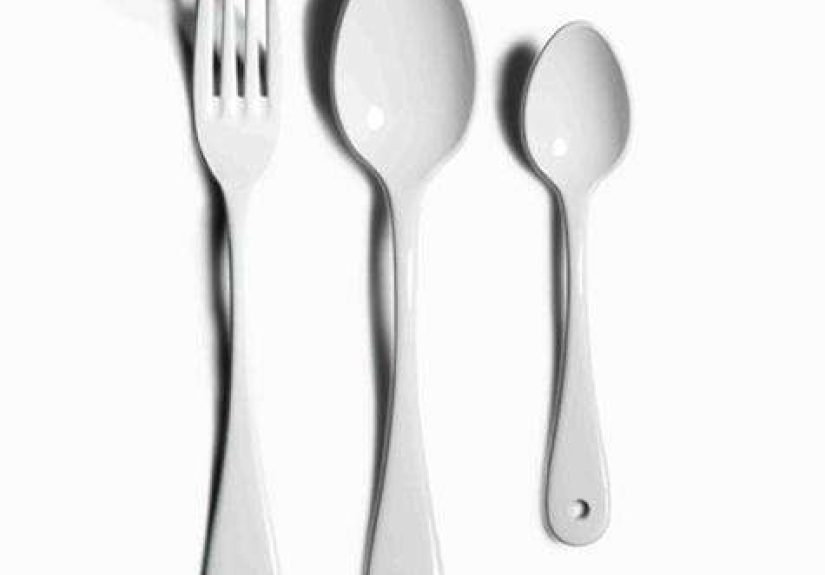
Fork, spoon, dessert spoonand beyond
The Remodelista post called out the core triofork, spoon, dessert spoonwith pricing shown through a retailer at
the time. Gardenista’s roundup later listed a broader assortment available by the piece: forks and spoons, knives,
dessert spoons, and even salad servers (and yes, charmingly niche items like salt spoons were mentioned as an
inquiry option).
Translation: this isn’t just “one flatware set.” It’s a modular, mix-and-match system. You can build a set for how
you actually eat: maybe you’re a dessert-spoon household (respect), maybe you need salad servers that look good in
photos, maybe you want a few knives that won’t ruin the vibe when you serve steak.
How to Style White Enamel Cutlery Without Trying Too Hard
White enamel cutlery is a styling cheat code because it reads both casual and elevated. Use it like you’d use a
neutral shoe: it goes with the outfit, but it doesn’t steal the show.
1) The “elegant picnic” table
Lean into enamelware’s outdoor DNA:
- White enamel cutlery + enamel plates or simple stoneware
- Striped tea towels as napkins
- A wooden board for bread/cheese (one board = instant “I meant to do this” energy)
- One vase of grocery-store flowers (or a single branch if you want peak Remodelista minimalism)
2) The weeknight table that still looks “designed”
Pair the cutlery with everyday dishes to make Tuesday feel less like a spreadsheet:
- White enamel cutlery + plain white plates + one bold color accent (lemons, a green salad, a bright pitcher)
- Or flip it: patterned plates + simple linens + the cutlery acting as the calm visual anchor
3) The brunch spread (where spoons matter)
Enamel spoons shine at brunch: yogurt, jam, soft eggs, and anything served from bowls. Gardenista specifically
highlighted the “no campfire required” practicality of enamel spoons and bowlsexactly the kind of detail that
makes this cutlery feel fun rather than fussy.
Performance: Pros, Cons, and the Real-World Truth
Pros
- Visual impact: White enamel stands out in a sea of stainless steel.
- Versatility: Works for indoor dining, outdoor meals, and everything in between.
- Comfort: The coated handle can feel smoother and warmer than bare metal.
- Modular buying: Build your set by the piece instead of committing to a whole box.
Cons (because even pretty things have boundaries)
-
Chipping risk: Enamel is glassy and hard, which also means it can chip if dropped hard on
stone or concrete. This is why some enamel cutlery sellers recommend it more for adults than small kids. -
Dishwasher ambiguity: Some enamelware is dishwasher safe, some brands recommend handwashing
enamel to protect the finish. Always follow the manufacturer’s guidance for your specific set. -
Availability can be limited: Design-forward niche cutlery can go in and out of stock, and older
collections may be harder to find new.
Care and Maintenance: Keep the White Glossy (Not “Mystery Gray”)
The number-one rule: follow the maker’s instructions first. Better Homes & Gardens recommends checking
manufacturer guidance for the specific finish before cleaning silverware, which is especially smart when you’re
dealing with coatings and specialty materials.
Daily cleaning
- Hand-wash when in doubt: Warm water, mild soap, soft sponge, dry thoroughly.
- Avoid harsh abrasives: Brands that specialize in enamel care (like Le Creuset for enamel finishes) warn against metal pads and harsh abrasives that can scratch enamel surfaces.
- Don’t leave pieces soaking forever: Prolonged soaking can encourage spotting and corrosion on metal parts.
Dishwasher tips (if your enamel cutlery is labeled dishwasher-safe)
- Unload promptly: Whirlpool notes that leaving utensils in the dishwasher too long can contribute to pitting or rusting.
- Watch salty/acidic residue: Whirlpool also flags high salt or acid exposure as a risk factor for pitting/rusting on utensilsso don’t let lemony dressing dry on overnight.
- Separate metals when you can: Mixed-metal contact can contribute to discoloration or reactions (especially if you also wash silver items).
Spotting, discoloration, or tiny rust marks: what to do
Even “stainless” can show spots depending on water chemistry, detergent, and how long utensils stay wet. For
stubborn rust marks on flatware, Bar Keepers Friend (BKF) publishes step-by-step guidance for removing rust from
silverware and stainless flatware using a soft cloth or non-abrasive spongeplus a key caution: don’t let the
cleanser sit too long and rinse thoroughly.
One important nuance: if your cutlery has enamel-coated areas, keep any mildly abrasive cleanser off the enamel
unless the manufacturer explicitly says it’s safe for that surface. Treat the enamel like a glossy countertop:
gentle cleaning keeps the finish looking crisp.
How to Buy Variopinte White Enamel Cutlery (And What to Do If It’s Hard to Find)
Remodelista’s post listed individual pieces through a retailer (fork, spoon, dessert spoon) and positioned the
cutlery as part of a broader Variopinte enamelware line. Gardenista later referenced Variopinte cutlery sold by
the piece (including knives and serving pieces) and also suggested alternatives from other retailers and brands
carrying white enamel flatware.
If you’re building a set
- Start with the pieces you actually use: forks + spoons first, then dessert spoons if you’re a yogurt/jam/ice-cream household.
- Add knives strategically: if you do a lot of grilled meats or tomatoes, you’ll want good knivesjust handle washing and storage thoughtfully.
- Consider serving pieces: salad servers and small spoons instantly “finish” a table.
If Variopinte is unavailable
White enamel flatware has become a broader category. If you can’t find Variopinte new, you can still capture the
look with similar enamel flatware collections (some are sold as sets, some by the piece). The styling principles
stay the same: glossy white, simple shapes, and a mix of indoor/outdoor ease.
Conclusion: Why White Enamel Cutlery Keeps Winning
Variopinte’s white enamel cutlery hits a rare balance: it’s graphic but not loud, playful but not childish, and
casual without looking disposable. Remodelista’s framing still makes sense todaysignature-stamped pieces that
belong equally at the picnic table or a pared-back dinner party. If your current flatware is “fine” but your table
never quite feels finished, a few white enamel pieces can do more than you’d expectlike adding a crisp white
sneaker to an outfit and suddenly looking like you planned the whole thing.
Experiences: Living With White Enamel Cutlery ( of Real-World Feel)
If you’ve never used white enamel cutlery, the first surprise is how different it feels from standard
stainless steel. Stainless can be sleek and efficientlike a work email. Enamel, by comparison, feels more like a
handwritten note. The glossy handle has a softness to it, not squishy, just smoother and less “cold metal” against
your fingers. It’s a small sensory upgrade that shows up in everyday moments: stirring coffee, scooping yogurt,
eating pasta salad straight from a bowl because you’re “just having something quick” (and then somehow it becomes
dinner).
The second surprise is how much it changes your table without you doing anything else. You can put out the same
plates you always use and suddenly the whole setting looks more deliberate. White enamel cutlery acts like a
visual highlighter: it brightens the place setting and makes textures popwood grain looks warmer, linen looks
more linen-y, and even paper napkins look like a choice rather than a surrender.
Outdoors is where the category really earns its keep. For picnics, it’s the difference between “we are eating
outside” and “we are having a picnic.” The cutlery looks great in sunlight, photographs well (if that matters to
you), and feels sturdy enough that you don’t instinctively grab a second fork “just in case the first one snaps.”
It’s also oddly good for shared food: big bowls, dips, fruit, salads. A clean-looking spoon that doesn’t scream
“camp mess kit” can make the whole spread feel a little more generous.
That said, enamel has manners. If you treat it like indestructible camping gear, it will eventually remind you it
has a glassy coating. Dropping enamel cutlery on hard surfaces can chip itespecially on stone patios or concrete.
In day-to-day use, that just means a few habits: set pieces down instead of tossing them into a drawer, don’t let
them clatter around loose in a tote bag, and consider a simple divider or wrap for travel. For families, it can
also mean deciding where it fits: maybe it’s the “grown-up” set for dinner parties and outdoor hosting, while the
kids get stainless or something truly bulletproof.
Cleaning is where people overthink it. The best approach is the simplest: wash promptly, dry well, and be gentle
on the enamel. If you do use a dishwasher (and your specific enamel cutlery says it’s dishwasher-safe), the
biggest lifestyle improvement is unloading sooner rather than later. Letting cutlery sit damp for hours turns
even the nicest pieces into a science experiment. And if you live somewhere with hard water, a quick rinse before
the dishwasher run can be the difference between glossy white and “why does my spoon look like it’s been through
a dust storm?”
Ultimately, white enamel cutlery is one of those tabletop choices that makes you feel slightly more put-together
than you actually are. It doesn’t demand a formal table setting. It just shows up, quietly making everything look
cleaner, brighter, and a little more designedwhether you’re serving a salad to friends or eating cereal at the
counter in the kind of calm you only get when everyone else is out of the house.