Table of Contents >> Show >> Hide
- Quick Look: The 6 Best Hummingbird Feeders The Spruce Has Tested
- 1. Sewanta Hummingbird Feeder – Best Overall
- 2. First Nature Hummingbird Feeder – Best Value Choice
- 3. More Birds Vintage Hummingbird Feeder – Best Glass Feeder
- 4. Aspects HummZinger HighView – Best Saucer Hummingbird Feeder
- 5. More Birds Amethyst Jewel – Best Design-Forward Feeder
- 6. Perky-Pet Window Mount Plastic Hummingbird Feeder – Best Window Feeder
- How to Choose the Best Hummingbird Feeder for Your Yard
- How to Use Hummingbird Feeders Safely (and Keep Birds Coming Back)
- Real-World Experiences with These Top Hummingbird Feeders
If you’ve ever watched a hummingbird hover in place like a tiny,
glittering helicopter, you know exactly why people become obsessed
with these birds. The right hummingbird feeder turns your yard into
a front-row seat to the show. The wrong one? Sticky leaks, a cloud
of bees, and sugar water that goes bad faster than your patience.
To save you from trial and error, we’re taking a closer look at the
six best hummingbird feeders The Spruce has actually tested in
real backyards. These picks were evaluated for how well they
attracted birds, how easy they were to clean, how leak-proof they
were, and whether they held up to rain, wind, and scorching
sunshine.
We’ll walk through each feeder, share what type of bird-lover it’s
best for, and sprinkle in expert-backed tips on nectar recipes,
cleaning routines, and feeder placement so your yard becomes the
neighborhood hummingbird hotspotnot the neighborhood ant buffet.
Quick Look: The 6 Best Hummingbird Feeders The Spruce Has Tested
- Sewanta Hummingbird Feeder – Best overall: affordable, lightweight plastic, built-in ant moat.
- First Nature Hummingbird Feeder – Best value: budget-friendly with 10 feeding ports for busy yards.
- More Birds Vintage Hummingbird Feeder – Best glass feeder: classic bottle-style design with metal base.
- Aspects HummZinger HighView – Best saucer feeder: low-profile, easy to clean, and tough enough for all seasons.
- More Birds Amethyst Jewel Hummingbird Feeder – Best design: statement-piece glass feeder that still performs.
- Perky-Pet Window Mount Plastic Hummingbird Feeder – Best window feeder: suction-cup mounted, perfect for close-up viewing.
All six of these hummingbird feeders were used over months of
testing in real home gardens, with testers monitoring setup,
durability, andmost importantlyhow many little winged guests
showed up for dinner.
1. Sewanta Hummingbird Feeder – Best Overall
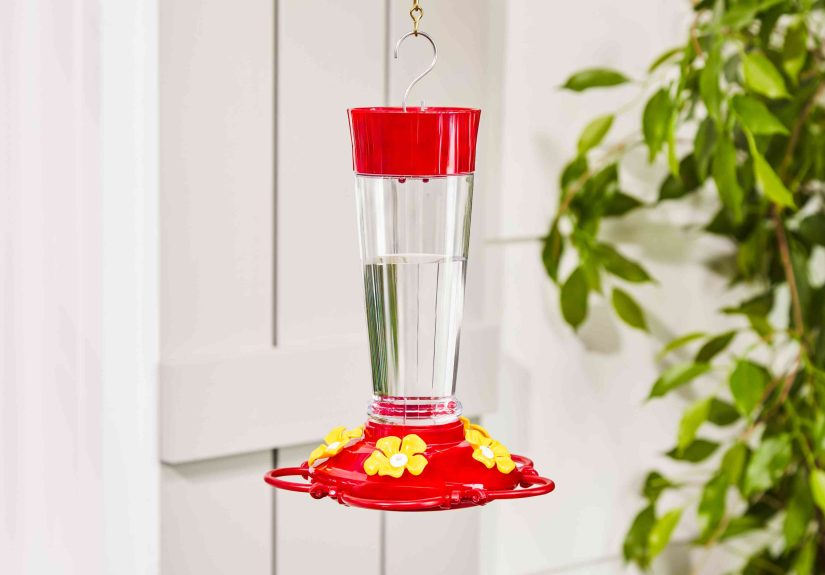
Think of the Sewanta Hummingbird Feeder as the all-around MVP:
nothing too fancy, but it nails the basics and keeps the birds
(and the humans) happy. The clear plastic reservoir holds around
10 ounces of nectarplenty for a small crowd but not so much that
it spoils quickly in hot weather.
The base features multiple flower-shaped feeding ports and a
circular perch so hummingbirds can rest while they sip instead of
burning calories in a constant hover. The built-in ant moat at the
top is a big plus: you simply fill it with water, and ants can’t
march their way down to your nectar. Ant moats are widely
recommended by birding communities and Audubon groups because
they prevent contamination and reduce the need for constant
cleaning.
The wide-mouth design and two-piece base make the Sewanta easy to
fill and cleanexactly what experts say you want, since dirty
feeders and old nectar can make hummingbirds sick.
Best for: Beginners, busy homeowners, and anyone
who wants an inexpensive, low-drama feeder that still attracts
plenty of birds.
2. First Nature Hummingbird Feeder – Best Value Choice
If your yard gets a steady stream of hummingbirds (or you hope it
will), the First Nature Hummingbird Feeder is a bargain workhorse.
This feeder typically holds around 16 ounces of nectar and offers
a generous 10 feeding portsthe most on The Spruce’s list.
The bright red top and base are essentially a neon “open” sign for
hummingbirds, which rely heavily on color to find nectar sources.
Experts consistently recommend red accents on feedersbut not red
dye in the nectar itselfso this design hits the sweet spot.
The wide-mouth reservoir makes refilling and cleaning easier, and
the clear bottle lets you quickly spot when the nectar is getting
low or cloudy. The base can be a bit tricky to open the first few
times, but the latches and sealing ring help prevent leaks once
everything is snapped back into place.
Best for: Large families of hummingbirds, budget
shoppers, and anyone who wants a bigger-capacity feeder without
spending much more than a takeout lunch.
3. More Birds Vintage Hummingbird Feeder – Best Glass Feeder
If you want your hummingbird feeder to double as garden decor, the
More Birds Vintage Hummingbird Feeder earns its “best glass”
title. The design channels old-fashioned bottle shapes with a
decorative metal base and multiple feeding ports, usually five,
each with its own perch.
The glass reservoir (often 20 ounces) makes it easy to see nectar
levels at a glance and feels more substantial than plastic. Many
birding stores and Audubon shops recommend high-quality glass
feeders for durability and ease of cleaningespecially in hot
climates where nectar spoils quickly and needs frequent
replacement.
On the flip side, glass is heavier and breakable, and the hanging
ring on this particular model can tilt slightly when hung. The
good news: testers reported that it stayed secure and didn’t scare
off birds, even with a bit of wobble. The wide opening and
removable base make cleaning straightforward with warm soapy
water and a bottle brush.
Best for: Design-conscious homeowners who want a
pretty feeder that still performs well and can handle a steady
crowd of hummingbirds.
4. Aspects HummZinger HighView – Best Saucer Hummingbird Feeder
Saucer-style feeders don’t always look flashy, but hummingbirds
adore themand so do serious birders. The Aspects HummZinger
HighView is a low-profile, disk-like feeder with a red cover, a
built-in ant moat, and multiple ports around the edge.
One big advantage of saucer feeders is that they’re much less
prone to leaking than inverted bottle designs. Because the nectar
sits in a shallow basin, you don’t have gravity constantly trying
to siphon sugar water onto your patio. They’re also extremely easy
to cleanjust pop off the lid, pour out the nectar, and wash the
interior with warm soapy water.
This particular model is made from tough polycarbonate, which
makes it resistant to temperature swings and impacts. Bird-feeding
experts often recommend smaller-capacity feeders (like this
roughly 12-ounce design) because nectar gets replaced more often,
reducing the risk of mold or fermentation in hot climates.
Best for: People in very hot or very cold
climates, anyone who hates sticky leaks, and birders who want a
crystal-clear view of their visitors.
5. More Birds Amethyst Jewel – Best Design-Forward Feeder
The More Birds Amethyst Jewel Hummingbird Feeder proves that
you can spoil your birds and your sense of style at the
same time. This glass feeder typically holds around 20 ounces and
features an elegant purple or amethyst color with etched details
and a metal base.
Testers noted that the feeder stayed secure through storms thanks
to a sturdy hanging wire and that hummingbirds visited reliably
even though the body isn’t pure red. Multiple red accents on the
base and ports help draw the birds’ attention, echoing what
ornithologists say about hummingbirds being especially attracted
to bright red shades in the landscape.
The trade-off with this beauty is maintenance: glass can break if
dropped, and some rust can develop on the metal base over time if
it isn’t cleaned and dried thoroughly. That said, the base unscrews
easily for cleaning, and the wide top opening means scrubbing the
inside isn’t a wrestling match.
Best for: Gardeners who treat their yard like an
outdoor living room, and want a hummingbird feeder that looks as
good as it works.
6. Perky-Pet Window Mount Plastic Hummingbird Feeder – Best Window Feeder
Want hummingbirds practically nose-to-nose with you while you sip
your morning coffee? The Perky-Pet Window Mount Hummingbird
Feeder brings the birds right to the glass. This compact feeder
attaches with a suction cup and often holds around 8 ounces of
nectarjust enough for a few regulars.
The standout feature here is the tapered feeding ports, which
make it harder for bees to reach the nectar while hummingbirds
can easily access it with their long bills. Pest-resistant designs
like this are frequently recommended by ornithologists and birding
organizations, especially in areas where yellow jackets love to
crash the party.
The feeder disassembles for easy cleaning and has a clear
reservoir so you always know how much nectar is left. The main
caveat: if the suction cup isn’t firmly secured to a clean,
smooth window, the feeder can slip and spill. A quick wipe of the
glass and a firm press during installation usually solves that.
Best for: Apartment dwellers, kids who love
watching wildlife up close, and anyone who wants a feeder they can
enjoy from indoors.
How to Choose the Best Hummingbird Feeder for Your Yard
Size and Nectar Capacity
Bigger isn’t always better. A giant 32-ounce feeder might sound
convenient, but if only a few hummingbirds are visiting, the
nectar may sit too long and spoil. Many bird experts suggest
starting with smaller feeders (8–16 ounces) and moving up as your
hummingbird traffic increases.
As a rule of thumb:
- 8–10 ounces: Great for new feeding stations or a small number of hummingbirds.
- 16–20 ounces: Ideal once your yard is a regular stop on the hummingbird buffet circuit.
- Multiple smaller feeders: Often better than one huge feeder, because hummingbirds are territorial and prefer several “stations” spread out.
Feeder Shape: Inverted vs. Saucer
Most hummingbird feeders fall into two camps:
-
Inverted bottle feeders hold more nectar and
make it easy to see the level from far away. They’re great for
high-traffic yards, but they have more parts and are more prone
to leaking if not assembled well. -
Saucer feeders (like the Aspects HummZinger)
are leak-resistant, simple, and easy to clean. They often hold a
bit less nectar but are excellent in very hot climates where
nectar needs frequent changing.
Materials: Plastic, Glass, and Metal
Plastic feeders are usually lighter, less breakable, and more
affordable. Glass and metal options look more upscale and resist
staining, but they’re heavier and can break or rust if not
maintained. Audubon groups generally care less about the material
and more about whether the feeder is easy to dismantle, scrub, and
rinse thoroughlywhich all six Spruce-tested picks manage well.
Pest Protection: Ant Moats and Bee Guards
You’re trying to feed hummingbirds, not host a sugar-water rave
for every insect in a five-mile radius. Features like:
- Ant moats – small water-filled cups above the feeder that ants can’t cross.
- Bee guards – inserts that make ports too deep or narrow for bees to reach the nectar.
- Non-yellow ports – many experts note yellow attracts wasps and bees more than red.
Several of The Spruce’s favorite feeders include ant moats or
bee-resistant designs right out of the box, and you can usually
buy add-on guards if your local insects get persistent.
How to Use Hummingbird Feeders Safely (and Keep Birds Coming Back)
Mix the Right Nectar
Good news: hummingbird food is incredibly easy to make and much
cheaper than store-bought mixes.
- Recipe: 1 part white table sugar to 4 parts water.
- Bring the water to a boil, stir in sugar until dissolved, then cool before filling feeders.
Bird experts are very clear on what not to use:
- No honey (it ferments quickly and can grow dangerous fungi).
- No brown, raw, or organic sugar (they contain minerals that can be harmful in high amounts).
- No red food dyehummingbirds don’t need it, and many organizations discourage it due to potential health concerns.
Clean Feeders Frequently
Dirty feeders are one of the biggest health risks to hummingbirds.
Moldy or fermented nectar can cause disease and keep birds from
returning. Major bird groups recommend:
- Every 2–3 days in hot weather.
- At least weekly in cooler conditions.
- More often if you see cloudy nectar, black spots, or floating debris.
Use hot, soapy water and rinse thoroughly. You can use a weak
vinegar solution instead of bleach if you want extra disinfecting
power without harsh chemicals. Allow the feeder to dry completely
before refilling.
Placement: Where to Hang Your Feeder
Hummingbirds are tiny, but they’re not shy about judging your
landscaping. To make your feeder irresistible:
- Hang it where the red base or accents are clearly visible.
- Place it near flowering plantsespecially tubular red or orange flowersto help birds spot it.
- Choose a partially shaded spot to keep nectar cooler and slow spoilage, especially during heat waves.
- Keep it away from pesticide-treated areas and from spots where cats can lurk nearby.
If you live in a region with migrating hummingbirds, local
ornithologists suggest putting feeders out just before migration
starts and leaving them up for a couple of weeks after your last
bird sighting in the fall to support late travelers.
Real-World Experiences with These Top Hummingbird Feeders
Reading specs is helpful, but what really matters is this: do the
feeders actually attract hummingbirds and survive real-life use?
The Spruce’s testing, along with feedback from birders and other
product reviewers, gives us a pretty clear picture of what living
with these feeders is like over an entire season.
When testers hung the Sewanta feeder for the first
time, many reported quick visits within daysespecially when the
feeder was paired with blooming plants or bright yard accents.
Birds seemed comfortable perching at the ports, and the ant moat
did its job, staying full of confused ants instead of sugar water.
The only “complaint” was that its smaller capacity meant more
frequent refills, but that’s actually a plus in hot climates
where fresh nectar is crucial.
The First Nature feeder often became the “main
dining hall” once hummingbirds discovered it. With 10 ports and
a circular perch, testers saw multiple birds feeding at onceand
occasionally deciding to squabble over who got the best seat.
That many ports are especially useful during migration or in
neighborhoods where several people keep feeders, turning your yard
into a regular stop on the hummingbird commute.
Gardeners who tried the More Birds Vintage and
Amethyst Jewel feeders often mentioned an
unexpected side effect: guests commenting on the feeders as decor
before noticing the birds. These glass designs work particularly
well alongside vintage-style lighting, cottage gardens, or
carefully styled back patios. In long-term use, owners found that
a little extra carebringing the feeders in during severe ice
storms or giving the metal bases a thorough dry after washingkept
them looking good year after year.
The Aspects HummZinger has something of a cult
following among serious birders and specialty shops. Saucer
feeders like this are frequently recommended by bird-feeding
stores focused on long-term health and cleanliness. In real-world
use, people love how quickly it comes apart and goes back
togetherno threading, no tiny parts to lose, just snap off the
top, rinse, refill, and you’re done in a minute or two.
One of the most fun experiences comes from the
Perky-Pet window feeder. Families with kids
routinely report excited squeals the first time a hummingbird
hovers right at eye level. That close-up vantage point is also
useful for spotting signs of cloudy nectar or mold early, since
you’re looking at the feeder multiple times a day just by walking
past the window.
Across all six designs, one pattern stands out: the best
hummingbird feeders aren’t necessarily the biggest or the
fanciest. Instead, they’re the ones that combine bird-friendly
features (red accents, comfortable perches, and pest-resistant
ports) with human-friendly details (easy cleaning, reliable
hardware, and durable materials). That balance is exactly what The
Spruce looked forand why these six models keep showing up not
only in their tests, but also in expert lists and backyard success
stories across the U.S.
So whether you’re hanging your very first feeder or upgrading from
a cheap, leaky model that has seen better days, starting with one
of these tested hummingbird feedersand following a few simple
best practices for nectar, cleaning, and placementgives you the
best chance of turning your yard into a buzzing, sparkling little
hummingbird oasis.