Table of Contents >> Show >> Hide
- Why Carpet Needs a Different Chair Mat (It’s Not Being Dramatic)
- Bob Vila’s Top Tested Picks for Carpet Chair Mats
- Best Overall: Evolve Clear Office Chair Mat
- Best Value: HON Rectangular Polyurethane Chair Mat
- Best Upgrade (Rigid Plastic): Marvelux Thick Polycarbonate Chair Mat
- Best for Low-Pile Carpet: Dimex Clear Office Chair Mat
- Best for Plush/High-Pile Carpet: ES Robbins EverLife with Anchor Bar
- Best “Not Plastic Looking”: Anji Mountain Rug’d Chair Mat
- Best Premium Option: Tempered Glass (Lorell / Vitrazza)
- How to Choose the Best Chair Mat for Your Carpet
- Setup Tips: How to Make a Chair Mat Behave on Carpet
- So… What’s the Best Chair Mat for Carpet, Really?
- Experiences: What Using a Chair Mat on Carpet Is Actually Like (500+ Words)
Office chairs are basically tiny off-road vehicles: they climb, spin, and dig ruts into carpet like they’re training for a rally race.
If you’ve ever stood up from your desk and seen your chair sitting in a little “carpet crater,” congratulationsyou’ve met the #1 reason
chair mats exist.
In BobVila.com’s most recent round of testing and research, the team reviewed more than two dozen chair mat options, focused on real-life
carpet problems (slipping, cracking, curling, denting), and narrowed the list to picks that make rolling easier while protecting your flooring.
This guide breaks down those Bob Vila-tested favorites and explains exactly how to choose the right mat for your carpet pile, desk setup,
and chair stylewithout buying the wrong plastic rectangle and immediately regretting it.
Why Carpet Needs a Different Chair Mat (It’s Not Being Dramatic)
Carpet is soft, springy, and deceptively grabby. Your chair casters compress the pile, twist fibers, and create friction that makes rolling feel like
pushing a grocery cart with one possessed wheel. A chair mat solves this by giving your wheels a smooth runway while spreading pressure across a wider
area so the carpet doesn’t get crushed into permanent “desk-chair terrain.”
But here’s the catch: a mat that works on hardwood can be useless on carpet. On carpet, you generally need a studded or gripper underside so the mat
doesn’t skate away every time you scoot back. And the thicker (higher pile) your carpet is, the more your mat needs to resist flexing, denting, and
sinking.
Bob Vila’s Top Tested Picks for Carpet Chair Mats
Bob Vila’s team evaluated chair mats with a focus on carpet compatibility, durability, and day-to-day roll quality. Below are the standout picks
(plus who each one is best for).
Best Overall: Evolve Clear Office Chair Mat
If you want a classic “set it and forget it” chair mat for carpet, Bob Vila’s best overall pick is the Evolve Clear Office Chair Mat. It’s a clear PVC
mat with a studded underside designed to grip carpet and a tapered front lip that helps you roll from carpet onto mat without catching an edge.
- Best for: Low-pile carpet and everyday home office use
- Why it stands out: Smooth glide, grippy underside, rounded corners, gentle transition lip
- Heads-up: Like many PVC mats, it can show dents over time under heavy chairs or constant rolling
This is the “safe choice” for most people with standard carpet: not overly fussy, not wildly expensive, and it does the job without needing a
complicated installation ritual.
Best Value: HON Rectangular Polyurethane Chair Mat
Want solid performance for less money? Bob Vila’s value pick is a HON polyurethane chair mat in a common, roomy size that fits most desks.
Polyurethane is often appreciated for clarity and flexibility, and the mat includes carpet-gripping studs plus a lip for desk coverage.
- Best for: Budget-minded buyers who still want a dependable mat
- Why it stands out: Good coverage for the price, studded grip, includes a lip for under-desk rolling
- Heads-up: Lower-cost mats can be more prone to shifting or wear if used on thicker carpet than they’re designed for
If you’re building a work-from-home setup and your budget is already being eaten by a chair, a monitor, and the mysterious cost of “just one more cable,”
this is a smart place to save.
Best Upgrade (Rigid Plastic): Marvelux Thick Polycarbonate Chair Mat
When you want something tougher than typical PVC, Bob Vila highlights the Marvelux thick polycarbonate chair mat. Polycarbonate is known for
impact resistance and rigidity, which can help prevent the mat from bending or cracking under heavier rolling loadsespecially on carpet.
- Best for: Higher-use workspaces, heavier chairs, and buyers who want a sturdier “investment mat”
- Why it stands out: Rigid feel, strong clarity, designed to stay put on carpet with a studded underside
- Heads-up: Rigid mats can be less forgiving on very plush carpet if the pile is too deep
Think of this as the “I’m done replacing flimsy mats” option. If your chair mat has ever cracked like a potato chip, you’ll appreciate the upgrade.
Best for Low-Pile Carpet: Dimex Clear Office Chair Mat
Bob Vila’s low-pile pick is the Dimex Clear Office Chair Mat, designed for carpets on the thinner side. Low-pile carpets tend to play nicely with a
wider range of mats, but the mat still needs enough grip to stay in place and enough firmness to support smooth rolling.
- Best for: Low-pile or commercial-style carpet
- Why it stands out: Purpose-built for thinner carpet, clear look, studded underside for grip
- Heads-up: Like many rolled mats, it may need time (and a little patience) to fully flatten
Best for Plush/High-Pile Carpet: ES Robbins EverLife with Anchor Bar
Plush carpet is where chair mats go to dieunless the mat is designed for it. Bob Vila points to the ES Robbins EverLife mat (with an Anchor Bar-style
gripping system) as a solution for thicker, softer carpets where lightweight mats slip or sink.
- Best for: Thick, plush, or high-pile carpet (including home bedrooms converted into offices)
- Why it stands out: Built for deeper pile, extra grip underneath, more stable platform for rolling
- Heads-up: The wrong spike length for your pile can still cause shiftingmatching mat type to pile height matters
Translation: if your carpet is fluffy enough to make your socks look like they’re wading through a soft cloud, don’t buy a thin mat and hope.
Go high-pile rated.
Best “Not Plastic Looking”: Anji Mountain Rug’d Chair Mat
Not everyone wants the glossy-clear-plastic vibe. Bob Vila includes the Anji Mountain Rug’d chair mat as a more decor-friendly option. It’s designed like a
woven rug on top with a supportive layer inside, giving a different feel under the wheels while still protecting flooring.
- Best for: Spaces where aesthetics matter (living rooms, bedrooms, visible home offices)
- Why it stands out: More stylish look, softer feel, can add controlled rolling resistance
- Heads-up: The “rug” texture can feel slower than slick plasticsome people love that, speed demons do not
Best Premium Option: Tempered Glass (Lorell / Vitrazza)
If you want the smoothest glide and a mat that won’t dent into ruts, tempered glass chair mats are the luxury lane. Bob Vila features a Lorell tempered glass
chair mat as a carpet-friendly alternative, and brands like Vitrazza position glass mats as long-lasting upgrades with features designed to reduce “creeping”
and improve edge roll-on/roll-off.
- Best for: Buyers who want maximum durability, smooth glide, and a premium look
- Why it stands out: Doesn’t dent like plastic, easy glide, visually minimal
- Heads-up: Costs more and is heavier to move; choose a reputable brand with real safety certifications
How to Choose the Best Chair Mat for Your Carpet
Here’s the decision-making framework that keeps you from buying the “wrong mat spiral” (buy → curse → return → repeat).
1) Start With Carpet Pile Height (Low, Medium, High)
Carpet pile height is basically how long and plush the fibers are. The thicker the carpet, the longer and stronger the mat’s gripping “studs” need to be
so it can anchor into the pile instead of wobbling around on top. Many chair-mat buying guides recommend matching spike length and mat thickness to your pile
so the mat stays stable.
If you’re unsure, a simple measuring trick is using a paperclip (or a small, stiff wire) to gauge pile depth down to the subfloor. Measure the depth and
shop mats rated for that pile range. It’s not glamorous, but neither is chasing a sliding chair mat across the room like you’re in a slapstick comedy.
2) Pick the Right Material: PVC vs Polycarbonate vs Glass
PVC/vinyl: Usually the most affordable. It works well on low-pile carpet but can dent, curl, or crack over timeespecially with heavier chairs.
Polycarbonate: More rigid and impact-resistant than typical PVC. Often clearer and more durable, but should still be matched to carpet thickness.
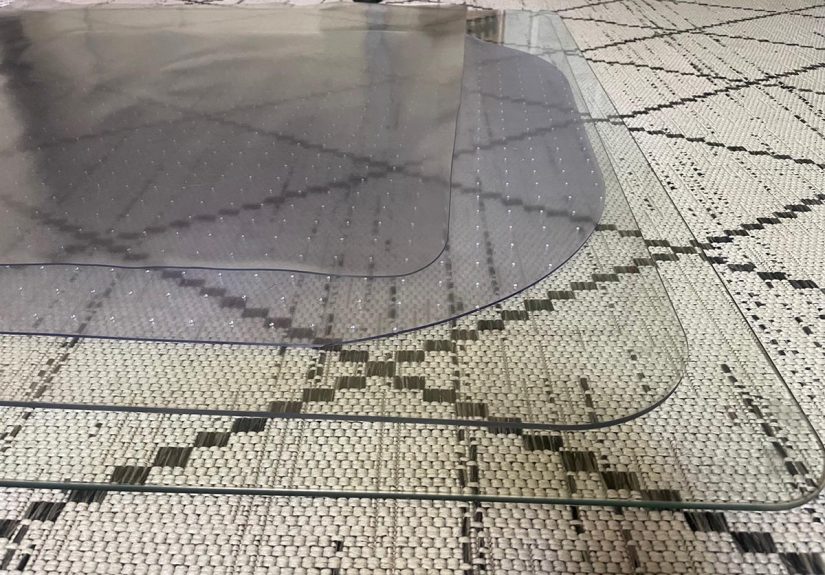
Tempered glass: The premium option. It’s rigid, smooth, and resists dents, but it’s pricier and heavier. Look for real safety glazing standards if you go this route.
3) Choose the Right Shape: Rectangular vs Lipped
Rectangular mats are simple and versatile. Lipped mats have a tab that extends under your desk so you can roll closer without the front wheels dropping off
the edge (a moment that can best be described as “surprise physics”).
A common starting size for a standard workstation is around 36” x 48”, but if you move around a lotor your desk setup is widergo bigger. Your goal is to
keep your chair’s typical rolling area on the mat.
4) Don’t Ignore the Edge (Your Shins Will Thank You)
A beveled edge makes it easier to roll onto and off the mat and can reduce “edge catching.” It also helps keep the mat lying flatter at transition points.
In general workplace safety guidance for mats and runners, beveled edges and keeping mat edges flat are recommended to reduce trip risks.
5) Think About Your Chair and Your Day
- Heavier chair or bigger body weight: favor thicker, more rigid mats (polycarbonate or glass).
- All-day use: durability matters more than saving $10.
- “Soft wheels” (urethane): often roll smoother and quieter on mats, especially on hard surfaces and glass.
- Gaming chair with aggressive rolling: go larger so you don’t constantly roll off the mat edge.
Quick Buying Checklist
- Measure (or at least identify) your carpet pile height.
- Choose a mat rated for that pile (especially for plush/high-pile).
- Decide if you need a lip/tab under the desk.
- Prefer beveled edges for smoother roll transitions.
- For heavy use, prioritize rigidity and thickness over bargain pricing.
Setup Tips: How to Make a Chair Mat Behave on Carpet
Even a great mat can act weird if it’s installed badly. Here are fixes that actually help:
- Let it relax: Many plastic mats arrive rolled. Lay it flat and give it time to settle. If corners curl, weigh them down with books.
- Warm it gently: A warm room (or indirect sunlight) can help stubborn curls flatten faster. Avoid high heat that could warp plastic.
- Check stud engagement: On carpet, make sure the studs are actually gripping the pile. If the mat “floats,” it’s likely the wrong pile rating.
- Keep it clean: Dirt under a mat can grind into carpet fibers. Vacuum underneath during routine cleaning.
So… What’s the Best Chair Mat for Carpet, Really?
If you want the simplest answer: for most low-pile carpets, Bob Vila’s best overall pickthe clear, studded Evolve mathits the sweet spot of price, grip,
and everyday glide. If you’re on plush carpet, step up to a high-pile-rated option like ES Robbins. If you’re tired of dents and want peak durability,
tempered glass is the premium upgrade.
The best chair mat isn’t the fanciest one. It’s the one that matches your carpet pile and stays put while you rollquietly, smoothly, and without turning your
office into a tiny demolition derby.
Experiences: What Using a Chair Mat on Carpet Is Actually Like (500+ Words)
Buying a chair mat for carpet sounds straightforwarduntil you live with one for a while. Then you realize a chair mat has a personality. Some are calm,
responsible adults. Others are chaos gremlins that migrate three inches a day like they’re trying to escape your home office.
The first week is usually the “flattening era.” Many mats arrive rolled up tighter than your weekend schedule. You put it down, step back, and it looks
perfect… until the corners slowly curl upward like they’re waving at you. The trick is patience plus weight. A couple of heavy books (or the kind of dumbbell
you swear you use regularly) on the corners for a day or two usually helps. Warmth can speed things up, but don’t blast it with high heat unless you want a
modern-art sculpture instead of a chair mat.
Next comes the “rolling reality check.” On carpet, a good mat should make your chair glide easierbut “easier” doesn’t always mean “ice rink.” In fact,
some people prefer a little rolling resistance, especially if their floor is slightly uneven or their chair tends to drift. That’s where woven-style mats,
like Anji Mountain’s Rug’d designs, can feel surprisingly pleasant. They give you grip without the full carpet struggle. The vibe is less “whoosh” and more
“controlled commute.”
If you’re on plush carpet, the experience is basically a before-and-after commercial. Without a mat, you’re pushing your chair like it’s stuck in a sandbox.
With the right high-pile-rated mat, rolling becomes normal againlike your chair finally got permission to act like a chair. The wrong mat, though? It will
wobble, dent, or shift. That’s when you discover a universal truth: spikes and pile height are in a relationship, and if you mismatched them, they will break
up loudly.
One underrated part of chair-mat life is sound. Some plastic mats are quiet. Some produce a constant little “click-click-click” as casters roll across them,
like your chair is typing its own angry email. Glass mats can be even louder with hard plastic castersstill smooth, but with more “tap” than “shhh.”
If you share walls with neighbors or you’re recording calls, switching to softer urethane casters can make a big difference.
Then there’s maintenance. A chair mat is basically a magnet for crumbs, dust, and the one speck of lint you’ll stare at during every video meeting.
Clear mats look greatbut they also highlight everything underneath them. Vacuuming under the mat occasionally helps keep carpet from getting gritty.
And yes, spills happen. The beauty of a mat is that coffee usually lands on something you can wipe instead of soaking into carpet like it’s trying to become a
permanent scent memory.
Finally, the real long-term win: your chair feels better to use. Less friction means less effort, and less effort means your legs and lower back aren’t
quietly doing extra work all day. It’s not dramatic to say a good chair mat can make your workstation feel more ergonomicbecause “not wrestling your chair”
is a surprisingly powerful wellness strategy.
In short: the best chair mat for carpet isn’t just a floor protector. It’s the difference between a smooth workday and a daily tug-of-war with textiles.
Choose the right pile rating, give it time to flatten, and enjoy the sweet sound of your chair rolling normally again.