Table of Contents >> Show >> Hide
- Why Blade Choice Matters More Than People Think
- The Best Oscillating Tool Blades of 2025: Top Picks by Job
- Best Overall Blade Kit: Milwaukee OPEN-LOK 20-Piece Oscillating Multi-Tool Blade Variety Pack
- Best for Nail-Embedded Wood and Aggressive Demo: Diablo Carbide Oscillating Blades
- Best for Extreme Materials: Milwaukee NITRUS CARBIDE Blades
- Best for Clean Hardwood Cuts: Milwaukee Japanese Tooth PRO-CURVE Blades
- Best Starlock Blade for Hard Metal: Bosch Curved-Tec Carbide Extreme Plunge Blades
- Best Blade Family for Starlock Users Who Want Premium Versatility: FEIN E-Cut and Carbide Pro
- Best Universal-Fit Metal Blade: Imperial Blades One Fit Storm Titanium
- Best Grout Removal Blade: Dremel MM500
- Best Budget-Friendly Universal Option: DEWALT Universal-Fit Oscillating Blades
- How to Choose the Right Oscillating Tool Blade
- Common Mistakes That Destroy Blades Too Fast
- What Smart Buyers Are Looking for in 2025
- Final Verdict
- Real-World Experiences With Oscillating Tool Blades in 2025
- SEO Tags
If you have ever burned through a cheap oscillating tool blade in the time it takes to say, “Well, that was disappointing,” welcome. You are among friends. An oscillating multi-tool is one of the handiest gadgets in a workshop, but the blade you attach to it decides whether the job feels smooth and precise or like a dramatic argument with drywall, nails, grout, and your patience.
That is why choosing the best oscillating tool blades of 2025 is less about chasing a shiny package and more about matching the blade to the material. In simple terms: carbide blades usually rule for heavy-duty work, bi-metal blades remain excellent all-arounders, and Japanese-tooth or high-carbon-steel blades still shine when you want fast, clean cuts in wood. The smartest buyers in 2025 are not looking for one magic blade. They are building a small, practical lineup.
In this guide, we break down the best oscillating tool blades for wood, metal, grout, demolition, detail work, and everyday DIY jobs. We will also explain which blade styles are actually worth your money, what to avoid, and how to keep your blades alive long enough to stop haunting your tool drawer.
Why Blade Choice Matters More Than People Think
Here is the truth: many people blame the tool when the blade is the real problem. A strong oscillating tool paired with the wrong blade will still cut slowly, overheat, chatter, dull too fast, and leave edges that look like a beaver handled the project after three espressos.
The best oscillating tool blades in 2025 are built around specific use cases:
- Carbide blades for nail-embedded wood, metal fasteners, cement board, and abrasive materials
- Bi-metal blades for general-purpose cuts in wood, PVC, drywall, and light metal
- Japanese-tooth or HCS blades for faster, cleaner cuts in hardwood and finish materials
- Grout-removal blades for tile work
- Scraper blades for caulk, adhesive, sealant, and old flooring residue
So no, the “best oscillating blade” is not a single heroic item. It is more like a great cast. Every star has a role.
The Best Oscillating Tool Blades of 2025: Top Picks by Job
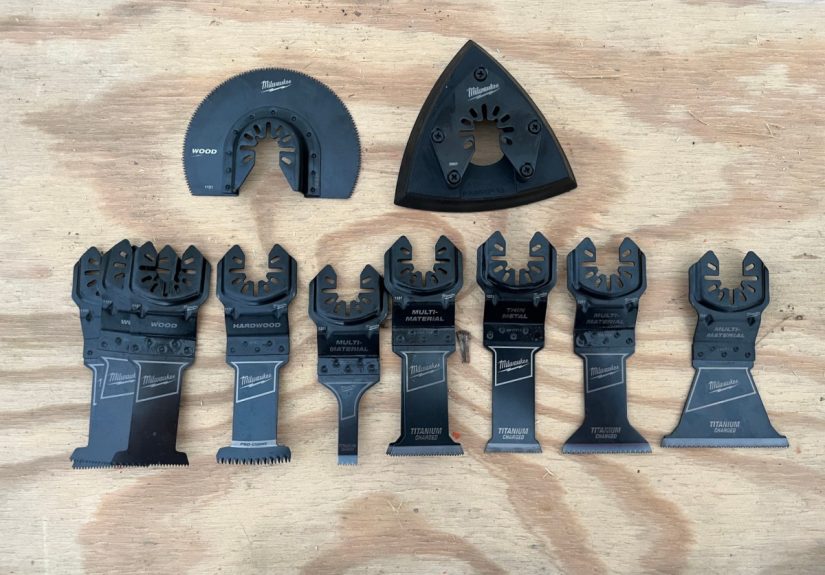
Best Overall Blade Kit: Milwaukee OPEN-LOK 20-Piece Oscillating Multi-Tool Blade Variety Pack
If you want one kit that covers the widest range of real-world work, the Milwaukee OPEN-LOK 20-piece variety pack is the standout choice. It earns high marks because it combines the blade types people actually use instead of stuffing the box with filler pieces that never leave the tray.
This kit is especially strong because it mixes titanium-enhanced bi-metal blades with Japanese-tooth options for hardwood and clean wood. That combination makes it useful for cutting trim, drywall, PVC, wood with nails, and even light metal. In other words, it is the blade pack equivalent of a reliable pickup truck: not flashy, but always ready.
For homeowners, remodelers, and general DIYers, this is the easiest recommendation because it covers the most ground without forcing you to buy three separate sets right away. If your projects jump from door jambs to baseboards to random plumbing access cuts, this is a smart place to start.
Best for Nail-Embedded Wood and Aggressive Demo: Diablo Carbide Oscillating Blades
When the work gets ugly, carbide earns its paycheck. Diablo’s carbide oscillating tool blades are among the most compelling options of 2025 for demo-style cuts involving nail-embedded wood, stubborn fasteners, and abrasive materials that would chew up ordinary blades in record time.
The appeal here is durability. If you are cutting through old framing, subfloor patches, rusty finish nails, or mixed materials where you are not exactly sure what is hiding inside the wall, a carbide blade is a far better bet than a standard wood blade. Diablo’s reputation in this category remains strong for a reason: these blades are designed for hard use, and they are not shy about it.
These are not the cheapest blades, but cheap disappears as an argument when you stop changing blades every few minutes. That is especially true for contractors or serious DIYers tackling renovation work.
Best for Extreme Materials: Milwaukee NITRUS CARBIDE Blades
Milwaukee deserves a second mention here because its NITRUS CARBIDE line pushes into a more specialized, heavy-duty lane. If your job regularly involves screw-embedded wood, dense renovation materials, plaster, cement board, or fasteners that laugh at ordinary teeth, these blades belong on your shortlist.
This is the blade category for people who do not ask, “Can I cut this?” They ask, “How fast can I finish before lunch?” For remodelers, deck repair work, punch-list pros, and anyone dealing with mixed-material demolition, this line feels purpose-built for the messy reality of the jobsite.
Best for Clean Hardwood Cuts: Milwaukee Japanese Tooth PRO-CURVE Blades
Not every project is demolition. Sometimes you want a cut that looks like you planned it on purpose. That is where Japanese-tooth blades shine, and Milwaukee’s PRO-CURVE hardwood blades are some of the best oscillating tool blades of 2025 for clean, controlled cuts in hardwood, trim, and finish materials.
These blades are excellent for door jamb undercuts, precision notches, cabinet modifications, flooring transitions, and detail work where a rough edge would be a rude surprise. They cut quickly, track well, and give you more control than a general-purpose blade.
If you mostly work with clean wood and want speed plus accuracy, this is one of the easiest upgrades you can make.
Best Starlock Blade for Hard Metal: Bosch Curved-Tec Carbide Extreme Plunge Blades
If your tool uses Starlock and you want premium performance in hard metal or demanding mixed materials, Bosch’s Curved-Tec carbide blades are a top-tier option. These blades are built for hard metal, wood with nails, PVC, drywall, and more, which makes them especially attractive for professionals who need strong plunge-cutting performance.
The curved edge design helps the blade enter the cut more smoothly, which is useful when precision matters and when you do not want the blade skating around like it has commitment issues. Bosch also gets points for the Starlock system itself, which offers excellent power transfer and quick blade changes.
The trade-off is compatibility. Starlock is great if your tool supports it. If not, you will need to stick with universal-fit blades. No amount of optimism changes that.
Best Blade Family for Starlock Users Who Want Premium Versatility: FEIN E-Cut and Carbide Pro
FEIN still carries serious weight in the oscillating tool world, and its E-Cut lineup remains one of the best choices for users who want premium Starlock accessories. The FEIN E-Cut Long-Life blades are especially good for wood, drywall, and plastic, while the FEIN Carbide Pro line is a beast for hard materials, metal, screws, masonry-adjacent tasks, and abrasive surfaces.
If your workflow includes both fine finish cuts and tougher metal or renovation jobs, FEIN offers a polished, professional-grade path. These blades are not bargain-bin options, but they are designed for people who care more about performance, control, and service life than scoring the cheapest 30-pack on the internet.
Best Universal-Fit Metal Blade: Imperial Blades One Fit Storm Titanium
Imperial Blades has built a loyal following with its One Fit system, and the Storm Titanium line remains one of the more appealing universal-fit choices in 2025. For people who want a versatile metal-cutting blade that also handles wood with nails, PVC, drywall, and common remodeling tasks, the One Fit Storm Titanium blade hits a very practical sweet spot.
Its big selling point is compatibility. If you own a non-Starlock tool and want a dependable blade that plays nicely with a wide range of brands, Imperial is easy to like. It is a very sensible choice for homeowners who use more than one platform or just want fewer compatibility headaches in life.
Best Grout Removal Blade: Dremel MM500
Tile work is where oscillating tools go from “nice to have” to “where have you been all my life?” The Dremel MM500 is one of the best oscillating tool blades of 2025 for grout removal, especially on long, straight grout lines where control and precision matter.
It is designed for 1/8-inch grout lines and is made to work right up to a wall or corner. That makes it a strong choice for bathroom refreshes, kitchen backsplash repairs, and selective grout replacement when you do not want to damage surrounding tile. The blade is especially useful for homeowners who want cleaner results without turning the project into a tile casualty report.
Best Budget-Friendly Universal Option: DEWALT Universal-Fit Oscillating Blades
DEWALT’s universal-fit blades continue to make sense for buyers who want readily available, easy-to-find accessories from a major brand. They are not always the most specialized blades on the shelf, but for common cutting tasks in wood with nails and general remodeling materials, they remain a reliable, accessible option.
If your main priority is convenience, broad compatibility, and grabbing a replacement locally without spending half your Saturday comparing spec sheets, DEWALT is a comfortable choice.
How to Choose the Right Oscillating Tool Blade
1. Match the Blade to the Material
This sounds obvious, but it is where most blade regret begins. Use a wood blade for clean wood, a bi-metal blade for mixed general-purpose work, and a carbide blade for nails, screws, hard metal, cement board, or abrasive stuff. For grout, use an actual grout blade. Your future self would appreciate the courtesy.
2. Check Compatibility Before You Buy
Most oscillating tool blades are universal-fit, but Starlock is the exception. If your tool uses Starlock, buy Starlock-compatible blades. If it does not, do not assume every premium blade on the wall will fit. Blade-shopping confidence is not the same thing as blade compatibility.
3. Think in Small Blade Groups, Not One Giant Bulk Pack
A small lineup is better than a random mountain of cheap blades. A smart starter setup usually includes one good carbide blade, one or two bi-metal blades, one Japanese-tooth wood blade, one grout blade if you do tile work, and one scraper blade for caulk or adhesive.
4. Buy for the Projects You Actually Do
If you do flooring, trim, and finish carpentry, invest in cleaner-cutting wood blades. If you renovate older houses full of mystery nails and mixed materials, spend more on carbide. If your workshop life is mostly emergency fixes, a quality variety pack gives you the broadest coverage.
Common Mistakes That Destroy Blades Too Fast
- Using wood blades for nail-heavy cuts: This is how optimism dies.
- Pushing too hard: Let the blade work. Forcing it creates heat and shortens blade life.
- Running the highest speed for everything: Higher speed means more heat on many materials.
- Using an oscillating tool for big rough cuts: It is a detail tool, not a replacement for every saw you own.
- Ignoring blade width and shape: Wide blades are great for long straight cuts; narrow plunge blades are better for tighter, more precise work.
What Smart Buyers Are Looking for in 2025
The best oscillating tool blades of 2025 reflect a simple trend: buyers want fewer blade changes, longer service life, better compatibility, and more control. That is why carbide has become such a dominant upgrade path for tougher materials. It is also why quick-change systems like Starlock remain attractive for pros who swap blades constantly.
At the same time, not every job calls for the most expensive blade. Clean wood work still rewards sharp, fast-cutting tooth geometry. General-purpose remodeling still favors good bi-metal blades. And grout removal still needs a specialized attachment unless you enjoy turning tile repair into a confidence-building exercise.
Final Verdict
If you want the simplest answer, the Milwaukee OPEN-LOK 20-piece variety pack is the best overall buy for many people because it gives you real versatility across wood, drywall, PVC, and general remodeling work. If you cut lots of nails, screws, dense materials, or mystery stuff hiding inside walls, step up to carbide blades from Diablo, Bosch, FEIN, or Milwaukee’s NITRUS CARBIDE line. If you care most about clean cuts in hardwood and finish work, a Japanese-tooth blade is still one of the smartest additions you can make.
The best oscillating tool blade is not the one with the loudest marketing. It is the one that matches the job, fits your tool, and keeps cutting without acting like it needs an emotional support replacement every ten minutes.
Real-World Experiences With Oscillating Tool Blades in 2025
One reason people get oddly passionate about oscillating tool blades is that the difference between a good one and a bad one is not subtle. It is immediate. A weak blade makes you question the tool, your project, and possibly your life choices. A good blade makes you feel like you suddenly became more skilled overnight.
Take a common flooring repair job. You need to undercut a door jamb, trim a little casing, and shave back part of a threshold. A cheap general-purpose blade can technically do it, but the cut often feels slow and twitchy. The blade heats up, the teeth dull sooner than expected, and the wood starts to scorch if you linger. Swap in a good Japanese-tooth blade, though, and the experience changes. The cut starts faster, tracks better, and looks cleaner. Suddenly the tool feels smarter, even though the real hero is the accessory.
The same pattern shows up during demolition. If you are opening a wall, cutting out old trim, or trimming back subflooring near nails and screws, a standard wood blade tends to lose the argument as soon as metal enters the chat. This is where carbide blades earn their dramatic entrance. They are not magical, but they are much better at surviving the messy reality of remodeling. That matters when you are halfway into a repair and do not want to stop every five minutes for a blade funeral.
Another common experience is learning that an oscillating tool is amazing for detail work but not a substitute for every saw in the garage. People often expect it to rip through large cuts like a circular saw. Then they wonder why the blade wears out fast. In practice, the oscillating tool is happiest doing controlled cuts, flush cuts, plunge cuts, grout removal, trim work, and awkward jobs in tight spaces where larger tools feel clumsy. Once you use it that way, blade life tends to improve and frustration drops fast.
Grout removal is another eye-opener. Many DIYers put it off because it sounds miserable, and to be fair, it can be. But with the right grout blade, especially a focused option like the Dremel MM500, the work becomes much more controlled. The biggest surprise for first-time users is how careful and deliberate the process feels. It is not instant, but it is far more manageable than scraping by hand for hours while muttering things your tile should not hear.
Compatibility also creates real-world headaches. Plenty of buyers discover too late that “universal” has footnotes. A blade may fit loosely, transfer power poorly, or simply not lock in the way they hoped. That is why matching the mount system matters so much. When the blade fits properly, the whole tool feels stronger and smoother. When it does not, the cut can feel sloppy even with a premium blade.
In the end, the real experience of owning the best oscillating tool blades of 2025 comes down to confidence. You stop guessing. You grab the right blade for the right material, make the cut, and move on. And in the world of home improvement, that kind of small victory feels pretty great.