Table of Contents >> Show >> Hide
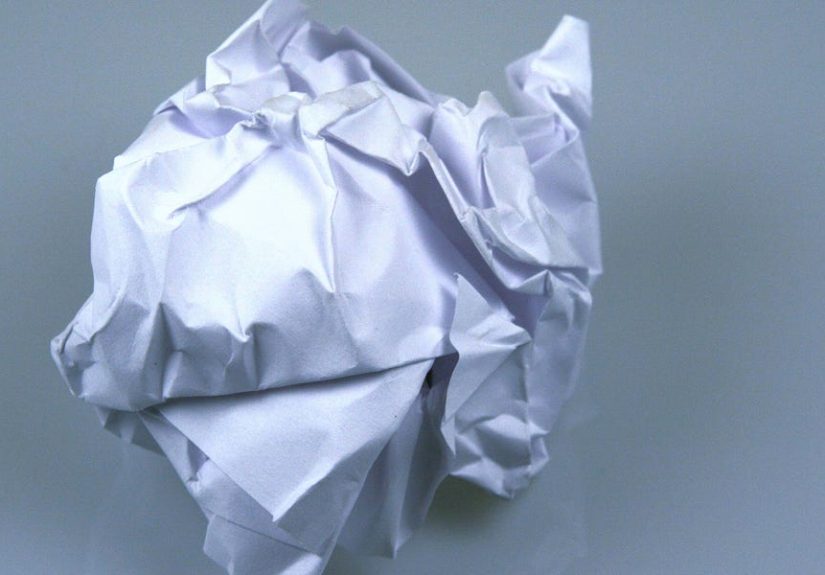
At first glance, crumpled paper looks like the physical embodiment of “Well, that went badly.” It is irregular, lumpy, and covered in creases that seem to have been assigned by chaos itself. But mathematicians and physicists see something else: a thin sheet trying to solve an impossible-looking geometry problem. Take a flat surface, force it into a tiny volume, and watch what happens. The answer is not random in the lazy sense. It is messy, yes, but the mess has rules.
That is what makes the math of crumpled paper so fascinating. A sheet of paper begins as a nearly two-dimensional object, yet the moment you crush it into a ball, it becomes a three-dimensional puzzle full of ridges, cones, folds, layers, and stress patterns. The sheet must decide where to bend, where to stretch, where to store energy, and where to give up and make a permanent crease. In other words, your rejected grocery list is running a complicated mechanical negotiation.
The deeper scientists looked, the clearer it became that crumpled paper is not just a cute desk toy for procrastinators. It offers a model for how thin materials behave under pressure, how wrinkles become folds, how disorder still contains structure, and how memory can be written into matter. The same ideas help explain soft materials, flexible electronics, packaging, biological tissues, and engineered surfaces. Not bad for something most of us throw away with dramatic flair.
Why Crumpled Paper Is a Real Math Problem
The core difficulty starts with geometry. A flat sheet would love to stay flat. In mathematical terms, it prefers to preserve distances across its surface. But once you try to pack that sheet into a small ball, you force it to curve, compress, and collide with itself. That creates a serious conflict: the sheet can bend fairly easily, but stretching it is much more expensive. So instead of stretching smoothly everywhere, paper cheats. It concentrates the pain into narrow zones.
This is the first big idea in the math of crumpled paper: stress focusing. Rather than distributing deformation evenly, the sheet channels it into sharp ridges and point-like features. Large parts of the surface remain almost flat, while the hardest geometric work gets dumped into a network of highly curved lines and singular points. It is the material equivalent of doing nothing all semester and then writing the entire group project the night before it is due.
Mathematically, thin sheets are often described using the Föppl–von Kármán equations, a famous set of nonlinear equations that couple bending and stretching. These equations are elegant on paper and stubborn in practice. For simple situations, they behave. For a truly crumpled surface, they become famously difficult to solve exactly. That is why researchers often study the simpler “building blocks” of crumpling and then piece the larger story together from those local structures.
Bending Beats Stretching
Paper bends more easily than it stretches, and that single fact explains a huge amount of the drama. If the sheet can get away with curving without changing the distances along its surface too much, it will. That is why many regions in a crumpled sheet are gently curved or nearly flat. But a sheet cannot be packed into a tiny ball by harmless bending alone. Eventually, geometry backs it into a corner, and then sharp ridges and concentrated vertices appear.
Think of it this way: if you drape paper loosely, it wrinkles. If you confine it harder, it folds. If you really insist on compacting it, the paper starts producing localized structures that look almost like emergency exits for mechanical stress. The sheet is always trying to minimize total energy, but under tight confinement the cheapest solution is often a combination of smooth regions and brutally sharp ones.
The Hidden Shapes Inside the Mess
One of the most important discoveries in this field is that a crumpled sheet is not a continuous soup of arbitrary bends. It contains recurring geometric motifs. Two of the stars of the show are ridges and developable cones, often called d-cones.
A ridge is a narrow line where curvature becomes large. A developable cone is a cone-like singularity that forms when a sheet is pushed in a way that forces the deformation into a localized core. These features are not decorative. They are how the sheet manages confinement while limiting stretching. In many experiments, researchers find that a large fraction of the paper surface remains relatively flat, while curvature piles up along ridges that meet at peaks or vertices.
That gives crumpled paper a kind of split personality. Up close, it looks sharp and violent. Step back, and you realize much of the sheet is still trying to behave politely. The dramatic geometry lives in a sparse but important skeleton.
Ridges, Vertices, and Crease Networks
When scientists scanned unfolded sheets that had been crumpled and then reopened, they found that curvature is not spread uniformly. Instead, it is highly concentrated along ridges. Ridge lengths often follow statistical patterns consistent with hierarchical breaking, meaning large structures are subdivided into smaller ones as crumpling proceeds. That is one reason the final crease pattern looks complex without being completely patternless.
Network analysis makes the idea even more interesting. If you treat ridge intersections as nodes and ridge segments as links, a crumpled sheet becomes a graph. Suddenly, something you might have launched at a trash can turns into a problem in geometry, statistics, and topology. Researchers have found that these ridge networks are real measurable structures, not just visual impressions. The connectedness is also less complete than early intuition suggested, which is a gentle scientific way of saying paper is sneakier than people expected.
This is also where the “math” becomes broader than equations alone. Crumpled paper invites tools from graph theory, scaling theory, probability, and fractal geometry. Different mathematical languages all show up because the sheet is solving several constraints at once: shape, packing, force balance, self-contact, and plastic damage.
From Flat Sheet to Paper Ball
Now imagine taking a sheet and crushing it into a roughly spherical ball. You might expect the inside to be wildly biased by the way your fingers squeezed it. Surprisingly, three-dimensional imaging studies found something subtler. The internal structure of a crumpled ball can be globally quite homogeneous and nearly isotropic, even though the forcing was messy and low-symmetry. In plain English, the outside process looks uneven, but the inside does not preserve that asymmetry as strongly as you might guess.
That is already a neat result, but it gets better. Researchers also found local layering: the sheet tends to form parallel stacks, especially as compression increases. So while the overall ball may look statistically uniform, the material still organizes itself locally into ordered packets. Crumpling is not just disorder; it is disorder with neighborhoods.
Why a Crumpled Ball Feels Surprisingly Strong
Anyone who has tried to squeeze an already crumpled paper ball knows the strange result: the more you crumple it, the more stubborn it becomes. A flat sheet is floppy. A crumpled sheet behaves more like a tiny fortress made of bad decisions.
The reason is mechanical self-stiffening. As ridges, vertices, layers, and self-contacts accumulate, the sheet develops a load-bearing internal architecture. More of the structure is forced into configurations where further compression requires additional bending, new creases, frictional rearrangements, or local stretching. That raises resistance. In effect, the sheet builds a disordered framework inside itself.
This is one reason crumpled structures interest engineers. They can absorb energy, resist compression, and tolerate defects better than tidy, perfectly ordered designs in some situations. A crumpled object is not strong because it is elegant. It is strong because it has learned to survive embarrassment.
Fractals, Scaling, and Statistical Patterns
The math of crumpled paper also involves scaling laws. Researchers have studied how the mass, size, and internal geometry of crumpled sheets relate across different levels of compression. Some results suggest fractal-like behavior, meaning that similar statistical structures can appear across multiple scales. The exact details depend on the material and the experiment, but the big lesson is that crumpling creates hierarchy.
You can see that hierarchy visually. Large folds contain smaller folds. Major ridges branch into minor ones. Regions that look smooth from a distance turn out to contain finer roughness when measured closely. It is a physical reminder that complexity often lives in layers. Crumpled paper is not one mess. It is a stack of messes nested inside one another.
The Sound of Crumpling: When Geometry Goes Pop
Crumpled paper is not only visual; it is acoustic. Those snaps and crackles you hear while squeezing a sheet are not random noise in the ordinary sense. Experiments on acoustic emission showed that crumpling produces bursts whose energy distribution is compatible with power-law-like scaling over a broad range. That is a fancy way of saying small events are common, big events are rarer, and the statistics have the flavor of avalanche behavior.
Why does that matter? Because it suggests crumpling is a system that releases stress intermittently rather than smoothly. Energy builds up, a local structure buckles or slips, and then the paper emits a little mechanical outburst. The sound becomes a clue to what the sheet is doing internally. Your ears, it turns out, are listening to geometry reorganize itself in real time.
This connects crumpled paper to a larger family of “crackling” systems in physics, where deformation or failure happens through bursts instead of steady motion. It is the same broad statistical mood that appears in earthquakes, magnets, and other complex systems, though of course the underlying materials are very different. Paper is humble, but the math it performs is surprisingly grand.
Crumpled Paper Has Memory
Another striking discovery is that crumpled sheets can remember. The simplest version of that idea is obvious: a crease remains after you unfold the sheet. But researchers have pushed the concept much further. Repeated crumpling does not merely add random damage. In some experiments, the evolution of the crease network can be described using a global quantity such as the total crease length. That means the sheet’s complicated history can sometimes be compressed into a manageable state variable.
That is a beautiful scientific plot twist. A crumpled sheet seems hopelessly high-dimensional, with endless possible configurations, yet key aspects of its behavior may still be captured by a relatively simple summary. Later work also used machine learning and simplified sister systems to uncover hidden order in crease networks. So even in a tangled pattern, there may be rules waiting to be extracted.
The broader concept of mechanical memory also appears in related disordered materials research. A crease can act like a stored record of past deformation. Under repeated loading, materials can encode, reveal, and even erase memories of previous forcing. Crumpled paper is therefore part of a larger story about how matter remembers what has happened to it. Which, frankly, makes that old failed math quiz in your backpack feel a little too self-aware.
Why the Math of Crumpled Paper Matters
It would be easy to dismiss all this as wonderfully useless. But the opposite is true. The same mathematical ideas help researchers think about flexible electronics, thin films, packaging materials, biological membranes, soft robotics, and morphing structures. If you want a surface to fold predictably, resist wrinkling, absorb impact, or store shape information, you need to understand how thin sheets manage stress.
Crumpling also teaches a deeper lesson about applied mathematics. Real systems are often too complicated to solve in one heroic leap. Progress comes from identifying elementary pieces, finding scaling laws, measuring statistical regularities, and building models that capture the right structure without pretending the world is simpler than it is. Crumpled paper is a perfect classroom for that method because it looks hopelessly disorderly while still rewarding careful analysis.
In that way, the subject is almost philosophical. A crumpled sheet is what happens when order is forced to negotiate with constraint. The result is not pure chaos and not neat symmetry either. It is organized damage. That phrase sounds dramatic, but it is exactly why the topic continues to fascinate mathematicians, physicists, and engineers.
Everyday Experiences With the Math of Crumpled Paper
Most people meet the math of crumpled paper long before they know it has a name. You see it in a classroom when someone misses the trash can with a balled-up worksheet. You see it in an office when a draft gets rejected and turned into a little white meteor. You see it at home when wrapping paper refuses to lie flat after one enthusiastic holiday battle. In each case, the experience feels ordinary, but the mechanics are surprisingly rich.
One of the clearest experiences is the moment you try to smooth a crumpled sheet back out. At first, it seems possible. You press it against a table, run your hands across it, maybe even whisper a few encouraging lies. But the paper never truly returns to its original state. The big wrinkles flatten, yet the crease network remains. That is a hands-on lesson in irreversible deformation. The sheet has a memory, and your fingers cannot negotiate it away.
Another familiar moment comes when you compare a flat sheet with a crumpled one. A flat page bends, flops, and waves around with almost comic weakness. Crumple that same page into a ball, and suddenly it feels stubborn. Press harder, and it pushes back. You do not need a lab to notice the increase in stiffness. Everyday life gives you the experiment for free. The internal ridges, folds, contacts, and layers have turned a flimsy surface into a compact structure that resists further compression.
There is also the sound. A crisp new sheet produces a different crackle from an older one that has already been folded, handled, and wrinkled. Even without formal equipment, you can hear that deformation happens in bursts. Some squeezes are quiet. Some release a sharp pop. It feels random when you are absentmindedly crushing paper during a phone call, but those tiny acoustic events reflect real stress rearrangements inside the sheet. The paper is effectively narrating its own structural drama, one snap at a time.
Artists, designers, and builders have their own version of this experience. Anyone who works with paper models, packaging prototypes, lampshades, book arts, or architectural mock-ups learns quickly that paper has preferences. It will curve in one place, fight in another, and suddenly produce a crease exactly where you did not want it. That “personality” is really geometry and mechanics showing through. A maker may describe it intuitively, while a mathematician describes it with equations, but both are seeing the same behavior.
Even children discover these principles in play. Fold a paper airplane too sharply and it gains a permanent bias. Wad up paper for a craft project and it becomes textured in a way you cannot fully reverse. Stuff tissue into a gift bag and it expands visually while storing folds inside. None of this looks like advanced mathematics, yet all of it belongs to the same world of thin sheets, confinement, curvature, and memory.
That is why the topic stays so appealing. The math of crumpled paper is not hidden in some remote particle accelerator or inside a mysterious black box. It is sitting on desks, in recycling bins, under wrapping tape, and inside every frustrated first draft. The experience is tactile, audible, visual, and weirdly emotional. You can feel the structure form beneath your hands. And once you know a little of the math, it becomes impossible to crumple a page without noticing that the paper is solving a difficult problem right in front of you.
Conclusion
The math of crumpled paper is the study of how a thin sheet survives impossible demands. Forced into a small space, it organizes stress into ridges, vertices, folds, layers, and memories. What looks chaotic turns out to be governed by geometry, scaling, statistics, and nonlinear mechanics. The sheet bends where it can, stretches where it must, and leaves behind a physical record of the whole struggle.
That is the real charm of the subject. Crumpled paper turns an everyday object into a map of hidden mathematics. It shows how disorder can still have structure, how damage can store information, and how simple materials can reveal deep laws. So the next time a piece of paper ends up balled into a corner, give it a little respect. It may be trash, but it is doing excellent math.