Table of Contents >> Show >> Hide
- Why This Burger King Became a Pittsburgh Legend
- The First Clues: Brown Bags, Dixie Cups, and “This Doesn’t Taste Like Burger King”
- How Does a Burger King Go Rogue, Anyway?
- The Internet Smells Smoke, Then Comes Running With Screenshots
- The “Please Get Off Our Property” Phase
- What Happened After the Rogue Era?
- Why the Rogue Burger King Story Still Works (Even If You’ve Never Been to Pittsburgh)
- So… Was It Really “Fake”?
- Experiences: What It Felt Like to Encounter the Rogue Burger King (A 500-Word Flavor Tour)
- Conclusion: The King, the Brand, and the Burgh
- SEO Tags
Every city has an urban legend that sounds like it was invented during a late-night group chat: a haunted bridge, a cursed vending machine,
a parking chair with diplomatic immunity. Pittsburgh’s contribution to the canon? A Burger King that allegedly looked corporate on the outside,
dressed corporate on the inside… and then served food like it had quietly joined a pirate crew.
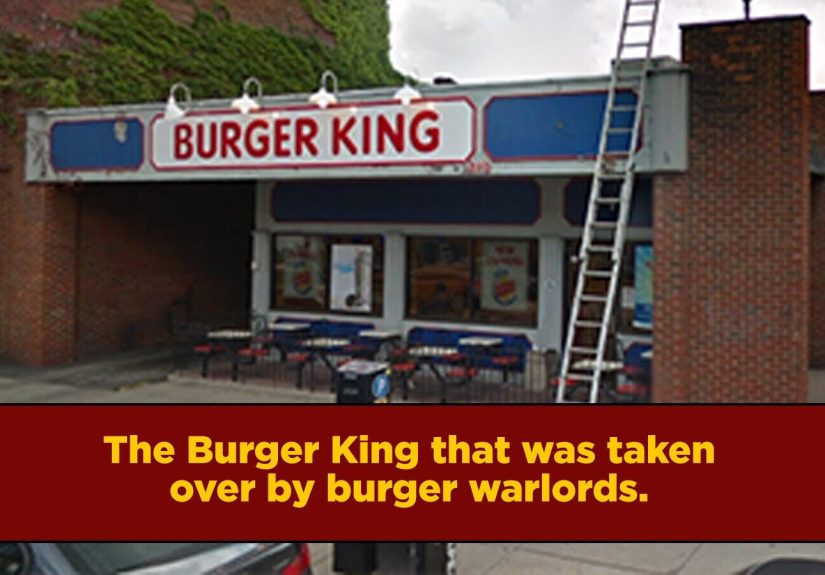
Locals came to call it the “rogue” or “fake” Burger Kingan East Carson Street drive-thru that, for a stretch in the 2010s, became famous for
off-brand packaging, missing menu items, and a general sense that the King had abdicated and left the fries to fend for themselves.
It’s a story about fast food, franchising, and the uniquely Pittsburgh talent of turning chaos into folklore.
Why This Burger King Became a Pittsburgh Legend
The South Side is a nightlife-heavy stretch of Pittsburgh, and East Carson Street is one of its most recognizable arteries. That matters, because
fast-food legends don’t usually start at 2:00 p.m. on a Tuesday when everyone is hydrated and emotionally stable. They start when you’re hungry,
it’s late, and the drive-thru is the only thing standing between you and eating saltines over the sink.
The Burger King at the center of this story sits on East Carson Street and has been referenced by local reporting as the South Side location
at 1820 E. Carson St.a spot that keeps finding ways to become newsworthy. Even years after the “fake” saga, the same location
has continued to pop up in local headlines for dramatic incidents and staffing drama, cementing its status as a minor character in the city’s
ongoing sitcom. It’s the kind of place that doesn’t just serve food; it serves plot.
The First Clues: Brown Bags, Dixie Cups, and “This Doesn’t Taste Like Burger King”
The legend goes that customers started noticing something was off in early 2014. Not “they forgot my napkins” offmore like “why is this meal
dressed like it’s in witness protection?”
Packaging That Didn’t Look Like Any Chain Restaurant
Reports and recaps describe customers receiving food in plain, unbranded packagingbrown paper bags, generic wrapping, and fries served in
small cups. People also complained that the food tasted different, and some said the restaurant wouldn’t honor Burger King coupons.
Those details sound small until you realize that, in fast food, branding is basically part of the ingredient list.
A Menu That Kept Shrinking
Word spread online that menu items were missing, sauces were limited, and the overall operation felt like it was improvising in real time.
The vibe wasn’t “we’re out of onion rings.” It was “we’re out of the concept of Burger King.”
If you’ve ever been to a normal Burger King, you know the chain’s entire business model is consistency: the same logos, the same menu boards,
the same “you know what you’re getting” comfort. This location’s alleged weirdness wasn’t just inconvenientit was suspicious in a way that
practically begged the internet to investigate.
How Does a Burger King Go Rogue, Anyway?
Here’s the key question: how can a restaurant appear to be a major chain while operating like it’s no longer connected to that chain?
The answer lives in the surprisingly unglamorous world of franchising.
Franchise 101: You’re Renting the Brand (and the Rules)
A franchisee typically operates a restaurant using the franchisor’s trademarks, operating system, and standards. In return, they pay fees and
agree to follow brand requirements. In the U.S., franchising is heavily disclosure-driven; the FTC’s Franchise Rule requires franchisors to provide
prospective buyers with a disclosure document covering key information about the franchise system. In other words: the “King” comes with paperwork.
Brand Standards Aren’t Optional
Franchise agreements generally require operators to follow cleanliness, service, and product standards to protect the brand. A Burger King-related
franchise agreement excerpt filed with the SEC, for example, describes obligations to comply with the “Burger King System” and the franchisor’s
quality standards, and the franchisor’s right to monitor compliance. That’s standard in franchising: brand control is the point.
So What Happened in Pittsburgh?
According to reporting and later retellings, this South Side location was allegedly operating in a confusing in-between perioddescribed as having
lost its official affiliation at some point, while still presenting itself as Burger King to customers. Recaps claim that the corporate relationship
had been revoked earlier due to issues including customer complaints, and that the store tried to keep functioning anywayleading to supply and
branding oddities that customers noticed.
To be clear: much of the “rogue” timeline is reconstructed from local news coverage, online threads, and later summaries. But the broad shape of
the story is consistent across multiple sources: the restaurant looked like Burger King, customers reported it didn’t operate like Burger King,
and it became a public spectacle once reporters and the internet showed up.
The Internet Smells Smoke, Then Comes Running With Screenshots
The “rogue Burger King” story didn’t become famous because one person complained. It became famous because a lot of people compared notes.
Online chatterespecially local community discussionhelped compile the details: weird packaging, weird service, weird everything.
Food sites and national outlets then amplified the story as a rare case of a major chain’s brand identity apparently being used in a way that
didn’t match corporate expectations. Grub-focused coverage highlighted how the restaurant seemed to be running out of official products while still
holding onto official signage, uniforms, and menu boardsessentially creating the fast-food version of a counterfeit designer bag.
The “Please Get Off Our Property” Phase
When local TV coverage entered the scene (and later recaps described it in detail), the restaurant’s response didn’t exactly scream
“transparent rebrand.” Accounts describe a reporter being told to leave the property, a security guard helping enforce that boundary,
and a rapid scramble that included removing signage while the story heated up.
The Name “South Side Burgers” Appears
One of the most memorable details in the legend is the appearance of a different name on receipts: “South Side Burgers.”
It’s like ordering a Whopper and getting a receipt that says “King-ish Sandwich.”
In later retellings, “South Side Burgers” became the shorthand for the location’s off-brand era: a period where the external identity looked like
Burger King, but the internal operation and labeling suggested something else was going on. Whether it was a sloppy transition, a dispute, or a
stopgap operation, customers felt misledbecause the entire premise of a chain restaurant is that you’re not taking a gamble.
What Happened After the Rogue Era?
Most versions of the story end the same way: corporate pressure and public attention eventually forced clarity. Later accounts describe the location
returning to official status and undergoing changes that made it “look normal” again. The rebel period, in other words, did not end with the
Burger King flag flying over a hilltop fortress.
The Location Still Finds Ways Into Headlines
If you were hoping the saga ended with a quiet, boring return to corporate normalcy… well, this is Pittsburgh. Years later, that South Side Burger King
was reported closed temporarily after a staff walkout, prompting police response to an unattended buildingan incident picked up by local outlets and
even national coverage. Local reporting noted the location’s earlier “fake” reputation while covering the staffing walkout, because the legend never
really stops being relevant once it’s part of the building’s personality.
More recently, local food news blurbs have continued to reference the location as notorious, citing bizarre incidents connected to calls for service.
In Pittsburgh terms, that’s basically an honorary landmark designation.
Why the Rogue Burger King Story Still Works (Even If You’ve Never Been to Pittsburgh)
The story resonates because it hits three universal nerves:
-
Brand trust: You go to a chain because you want the predictable version of that thing.
If the brand’s “promise” disappears, the whole experience feels like a prank. -
Consumer expectations: People don’t mind a small local burger place being quirky.
They mind a global brand’s signage being used while the product is allegedly something else. -
Folklore fuel: The weirdest stories thrive where lots of people pass through late at night,
compare notes online, and insist, “No, seriously, it was in a Dixie cup.”
It also shines a light on something most customers never think about: franchising is a legal relationship, not a magical spell.
A building can keep the look of a chain longer than it keeps the chain’s supportespecially if ownership, licensing, or compliance
issues are involved. That’s why the FTC’s franchising framework emphasizes disclosure and why franchise agreements emphasize standards:
the brand’s value depends on consistency.
So… Was It Really “Fake”?
“Fake” makes for a better headline than “legally complicated franchising dispute with confusing on-the-ground execution,” but the core idea remains:
customers and reporters described a restaurant that presented itself as Burger King while acting like it wasn’t fully operating as Burger King.
In the absence of a single public, definitive timeline released by all parties, the most accurate way to say it is:
it was a real Burger King location that became publicly associated with an off-brand perioda chaotic stretch where the branding,
packaging, and operations allegedly didn’t match what customers expected from the chain.
And honestly, that’s the most Pittsburgh part of all: the truth is messy, the story is funnier, and the legend is what people remember.
Experiences: What It Felt Like to Encounter the Rogue Burger King (A 500-Word Flavor Tour)
If you never experienced the rogue era firsthand, the best way to understand it is to imagine you’re running on fumes in the South Side.
You’ve had a long night (or a long shift, or both), you want something hot and salty, and your brain has narrowed the universe down to two options:
food, or becoming one of those people who “accidentally” eats dry cereal out of the box at home.
You pull into the drive-thru expecting comfort. That’s the whole point of Burger King at midnightpredictable menu boards, predictable options,
predictable regret. But in the rogue-BK stories people tell, the comfort is replaced by a tiny sense of suspense, like you’ve accidentally wandered
into a parallel universe where corporate logos are just… suggestions.
The first “experience” detail people remember isn’t some dramatic confrontation. It’s the small stuff: the way the food shows up in packaging that
doesn’t match the brand you thought you ordered. A plain bag. A cup that doesn’t say anything. A wrap that looks like it came from a generic supply
closet. It’s the kind of moment that makes you squint at your meal like it’s a suspicious email attachment: Do I click this?
Then there’s the menu roulette. In retellings, customers describe trying to order something standard and being told it’s unavailableor finding the
sauces and sides strangely limited. That’s when the experience crosses from “we’re out of something” into “are we still in the Burger King ecosystem?”
Your friend in the passenger seat starts laughing, because of course this would happen here, and of course it would happen now, when you’re hungry
enough to consider ordering “whatever you’ve got that resembles a burger.”
The most Pittsburgh part of the experience is what happens next: you don’t just eat and move on. You tell somebody. And in the modern era, telling
somebody means posting about it. The rogue Burger King wasn’t just a restaurant; it was a shared mystery. People compared notes like amateur detectives
in ketchup-stained trench coats. Someone had a picture. Someone had a story about the taste being “off.” Someone else swore they heard the soda wasn’t
what it claimed to be. Whether every detail was true or not, the vibe was consistent: everyone felt like they’d stumbled into a fast-food folktale.
And that’s why the legend stuck. Even if you never tasted a single suspicious fry, you can understand the feeling: the surreal moment when something
designed to be identical everywhere suddenly becomes uniquely local. For better or worse, it transformed a corporate chain into a Pittsburgh story
the kind you tell with a grin, a little disbelief, and the absolute certainty that no one outside the city would believe you without receipts.