Table of Contents >> Show >> Hide
Every great comeback story needs a villain. In this one, the villain is not a mustache-twirling cartoon bad guy. It is pigweed, lambsquarters, nutsedge, volunteer grasses, and every other green freeloader that shows up uninvited, steals water, robs nutrients, crowds crops, and somehow looks smug while doing it. Enter the Weedinator: a small-farm robotic weeding concept with a name that sounds like a Saturday morning action figure and a mission that is much less silly than its glorious title suggests.
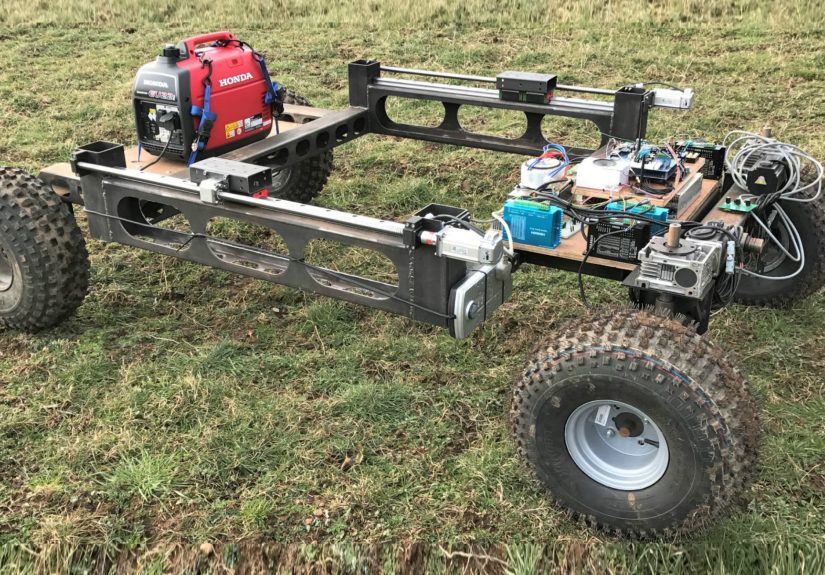
The phrase The Weedinator Returns first gained attention when Hackaday featured the project in 2018 as a returning entry built for small farms. The big idea was simple and smart: instead of relying only on bigger, heavier, more expensive equipment, why not build a smaller autonomous electric platform that can cultivate, till, and weed seedbeds without getting tired, bored, or distracted by the weather forecast and a half-finished cup of coffee? Fast-forward to 2026, and the project is still alive in a newer Hackaday.io build, now described as a modular robot tractor system for autonomous weeding in vegetable rows, with open-source control hardware, safety camera modules, and AI-assisted crop detection. In other words, this is not just a clever headline. It is an ongoing attempt to make robotic weed control practical for real farms.
That matters because weeds are not a cute side quest in agriculture. They are a daily, expensive, back-bending fight. And on small farms, especially organic and specialty-crop operations, that fight can decide whether a season feels manageable or brutally expensive. The Weedinator returns at exactly the right time because the pressures that made the idea attractive in the first place have only become more obvious.
Why a Machine Like the Weedinator Matters
Weed control is one of those jobs that sounds simple until you try doing it for acres of vegetables instead of one raised bed behind the garage. On paper, weeds are just unwanted plants. In practice, they are relentless competitors. They steal light, water, and nutrients from the crop you actually meant to grow. They complicate harvest, reduce yields, and turn labor schedules into chaos. USDA and Extension resources have been remarkably consistent on this point: effective weed management is not optional. It is foundational.
And the economics are not exactly subtle. USDA’s Economic Research Service has shown that labor costs weigh especially heavily on specialty-crop farms. In some fruit, tree nut, vegetable, and melon systems, labor accounts for a striking share of production costs. That means every repetitive field task, especially one that must be done carefully and repeatedly, becomes a prime target for innovation. Weeding sits near the top of that list. It is labor-hungry, time-sensitive, and physically exhausting. If it is delayed, the crop pays the price.
For small and mid-sized growers, that pressure is even more intense. Large farms can spread capital costs over more acreage and may already own specialized machinery. Smaller farms often cannot. They need tools that are flexible, precise, and affordable enough to justify the investment. That is why the original Weedinator concept was so interesting: it aimed at the small-farm problem, not just the giant-tractor fantasy. Smaller robots may need more passes, but they can also be more maneuverable, easier on soil, less energy-hungry, and potentially more modular.
Small Farms Do Not Need a Spaceship
They need something dependable. That may be the most important lesson behind the Weedinator idea. Farms do not need a machine that looks like it escaped from a science fiction movie. They need something that survives dust, uneven ground, moisture, changing light, row variation, and the occasional “well, that definitely was not in the brochure” moment. A smaller, rugged robot with swappable modules may be more useful than one giant machine that does everything brilliantly in theory and terribly in mud.
What the Weedinator Actually Represents
The Weedinator is best understood not as one magic gadget, but as a philosophy of field automation. The 2026 project description frames it as a collection of modules for autonomous weeding in rows of vegetables by a robot tractor. That wording matters. Modular systems can evolve. A farm may start with guidance and safety features, then add crop detection, then add a cultivator, then experiment with planting or other row-crop tasks later. That is a much more believable adoption path than asking growers to trust one sealed black box that promises to do absolutely everything except probably fix the weather.
The current project notes describe control boxes, safety cameras to detect people, and a machine-learning-assisted camera system designed to recognize crop grids and predict gaps between seedlings. The goal is highly targeted cultivation: act when there is space, avoid damaging the crop, and keep moving. It blends older computer-vision logic with newer AI image inference, which is a useful reminder that “AI in agriculture” often means practical pattern detection rather than dramatic robot monologues about destiny.
That broader direction lines up with how university and Extension sources describe robotic weeders today. These are generally uncrewed machines that use cameras, software, and field logic to tell crops from weeds and then remove unwanted plants with tools such as cultivators, targeted sprayers, lasers, or electric systems. Some focus on intra-row weeds, the especially annoying ones growing right next to the crop where conventional cultivation is hardest. Others handle inter-row work or specialized situations in orchards and vineyards.
Why Intra-Row Weeds Are Such a Big Deal
If weeds in the middle of the row were the only problem, farmers would have had an easier life a long time ago. The real misery is often right next to the crop plant, where aggressive action can also mean accidental crop injury. University of California researchers have emphasized that these close-in weeds are often the most expensive to remove. They also note that younger weeds are easier and faster for machines to kill, which makes timing, vision, and repeatability critical. A robot that can detect early growth and work carefully around crop spacing is attacking the toughest part of the job.
The Real-World Case for Robotic Weeding
Robotic weed control is not hype pulled from thin air. It is being tested, evaluated, and refined across the United States. NC State Extension describes AI-enabled robotic weeders as uncrewed vehicles built to identify and remove weeds with minimal human intervention. University of Arizona materials have long described camera-based systems that distinguish crop plants from weeds and use different tools for intra-row and inter-row control. University of California research has evaluated automated weeders in lettuce, tomatoes, and melons, and reported promising labor savings without yield penalties in certain systems.
One of the most eye-catching findings from UC Davis work is that automated weeders in lettuce reduced labor use by roughly 38% to 45% without reducing yield. That is the kind of result that gets attention, and for good reason. If a machine can cut hand-weeding demand while preserving output, it is not just a novelty. It becomes an economic argument.
At the same time, researchers keep repeating the caution sign in smaller print: these machines are promising, but they are not cheap, and they are not universally plug-and-play. Some commercial systems have been around for about a decade and still remain expensive. That is exactly why low-cost and open or semi-open systems matter. USDA NIFA is funding projects specifically aimed at affordable robotic weed control for organic and regenerative agriculture, and other NIFA-backed work is evaluating electric weed control for perennial crops where hand labor, mulches, and repeated soil disturbance can be major burdens.
The Organic Angle Is Huge
Organic growers have a special reason to care. Weed management in organic production often relies on hand labor, cultivation, mulches, cover crops, and careful timing. That can work, but it can also be expensive, disruptive to soil, and difficult to scale. USDA and ATTRA guidance repeatedly stress the need to balance weed suppression with soil health. Frequent tillage may control weeds, but it can also damage soil structure and microbial life. Reduced tillage can help soil health, but it may make weed pressure harder to manage. Welcome to farming: every solution arrives holding hands with a new problem.
This is where targeted robotic systems become especially attractive. If a machine can remove weeds precisely, close to the crop, with less blanket disturbance and less chemical dependence, it potentially helps resolve a tradeoff that has frustrated growers for years. It does not erase the need for crop rotation, cover crops, stale seedbeds, mulches, and other ecological strategies. But it could become a valuable tool inside an integrated weed management system.
The Weedinator Is Not a Silver Bullet, and That Is Fine
Good farm technology does not need to solve every problem to be worth using. It just needs to solve an expensive, painful one reliably enough that the math works. The Weedinator should be judged by that standard.
It probably will not replace ecological weed management, because ecological weed management is still the long game. SARE’s guidance makes that clear: smart weed control is knowledge-intensive, not just input-intensive. Understanding weed biology, crop competition, emergence timing, and physical control methods still matters. Even the fanciest robot cannot undo a poor rotation plan or rescue a field where weeds were allowed to get a head start and throw a party.
It also will not eliminate the need for farmers to supervise, calibrate, repair, and rethink. Agriculture is a rough environment for precision hardware. Cameras get dirty. Field conditions change. Rows are not always as perfect as the software hoped. Seedlings do not read the manual. A robot that behaves beautifully in one crop may become dramatically less confident in another. That is why the newer Weedinator emphasis on safety cameras, modular control systems, and adaptable functions is encouraging. It suggests a system being built with reality in mind, not just a demo reel.
What Success Would Look Like
Success for the Weedinator is not replacing farmers. It is replacing drudgery. It is taking over the slow, repetitive, attention-heavy work that drains labor budgets and human patience. It is letting growers redeploy time toward irrigation, scouting, harvest prep, marketing, equipment maintenance, and the other hundred jobs that still demand a human brain. In that sense, the best farm robot is not the one that looks most futuristic. It is the one that quietly makes the week less punishing.
Why the Timing Feels Different Now
The Weedinator concept would have been interesting a decade ago. Today, it feels timely. Computer vision is better. Small-form computing is cheaper. Machine learning tools are more accessible. Sensors, connectivity, and power systems have all improved. Meanwhile, labor pressure has not magically disappeared, and growers continue looking for ways to reduce both hand-weeding dependence and blanket herbicide use.
Even the wider research landscape suggests momentum. University of Vermont Extension is testing multiple robotic weeders in the 2026 season. Penn State Extension has discussed advanced weed management technologies, including robotic systems for self-guidance, detection, mapping, and control. Michigan State and other land-grant programs are exploring electric and automated approaches as part of sustainability-oriented weed management. This is no longer one lonely inventor in a shed muttering about sensors. It is a field of serious experimentation.
That does not guarantee that every prototype wins. Many will not. Some will be too expensive. Some will be too fragile. Some will be just smart enough to be annoying. But the direction is real. And the Weedinator’s return is interesting precisely because it sits at the intersection of three big trends: small-farm practicality, ecological pressure to reduce blunt-force weed control, and a new generation of affordable automation tools.
Conclusion
The Weedinator Returns works as a title because it sounds dramatic, but the deeper story is refreshingly practical. The return is not about a robot celebrity taking another bow. It is about an agricultural idea coming back stronger because the world finally has more reasons to take it seriously. Weeding remains one of the least glamorous and most expensive chores in crop production. Small farms and organic growers still need better options. Researchers across the United States are proving that robotic and targeted weed control can reduce labor, cut chemical dependence in some situations, and fit into more sustainable production systems.
The Weedinator will earn its reputation not by looking cool, but by surviving field conditions, protecting crops, staying affordable, and giving growers a tool that works on Tuesday morning instead of just at conferences. If it can do that, then this “return” is not just a comeback. It is a sign that the future of weed control may be smaller, smarter, and a lot more practical than the old bigger-is-better model. And honestly, if a robot can take a few hours of weeding off a farmer’s plate in July, it deserves at least a little dramatic music.
Experience: What This Kind of Machine Feels Like in the Real World
The experience surrounding a machine like the Weedinator is not just technical. It is emotional, physical, and economic all at once. Anyone who has spent time on a working farm knows that weeds create a special kind of stress because they punish delay. You can wake up feeling on schedule, lose two days to rain, and suddenly the field looks like it joined a rebellion overnight. That is why the promise of robotic weeding feels so powerful. It is not merely about replacing one task. It is about giving growers a little breathing room in a system that rarely offers any.
For many farmers and farm workers, weeding is the kind of labor that sneaks up on the body. It starts as a simple field pass and ends with sore knees, tired shoulders, dust in places dust should never be, and a running mental calculation about whether the crew can finish before the weeds get another growth spurt. In that context, a machine that can patrol rows, identify gaps, and remove weeds without constant hand labor starts to feel less like a gadget and more like relief. Not total relief, of course. Farming does not hand out that kind of luxury. But meaningful relief.
There is also the psychological shift. A farmer looking at a weeding robot is not only wondering, “Does it work?” They are also wondering, “Can I trust it around my crop?” That is a much bigger question. A good machine pass can feel almost magical: clean rows, intact plants, and a job completed before lunch. A bad pass can feel like a tiny mechanical betrayal. That is why safety systems, reliable detection, and predictable behavior matter so much more than flashy branding. Farm equipment earns respect the hard way.
Then there is the management experience. A robot does not remove the farmer from the process; it changes the farmer’s role. Instead of spending every minute on the tool, the grower becomes more of a supervisor, scheduler, troubleshooter, and strategist. That shift can be a major advantage. Time once spent on repetitive field labor can move toward scouting, irrigation decisions, marketing, harvest planning, or maintenance. But it also means the machine has to be understandable. If a farmer needs three software engineers and a philosopher to explain why the cultivator stopped in row seven, adoption will be limited.
On smaller farms, the experience can be even more personal. These operations often rely on tight margins, flexible labor, and constant multitasking. The ideal robot is not one that tries to run the whole farm. It is one that removes a few of the most exhausting, repetitive jobs without demanding a total redesign of the operation. That is why the Weedinator’s modular spirit is appealing. Growers can imagine adding capability piece by piece instead of betting the whole season on one giant leap.
In the end, the lived experience behind robotic weeding is simple: when it works, it gives farmers time, energy, and a little dignity back from one of agriculture’s most thankless chores. And that, more than the hardware itself, is why projects like the Weedinator keep returning.