Table of Contents >> Show >> Hide
- Meet the Woman Behind the Blooms: Marianne Eriksen Scott-Hansen
- Why Tissue Paper Works (Even Though It Really Shouldn’t)
- How an Enormous Tissue Paper Bouquet Is Built
- Where These Giant Tissue Paper Flowers Show Up in the Real World
- Why People Love Giant Paper Flower Bouquets (Besides the Obvious “Wow”)
- DIY: Make Your Own Big Tissue Paper Flowers (Without Losing Your Mind)
- Display and Care Tips (So Your Bouquet Doesn’t Become Confetti)
- Common Mistakes (And the Quick Fixes)
- FAQ
- Conclusion: A Bouquet That Never Wilts (And Somehow Feels Alive)
- Experience Notes: of Real-World Lessons From Making Giant Tissue Paper Flowers
Tissue paper usually lives a humble life: wrapping gifts, padding packages, and occasionally getting crumpled into a sad little ball after a birthday party.
Then along comes an artist who looks at that fragile, whisper-thin stuff and thinks, “What if I made a bouquet the size of your coffee table… and then kept going?”
The result is a world of enormous tissue paper flower bouquetslush, dramatic, and strangely emotional for something that started in the stationery aisle.
In this article, we’re diving into the work (and the why) behind those oversized blooms, how they’re built, where they show up in real life, and how you can
steal a little of that big-bouquet magic for your own parties, weddings, photo backdrops, or “I just need something pretty on this wall” moments.
Meet the Woman Behind the Blooms: Marianne Eriksen Scott-Hansen
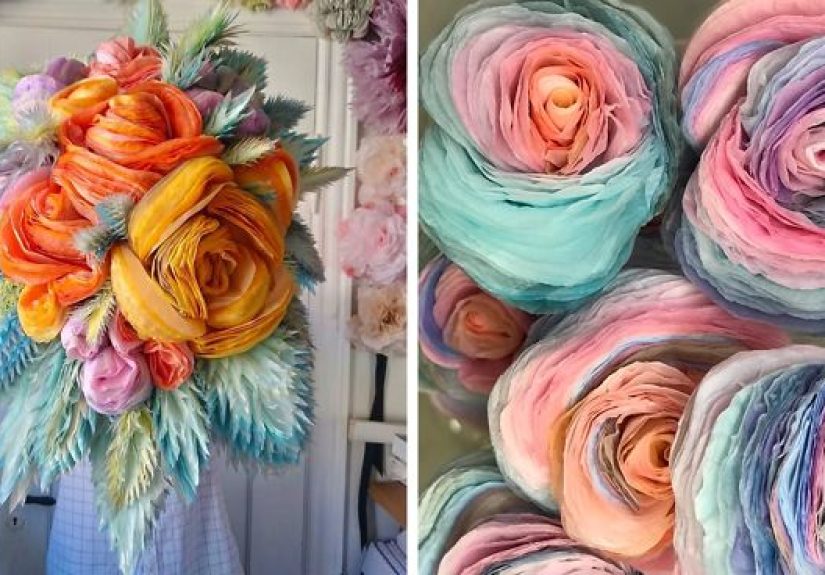
The phrase “enormous bouquets of tissue paper flowers” isn’t marketing fluff hereit’s an accurate description of what Marianne Eriksen Scott-Hansen creates.
Her work features countless petals and leaves gathered into color-coordinated bunches that feel half botanical, half dream sequence. Her flowers don’t wilt,
and they don’t need water. They just quietly dominate a room like they pay rent.
Marianne often describes her approach as “paper couture,” which makes sense the second you look closely: these aren’t quick craft-store blooms. They’re
sculptural, layered, and engineered to look soft while holding their shape. Even when the colors go candy-bright, the forms still feel organiclike something
you’d find in a greenhouse on a planet with better lighting.
Why Tissue Paper Works (Even Though It Really Shouldn’t)
Tissue paper is the underdog of art materials. It tears if you glare at it too hard. It wrinkles when you breathe near it. And yet, in the right hands, it becomes
a superpower material: translucent, lightweight, inexpensive, and unbelievably good at building volume through layering.
The magic is in the stack. Tissue paper behaves like a single sigh; tissue paper in layers behaves like a cloud with opinions. When you gather, pleat, crimp,
or fringe multiple sheets, you get structure without stiffnesssoft edges, gentle gradients, and petals that catch light the way real blooms do.
That “ethereal but solid” look is exactly why giant tissue paper flowers photograph so well: they have depth, but they don’t feel heavy.
How an Enormous Tissue Paper Bouquet Is Built
Let’s be clear: the “secret” isn’t one weird trick. It’s a long series of smart, patient decisionslike making a lasagna, but with petals.
Below is the general anatomy of a giant tissue paper bouquet, based on techniques used across professional paper-flower artists and mainstream DIY methods.
1) The color palette comes first
Real bouquets rarely use one flat color. They use familiescream to butter, blush to coral, emerald to sage. Oversized paper bouquets do the same thing, only
louder. Tissue paper is perfect for this because you can layer slightly different shades and let edges overlap, creating “built-in” gradients without painting.
2) Petals are shaped like a collection, not a copy
In nature, petals don’t show up like identical twins in matching outfits. The most convincing giant paper flowers mix shapes: rounded outer petals, tighter inner
petals, a few slightly wonky ones for realism. The goal is consistency in style, not perfect duplication.
3) Volume is created with pleats, ruffles, and “controlled chaos”
If you’ve ever made tissue pom-poms, you already understand the concept: accordion folds create a fan that expands into a sphere. Giant bouquet work borrows that
logic, then refines it. Instead of one puffball, you build multiple layered “petal zones,” each one adding depth and direction.
4) The center is where the flower convinces you
The center (stamens, pistils, tight inner petals) is what makes a giant paper bloom feel botanical instead of “party decor.” Fringe cuts, rolled strips, and
tightly gathered layers create that dense heart that reads as “flower” even from across a room.
5) Stems and supports are the unglamorous heroes
Huge tissue paper flowers are lightweight, but they still need an internal plan: floral wire, taped stems, hidden skewers, or a wrapped handle for bouquets.
Think of it as building a tiny stage crew inside the flower so the petals can perform.
Where These Giant Tissue Paper Flowers Show Up in the Real World
Oversized paper blooms aren’t just an internet delightthey’re used in events, editorial styling, retail displays, and brand experiences where you want drama
without worrying about wilting petals under hot lights. In fact, “paper couture” flowers by Marianne Eriksen Scott-Hansen have even appeared as chic gifts at a
New York dinner eventproof that a handmade paper flower can absolutely hold its own in a room full of fashion people and strategic lighting.
More broadly, paper flowers have a long history and a very modern resurgence: the craft spans centuries and cultures, then re-boomed alongside contemporary
maker culture and fashion-scale installations. Today, you’ll see everything from DIY wedding backdrops to museum-scale botanical sculpturesbecause paper can be
both accessible and high art, sometimes in the same afternoon.
Why People Love Giant Paper Flower Bouquets (Besides the Obvious “Wow”)
They’re allergy-friendly and season-proof
A paper bouquet never triggers sneezes, never browns at the edges, and never decides to “drop petals dramatically” in the middle of your event. It’s floral
commitment without floral chaos.
They’re customizable in ways real flowers can’t be
Want a sunflower the size of a steering wheel? A peony bigger than your head? A bouquet that matches your brand’s exact Pantone shade? Paper says, “Sure.”
You can scale, recolor, and exaggerate without waiting for nature’s permission.
They’re built for photos
Giant blooms create instant depth and texture on camera. That’s why they’re popular for party backdrops, wedding entrances, dessert tables, and storefront
displays. They make people step closerand then they make people take pictures.
DIY: Make Your Own Big Tissue Paper Flowers (Without Losing Your Mind)
You don’t need a fashion studio to start. You need tissue paper, scissors, and a willingness to accept that your first flower might look like a cabbage that got
into a fight. That’s normal. Here’s a friendly, scalable approach you can adapt into a bouquet.
Materials
- Tissue paper (8–12 sheets per bloom is a good starting point)
- Scissors (pinking shears are a bonus)
- Floral wire or pipe cleaners
- Floral tape or masking tape
- Optional: glue dots or a low-temp glue gun for accents
- Optional: a wooden dowel or skewer for an extra-sturdy stem
Method: The “Big Bloom” Base
- Stack your tissue paper sheets neatly and fold them accordion-style (fan folds).
- Secure the center with wire (or a pipe cleaner). Leave extra length to form a stem or a hanging loop.
- Trim both ends of the folded stack (rounded ends = soft petals, points = spiky petals).
- Gently separate each layer, pulling upward toward the center. Go slowtissue paper tears when rushed.
- Fluff and shape. Rotate the bloom as you pull layers so it stays balanced.
Turning Blooms Into an “Enormous Bouquet”
A bouquet feels enormous when you mix sizes and textures. Make a few large flowers, then several medium ones, then filler elements like leaves or smaller puffs.
Wrap stems together with floral tape, and don’t be shy about building outwardbouquets look fuller when flowers face slightly different directions.
Want a more sculptural look? Add a second “collar” of tissue paper around the base of a bloom to mimic sepals, or layer two colors so edges peek out like
natural variation. For a wedding-style handle, wrap the bundled stems in ribbon after taping.
Display and Care Tips (So Your Bouquet Doesn’t Become Confetti)
- Keep them dry: Tissue paper and moisture are not friends. Avoid humid storage or misty outdoor setups.
- Dust gently: A soft brush or cool hairdryer setting can help. Don’t go full leaf-blower.
- Transport smart: Use large boxes and prevent crushing with light internal supports (crumpled kraft paper works well).
- Mind heat sources: Keep away from candles and hot stage lights. Paper is gorgeous, but it’s still paper.
Common Mistakes (And the Quick Fixes)
“My flower looks flat.”
You probably need more layers, tighter center gathering, or a deeper trim shape. Add more sheets next time, and pull layers upward more vertically before
fluffing outward.
“I keep tearing the tissue paper.”
Slow down and reduce tension. Also, trim edges before you separate layers; clean edges make the pull smoother. If you’re using very thin tissue, consider
slightly fewer aggressive pleats.
“My bouquet looks like a pile, not an arrangement.”
Vary the heights. In real bouquets, some blooms sit higher, others tuck in. Tape stems in a staggered way, and angle a few flowers outward like they’re
flirting with the camera.
FAQ
How long does a giant tissue paper bouquet take?
A single large bloom can take 15–45 minutes depending on complexity and how careful you are with shaping. A full “enormous” bouquet can be a weekend project
(or a very determined evening with snacks and a playlist).
Are tissue paper flowers sturdy enough for events?
Yesespecially when layered and properly supported. They won’t survive a rainstorm, but they can absolutely handle indoor events, photo backdrops, and
display installations.
Can I make them look more realistic?
Use multiple shades, vary petal shapes, and build a detailed center. If you want next-level realism, add subtle painted accents on thicker paper elements or
incorporate crepe paper for parts that need stretch and texture.
Conclusion: A Bouquet That Never Wilts (And Somehow Feels Alive)
Marianne Eriksen Scott-Hansen’s enormous tissue paper bouquets prove something delightful: “fragile” materials can become bold, architectural, and
emotionally punchy when treated with serious craft. These flowers don’t wilt, but they do what real flowers do bestthey change the mood of a space.
Whether you admire them as art, borrow them as event inspiration, or build your own giant blooms at home, tissue paper flowers are a rare creative win:
accessible, affordable, and capable of looking wildly luxurious. All it takes is patience, layers, and the confidence to make something bigger than you think
you’re allowed to make.
Experience Notes: of Real-World Lessons From Making Giant Tissue Paper Flowers
If you’re adding “enormous tissue paper flowers” to your life, here’s what the process often feels like in the real worldbased on what makers commonly run
into when they scale up from “cute craft” to “why is this flower taller than my lamp.”
First, there’s the confidence spike. You stack the tissue, fold it neatly, twist the wire, and think, I am unstoppable. Then you begin separating
layers and discover that tissue paper has the emotional stability of a soap bubble. The biggest lesson: gentleness wins. A slow, steady pull keeps layers
intact and actually produces a fluffier bloom because you’re not accidentally yanking half the petals into early retirement.
Second, you learn that “big” is a design choice, not just a measurement. Giant flowers can look theatrical or elegant depending on the palette and edge
trimming. Rounded edges read soft and romantic. Pointed or zig-zag edges feel energetic and modern. If your first attempt looks too “party pom-pom,” don’t
panicadjust the silhouette. More varied petal shapes and a denser center instantly move the flower toward “botanical.”
Third, making a bouquet teaches you the art of controlled imbalance. A bouquet that’s perfectly symmetrical can look stiff. The most convincing arrangements
let a few blooms lead and a few tuck back. You’ll probably reposition flowers ten timesthis is normal. Treat it like styling a photo: move one bloom forward,
rotate another slightly, then step back and squint like a dramatic interior designer.
Fourth, you discover your personal “glue philosophy.” Some people glue everything. Others barely glue at all and rely on wrapping, wiring, and clever folding.
When you’re working with tissue paper, less glue is often more. Glue can create hard spots and darken thin paper. Many makers prefer wire centers, floral tape,
and small glue dots only where neededespecially when building a bouquet that will be handled or transported.
Fifth, the weirdest surprise: it’s calming. The repetitive folding, trimming, and shaping can feel meditative, like you’re turning stress into petals.
And when the bouquet finally comes togetherbig, bright, and unbothered by gravityyou get the best kind of creative payoff: the room looks different, and
you did that with basically fancy napkins.
Finally, plan for storage. Giant tissue paper flowers are lightweight, but they occupy space like a friendly octopus. If you want to reuse them, keep large
boxes, avoid squishing, and store them somewhere dry. Your future self will be gratefulespecially when you need instant decor for the next celebration.