Table of Contents >> Show >> Hide
- Quick Snapshot (So You Know What You’re Getting Into)
- Where It Ranks in the Modern Indie Horror Conversation
- My Ranking Method (AKA: How This Movie Gets Graded)
- The Rankings: Category Scores (Out of 10)
- Why People Praise It (And Why That Praise Makes Sense)
- Why Some Viewers Bounce Off It (And They’re Not Wrong Either)
- The Best Things About the Film (My Personal Top 5)
- The Biggest Weak Spots (My Personal Bottom 3)
- Who Should Watch It (And Who Should Skip It)
- Opinion-Based Ranking: Where It Sits on My “Horror Mood Map”
- Spoiler-Light Discussion Prompts (Great for Reviews, Podcasts, or Comment Sections)
- Final Take
- Viewer Experiences (Extra Section: What It Feels Like to Watch This Movie)
Some horror movies scream. The Eyes of My Mother whispersthen makes you regret turning the volume up.
Nicolas Pesce’s stark, black-and-white debut is one of those “I can’t stop thinking about it” films that people
either praise as hypnotic art-horror or reject as cold, punishing, and deliberately uncomfortable. If you came
here looking for a simple thumbs-up/thumbs-down, I have bad news: this movie is not simple. If you came here for
a smart ranking, honest opinions, and a spoiler-light breakdown of what works (and what might not), welcome to the
farmhouse.
Quick Snapshot (So You Know What You’re Getting Into)
What it is
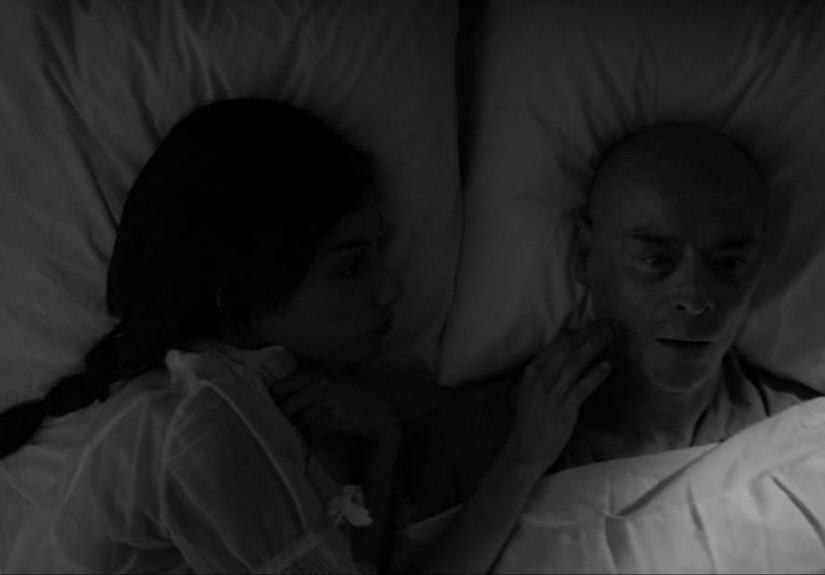
The Eyes of My Mother is a lean, art-house horror drama built around isolation, grief, and a character who
processes trauma in disturbing ways. It’s quiet, patient, and visually meticulousmore “uneasy mood” than “jump-scare buffet.”
Important content note
This film is rated R and includes disturbing violence and brief nudity. It’s not a “fun horror night”
for everyone. If you’re sensitive to intense themes, watch with care, and consider reading a spoiler-free content guide first.
Where It Ranks in the Modern Indie Horror Conversation
If modern horror has a spectrumfrom crowd-pleasing popcorn scares on one end to “existential dread with fancy lighting” on the other
The Eyes of My Mother plants its flag firmly in the dread-and-craft zone. Critics and audiences often describe it as
hypnotic, elegant, and emotionally bleak, with a story that’s intentionally pared down and a style that does a lot of the talking.
It’s the kind of movie that ends and leaves you sitting there like: “Okay. Cool. I’m going to need to look at a cheerful lamp for a minute.”
In my personal “2010s indie horror” mental bracket, it lands as a top-tier visual debut and a
mid-to-high tier rewatchnot because it’s weak, but because it’s heavy. Think of it like an espresso shot:
short, intense, and you probably shouldn’t have three in a row unless you enjoy vibrating through walls.
My Ranking Method (AKA: How This Movie Gets Graded)
Horror rankings get messy fast because people want different things. Some viewers want scares. Some want story.
Some want atmosphere so thick you could spread it on toast. So I rank this film across eight categories, each scored out of 10,
then add an overall opinion score that factors in who the movie is actually trying to please.
The Rankings: Category Scores (Out of 10)
| Category | Score | Why |
|---|---|---|
| Cinematography & Visual Style | 9.5 | Black-and-white photography that looks composed, deliberate, and hauntinglike every frame applied for a museum grant. |
| Atmosphere & Dread | 9.0 | Slow-burn tension built through silence, stillness, and isolation rather than constant shocks. |
| Performance (Lead) | 8.5 | The central performance carries the film with restraintmore unsettling calm than theatrical villainy. |
| Story & Structure | 7.5 | Minimalist, chapter-like storytelling that can feel poetic… or feel like missing puzzle pieces, depending on your taste. |
| Originality | 8.0 | Familiar horror ingredients, but arranged in a distinctive tonegrim fairy tale energy without the bedtime friendliness. |
| Sound & Silence | 8.0 | Sound design and restraint work together; what you don’t see often becomes what you imagine. |
| Scare Factor | 6.5 | Not “boo!” scary. More “I feel weird walking to the kitchen alone” scary. |
| Rewatch Value | 7.0 | High craft rewards rewatching, but the emotional heaviness can make it a “once every few years” title. |
Overall Opinion Score
8.3/10 for viewers who like art-house horror, slow-burn dread, and films that prioritize mood and imagery.
6.5/10 for viewers who want fast pacing, clear motivations, and traditional “setup-payoff” horror storytelling.
Why People Praise It (And Why That Praise Makes Sense)
1) It’s visually “locked in” from frame one
Plenty of horror movies have strong moments. This one has a strong visual thesis.
The black-and-white look isn’t a gimmick; it’s part of the emotional temperature. Shadows feel heavier. Rooms feel emptier.
Ordinary spaces feel slightly unreallike the movie is draining color to make you focus on shape, distance, and silence.
2) The horror is often suggested rather than displayed
One of the film’s most effective choices is restraint: it often lets implication do the damage. That means the movie can feel
even more intense than a “show everything” approachbecause your brain fills in blanks with the exact nightmare custom-built
for you. (Thanks, brain. Really looking out for us.)
3) It treats loneliness as the engine of terror
Strip away the genre label and what you have is a story about isolation curdling into something unrecognizable.
The film doesn’t ask you to “root” for anyone. It asks you to sit with the uncomfortable idea that trauma plus solitude can
distort a person’s sense of normaland that the results can be both tragic and frightening.
Why Some Viewers Bounce Off It (And They’re Not Wrong Either)
1) The pacing is deliberate to the point of provocation
This is not a “plot twist every 12 minutes” film. It’s more like a series of stark chapters. If you prefer horror that moves
like a roller coaster, this will feel like a slow elevator ride… in a building where the lights keep flickering.
2) Emotional distance is part of the design
Some critics and viewers interpret the film’s cool tone as purposefulan artistic choice that mirrors the protagonist’s detachment.
Others read it as alienating or even hollow. Both reactions are understandable because the movie often refuses to comfort the viewer.
It’s not interested in handing you neat explanations. It’s interested in leaving you unsettled.
3) It’s a “mood-first” movie, and mood-first isn’t for everyone
If you love horror as craftsmanshipcomposition, silence, editing rhythmsthis is a feast. If you love horror as a story machine,
you may find it frustrating. It’s closer to a disturbing fable than a conventional thriller.
The Best Things About the Film (My Personal Top 5)
- The black-and-white cinematography: gorgeous, bleak, and never accidental.
- The commitment to stillness: quiet scenes aren’t filler; they’re pressure chambers.
- Lead performance choices: restrained physicality that communicates “not quite human in the usual way.”
- Editing and structure: sharp transitions that can feel dreamlike (or like the floor drops out beneath you).
- The emotional aftertaste: not “fun,” but memorablelike a sad poem that also happens to be a horror film.
The Biggest Weak Spots (My Personal Bottom 3)
- Narrative gaps: some viewers will read them as mystery; others as missing development.
- Limited catharsis: it doesn’t “release” tension in satisfying ways; it mostly tightens it.
- Not a social watch: this is not the movie you throw on during a party unless your parties are held in abandoned lighthouses.
Who Should Watch It (And Who Should Skip It)
Watch it if you like:
- Art-house horror, slow burns, and atmospheric dread
- Black-and-white cinematography with a deliberate visual concept
- Character studies that are unsettling rather than “relatable”
- Films where implication is as important as action
Skip it (or save it for later) if you prefer:
- Fast pacing, lots of dialogue, and clear explanations
- Traditional scare structures and frequent jump scares
- Horror that feels “fun” or crowd-pleasing
- Movies that offer emotional relief or tidy closure
Opinion-Based Ranking: Where It Sits on My “Horror Mood Map”
Here’s the most honest ranking I can give: The Eyes of My Mother is a
9/10 craft movie and a 6–9/10 enjoyment movie depending on your tolerance for bleakness.
It’s not designed to entertain you in the usual way. It’s designed to haunt youpolitely, quietly, and with excellent framing.
Spoiler-Light Discussion Prompts (Great for Reviews, Podcasts, or Comment Sections)
- How does the black-and-white look change the way you experience fear?
- Do the story gaps feel intentional and poeticor distracting and underwritten?
- Is the film more about violence, or more about loneliness?
- When horror is implied rather than shown, does it become more powerful or less effective for you?
- What role do religion, ritual, or “rules” seem to play in the character’s sense of the world?
Final Take
The Eyes of My Mother isn’t a movie you casually recommend to everyone you’ve ever met. It’s more like a very specific
dare for people who enjoy slow, unsettling art-horror. If you’re in the right mood, it’s hypnotic and technically impressive.
If you’re in the wrong mood, it may feel punishing, distant, or simply too bleak.
My verdict: a chilling, visually confident debut that earns its reputationjust not one-size-fits-all.
And honestly? Horror shouldn’t be one-size-fits-all. If it were, it would come in a value pack with coupons, and that would be
objectively less scary.
Viewer Experiences (Extra Section: What It Feels Like to Watch This Movie)
The first time you watch The Eyes of My Mother, you might notice something odd: your body reacts before your brain can file the paperwork.
Your shoulders inch upward. You hold your breath in scenes that aren’t “scary” in the traditional sense. You become intensely aware of doors, windows,
and the fact that silence is not the same as safety. It’s less like being chased and more like standing still while the atmosphere slowly changes the
oxygen content in the room.
A lot of viewers describe the experience as “hypnotic,” and that’s the word that fits best. The film’s pacing can feel like a trancecalm on the surface,
tense underneath. That trance can be rewarding if you’re watching with full attention (phone away, lights dim, no multitasking). But if you’re half-watching,
it can feel like the movie is refusing to meet you halfway. This is a film that basically says, “I will be quiet now. You will come to me.”
Which is either artistically bold… or a little rude… or both.
Another common viewing experience: people underestimate how much the restraint affects them. Because the film often implies rather than shows,
your imagination does unpaid labor. The result is a very personal kind of discomfortdifferent viewers walk away shaken by different moments, and sometimes
they can’t quite explain why. That’s also why the movie tends to inspire strong opinions. When the horror lives partly in your head, it feels oddly intimate,
like the film pulled a chair up next to your thoughts and said, “So, what scares you specifically?”
If you’re watching with friends, it’s usually not a “laugh and scream together” experience. It’s more of a post-movie debrief experience: long pauses, a few
“I did not love that,” a few “I did love that,” and at least one person who immediately puts on something bright and harmless afterward. Pro tip: have a
palate cleanser readysomething light, familiar, or comforting. Not because the movie is “bad,” but because it’s heavy. Treat it the way you’d treat a very
intense book: you don’t finish it and then go, “Now let’s read three more tragedies before bed!”
On rewatches, people often shift focus away from “what happens” and toward “how it’s built.” You start noticing the geometry of shots, the way distance is
used to make characters feel alone even when they’re not technically alone, and the way the story moves in firm, deliberate steps. Some viewers find the film
grows on them the second time because they’re no longer bracing for surprisesthey’re studying the craft. Others find it harder the second time because they
already know the emotional temperature and don’t want to sit in it again. Both reactions are valid, and honestly, that’s part of what makes the movie stick
around in horror discussions years later: it doesn’t evaporate. It lingers.
The most relatable takeaway I hear from people (even the ones who don’t “like” the film) is: it’s memorable. It has a specific voice. It knows what it wants
to do. And whether you admire that voice or wish it would please stop talking, you usually remember the experiencelike you visited a very bleak art gallery,
then walked outside and felt grateful that the sky is a normal color.