Table of Contents >> Show >> Hide
- Why Birds Make Ridiculously Good Fashion References
- My Process: From Bird Drawing to Outfit (Without Looking Like a Mascot)
- The 23 Fashion Looks (Bird Drawing → Outfit Translation)
- 1) European Bee-eater: Sunset Stripes, Clean Lines
- 2) Peacock: The “I Arrived” Cape Moment
- 3) Kookaburra: Soft Neutrals With a Comedic Punch
- 4) Cedar Waxwing: Blush, Beige, and That Little Red Detail
- 5) White Stork: Monochrome With a Red “Beak” Accent
- 6) Blue Jay: Graphic Blues and a Bold Collar
- 7) Atlantic Puffin: Color-Blocked Cutie With Strong Shoes
- 8) Flamingo: Pink, But Make It Architectural
- 9) Kingfisher: Electric Blue Flash + Warm Underlayer
- 10) Northern Cardinal: Red Power Suit, No Apologies
- 11) American Goldfinch: Yellow Pop With Black Anchors
- 12) Scarlet Macaw: Primary Colors, Polished
- 13) Barn Owl: Soft Neutrals and Ghost-Quiet Texture
- 14) Mallard: Green Head Sheen + Classic Prep
- 15) Red-winged Blackbird: Black Base, One Hot Shoulder
- 16) Bird-of-Paradise: Texture Party, But Curated
- 17) Toucan: Big Beak Energy in Accessories
- 18) Snowy Owl: Winter White With Shadow Detail
- 19) Hummingbird: Iridescence Without the Glitter Explosion
- 20) Mandarin Duck: Pattern Mixing With a Rulebook
- 21) American Robin: Classic Casual With a Warm Chest Color
- 22) Magpie: High-Contrast Chic With a Hint of Oil-Slick Shine
- 23) Raven: Monochrome, Matte-to-Gloss Gradient
- Ethics & Sustainability: How to Keep Bird-Inspired Fashion Bird-Friendly
- Conclusion: The Real Secret Is Translation
- My Experience After Styling 23 Bird-Based Looks (The Extra )
I didn’t set out to become a one-person aviary runway. It started innocently: I was sketching birds (because birds are basically nature’s tiny
fashion editors), and then I realized something dangerousmy closet already contained suspiciously bird-like colors, textures, and silhouettes.
One minute I’m drawing a kingfisher’s electric-blue flash, the next minute I’m holding up a satin skirt like it’s evidence in a court case:
“Your honor, this hemline clearly has the energy of a wing.”
This article is a behind-the-scenes breakdown of how I turned bird drawings into wearable outfits23 of themusing real design principles:
color palettes, silhouette translation, texture mapping, styling tricks, and a big, very intentional respect for wildlife. (We admire feathers.
We do not “source” feathers. There’s history there, and it’s not cute.)
Why Birds Make Ridiculously Good Fashion References
Birds are walking masterclasses in design: contrast, proportion, repetition, and strategic drama. Some species look like they were styled by a
maximalist who drinks espresso shots for fun. Others are so elegantly minimal they could headline a Scandinavian capsule wardrobe.
The magic starts with color. Bird feather color typically comes from two big mechanisms: pigments and structure. Pigments (like melanins and
carotenoids) create many of the browns, blacks, reds, oranges, and yellows; structural coloration comes from microscopic feather structures that
bend and scatter light, producing vivid blues and iridescent effects. Translation: if your reference bird looks like a living hologram, you’re
probably chasing shimmer, sheen, and angle-dependent shinenot just “blue fabric.”
Feathers also have architecture. Most contour feathers have a central shaft and branching “barbs,” and those barbs branch again into finer
structures. When you zoom in, you start seeing design ideas everywhere: ribbing, fringe, layered tulle, quilting, pleats, even beadwork layouts.
Birds aren’t just “pretty.” They’re engineered.
My Process: From Bird Drawing to Outfit (Without Looking Like a Mascot)
Step 1: Pull a “micro palette,” not a rainbow
I pick 3–5 colors from the drawing: a dominant shade, a supporting shade, a shadow/neutral, and one “pop.” Birds are experts at restraint.
Even the loud ones usually have one primary story. The trick is copying that discipline.
Step 2: Translate shapes into silhouette
Instead of trying to “dress as a bird,” I translate shapes: a stork’s long vertical line becomes a column dress; a puffin’s compact body becomes a
boxy jacket; a peacock’s display becomes a circular cape, fan-pleat skirt, or dramatic shoulder shape.
Step 3: Match texture to feather logic
If the bird reference has matte softness (owl, waxwing), I reach for knits, brushed fabrics, velvet, and diffused makeup. If the bird is glossy
or iridescent (hummingbird, peacock, some blackbirds), I lean into satin, lamé, sequins, metallic liner, or reflective accessories.
Step 4: Add “field marks” like a stylist, not a scientist
Birders identify species by field markseye stripes, wing bars, spots, collars. In outfits, those become a scarf line, a belt placement, a
contrasting lapel, a makeup flick, or a single bold accessory. Tiny details do the heavy lifting.
Step 5: Keep it ethical (and honestly, more creative)
Real feathers have a complicated fashion history. Instead of literal feather trims, I use prints, embroidery, sculpted fabric, and clever layering.
It’s more fun to “suggest” plumage than to copy it, and it keeps the inspiration where it belongs: on the bird.
The 23 Fashion Looks (Bird Drawing → Outfit Translation)
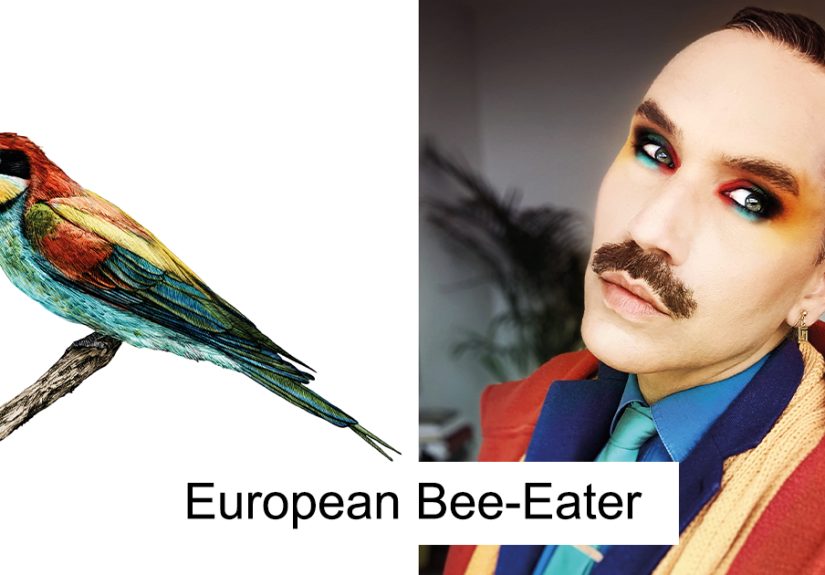
1) European Bee-eater: Sunset Stripes, Clean Lines
I built this look from color blocking: turquoise top, warm cinnamon trousers, and a golden accent (belt or earrings). A sharp eyeliner wing mimics
that sleek head shapeproof that “bee-eater” can sound chaotic while looking extremely put-together.
2) Peacock: The “I Arrived” Cape Moment
Instead of literal feathers, I went for a fan effect: pleated skirt or circular cape, jewel tones (emerald, cobalt), and a high-shine accessory.
A peacock look should feel like the outfit is making eye contact before you do.
3) Kookaburra: Soft Neutrals With a Comedic Punch
Warm brown layers, a chunky knit, and a slightly oversized silhouette capture that sturdy, grounded vibe. I add one playful elementa patterned sock,
a quirky bagbecause this bird’s whole brand is laughing at your seriousness.
4) Cedar Waxwing: Blush, Beige, and That Little Red Detail
This one is quiet luxury: taupe coat, creamy blouse, subtle satin sheen. Then a tiny red “wax” accent shows up as a lip color or nail shade.
Minimalism, but with a secret handshake.
5) White Stork: Monochrome With a Red “Beak” Accent
A crisp black-and-white outfit (long coat, slim pants, pointed shoes) gets one vivid red detailbag, shoe, or lipstick. The silhouette stays tall
and clean, because storks don’t do clutter.
6) Blue Jay: Graphic Blues and a Bold Collar
Blue-on-blue layers plus a sharp white element (collar, scarf, or piping) mimic the jay’s high-contrast patterning. A structured jacket adds the
“don’t test me” attitude these birds seem born with.
7) Atlantic Puffin: Color-Blocked Cutie With Strong Shoes
Puffins are basically tiny formalwear. I used a black base, white front panel, and a bright pop (orange-yellow accessories). Chunky shoes ground it,
because puffins look adorable but also like they could run a meeting.
8) Flamingo: Pink, But Make It Architectural
I avoid “cotton-candy” and go sculptural: a structured pink blazer or a column dress, plus long lines and a slightly off-balance pose (hello, one-leg
energy). Metallic highlights nod to sunlit water.
9) Kingfisher: Electric Blue Flash + Warm Underlayer
Bright blue outer layer, warm rust or copper underneath. The kingfisher look is all about that split-second color hit. I add a sleek hairline or
sharp brow to keep it aerodynamic.
10) Northern Cardinal: Red Power Suit, No Apologies
A red blazer or matching set does the work. Everything else goes quiet: black shoes, minimal jewelry, clean makeup with one crisp accent (liner or
lip). Cardinals don’t accessorizethey announce.
11) American Goldfinch: Yellow Pop With Black Anchors
Yellow sweater or skirt paired with black jeans or boots keeps it grounded. I like adding a tiny white detail (bag, collar) to echo wing markings.
Sunshine, but with structure.
12) Scarlet Macaw: Primary Colors, Polished
Red base, cobalt accessory, and a yellow highlightkept sleek with tailored shapes so it doesn’t read like a kindergarten art station. High-gloss
hair or a metallic eye gives that tropical shine.
13) Barn Owl: Soft Neutrals and Ghost-Quiet Texture
Creams, sandy tones, and a matte finish. I use fuzzy texturesmohair, brushed cotton, soft scarfto echo the owl’s plush look. Makeup stays diffused:
gentle contour, no harsh glitter.
14) Mallard: Green Head Sheen + Classic Prep
A green satin blouse (or accessory) with a navy coat and a warm brown belt gives mallard logic without being literal. The vibe is “park stroll,” but
make it editorial.
15) Red-winged Blackbird: Black Base, One Hot Shoulder
I start in all blacktop, pants, shoesthen add a single red-and-gold hit at the shoulder or sleeve (scarf, brooch, jacket detail). It’s a lesson in
how one accent can dominate the whole story.
16) Bird-of-Paradise: Texture Party, But Curated
This is where I let myself go a little feral: mixed textures (fringe, sequins, pleats), but within a tight palette. The silhouette stays intentionalone
dramatic element at a timeso the look reads “art,” not “costume closet.”
17) Toucan: Big Beak Energy in Accessories
Toucans are all about one iconic shape, so I echo that with a bold statement necklace or a curved bag shape. Outfit stays simpleblack and white base
then a bright accessory arc.
18) Snowy Owl: Winter White With Shadow Detail
A white coat or sweater with subtle gray patterning (speckled knit, light print) gives that snowy-owl texture. I keep the silhouette cozy and slightly
oversizedlike a soft storm cloud with great posture.
19) Hummingbird: Iridescence Without the Glitter Explosion
I use one iridescent piecemetallic skirt, shimmering top, or color-shift eyelinerand keep everything else clean and fitted. Hummingbirds look
futuristic because the shine is concentrated, not scattered everywhere.
20) Mandarin Duck: Pattern Mixing With a Rulebook
Multiple colors, multiple shapes, but the trick is repeating at least one tone across the whole outfit (like navy or cream). I’ll mix a patterned top
with a solid bottom and let accessories carry the extra color notes.
21) American Robin: Classic Casual With a Warm Chest Color
Denim or navy base, then a rust sweater or scarf at the centerlike the robin’s warm breast. It’s approachable, everyday, and secretly very flattering,
because nature knows where to place emphasis.
22) Magpie: High-Contrast Chic With a Hint of Oil-Slick Shine
Black and white tailoring gets upgraded with a glossy accent: patent shoes, shiny bag, or a subtle green-purple shimmer on the eye. Magpie style is
“minimal,” but with a mischievous twist.
23) Raven: Monochrome, Matte-to-Gloss Gradient
The raven look is all about depth. I layer black texturesmatte knit, satin skirt, leather beltso the outfit has dimension. Makeup stays sculpted,
not sparkly. Ravens don’t glitter; they brood professionally.
Ethics & Sustainability: How to Keep Bird-Inspired Fashion Bird-Friendly
Bird aesthetics have been tangled with fashion for a long timesometimes in ways that harmed wildlife. In the late 1800s and early 1900s, feathers
(and even whole birds) were used in hats and garments, fueling a destructive feather trade. Conservation pushback helped change public behavior and
shaped early protections for birds. That history matters, because it reminds us: inspiration doesn’t require extraction.
Today, you can get the “plume” feeling without feathers at all. Think: embroidery that suggests barb patterns, pleats that mimic wing layering,
and fabrics that recreate structural shine. If you want softness, use faux-down textures. If you want iridescence, experiment with satin weaves,
metallic thread, and light-reactive makeup placements.
Sustainability isn’t only about materialsit’s also about behavior. The most sustainable bird-inspired piece is often the one already in your closet.
The U.S. has a serious textile waste problem, and extending the life of garments (through restyling, repair, or resale) can be a practical act of
climate sanity. When you style bird looks through remixing what you own, you’re practicing creativity and waste reduction at the same time.
One more modern wrinkle: synthetics can shed microfibers and contribute to microplastic pollution. That doesn’t mean “never wear polyester,” but it
does mean it’s smart to buy fewer, better pieces, wash thoughtfully, and favor durable construction over disposable trends.
Conclusion: The Real Secret Is Translation
Making bird-inspired fashion looks isn’t about copying a creatureit’s about translating design principles you can actually wear: controlled palettes,
strong silhouettes, and small “field mark” details that make the concept click. Birds gave me the reference, but the outfit still has to live in the
human world: walking, sitting, laughing, ordering iced coffee, and pretending I didn’t plan the whole look around a tiny flash of feather color.
If you want to try your own version, start with one drawing and one outfit. Choose one dominant color, one texture idea, and one signature detail.
Keep it playful, keep it respectful, and remember: the goal isn’t to become a bird. The goal is to borrow nature’s design geniuswithout stealing
anything from nature.
My Experience After Styling 23 Bird-Based Looks (The Extra )
After look number five, I learned an important truth: birds do not care about your schedule. I would sit down thinking, “Okay, today is a quick one,”
and then I’d notice a tiny detail in my drawingan eye ring, a wing bar, a shadowed throat patchand suddenly I was rearranging my entire outfit
around something the size of a dime. That’s when it hit me: this project wasn’t just about fashion looks created using bird drawings as references.
It was a crash course in seeing like a designer.
Birds forced me to slow down. When you’re drawing, you have time to study: where the darkest value actually sits, how many colors are really present,
how the “simple” brown bird has three different browns plus a warm highlight that only shows up in certain light. Translating that into clothing made
me stop doing the lazy version of stylinggrabbing the obvious piece and calling it done. Instead, I started building outfits the way birds build
visual impact: layering subtlety until it reads as confidence.
The biggest practical lesson was palette discipline. I used to think “inspired by” meant “include every color in the reference.” Birds cured me of
that immediately. A kingfisher isn’t “blue everywhere.” It’s a flash of blue against warm neutrals. A cardinal isn’t “red plus chaos.” It’s red with
strong, clean support. Once I started limiting myself to a tight palette, the outfits looked more expensiveeven when they were literally composed of
my oldest closet veterans doing community service.
Texture became my second obsession. Feather logic is all about direction and layering, and clothing can do that too. Pleats and fringe gave me motion.
Satin gave me that structural-color illusion where the shade shifts as you move. Velvet gave me owl softness. And when I didn’t have the “right” fabric,
makeup filled the gaphighlight placement for sheen, a matte shadow to create depth, or a single sharp line to mimic a crisp marking. I stopped treating
makeup as decoration and started treating it as part of the outfit’s design language.
Emotionally, this project surprised me. Birds are tiny anchors to the real world. Even on days when everything felt too loudnews, work, lifedrawing a
bird gave me something specific and solvable: shape, light, color, pattern. Then turning that drawing into a look gave me a second kind of calm:
problem-solving with humor. Some outfits came out genuinely chic. Some came out “editorial in a very specific alternate universe.” But every single one
reminded me that creativity doesn’t need new stuff. It needs attention. And if a bird can look iconic with nothing but physics, pigment, and attitude,
then I can probably make a decent outfit with what I already own and a little bravery.
![18 Best Types of Charts and Graphs for Data Visualization [+ How to Choose]](https://corkopencoffee.org/wp-content/uploads/2026/05/18-best-types-of-charts-and-graphs-for-data-visualization-how-to-choose-qKM1PBYG-thumb.jpg)