Table of Contents >> Show >> Hide
- What the “Embarrassing Stuff” trend is really selling (hint: it’s not shame)
- Why embarrassing moments are funny: “wrong, yet okay” in action
- Embarrassment vs. shame: a quick, helpful distinction
- Secondhand embarrassment is real, and your face knows it
- The 50 funniest “embarrassing stuff” moments people confess online
- How to survive your own cringe without launching a new identity
- How to tell an embarrassing story so it’s funny (and not just painful)
- Extra: of real-life embarrassment experiences (and what they teach us)
There are two kinds of people in this world: the ones who’ve done something embarrassing, and the ones who are currently lying to themselves about it.
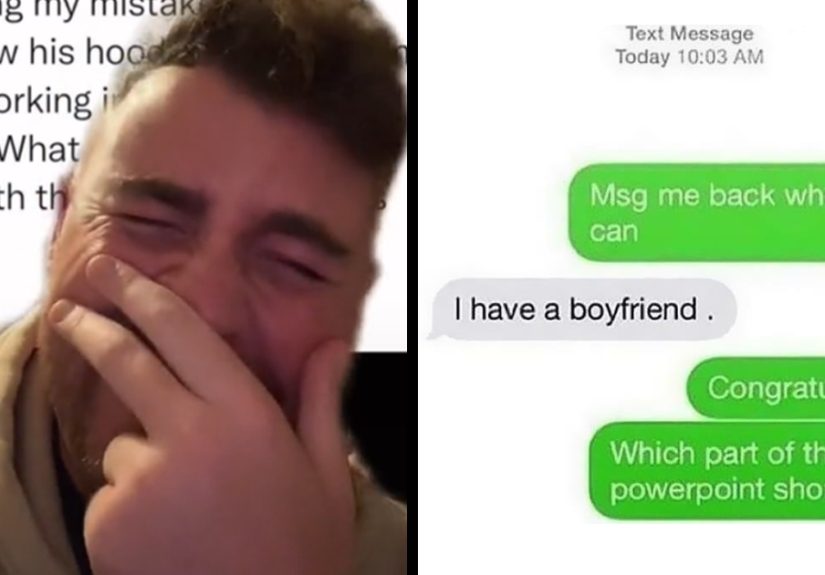
The good news? The internet has turned cringe into community service. When a TikToker reads other people’s awkward moments out loud (with impeccable timing),
we all get to laugh, wince, and whisper, “Oh no… I’ve done that.”
Bored Panda’s roundup of TikTok-style “Embarrassing Stuff” stories captures that exact feelinglike watching your past self trip in slow motion, but with
better lighting and a comment section. And while we can’t rewind time, we can turn the volume up on the funniest parts of being human.
What the “Embarrassing Stuff” trend is really selling (hint: it’s not shame)
At the center of this Bored Panda post is a familiar internet recipe: everyday people confess a moment that still haunts them at 2:00 a.m., and a creator
reacts like a supportive friend who can’t stop laughing. It’s not mean-spirited “point and laugh” humorat its best, it’s “I’m laughing because I recognize
the species.”
That’s also why these stories spread so fast: they’re short, vivid, and weirdly comforting. If you’ve ever waved back at someone who wasn’t waving at you,
congratulationsyou’re now part of a global club with no membership fee and unlimited emotional damage.
Why embarrassing moments are funny: “wrong, yet okay” in action
A lot of embarrassment humor works because it sits on the edge of a small social “violation” that’s ultimately harmless. You didn’t commit a crime. You just
accidentally told a server “Love you!” at the end of your order like you were calling Grandma. It’s a mistake, not a catastropheyet it feels like a
catastrophe because other humans were present.
Humor researchers often describe this as the “benign violation” sweet spot: something breaks a norm (violation) but doesn’t cause real harm (benign), and your
brain holds both truths at the same time. That’s why the stories land so well as TikTok reactions: you get distance (it happened to someone else), safety
(no one is actually hurt), and the relief of realizing your worst moment has company.
Embarrassment vs. shame: a quick, helpful distinction
Not every uncomfortable feeling is the same flavor. Embarrassment is usually about a social slipan awkward moment, a misunderstood cue, a tiny public mishap.
Shame tends to hit deeper: it’s the feeling that the mistake means something is wrong with you, not just what you did. That difference matters because
the healthiest versions of these viral stories are embarrassment-based: “I did something silly,” not “I am unworthy.”
When creators and audiences keep the tone gentlemore sitcom than courtroomthese stories become a safe way to practice self-compassion. You’re not being
“exposed.” You’re being reminded that humans are basically Wi-Fi routers with emotions: we act confident until we blink and forget our own password.
Secondhand embarrassment is real, and your face knows it
Ever watched someone do something awkward and felt your soul try to exit through your forehead? That’s secondhand embarrassment. It’s your brain imagining
being in that person’s shoes and deciding those shoes are on fire.
TikTok reaction videos amplify that feeling because the storyteller is often calm while describing a moment that would’ve ended your social life. The contrast
makes it funnierand also more relatablebecause it gives you permission to laugh instead of spiraling.
The 50 funniest “embarrassing stuff” moments people confess online
Below are 50 classic, very-real-life types of embarrassing moments people share in comment threads, confession posts, and viral compilations.
They’re written anonymously and generally (no receipts, no doxxing, no emotional subpoenas)just the kind of “how did my body do that” stories that show up
everywhere online.
-
You confidently say “You too!” after someone tells you to enjoy your mealand you realize it mid-syllable.
-
You pull the door that clearly says “PUSH,” then act like you were testing it for safety standards.
-
You wave enthusiastically… at a stranger behind the person who was actually waving at you.
-
You try to look cool putting in earbuds, but one falls out and bounces like it’s auditioning for a slapstick role.
-
You call someone “bestie” in a work email. The signature says “Warm regards.” The shame says “Cold sweat.”
-
You say someone’s name wrong for monthsand find out when they finally correct you with a smile that contains centuries.
-
You laugh at a joke a full ten seconds late because your brain loaded it on dial-up.
-
You step onto an escalator with the confidence of a gazelle… and immediately forget how legs work.
-
You yell “Hi!” to someone you recognizethen realize it’s not them, just a similar jacket and your own overconfidence.
-
You practice a “casual” entrance, but the door swings back and bonks you like it’s correcting your attitude.
-
You send a message meant for your friend… to your boss… and it includes the phrase “I can’t stand him.”
-
You walk into the wrong car, sit down, and wonder why your “Uber” smells like betrayal.
-
You confidently reorder a drink at a café using the exact wrong pronunciation, like you’re hosting a cooking show nobody asked for.
-
You try to whisper, but your whisper comes out loud, theatrical, and suspiciously microphone-ready.
-
You call a teacher “Mom.” A hush falls over the room like a curtain drop.
-
You go in for a handshake and they go for a hug, so you invent a third thing: the human pretzel greeting.
-
You trip over absolutely nothing, then glare at the floor like it started it.
-
You confidently push “Reply All” and instantly become the main character in the worst way.
-
You compliment someone’s “new haircut” and learn it’s… just their face.
-
You try to close a zipper quietly, but it announces itself to the room like a tiny chainsaw.
-
You say “Bless you” after someone coughs. You panic. You double down. You apologize to the air.
-
You walk into a glass door that has been there your whole life. The door wins. You salute it.
-
You answer the phone with the wrong greeting and can’t recover, so you keep going like it’s a bit.
-
You compliment a stranger’s “cute baby”… and it’s a very small dog wearing a sweater.
-
You start singing along in the car, then realize your window is down and your voice is… public property.
-
You try to sneak a snack into a quiet room and the wrapper sounds like a thunderstorm documentary.
-
You walk out of the restroom with a tiny piece of paper towel on your shoe like a sad parade streamer.
-
You attempt a confident nod in a meeting, but it becomes an aggressive bobblehead performance.
-
You say “Thanks, you too!” to someone who says “Happy birthday!” and your spirit briefly leaves your body.
-
You enter a room and forget why, so you pretend you were just checking on the vibes.
-
You try to look mysterious and unbothered, but your stomach growls like it’s auditioning for a monster movie.
-
You accidentally “like” a post from 2016 and consider changing your name and moving to the ocean.
-
You mistake a stranger for an employee and ask for helpwhile they’re wearing headphones and a look of peace.
-
You confidently start a story, realize you’re wrong halfway through, and still finish because you’ve committed to the nonsense.
-
You try to exit gracefully, but the chair makes a noise that sounds like a laugh track.
-
You say “My condolences” when you meant “Congratulations,” and the room temperature drops 12 degrees.
-
You pick up the wrong drink at a table, take a sip, and meet someone’s eyes at the exact moment you learn what regret tastes like.
-
You forget a coworker’s name during an introduction, so you introduce them as “my dear friend… you!”
-
You walk with someone for five minutes thinking you’re togetherthen they turn into their actual group like a plot twist.
-
You start clapping because other people started clapping, then realize it was for a baby burp.
-
You try to use a cool slang term and it comes out like you’re reading from a 2007 textbook.
-
You attempt to “casually” fix your hair, but it looks like you’re trying to communicate with satellites.
-
You say “Nice to meet you” to someone you’ve met multiple times, and both of you pretend it’s the first.
-
You walk into the wrong Zoom meeting, announce yourself, and become a legend in a department you don’t work for.
-
You unmute to speak and discover your last sentence was “I’m starving” said directly into the corporate record.
-
You attempt a confident toast and immediately spill a drink on the person you were praising.
-
You call someone “sir” and then realize you’re looking at your cousin.
-
You laugh so hard you snortthen you laugh harder because you snortedthen you consider becoming a silent monk.
-
You walk away after saying goodbye… in the same direction as them… for far too long… like a cinematic tragedy.
How to survive your own cringe without launching a new identity
1) Name it, lightly
A quick “Wow, that was awkward” can defuse the moment. Most people aren’t judging you; they’re busy replaying their own greatest hits of humiliation.
2) Keep self-deprecating humor kind, not cruel
Laughing at yourself can be healthy when it’s gentle. The difference is whether you’re making room for humanity (“I’m such a goof”) or tearing yourself down
(“I’m the worst person alive”). Aim for the former. Your brain is listening.
3) Offer others a soft landing
If someone else is embarrassed, you can rescue them with a simple pivot: change the subject, smile, or share a quick “I’ve done that too.” That kind of
kindness is basically social CPR.
4) Don’t turn someone else’s embarrassment into content without consent
There’s a difference between laughing with someone and posting about someone. If a moment involves another person, ask before sharing it
especially if names, tagging, or identifying details are involved. Online exposure can feel very different depending on closeness and audience overlap.
How to tell an embarrassing story so it’s funny (and not just painful)
The best “embarrassing stuff” stories tend to follow a simple rhythm: a normal setup, a confident choice, a surprise twist, and a quick self-aware landing.
Keep it short, focus on one clear moment, and end with the funniest truth you can manageusually something like: “And that’s why I can never return to that
Walgreens.”
-
Zoom in on the detail that makes it vivid (the exact phrase you said, the slow realization, the one witness who made eye contact).
-
Let the audience catch upa tiny pause before the punchline is comedy gold.
-
Don’t over-explain; embarrassment is already universally understood.
-
Make yourself the hero by owning it at the end: “Anyway, I survived. Barely.”
Extra: of real-life embarrassment experiences (and what they teach us)
If you read enough “embarrassing stuff” stories, you start noticing patternsnot because humans lack creativity, but because our social lives run on the same
tiny scripts. The scripts are useful… until they glitch. And when they glitch in public, your body reacts like you just spilled soup on the Constitution.
One of the most common modern embarrassment experiences is the technology betrayal. People describe joining a video call with the confidence
of a trained professional, only to discover they’re unmuted while narrating their entire snack plan. Others swear they were on the right screen share until a
private tab pops up like a confessional booth with bookmarks. These stories explode online because they’re so currentand because so many people are one click
away from starring in the same disaster.
Another evergreen category is the language autopilot. You say “Happy anniversary” to a grieving coworker or “Enjoy your flight” to a cashier.
It’s not that you’re careless; it’s that your brain is trying to be efficient. Social phrases are like keyboard shortcuts, and sometimes you hit the wrong one.
When storytellers admit it, the audience laughs with relief: “Oh thank God, it’s not just me.”
Then there’s the misread signal experiencewaving back, walking toward someone who wasn’t calling you, or joining a group photo you weren’t
invited to. These moments feel brutal because they touch a very old fear: rejection. But online, the sting transforms into comedy because the outcome is small,
safe, and shared. It becomes a reminder that connection is messy and we’re all guessing half the time anyway.
The healthiest threads often include something quietly beautiful: people don’t just laugh, they relate. They offer their own story as a peace offering.
That’s why creators who react with warmthlaughing while still respecting the persontend to build the biggest communities. The vibe is, “We’re not here to
roast you. We’re here to prove you’ll live.”
And maybe that’s the secret benefit of these Bored Panda/TikTok compilations. They turn embarrassment from a lonely spiral into a group exhale. You can’t erase
the moment you said the wrong thing at the wrong timebut you can reframe it as a human glitch, not a character flaw. If you can laugh at it kindly, you get
something back: perspective. Plus, if you ever feel your cheeks heating up again, you’ll remember: someone, somewhere, once walked into the wrong car and sat
there like it was their destiny. You’re doing fine.