Table of Contents >> Show >> Hide
- Why long hair is never “just hair”
- How to make 30 long-hair portraits feel truly unique
- The behind-the-scenes truth: long hair is a commitment (and portraits respect that)
- Representation done right: consent, comfort, and the “no surprise makeover” rule
- A mini playbook: how to capture your own long-hair portraits (without a full studio)
- Why people can’t stop scrolling: the psychology of hair in portraits
- Experience-based add-on: what long hair teaches you (and what photographing it teaches you back)
- Conclusion
Long hair is one of the few “accessories” you can’t accidentally leave on the bathroom counter. It grows with you, changes with you, and (on humid days) sometimes
negotiates with you. So when a photographer decides to celebrate the beauty of women with long hair through a set of 30 unique portraits, the real
subject isn’t just lengthit’s identity, patience, culture, craft, and the quiet confidence that can live in a single strand catching the light.
The concept sounds simple: photograph women with long hair. But the moment you try to make 30 portraits feel genuinely differentwithout turning everyone into
the same shampoo-ad smileyou realize the assignment is deeper. Long hair can be sculptural, protective, political, playful, spiritual, glamorous, practical, and
occasionally weaponized by a windy day. A well-made portrait series doesn’t flatten those meanings; it lets them breathe.
Why long hair is never “just hair”
Hair sits in a uniquely personal zone: it’s part of your body, but also part of how the world reads you before you say a word. Long hair in particular often carries
a double load of symbolismbeauty standards on one shoulder, individuality on the otherwhile still being, you know, something that gets stuck in your lip gloss.
Culture, identity, and the stories a hairstyle can carry
Across American life, hair has long been tied to ideas about identity, belonging, and self-expression. In many communities, hair traditions aren’t simply “looks”;
they’re languagesignaling heritage, creativity, pride, and sometimes resistance to narrow expectations. That’s why a portrait series centered on long hair can
become a series about peoplenot just aesthetics.
And long hair is not a single “type.” It shows up as coils, curls, waves, straight textures, locs, braids, twists, and protective styleseach with its own
relationship to care, time, and cultural meaning. When a photographer builds variety into a series, they’re not only changing the visual rhythm; they’re honoring
the fact that hair can be both deeply personal and deeply communal.
How to make 30 long-hair portraits feel truly unique
If you’re imagining “30 women, 30 center-part blowouts, 30 identical smiles,” don’t worry. A thoughtful photographer has more tools than thatlight, environment,
pose, narrative, and the most underrated ingredient: listening. Uniqueness doesn’t come from gimmicks. It comes from decisions that are specific to the person
in front of the lens.
Hair as shape, line, and texture (a.k.a. the art department that grows itself)
Long hair creates built-in design elements: leading lines, frames, negative space, and movement. In a series of 30, a photographer can treat hair like a flexible
sculpturesometimes the star, sometimes the supporting actor who still steals the scene.
- The “veil” portrait: hair worn forward, partially obscuring the face, making the eyes the anchor.
- The “cascade” portrait: hair falling down the back, photographed in profile so the silhouette becomes the story.
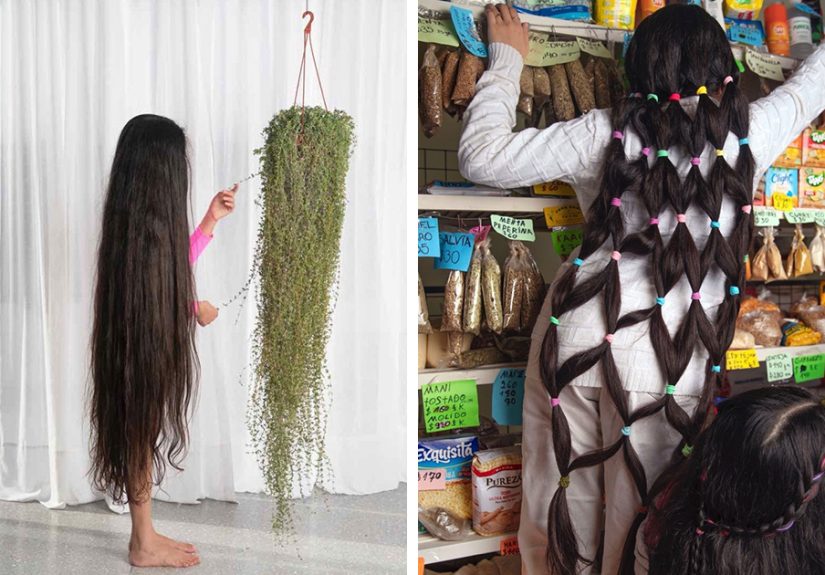
- The “braid architecture” portrait: intricate braids or twists highlighted with side light to emphasize pattern and craftsmanship.
- The “wind clause” portrait: a controlled outdoor moment where movement is intentionalnot chaos with better branding.
Notice how none of these require forcing the subject into a “look.” They’re variations on how hair interacts with the face, shoulders, hands, and the space around
the body. That’s the secret: don’t photograph hair instead of a person. Photograph hair as part of a person.
Lighting that loves long hair: separation, shine, and that soft halo
Hair is one of the fastest ways to add depth in a portraitbecause it catches light differently than skin and fabric. Photographers often use a backlight or “hair
light” to create separation from the background, especially when hair is dark or the backdrop is deep-toned. Done well, it gives that subtle rim of brightness
along the edges that makes the subject pop without looking like a neon outline.
In a 30-portrait series, lighting can become a storytelling device:
- Soft window light: gentle, intimate, everyday beautylike the feeling of a quiet morning.
- Bold studio lighting: graphic and confidenthair becomes a strong shape, not just softness.
- Backlit sunset: romantic in the cinematic sense (not the cheesy sense)hair glows, edges sparkle, mood deepens.
- Low-key lighting: dramatic shadows with selective highlights that emphasize texture and depth.
The point isn’t “more shine.” The point is intentionality. Hair can look glassy, airy, matte, wild, or sleek depending on lighting and styling choices.
A series feels unique when each frame has a reason for the way it’s lit.
The behind-the-scenes truth: long hair is a commitment (and portraits respect that)
Long hair often takes years to grow and consistent care to maintain. That reality shapes how people feel about it. Some women associate long hair with personal
milestonesrecovery, reinvention, culture, faith, or simply the satisfaction of sticking with something long enough to see it become part of who they are.
Healthy hair basics that matter in front of a camera
A portrait doesn’t require “perfect” hair, but it benefits from hair that looks cared forwhatever that means for the person’s texture and routine. Common-sense
practices can reduce damage, dryness, and breakage, especially for long hair that’s been through the friction Olympics (coats, scarves, car headrests, and the
eternal rivalry with zippers).
- Be gentle when detangling: start at the ends and work upward to reduce snapping.
- Limit heat and protect when you use it: repeated high heat can weaken the hair shaft over time.
- Avoid tight styles all the time: constant tension can stress hair and edges.
- Protect at night: smoother fabrics and loose styles can reduce friction.
Even washing habits matter more with length. Many experts emphasize applying shampoo to the scalp (where oil and buildup live) and focusing conditioner on the
lengths and ends (where dryness and tangles tend to show up). That simple split of responsibilitiesclean the scalp, cushion the endscan make long hair look
healthier in real life and in photos.
When “shedding” is normal and when it’s worth checking in
A long-hair portrait project can also make space for honest conversations about hair loss and thinningbecause beauty and vulnerability are not enemies. Some
shedding is normal for most people, but persistent, sudden, or patchy loss can have many causes and may be worth discussing with a healthcare professional.
A respectful portrait series doesn’t treat these topics as taboo; it treats them as human.
Representation done right: consent, comfort, and the “no surprise makeover” rule
Photographing women and their hair can be empoweringor it can feel like being “styled at.” The difference comes down to collaboration. The best portrait sessions
treat the subject as a partner in creative decisions: how hair is worn, whether it’s touched, how much is revealed, and what the final images should feel like.
Ethics of retouching: keep hair looking like hair
Retouching is where portrait series often lose their soul. Over-smoothing hair can erase texture, and over-sharpening can turn strands into crunchy spaghetti
(delicious, but not the goal). A modern, ethical approach is to clean up distractionsflyaways that don’t fit the intended look, background clutter, temporary
issueswhile keeping the hair’s real character intact.
A useful rule: if the subject wouldn’t recognize herself, you’ve edited a fantasy, not a portrait. A series celebrating long hair should not end by replacing
30 distinct people with one algorithmic “beauty setting.”
A mini playbook: how to capture your own long-hair portraits (without a full studio)
Want to create a similar vibewhether for a personal project, a client session, or a creative challenge? You don’t need a huge budget. You need a plan.
Step 1: Set the intention (what is this portrait about?)
Before the camera comes out, ask one question: what should this portrait communicatestrength, softness, joy, mystery, humor, tradition, freedom, calm?
Hair becomes more interesting when it serves a story.
Step 2: Use light that flatters texture
- Window light: place the subject near a large window; turn slightly toward the light for gentle shaping.
- Backlight outdoors: put the sun behind the subject for a soft glow; expose carefully so the face stays readable.
- Simple rim light: one light behind and above can separate hair from a darker background.
Step 3: Choose poses that give hair a purpose
Instead of “just stand there,” try prompts that create natural movement:
- “Turn your shoulders away, then look back with your eyes first.”
- “Run your fingers through the endsslowlythen let your hand fall.”
- “Gather your hair to one side like you’re about to braid it.”
- “Tilt your chin slightly down and laugh at something off-camera.”
These prompts avoid stiff posing and keep attention on expression. Hair becomes a visual accent, not the whole personality.
Step 4: Edit with restraint
Adjust exposure and contrast to keep detail in both hair and skin. If you remove distractions, do it lightly. Preserve texture. Avoid turning shine into plastic.
And remember: the goal is not to win an internet argument about “sharpness.” The goal is to make a portrait that feels like a person.
Why people can’t stop scrolling: the psychology of hair in portraits
Long hair is visually magnetic because it creates pattern and motiontwo things the human brain loves. It’s also emotionally loaded. Hair marks phases of life:
growing it, cutting it, coloring it, protecting it, losing it, reclaiming it. A portrait series featuring long hair works when it quietly invites viewers to
project their own memories: the first haircut, the braid a parent used to do, the curls that refused to “behave,” the decision to stop fighting texture and start
respecting it.
In other words, viewers don’t just see hair. They see time. And that’s why 30 portraits can feel like 30 chapters.
Experience-based add-on: what long hair teaches you (and what photographing it teaches you back)
If you ask women who’ve worn long hair for years what it’s like, the answers are rarely about “beauty” first. They talk about ritual. The small
habits that shape a day: detangling gently, learning which products work and which ones are basically expensive perfume for your bathroom shelf, figuring out how
to keep hair from wrapping itself around a scarf like it’s practicing for an escape room.
Many describe long hair as a timeline you can touch. The ends might represent the last few yearswhat you ate, how stressed you were, how often you used heat,
whether you spent a summer in the sun, whether you went through a period where “self-care” meant remembering to drink water. That’s one reason portraits of long
hair can feel intimate without being invasive: the hair is literally a record of time passing.
In portrait sessions, photographers often notice that long hair changes a subject’s confidence in real time. Someone who feels awkward about their smile may relax
once their hair is arranged the way they like. Someone who usually “hides” behind hair might choose to sweep it back and reveal their face, surprising even
themselves. And sometimes the most powerful moments happen when the hair is imperfect: a little frizz after rain, wind lifting strands, a braid coming loose at
the edges. Those details signal real life, not a catalog.
There’s also the very practical side people don’t mention until you’re laughing together on set: long hair is heavy. It gets caught under backpack straps. It
sneaks into pictures when you least expect itlike a photobombing friend who only speaks in split ends. Women often develop little “systems”: always carrying a
clip, knowing which hairstyles survive a commute, learning the exact angle to flip hair over a coat collar so it doesn’t turn into a knot by lunchtime.
Photographers learn their own lessons. They learn that hair is a lighting instrument. Backlight can make strands glow, but it can also reveal every flyaway if
the mood is meant to be sleek. Side light can carve out texture beautifully, but it can also exaggerate dryness if the hair is dehydrated. The best photographers
don’t panic when hair has a mind of its own; they build time into the session for adjustments and they talk the subject through choices. “Do you want it to look
wild and free, or smooth and polished?” is not a styling questionit’s a storytelling question.
Another common experience: long-hair portraits are rarely just about hair. When you center hair, you inevitably talk about identity. Women share why they grew it
out, why they keep it, what it means in their family, what comments they’ve received, what assumptions people make. Some love the attention; others have learned
to set boundaries. A portrait series can honor that by showing variety: a woman whose hair is her signature; a woman whose hair is simply part of her, not the
headline; a woman who wears protective styles as art; a woman with gray length she refuses to “fix” for anyone.
Finally, the most consistent “experience-based” truth is this: long hair rewards respect. Not obsessionrespect. Treat it gently, listen to what it needs, stop
punishing it for not behaving like someone else’s, and it becomes an extension of self rather than a daily argument. A portrait series that celebrates long hair
at its best isn’t celebrating perfection. It’s celebrating relationshipthe ongoing, human relationship between a woman and something that grows with her.
Conclusion
A set of 30 long-hair portraits works when it refuses the lazy shortcut of sameness. The best versions of this project don’t say, “Look how pretty long hair is.”
They say, “Look how many ways beauty can show up when we let people be specific.” Hair becomes shape, texture, time, memory, culture, and sometimes comedy.
And in the end, the portraits aren’t really about hairthey’re about women being seen clearly, on their own terms, one frame at a time.