Table of Contents >> Show >> Hide
- What We Mean by “Lonely” (and Why It’s Complicated)
- The Top 10 Loneliest People In History
- 1) Alexander Selkirk (The Real-Life Castaway)
- 2) Mary Mallon (“Typhoid Mary,” Quarantined and Feared)
- 3) Admiral Richard E. Byrd (Alone in Antarctica)
- 4) Emily Dickinson (Famous, Brilliant, and Privately Alone)
- 5) Nikola Tesla (A Genius with Pigeons for Company)
- 6) Howard Hughes (The Billionaire Who Vanished Indoors)
- 7) Robert Stroud (The “Birdman of Alcatraz,” Mostly Without Birds)
- 8) Napoleon Bonaparte (Exile After an Empire)
- 9) Vincent van Gogh (Lonely, Misunderstood, and Still Writing Letters)
- 10) Henry David Thoreau (Solitude with a Purpose)
- What These Lives Have in Common
- Modern Experiences Related to “Top 10 Loneliest People In History” (Extra)
- Conclusion
“Lonely” is a slippery word. Sometimes it means no one is around. Sometimes it means
people are around, but you still feel like you’re speaking into a void. History can’t measure
loneliness with a yardstick, but it does leave breadcrumbs: exile orders, quarantine records, prison logs,
letters that sound like they were written to a future friend, and the quiet choices of people who stepped
away from the crowd.
So this isn’t a “who suffered most” contest (history already has too many of those). This is a guided tour
of ten real individuals whose lives were shaped by extreme isolationsometimes forced, sometimes chosen,
sometimes both. Along the way, you’ll notice a pattern: loneliness can break people, sharpen them, or do a
little of eachlike a gym workout you didn’t sign up for.
What We Mean by “Lonely” (and Why It’s Complicated)
Being alone and being lonely aren’t identical twinsthey’re more like cousins who borrow each other’s
clothes. Some people seek solitude for clarity, creativity, or survival. Others are isolated by illness,
punishment, scandal, politics, or sheer bad luck. In the historical record, loneliness often shows up as:
- Physical separation: an island, a prison cell, a remote base, an exile destination.
- Social separation: stigma, fear, misunderstanding, or a reputation that keeps doors shut.
- Emotional separation: feeling unseen even when surrounded by admirers or employees.
With that in mind, here are ten lives that read like a masterclass in what isolation can do to a human being
and what a human being can do with isolation.
The Top 10 Loneliest People In History
1) Alexander Selkirk (The Real-Life Castaway)
In 1704, Scottish sailor Alexander Selkirk ended up marooned on an uninhabited island in the Juan Fernández
archipelago. Whether you call it stubbornness, courage, or a catastrophic case of “I’d rather walk than ride
with you,” the result was the same: years with no human conversation. Selkirk survived through routine
hunting, building shelter, and turning time into something he could manage one day at a time.
What makes his story so haunting isn’t just the isolation; it’s the way loneliness becomes a landscape you
live inside. Selkirk’s endurance helped inspire the castaway archetype in popular literature, but the real
lesson is simpler: when there’s no audience, you either fall apartor you become your own company.
2) Mary Mallon (“Typhoid Mary,” Quarantined and Feared)
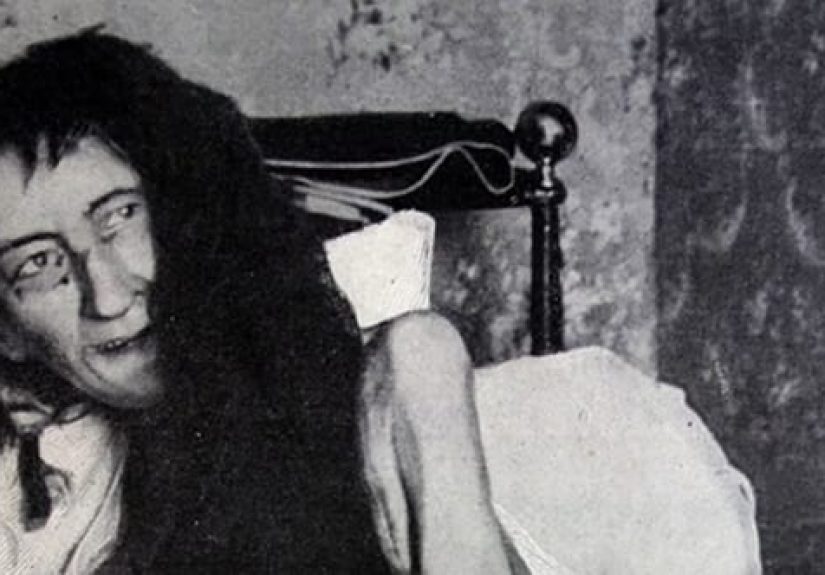
Mary Mallon was an asymptomatic carrier of typhoid fever, identified after outbreaks connected to households
where she worked as a cook. Public health officials forcibly quarantined her on North Brother Island in New
York Citytwice. The second confinement lasted decades, and she died there.
Loneliness in her case wasn’t just physical separation; it was social exile. She became a symbol and a
warning label, nicknamed in a way that made her feel less like a person and more like a walking headline.
Her story sits at the uncomfortable intersection of public safety and personal libertywhere “necessary”
can still feel like “abandoned.”
3) Admiral Richard E. Byrd (Alone in Antarctica)
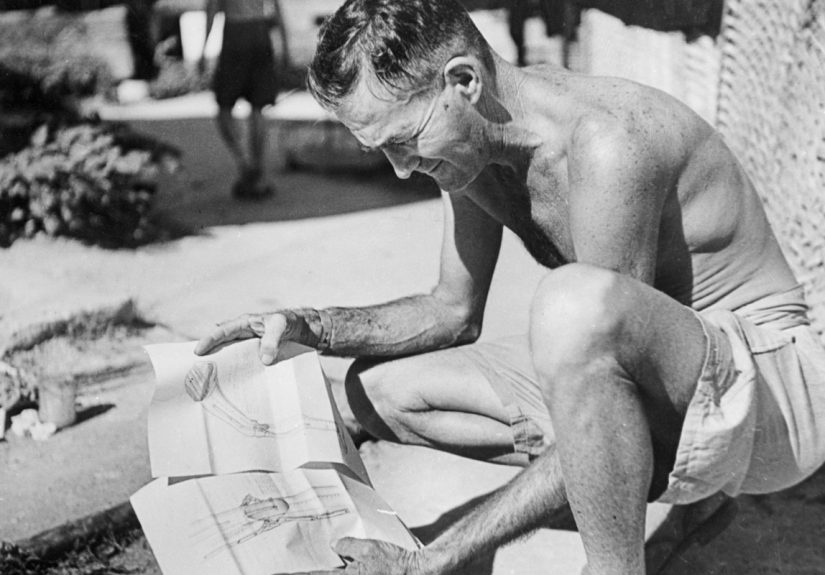
Polar explorer Richard E. Byrd spent months alone at an Antarctic outpost during the winter of 1934, operating
a remote meteorological station. The cold was punishing, the darkness relentless, and the isolation so complete
it could make a person start negotiating with their stove like it’s a roommate who never pays rent.
Byrd’s ordeal became legendary partly because it wasn’t just “quiet time.” It was solitude with consequences:
danger, illness, and the slow mental grind that comes when every thought echoes. His experience shows how
loneliness can become a physical riskbecause the mind and body don’t really believe in separate departments.
4) Emily Dickinson (Famous, Brilliant, and Privately Alone)
Emily Dickinson wrote poems that feel like they were whispered from the edge of a crowded room. During her life,
she published very little, and over time she became increasingly reclusive. Much of her connection to others
traveled through lettersintimacy by ink.
Dickinson’s loneliness is easy to romanticize (“Ah yes, the mysterious genius!”), but it’s more interesting than
a stereotype. She created a world that was both smaller and bigger than most: smaller in geography, bigger in
imagination. Her story suggests that isolation can be both a wound and a workshopsometimes in the same hour.
5) Nikola Tesla (A Genius with Pigeons for Company)
Nikola Tesla helped shape modern electrical power, yet his later years were marked by financial trouble,
eccentric routines, and increasing isolation. Stories from that period often describe him living alone in New York,
devoting affection to pigeons with a tenderness that reads like someone redirecting a social need into a safer,
simpler bond.
Tesla’s loneliness is a reminder that innovation doesn’t guarantee belonging. You can change the world and still
feel separate from itespecially when your mind runs faster than the social world can keep up. The tragedy isn’t
that he was alone; it’s that so many people understood his inventions before they understood him.
6) Howard Hughes (The Billionaire Who Vanished Indoors)
Howard Hughes had fame, money, and influencebut in his later years, he pursued privacy with near-obsessive
intensity, often living in seclusion in hotel suites and limiting contact to a small circle of aides. It’s one of
history’s sharpest examples of how isolation can happen in the center of luxury.
Hughes shows the difference between being “protected” and being “connected.” A locked door can keep danger out,
but it also keeps companionship out. His story reads like a cautionary tale for any era with high walls, high
status, and the mistaken belief that control is the same thing as peace.
7) Robert Stroud (The “Birdman of Alcatraz,” Mostly Without Birds)
Robert Stroud spent decades incarcerated in the U.S. prison system, including years in segregation and restricted
conditions. Popular culture labeled him the “Birdman of Alcatraz,” though historical accounts note he did not keep
birds at Alcatraz itself. The nickname became part myth, part marketing, part misunderstanding.
Regardless of the bird detail, the loneliness is real: long-term confinement can turn time into a heavy substance.
Stroud’s story highlights how isolation can reshape identity. When you’re cut off from ordinary relationships,
you either lose your narrativeor you cling to one with both hands, even if it’s built from scraps.
8) Napoleon Bonaparte (Exile After an Empire)
Napoleon went from commanding Europe to being confined on Saint Helena, a remote island in the South Atlantic,
after his final defeat. Exile isn’t just distanceit’s the abrupt shrinking of your universe. Your calendar goes
from battles and politics to weather and waiting.
Napoleon wasn’t alone in the strict sense; he had attendants and guards. But exile produces a specific kind of
loneliness: being surrounded by people who are not there to share your life, but to manage it. The silence of
irrelevance can be louder than the silence of empty rooms.
9) Vincent van Gogh (Lonely, Misunderstood, and Still Writing Letters)
Vincent van Gogh’s life is often summarized with a few dramatic headlines, but one of the most revealing details
is how much of his emotional world survives in lettersespecially to his brother Theo. His struggles with mental
health, periods of hospitalization, and social friction contributed to a life that often felt isolating, even when
people were physically nearby.
Van Gogh illustrates a painful truth: loneliness isn’t always a lack of people; sometimes it’s a lack of being
understood. Yet his work suggests another truth: isolation can intensify perception. The same sensitivity that
hurts can also see.
10) Henry David Thoreau (Solitude with a Purpose)
Thoreau’s time at Walden Pond is frequently misread as total isolation. In reality, his cabin was not in another
galaxy, and he wasn’t living like a human Wi-Fi dead zone forever. Still, he intentionally stepped away from
everyday social noise to examine life more closely.
Thoreau belongs on this list because he reveals the paradox: chosen solitude can feel empoweringuntil it doesn’t.
When you reduce your world on purpose, you also reduce your distractions. What’s left is you, your thoughts, and
whatever feelings were waiting behind the noise.
What These Lives Have in Common
Put these ten stories side by side and you’ll see recurring “loneliness engines” that still operate today:
- Forced isolation: quarantine, prison, exile, remote duty.
- Chosen isolation: creative retreat, philosophical experiment, obsessive privacy.
- Stigma and misunderstanding: being reduced to a label, a rumor, or a caricature.
- Mind-body feedback loops: isolation affecting health, health deepening isolation.
Loneliness isn’t always the same experience, but it often behaves the same way: it amplifies whatever is already
inside a personfear, brilliance, grief, discipline, imagination, obsession. That amplification is what makes it
dangerous, and occasionally transformative.
Modern Experiences Related to “Top 10 Loneliest People In History” (Extra)
If these stories feel strangely familiar, it’s because loneliness didn’t retire after the invention of group chats.
Plenty of modern life is built to look connected while quietly running on isolation. You can be “reachable” all day
and still feel unseen. You can have a calendar full of meetings and a heart that feels like it’s working the night
shift alone.
Think about the first week in a new city. You walk past crowds that don’t know your name, eat meals that taste fine
but feel oddly silent, and realize that “busy” is not the same thing as “bonded.” That’s a mild version of exile:
not Saint Helena-level, but still a sharp reminder that belonging is a relationship, not a location.
Or consider quarantine and illnessthe Mary Mallon lesson, updated. Even short-term isolation can mess with your
sense of time. Days blur. Motivation evaporates. The mind starts narrating everything like a documentary:
“Here we observe the human, once social, now debating whether the laundry counts as cardio.” When your world shrinks,
your thoughts get louder, and not all of them are friendly.
Creative solitude can also flip on you. Many writers, artists, and builders recognize the Dickinson-Thoreau paradox:
solitude helps you hear your own voiceuntil that voice starts arguing with itself. A weekend alone can feel like a
reset button. A month can feel like drifting. The difference often isn’t the calendar; it’s whether you have
meaningful points of contactpeople who know you beyond your “update,” your “status,” your “productivity.”
There’s also the Howard Hughes flavor of modern loneliness: control-as-comfort. You optimize everythingyour routines,
your environment, your privacyuntil you realize you’ve optimized the humans out of your life. The scary part is how
reasonable it feels while you’re doing it. “I’m just busy.” “I’m just protecting my peace.” Sometimes that’s true.
Sometimes it’s a socially acceptable way to say, “I’m disappearing.”
The antidotes are rarely dramatic. They’re usually small, consistent acts that rebuild connection without demanding
perfection: a recurring coffee with one person who makes you laugh, a hobby where you’re a beginner with other beginners,
volunteering where you’re useful in a human way, therapy or support groups when isolation has gotten sticky. Even
texting “Want to take a walk?” can be a tiny rebellion against the gravitational pull of loneliness.
If history teaches anything here, it’s this: isolation changes people. But people can also change what isolation means.
Selkirk built routines. Dickinson built language. Byrd endured and recorded. Even when loneliness can’t be erased,
it can be shapedinto reflection, into art, into empathy, into a stronger skill for reaching out the next time the door
is unlocked.
Conclusion
The loneliest people in history weren’t all the same type. Some were punished. Some were feared. Some were misunderstood.
Some stepped away from society on purpose. But they share one thing: their isolation left evidencehabits, writings,
reputations, and stories that still make us flinch because they feel possible.
If you’re reading this because loneliness is a topic, not just a curiosity, take the gentlest lesson from the harshest
stories: connection is a practice. It doesn’t always arrive dramatically. Sometimes it’s builtone letter, one walk,
one honest conversation at a time. History is full of people who didn’t get that chance. We do.