Table of Contents >> Show >> Hide
- Quick overview: what Tremfya treats and why dosing varies
- Dosage forms and strengths: what comes in the box (and what doesn’t)
- Tremfya dosing schedule by condition
- Plaque psoriasis dosing (adults)
- Plaque psoriasis dosing (pediatric patients 6+ who weigh at least 40 kg)
- Psoriatic arthritis dosing (adults)
- Psoriatic arthritis dosing (pediatric patients 6+ who weigh at least 40 kg)
- Ulcerative colitis dosing (adults): induction + maintenance
- Crohn’s disease dosing (adults): induction + maintenance
- What “Week 0 / Week 4 / every 8 weeks” looks like in real life
- How to take Tremfya: injection basics (without the panic spiral)
- Missed dose: what to do if your schedule goes off the rails
- Do you ever need a dose adjustment?
- Before starting Tremfya: practical safety checks that affect dosing plans
- Storage and handling: keeping the dose usable
- Common dosing questions (FAQ)
- Real-world experience: what dosing feels like week to week (and how people actually stick with it)
- Conclusion
Tremfya (guselkumab) is one of those modern “smart” medicines that sounds like a character from a sci-fi movie,
but actually shows up in real life to help calm down an immune system that’s acting like it has 37 browser tabs
open and none of them are responding.
If you’re here, you probably don’t need the dramatic traileryou need the practical stuff: what strengths Tremfya
comes in, what the dosing schedule looks like for psoriasis vs. psoriatic arthritis vs. Crohn’s disease vs.
ulcerative colitis, what “induction” means, and what to do if you miss a dose (because life happens and calendars
are not always the boss of us).
This guide walks through Tremfya dosing in plain American English, with enough detail to be truly usefulwithout
turning your brain into an insurance prior-authorization form. (No promises about insurance, though.)
Quick overview: what Tremfya treats and why dosing varies
Tremfya is an interleukin-23 (IL-23) antagonistbasically, it blocks part of the immune signaling that can drive
inflammation. It’s used for:
- Moderate to severe plaque psoriasis (adults and certain pediatric patients)
- Active psoriatic arthritis (adults and certain pediatric patients)
- Moderately to severely active ulcerative colitis (adults)
- Moderately to severely active Crohn’s disease (adults)
The “why” behind different dosing schedules is pretty intuitive: skin and joints often do well on a steady,
relatively low-maintenance rhythm, while inflammatory bowel disease (IBD) may need an upfront “get control fast”
phase (induction) before shifting into maintenance dosing.
Dosage forms and strengths: what comes in the box (and what doesn’t)
Tremfya can be given in two ways:
subcutaneous (SC) injection (under the skin) and, for certain IBD regimens,
intravenous (IV) infusion (into a vein at a healthcare facility).
Subcutaneous injection options
Tremfya is available as single-dose devices designed for a full-dose injectionno math required on your part.
Common options include:
- Prefilled syringe (single-dose)
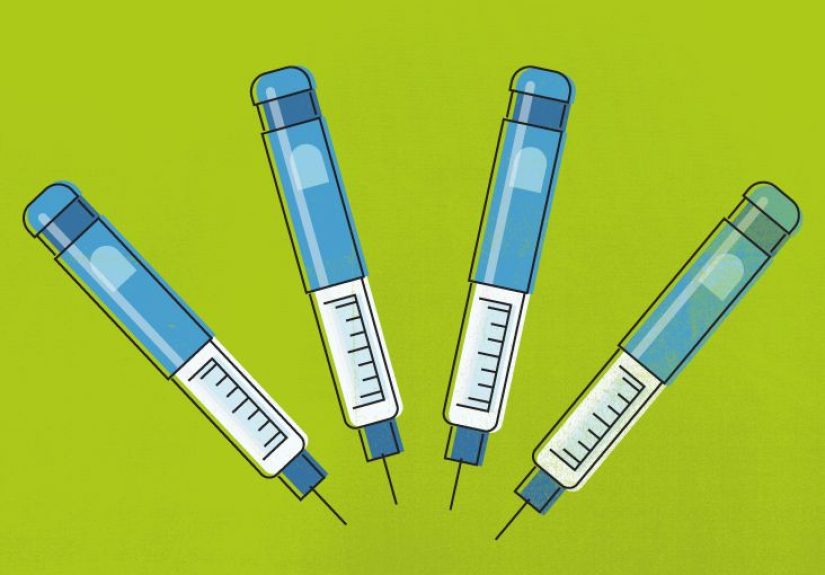
- Prefilled pen (Tremfya Pen) (single-dose)
- One-Press patient-controlled injector (single-dose)
Strengths you may see for subcutaneous dosing include:
- 100 mg/mL (typically 1 mL total volume for a 100 mg dose)
- 200 mg/2 mL (still 100 mg/mL concentration, but a larger total dose/volume)
IV infusion option (IBD)
For certain induction schedules in ulcerative colitis and Crohn’s disease, Tremfya may be used as an IV infusion
using a single-dose vial:
- 200 mg/20 mL (10 mg/mL) single-dose vial for infusion
One more practical note: some IBD induction schedules use a 400 mg subcutaneous dose, which is
given as two consecutive 200 mg injections (back-to-back, same visityes, you get two little
“you did it” moments instead of one).
Tremfya dosing schedule by condition
Tremfya dosing is usually described in “Week 0, Week 4…” language. Here’s how to translate that:
Week 0 means your first dose day. From there, schedules are counted forward in weeks.
Plaque psoriasis dosing (adults)
For adults with moderate to severe plaque psoriasis, Tremfya is administered as a subcutaneous injection:
- Week 0: 100 mg
- Week 4: 100 mg
- Then: 100 mg every 8 weeks
In plain terms: two starter doses a month apart, then one injection about every two months.
That “every 8 weeks” cadence is a big reason people like the routineit’s not exactly daily vitamins.
Plaque psoriasis dosing (pediatric patients 6+ who weigh at least 40 kg)
For pediatric patients 6 years and older who weigh at least 40 kg (88 lb),
the dosing schedule for plaque psoriasis is also:
- Week 0: 100 mg (SC)
- Week 4: 100 mg (SC)
- Then: 100 mg (SC) every 8 weeks
A key difference is who gives the injection: pediatric self-administration is generally
not recommendeddoses are typically administered by a trained caregiver or healthcare professional.
Psoriatic arthritis dosing (adults)
For active psoriatic arthritis, the Tremfya schedule matches the psoriasis schedule:
- Week 0: 100 mg (SC)
- Week 4: 100 mg (SC)
- Then: 100 mg (SC) every 8 weeks
Tremfya may be used alone or in combination with a conventional DMARD
(for example, methotrexate), depending on your clinician’s plan and your specific disease pattern.
Psoriatic arthritis dosing (pediatric patients 6+ who weigh at least 40 kg)
For pediatric patients 6 years and older who weigh at least 40 kg,
the dosing schedule is again:
- Week 0: 100 mg (SC)
- Week 4: 100 mg (SC)
- Then: 100 mg (SC) every 8 weeks
As with pediatric psoriasis, administration is typically handled by a trained caregiver or healthcare provider.
Ulcerative colitis dosing (adults): induction + maintenance
For moderately to severely active ulcerative colitis, dosing includes an induction phase
(to help get inflammation under control) followed by maintenance dosing (to keep it controlled).
Induction (choose one approach based on your prescriber’s plan)
- IV induction: 200 mg by IV infusion over at least 1 hour at Week 0, Week 4, and Week 8
-
SC induction: 400 mg by SC injection at Week 0, Week 4, and Week 8
(given as two consecutive 200 mg injections each time)
Maintenance (two labeled maintenance options)
- Option A: 100 mg (SC) at Week 16, then every 8 weeks
- Option B: 200 mg (SC) at Week 12, then every 4 weeks
Clinicians are generally advised to use the lowest effective recommended maintenance dose
that maintains response. Practically, that means your provider may choose the dosing track that best fits
disease severity, response, tolerability, and real-world logistics.
Crohn’s disease dosing (adults): induction + maintenance
Crohn’s disease dosing follows the same “induction then maintenance” logic.
Induction (two common labeled pathways)
- IV induction: 200 mg by IV infusion over at least 1 hour at Week 0, Week 4, and Week 8
-
SC induction: 400 mg by SC injection at Week 0, Week 4, and Week 8
(two consecutive 200 mg injections each induction visit)
Maintenance
- Option A: 100 mg (SC) at Week 16, then every 8 weeks
- Option B: 200 mg (SC) at Week 12, then every 4 weeks
If you’re thinking, “Why does the gut version of this plan look like a much busier calendar?”you’re not wrong.
Induction is intentionally front-loaded, and maintenance can be every 4 weeks for some people depending on the
chosen regimen.
What “Week 0 / Week 4 / every 8 weeks” looks like in real life
Here’s a concrete example for the psoriasis / psoriatic arthritis schedule (100 mg at Week 0, Week 4, then every 8 weeks).
Let’s pretend your first dose is on a Monday.
- Week 0 (Dose 1): Monday, Day 1
- Week 4 (Dose 2): Monday, Day 29 (about 1 month later)
- Week 12 (Dose 3): Monday, Day 85 (8 weeks after Dose 2)
- Week 20 (Dose 4): Monday, Day 141
- Then: every 8 weeks from there
For many adults, this ends up being roughly 6 injections per year after the starter doses.
(Your first year may include more because it starts with Week 0 and Week 4 before the every-8-weeks rhythm settles in.)
How to take Tremfya: injection basics (without the panic spiral)
Tremfya is typically started under the guidance of a healthcare professional. After training, adults may
self-inject with certain devices. For pediatrics, a trained caregiver or healthcare provider usually administers it.
Where to inject
Common injection sites for subcutaneous Tremfya include:
- Front of the thighs
- Lower abdomen (except the 2-inch area around the navel)
- Back of the upper arms (typically only if a caregiver/health professional is giving the injection)
It’s also important to avoid injecting into skin that is tender, bruised, red, hard, thick, scaly,
or otherwise irritated. For people with psoriasis, avoid injecting into active plaques when possible.
Let it warm up (no, not with a hair dryer)
Tremfya is stored in the refrigerator. Before injecting, you typically remove it from the fridge and let it sit at
room temperature for about 30 minutes (without removing the needle cap). Don’t try to “speed-run”
the process with hot water, microwaves, sunlight, or questionable radiator stunts. Let time do its thing.
What the liquid should look like
Before you inject, inspect the solution. Tremfya is typically described as clear and colorless to light yellow.
Tiny particles may be seen in some situations depending on the product instructions, but you should not use it if the
liquid is cloudy, discolored, or has large particles.
Rotate injection sites
Don’t inject into the same exact spot every time. Rotating sites can help reduce irritation and make the experience
less unpleasant over time. Think of it like not wearing the same shoes every dayyour skin appreciates variety.
Missed dose: what to do if your schedule goes off the rails
If you miss a Tremfya dose, the general instruction is straightforward:
take the missed dose as soon as you remember, then
take your next dose at your regular scheduled time.
If you’re unsure how to get back on track, call your healthcare provider.
What you generally don’t want to do is “double up” without medical direction. Two doses at once might sound
like a bold productivity hack, but biologics are not a to-do list.
Do you ever need a dose adjustment?
Tremfya dosing is generally fixed-dose for its labeled indicationsmeaning it’s not typically
adjusted based on body weight in routine practice, even though drug clearance can vary with weight.
In older adults, available pharmacokinetic data have not shown clinically meaningful differences requiring dose adjustment.
Specific dosing adjustments for renal or hepatic impairment are not well defined in the same way they are for some
oral medicationsyour prescriber will consider your overall clinical picture.
Before starting Tremfya: practical safety checks that affect dosing plans
While this article focuses on dosing, a few pre-treatment steps can shape the “when” and “how” of your schedule:
- TB screening: patients are typically evaluated for tuberculosis before starting therapy.
- Liver labs for IBD: for ulcerative colitis or Crohn’s disease, prescribers may obtain liver enzymes and bilirubin prior to starting.
- Vaccines: complete age-appropriate vaccinations before treatment when possible, and generally avoid live vaccines during treatment.
These steps are not “busywork.” They help clinicians reduce avoidable risk, especially when a medication influences immune activity.
Storage and handling: keeping the dose usable
Tremfya is generally stored in a refrigerator at 36°F to 46°F (2°C to 8°C). Keep it in the
original carton to protect it from light, and avoid freezing or shaking it. If you’re traveling, ask your pharmacy
or care team about travel coolers and temperature guidance so you don’t accidentally turn your medication into an
expensive science experiment.
Tremfya products are sterile and preservative-free, so unused portions are generally discarded rather than saved.
Also, Tremfya is not made with natural rubber latexhelpful information for people with latex sensitivity.
Common dosing questions (FAQ)
Is Tremfya dosed weekly or monthly?
For plaque psoriasis and psoriatic arthritis, Tremfya is usually dosed at Week 0, Week 4, then every 8 weeks.
For Crohn’s disease and ulcerative colitis, induction and maintenance dosing can be more frequent, with some
maintenance schedules every 4 weeks depending on the regimen.
What’s the difference between the pen, syringe, and One-Press injector?
They’re different delivery devices for the same medication. The best choice often depends on comfort, dexterity,
and personal preference. Some people prefer a pen for simplicity; others like the control of a syringe; and some
appreciate the One-Press design. Your care team can help you choose and train you on technique.
Do I have to go to a clinic for Tremfya?
For psoriasis and psoriatic arthritis, Tremfya is typically given as a subcutaneous injection and may be
self-administered by trained adults. For IBD, some induction options use IV infusion in a healthcare facility,
while other regimens use subcutaneous induction. Maintenance is generally subcutaneous.
How long does it take to notice improvement?
Response time varies by condition and individual. Some people may notice improvement within weeks, while others
may need a few months to see the full effect. Your prescriber will monitor response and adjust the overall plan
as needed (for example, confirming you’re on the appropriate maintenance schedule).
Real-world experience: what dosing feels like week to week (and how people actually stick with it)
Dosing schedules look clean on paper. Real life is messierschool events, work deadlines, travel, “I swear I put
that calendar reminder in there,” and the occasional day when you’re simply not in the mood to be poked by a tiny
needle, even if it’s a helpful tiny needle.
In the real world, many people describe Tremfya’s every-8-weeks rhythm (for psoriasis/PsA maintenance) as one of
its most “livable” features. After the first two starter doses, the spacing is wide enough that you’re not always
planning your week around injection day. People often build little routines: picking a consistent day of the week,
pairing the dose with something memorable (like “the first Sunday after payday” or “the day I do laundry”), and
setting two remindersone for “take it out of the fridge” and one for “actually inject.”
For those using IBD induction schedules, the experience can feel more intense early on because Week 0, Week 4,
and Week 8 come quickly, and an induction dose may be IV infusion or two back-to-back injections. A common
strategy is to treat induction like a short “project sprint.” People plan lighter days, keep snacks and water on
hand, and ask a friend or family member to be available the first timeless because something dramatic is expected,
and more because it reduces stress. Stress is not a medical dosing parameter, but it is absolutely a human one.
Another real-world theme is device preference. Some people love pens because they feel streamlinedcap off, press,
done. Others prefer prefilled syringes because they like seeing what’s happening and controlling the pace. For
people with hand pain or limited dexterity (which can happen with psoriatic arthritis), the device choice can be
more than a comfort preferenceit can be the difference between “I can do this myself” and “I need help every time.”
If you’re struggling, it’s worth asking your care team about device options rather than silently suffering through
a method you hate.
Missed doses happen, and the emotional reaction is often bigger than the clinical one: people feel guilty, like
they “failed” at medicine. In reality, the fix is usually straightforwardtake the dose when you remember, then
return to the normal schedule. The most helpful mindset is treating your schedule like a GPS, not a moral scorecard:
you took a wrong turn, it reroutes, you keep going.
Finally, people often mention that the best dosing plan is the one that fits their life. The “right” maintenance
option for IBD, for example, may involve balancing symptom control, lab monitoring, injection frequency, and access
to care. That’s not a sign you’re being difficultit’s a sign you’re being realistic. A sustainable plan is how
long-term treatment actually works.
Conclusion
Tremfya dosing is refreshingly structured once you decode the Week 0 / Week 4 language:
psoriasis and psoriatic arthritis typically use 100 mg at Week 0 and Week 4, then every 8 weeks,
including certain pediatric patients 6+ who weigh at least 40 kg. For ulcerative colitis and Crohn’s disease,
dosing often includes induction (IV or SC options) followed by maintenance at either every 8 weeks (100 mg) or every 4 weeks (200 mg),
depending on the regimen. Add in practical handling stepsrefrigerated storage, 30 minutes to reach room temperature, site rotation,
and a plan for missed dosesand you’ve got the real-life version of “schedule and more.”