Table of Contents >> Show >> Hide
- Why Antique American Patchwork Quilts Are Back in a Big Way
- Quilts Were Always More Than Bedcovers
- From Attic to Outfit: Antique Quilts in Fashion
- From Blanket to Bench: Quilts in Upholstery and Furniture
- From Bedspread to Wall Art
- How to Style Antique Patchwork Quilts Without Making Everything Look Like a Theme Restaurant
- What to Look for When Buying an Antique American Quilt
- Why This Trend Has Staying Power
- Experience and Inspiration: What It Feels Like to Live With the Quilt Comeback
- Conclusion
Note: Body-only HTML, English content, and source links intentionally omitted for clean web publishing.
Once upon a time, the antique American patchwork quilt was mostly associated with guest rooms, cedar chests, and at least one relative who called every object “good quality” with the seriousness of a museum curator. Now? It has swagger again. These handmade textiles are turning up as statement jackets, reupholstered accent chairs, gallery-worthy wall hangings, and the kind of storied decor that makes a room feel collected rather than copied from a showroom.
This comeback is not random, and it is definitely not just another fleeting “grandma-core” mood board. Antique patchwork quilts sit at the intersection of several powerful design currents: nostalgia, sustainability, craftsmanship, slow decorating, Americana, and the growing desire for homes and wardrobes that actually say something. In an era of mass-produced sameness, quilts offer the opposite. They are tactile, imperfect, deeply personal, and often astonishingly graphic. In other words, they are having a moment because they never stopped being good. The rest of us just finally caught up.
Why Antique American Patchwork Quilts Are Back in a Big Way
The first reason is emotional. People are hungry for spaces and clothes that feel human. After years of fast furniture, disposable fashion, and algorithm-approved beige everything, handmade objects suddenly feel luxurious in a richer sense of the word. Not expensive for the sake of expensive, but meaningful. A patchwork quilt carries visible labor. You can see the piecing, the rhythm, the mending, the decisions. It looks like someone made it because someone did.
The second reason is aesthetic. Antique American quilts are visually stronger than their sweet reputation suggests. Many are bold enough to stand in for contemporary art, especially patterns like Log Cabin, Lone Star, Flying Geese, Drunkard’s Path, and certain improvisational Gee’s Bend compositions. They bring color, geometry, asymmetry, and texture all at once. A good quilt does not whisper from the corner. It casually steals the room.
The third reason is cultural. Quilts have long occupied an unusual and fascinating place in American design history. They were practical objects, yes, but also deeply expressive ones. Women used quilts to mark marriages, births, community ties, memory, grief, celebration, and belonging. Some were made for everyday warmth; others were “best” bedcovers reserved for special use. Over time, many quilts moved from utility to symbolism, from family keepsake to folk art to recognized museum object. That shift matters because it helps explain why quilts now make perfect sense not only on beds, but on walls and in design-forward interiors.
And then there is the broader trend climate. Nostalgia is driving a great deal of current decorating, but not in a dusty, untouched, do-not-sit-there way. Today’s version mixes old and new. Designers are pairing heirlooms with modern silhouettes, antique textiles with cleaner architecture, and traditional craft with more playful styling. The result is not a historical reenactment. It is a layered, contemporary look with a pulse.
Quilts Were Always More Than Bedcovers
If the current revival feels fresh, it also has deep roots. American quilts from the eighteenth and nineteenth centuries were often among the few handmade objects through which women could show artistry, skill, and personal expression. Over time, as fabrics became more available and piecing techniques evolved, quilts became more varied and more ambitious. Appliqué quilts, pieced quilts, album quilts, presentation quilts, crazy quilts, and regional styles all expanded what a bedcover could be.
That history matters because it corrects a common misconception: quilts are not merely cozy extras. They are part design object, part social record, part art form. Museums have spent years reinforcing that point. Major collections and exhibitions have highlighted quilts not as quaint leftovers from domestic life, but as works of composition, color, storytelling, and invention. The recognition of Gee’s Bend quilts as major American art helped accelerate this understanding even further. These works have been celebrated for abstraction, improvisation, rigor, and emotional forcequalities the art world tends to admire very loudly once it stops calling something “craft.”
That museum validation has had a trickle-down effect in interiors, fashion, and collecting. When a quilt is seen as art, hanging it on the wall no longer feels eccentric. When its patterns are understood as design language, using them in upholstery or clothing feels less like novelty and more like continuation.
From Attic to Outfit: Antique Quilts in Fashion
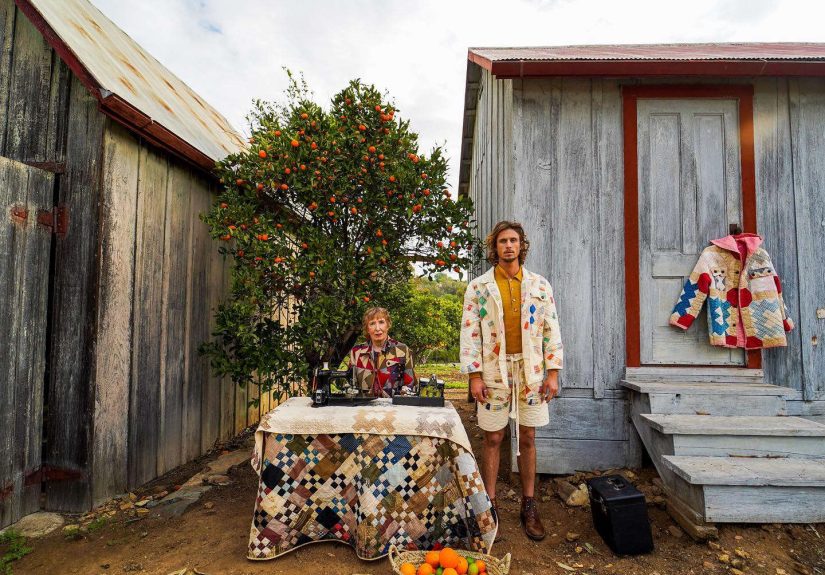
Let us begin with the most photogenic part of the comeback: clothing. Antique quilts have become fashion’s favorite way to look both soulful and expensive without screaming either one. Designers helped lead the charge by reworking antique and heritage textiles into jackets, trousers, shirts, and coats. One of the clearest examples is Bode, the New York label that built a reputation around turning antique American quilts and other historical textiles into one-of-a-kind garments. The appeal is obvious. Each piece has pattern, age, provenance, and built-in character before a single sleeve is cut.
That idea spread far beyond one label. Quilt jackets, quilt coats, and patchwork outerwear now sit comfortably in the same universe as workwear, vintage Americana, and elevated craft dressing. They are rustic without being sloppy, romantic without being precious, and cool in that suspiciously effortless way that usually requires either remarkable taste or an excellent vintage dealer.
What makes antique quilts so compelling in clothing is that they do what good fashion always tries to do: tell a story at a glance. Faded calicos, irregular seams, softened cotton, sun-aged reds, and repaired corners all read as lived experience. A quilt jacket feels less like a new garment and more like a continuation of an old life. That is powerful. It also aligns with a broader interest in upcycling, repair, and fashion that values materials with history.
Still, this is where good judgment matters. Not every antique quilt should become a jacket. Rare, pristine, or historically significant quilts are often better preserved intact. Fashion pieces made from fragile textiles may also be beautiful but not especially practical for hard wear. The smartest makers and buyers understand the difference between giving damaged textiles a second life and chopping up a museum-worthy heirloom for clout. The best quilt clothing honors the material rather than merely harvesting its vibe.
From Blanket to Bench: Quilts in Upholstery and Furniture
If clothing gave quilts cool-girl credibility, upholstery gave them room presence. Antique patchwork quilts are now appearing on chairs, stools, pillows, headboards, benches, and even chaise silhouettes. Sometimes designers use actual vintage textiles, especially when a quilt is already too worn for full preservation but still rich with beauty. Other times they use reproductions inspired by historic quilts, which is often the more durable and responsible route for furniture that will see everyday use.
This is where the comeback gets especially interesting. Upholstery translates quilt language into architecture. A patchwork chair becomes a sculptural object. A headboard covered in quilt-inspired fabric turns a bed into an instant focal point. A bench upholstered in bold piecing can bridge traditional and modern elements more effectively than many artworks can.
One of the clearest examples of this crossover is the furniture collaboration inspired by the quilts of Gee’s Bend, Alabama. In that collection, licensed reproductions of quilt designs were translated into upholstered beds, chairs, ottomans, and other pieces. That approach matters because it honors the artists, supports their legacy, and shows how quilt compositions can live beautifully in three dimensions without requiring original historic textiles to endure daily wear and tear.
Contemporary designers are also using antique quilt fragments in more experimental furniture. In recent work, antique patchwork has appeared on artful seating, blurring the line between collectible design and functional object. That is the sweet spot of the current trend. The quilt is not merely decoration placed on top of design. It becomes part of the design vocabulary itself.
For everyday homes, the easiest upholstery entry points are smaller ones. Think a reading-chair seat, an ottoman top, a lumbar pillow, or the inside back of a slipper chair. These uses preserve the visual excitement of the patchwork while avoiding the “help, my sofa looks like it got dressed in frontier cosplay” problem. A little quilt goes a long way.
From Bedspread to Wall Art
Perhaps the most convincing sign of the revival is how naturally quilts now function as wall art. This should not be surprising. Many antique quilts are large-scale compositions with striking geometry, rich negative space, and painterly color relationships. Hung vertically, they read less like bedding and more like textile paintings. Some are graphic enough for minimal interiors; others bring exactly the right amount of warmth to traditional, cottage, farmhouse, bohemian, or eclectic rooms.
There is also a practical advantage: quilts soften a space visually and acoustically. They add depth without glare, movement without busyness, and history without requiring a matching set of anything. A quilt above the bed, behind a dining table, along a hallway wall, or in an entry makes a room feel warmer in every sense. It is a design move with emotional intelligence.
That said, truly antique textiles deserve careful display. Historic quilts are vulnerable to light damage, especially direct sunlight and UV exposure. If you are framing one, archival materials are essential, and adhesives should never touch the textile. Larger quilts can be wall-mounted with proper support so weight is distributed evenly. If a piece is especially valuable or fragile, consult a textile conservator or experienced framer before doing anything adventurous. Your quilt should not have to risk its afterlife because you got inspired at 11:47 p.m. and found a staple gun.
How to Style Antique Patchwork Quilts Without Making Everything Look Like a Theme Restaurant
Mix eras on purpose
The best rooms using antique quilts do not surround them with only other antique things. They mix crisp lamps, contemporary art, clean-lined furniture, or modern paint colors with one or two storied textiles. Contrast makes the quilt feel current.
Let one piece be the star
If your quilt is bold, give it breathing room. A wall-hung quilt can replace a gallery wall. A quilt-upholstered chair can stand in for a brighter fabric story elsewhere. You do not need five patchwork moments in one room unless your goal is “historic general store, but emotional.”
Respect the wear
Fading, repairs, and softness are not flaws to hide. They are often what make antique quilts beautiful. Patina is part of the charm. That said, active tearing, brittleness, or dye instability are signs a piece may be better suited to preservation than use.
Use reproductions when durability matters
For busy households, high-contact upholstery, or children’s spaces, quilt-inspired prints and licensed reproductions are often the smartest choice. You still get the visual punch without asking a historic textile to survive snacks, pets, denim rivets, and reality.
Think beyond the bed
Yes, quilts still look fantastic folded at the foot of a bed. But they also work on banquettes, over screens, across daybeds, on walls, and as the design anchor in guest rooms and reading corners. The current comeback is all about using them with intention rather than habit.
What to Look for When Buying an Antique American Quilt
First, buy with your eyes and your common sense. Pattern, color, craftsmanship, and condition matter more than trend-chasing. Some buyers fall in love with high-contrast stars; others want softer, faded scrap quilts with obvious handwork. There is no single right type, only the piece that feels alive in your hands and right in your space.
Check the construction. Hand stitching, older fabrics, and signs of age can all point to authenticity, but condition is crucial. Look for weakening seams, shattering fabric, severe fading, odors, or stains that may be difficult to stabilize. Ask about provenance when possible. Even partial history adds value, especially if you are interested in the quilt as a cultural object and not just a decorative one.
Most important, match the quilt to its future role. If you want wall art, you can choose a more delicate piece. If you want to use a quilt in upholstery or clothing, sturdier textiles or damaged fragments may make more sense. The prettiest quilt in the shop is not automatically the one that should become your headboard.
Why This Trend Has Staying Power
Antique American patchwork quilts are making a comeback because they answer several modern desires at once. They offer craftsmanship in a culture of speed. They offer identity in a sea of copy-and-paste interiors. They offer sustainability without the self-righteous packaging. And they bring a deeply American visual language back into circulation at a moment when many people want homes and wardrobes with memory, softness, and a little backbone.
Most trends burn bright because they photograph well. Quilts do that too, but their staying power comes from something else: substance. They are useful, beautiful, culturally layered, and endlessly adaptable. They can live on a bed, on a body, on a chair, or on a wall and still feel true to themselves. That is rare. It is also why this revival feels less like a gimmick and more like a rightful return.
So yes, the patchwork quilt is back. Not quietly, not apologetically, and definitely not just in the linen closet. It is back in fashion, back in interiors, back in the art conversation, and back in the hands of people who understand that the best design objects are not always the newest ones. Sometimes the coolest thing in the room is the thing with the longest memory.
Experience and Inspiration: What It Feels Like to Live With the Quilt Comeback
One reason this trend resonates so strongly is that living with quilts feels different from living with ordinary decor. A vintage lamp can be beautiful. A new chair can be comfortable. But an antique American patchwork quilt adds something less tangible and more memorable: atmosphere. The room feels softer, yes, but it also feels inhabited. Even when you do not know the full story behind a quilt, you can sense that it had a life before you. That changes the energy of a space in a way flat-pack furniture simply cannot. No offense to flat-pack furniture, but it has never once whispered, “I was here before your Wi-Fi password.”
Many people first reconnect with quilts through inheritance. A relative passes one down, and for years it sits folded in a closet because nobody knows what to do with it. Then one day it lands on a chair, across a guest bed, or above a headboard, and suddenly it becomes the piece that makes the whole room click. It stops feeling like an obligation and starts feeling like design with emotional weight. That is often the gateway experience: realizing the old family textile is not just sentimental, but visually fantastic.
Others come to the trend through fashion. Wearing a quilt jacket is a completely different experience from wearing a regular coat. It draws attention, but in a more interesting way. People ask where it came from. They touch the fabric. They notice the pattern. The garment starts conversations because it does not look anonymous. It feels collected, not consumed. In a sea of trend-driven outerwear, quilt clothing has personality without trying too hard. It is the fashion equivalent of someone who knows how to host dinner with mismatched plates and still somehow makes it look chic.
There is also a particular pleasure in decorating with quilts because they are so forgiving. A room that feels cold becomes warmer. A room that feels too polished becomes more relaxed. A modern room becomes less sterile. A traditional room becomes less stiff. Even a small quilt folded over the arm of a chair can make a space feel more layered and real. That flexibility is why designers keep returning to textiles when a room feels technically finished but emotionally unfinished.
And then there is the wall-art effect. People are often surprised by how dramatic a quilt looks when hung vertically. What seemed sweet on a bed can become commanding on a wall. The geometry sharpens. The color relationships stand out. The stitching reads differently. It feels less like “blanket” and more like “composition.” That moment of re-seeing is part of the joy of the trend. Antique quilts are familiar objects, but when used creatively they become new again.
Perhaps the most satisfying experience, though, is knowing that these pieces slow you down. They encourage attention. You notice the handwork, the mends, the fabric choices, the odd little inconsistencies that make handmade things wonderful. In a culture that rewards speed, quilts reward looking. Maybe that is the real reason they are making such a strong comeback. They remind us that beauty is not always sleek, new, or machine-perfect. Sometimes beauty is patched, pieced, sun-faded, slightly crooked, and full of history. Which, frankly, is also true of the best people.
Conclusion
The return of antique American patchwork quilts is not a random flirtation with nostalgia. It is a full-spectrum design shift that touches clothing, upholstery, and wall art because quilts are uniquely equipped to travel between those worlds. They carry story, pattern, craft, memory, and visual force. They make fashion feel more personal, furniture feel more soulful, and walls feel less empty. In a design era obsessed with authenticity, quilts have become impossible to ignorebecause they were authentic long before authenticity became a buzzword.
If you are tempted to join the trend, start with one strong piece and let it do the work. A wall-hung quilt can anchor a bedroom. A quilted jacket can transform a simple outfit. A small upholstered bench or chair can bridge the old and the new in a room instantly. The secret is not to overdo it. Antique quilts do not need help being interesting. They have been waiting, very patiently, for us to notice that all along.