Table of Contents >> Show >> Hide
- What Tempest Actually Is
- Why Britain Wants Tempest So Badly
- GCAP Turned Tempest Into Something Bigger
- What Makes Tempest Different From Today’s Fighters
- How Far Along Is the Program?
- The Big Challenges Hovering Over Tempest
- Why Tempest Matters Beyond the U.K.
- Experiences Around the Tempest Story: What This Program Feels Like on the Ground
- Conclusion
- SEO Tags
The name sounds like a summer blockbuster, a high-end sports car, or maybe a storm that forgot how to be subtle. In reality, Tempest is Britain’s ambitious answer to the next era of air combat: a stealthy, data-hungry, heavily networked fighter designed for the kind of battlefield where surviving is not enough. The jet also has to think fast, share information instantly, and work with drones, missiles, and other systems as if they all went to the same very expensive military prep school.
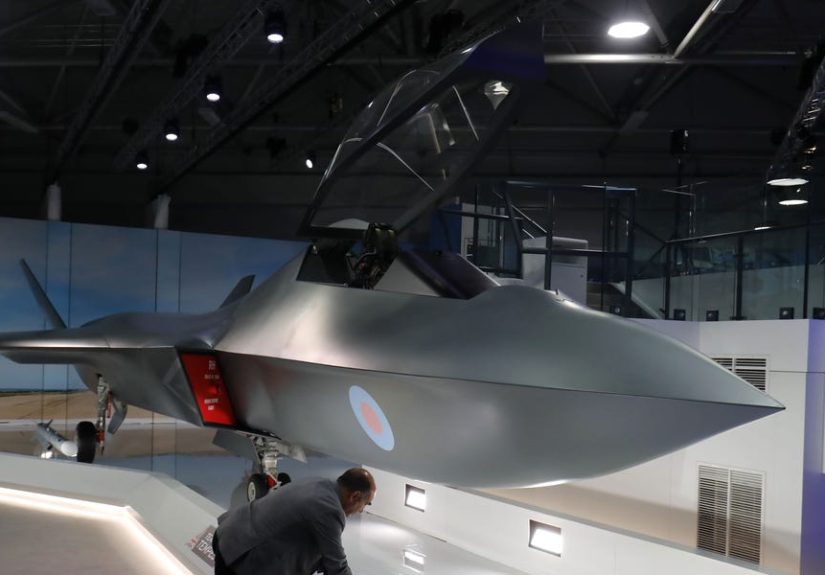
There is one important clarification right up front. Despite the headline, Tempest is not a fighter that has already entered Royal Air Force service. It is a future combat aircraft program, first unveiled by the U.K. in 2018 and now folded into the broader Global Combat Air Programme, or GCAP, with Italy and Japan. The goal is to field the aircraft around 2035. So Britain has not rolled a finished warplane onto the runway and tossed the keys to a squadron. What it has done is launch and steadily advance one of the world’s most closely watched next-generation fighter efforts.
And that matters. A lot. Because Tempest is not just about replacing an aging fleet someday down the road. It is about whether the U.K. can remain a serious combat aviation power in a world where air superiority is getting more crowded, more digital, and much more unforgiving.
What Tempest Actually Is
Tempest began as a British-led future fighter concept unveiled at the Farnborough Airshow in 2018. At the time, it represented a bold statement: the U.K. wanted a next-generation combat aircraft of its own, backed by domestic industrial heavyweights and aimed at entering service in the mid-2030s. That was already ambitious. Then the project got bigger.
In 2022, Britain, Italy, and Japan agreed to merge their future fighter ambitions into GCAP. That changed the story from “Britain has a cool mock-up and a long to-do list” into “three advanced industrial powers are now trying to build a shared sixth-generation combat aircraft.” The result is that Tempest is still very much the U.K. identity of the effort, but it now sits inside a trinational framework with broader resources, broader politics, and broader expectations.
In plain English, Tempest is both a jet and a strategy. It is a future aircraft, yes, but it is also a way for the U.K. to keep design, manufacturing, propulsion, software, and mission-system expertise alive at home while partnering internationally where that makes sense. Britain is not just building a plane. It is trying to preserve an ecosystem.
Why Britain Wants Tempest So Badly
The RAF’s Eurofighter Typhoon remains highly capable, but no fighter stays young forever. Air forces can upgrade radar, software, weapons, and sensors until a jet is basically the aviation version of a smartphone held together by sheer optimism, but at some point a new design is necessary. Tempest is intended to replace the capabilities currently provided by Typhoon and to do so in a threat environment that looks nothing like the one Typhoon was built for.
That future environment includes denser air defenses, longer-range missiles, more contested electromagnetic battlespace, faster decision cycles, and increasingly networked warfare. A future fighter cannot just be fast and stealthy. It has to be a flying node in a combat cloud, constantly gathering, processing, protecting, and distributing information while also avoiding becoming a very expensive fireworks display.
There is also a sovereignty angle here. Nations that stop designing advanced combat aircraft do not easily get that capability back. Once the engineering talent, test infrastructure, supplier base, and design culture fade away, rebuilding them is brutally difficult. Tempest is therefore a military project, an industrial strategy, a jobs program, and a national signal all at once.
GCAP Turned Tempest Into Something Bigger
The most important development in Tempest’s story is not a slick rendering or a dramatic tagline. It is the partnership structure now sitting behind it. GCAP brings together the U.K., Italy, and Japan in a long-term effort to develop a shared next-generation fighter for around 2035.
That matters for three reasons. First, fighter programs are staggeringly expensive. Sharing development costs helps. Second, each partner brings different strengths. Britain contributes deep expertise in combat air design and integration. Italy adds aerospace depth through Leonardo and a strong defense industrial base. Japan brings advanced manufacturing, electronics capability, and a major strategic motivation to field a next-generation aircraft as regional security pressures grow.
Third, the partnership turns Tempest into more than a national vanity project. It becomes an international program with wider potential production runs, broader export logic, and greater geopolitical weight. Japan’s move to loosen longstanding restrictions so the future fighter could potentially be exported was a major sign that this is not intended to be a boutique science experiment. The partners want a real combat system with real market relevance.
That said, international teamwork in defense is never just handshakes and happy press photos. It also means negotiation, compromise, industrial horse-trading, and periodic headaches powerful enough to make coffee nervous. Recent public friction over technology sharing has shown that GCAP is a serious partnership, but not a frictionless one.
What Makes Tempest Different From Today’s Fighters
1. It is being designed for range and payload, not just sleek looks
Modern air warfare is increasingly a long-distance sport. Tempest is being shaped around the idea that future combat aircraft may need to travel farther, carry more fuel, and haul larger or more numerous weapons than some current stealth fighters. Public reporting around the program has repeatedly emphasized range and payload as major priorities.
That is a notable design choice. For years, casual fighter fans have tended to judge new jets like they are Olympic gymnasts with afterburners. But in real combat, endurance, reach, and weapons flexibility can matter just as much as flashy maneuverability. If Tempest can strike deeper, stay out longer, and carry a wider menu of weapons, it becomes a much more useful tool in a stretched and contested battlespace.
2. It is supposed to be a sensor monster
If older fighters were about seeing the enemy, Tempest is about seeing everything, sorting it, fusing it, and making sense of it quickly enough to matter. The aircraft’s mission systems are expected to be a central selling point. Public descriptions of the radar and sensing architecture have painted a picture of massive data collection, high-speed onboard processing, and integrated electronic warfare functions.
This is the part of the story where the jet starts sounding less like a traditional fighter and more like a stealthy server rack with attitude. That is not a criticism. It is exactly where combat aviation is headed. Pilots in future air battles will drown without strong decision support, sensor fusion, and machine assistance. Tempest is being designed for that reality.
3. It is built for bigger sticks
One of the most interesting recent discussions around Tempest is its emphasis on larger, longer-range air-to-air missiles and broader weapons-bay flexibility. The logic is simple: future air combat may require engaging threats at greater distance, under heavier electronic attack, against better defended opponents. A fighter that can only carry a narrow set of munitions is a fighter that starts every war by limiting itself.
Program thinking has also leaned toward making the aircraft compatible with a wide variety of weapons from the partner nations and potentially broader NATO inventories. That kind of flexibility is not glamorous, but it is strategically smart. Wars consume munitions fast. Supply chains wobble. Stockpiles shrink. A jet that can accept multiple weapon families gives commanders options when the neat spreadsheets stop matching reality.
4. It will not fight alone
Tempest is not being conceived as a lone wolf hero plane soaring off into battle while inspirational music plays in the background. It is part of a wider family-of-systems approach. That includes collaborative drones, often described as loyal wingmen or collaborative combat aircraft, which could scout ahead, carry weapons, jam defenses, or absorb risk the crewed fighter would rather avoid.
This matters because the most advanced future fighters may be defined as much by the systems around them as by the aircraft itself. Tempest’s value could come not only from what sits inside its airframe, but from how well it commands and cooperates with surrounding uncrewed systems. In other words, it may be less “one amazing jet” and more “quarterback of an airborne team.”
How Far Along Is the Program?
GCAP is still a development effort, but it is no longer just concept art and glossy brochures. Britain has been pushing a combat air flying demonstrator meant to fly by 2027, and official updates indicate major structural elements are already in manufacturing. That demonstrator is important because it gives the program something concrete, testable, and politically useful. Governments love a strategy paper. They love a real airframe even more.
The broader program has also moved into a more formal industrial phase. Britain, Italy, and Japan established a joint organization earlier, and the industrial side has continued evolving with joint-company and contract milestones intended to keep design work moving toward the 2035 target. A recent first international GCAP design contract suggests the program is advancing from concept politics into harder-edged engineering and integration work.
Still, nobody should confuse momentum with inevitability. Defense aviation history is littered with programs that looked unstoppable until budgets, politics, or technology decided otherwise. Tempest is further along than a napkin sketch, but it still has a mountain to climb.
The Big Challenges Hovering Over Tempest
Money
Advanced fighter programs are where ambition goes to meet accounting. Tempest has impressive goals: stealth, long range, large payload, advanced sensors, digital design, software-heavy architecture, and integration with uncrewed systems. Each of those phrases sounds exciting. Each also sounds expensive because it is expensive.
The program will need sustained political backing across multiple capitals for years, not months. That means surviving elections, defense reviews, industrial disputes, inflation, and the eternal temptation of governments to promise ten things while fully funding maybe three and a half.
Technology sharing and industrial balance
Recent criticism from Italy over British technology sharing shows the usual stress point in multinational defense work: everyone wants collaboration, but nobody wants to feel like the junior partner paying premium prices for selective access. If those tensions grow, they could slow decision-making or complicate the division of labor.
This does not mean GCAP is falling apart. It means GCAP is behaving like a real multinational weapons program, which is a bit like saying the sea is behaving like water. But it is still a risk worth watching.
Schedule pressure
A 2035 in-service goal is bold. So is a 2027 demonstrator. These dates are not impossible, but they leave little room for bureaucratic wandering, technological surprises, or budgetary drama. And let us be honest: defense programs are not famous for their modesty or punctuality. If Tempest hits its dates, that will be an achievement worth highlighting in bold, underlined text, maybe with a trumpet fanfare.
Why Tempest Matters Beyond the U.K.
Tempest matters because it sits at the crossroads of military capability, allied cooperation, and industrial competition. It gives Britain, Italy, and Japan a chance to shape their own path instead of simply waiting to buy whatever someone else has already decided to build. It also gives Europe and Asia a high-end air combat program that is not purely American and not purely continental European.
There is also a strategic message in the partnership itself. Britain is linking its defense-industrial future with Japan and Italy at a time when security concerns stretch from Eastern Europe to the Indo-Pacific. That makes Tempest more than a jet. It becomes a symbol of how allied defense relationships are evolving across regions.
And yes, there is the export angle. A fighter program without export potential quickly starts sweating in budget meetings. The more credible Tempest looks as a future product, the more sustainable the economics become. That does not guarantee success, but it does improve the odds that this aircraft becomes more than a niche platform with a very impressive presentation deck.
Experiences Around the Tempest Story: What This Program Feels Like on the Ground
One of the most interesting ways to understand Tempest is to stop looking at it as a silhouette and start looking at it as an experience. Not a joyride, obviously. Nobody is handing out demo flights with a complimentary mug. But the program creates very different lived realities for the people around it.
For engineers and factory workers, Tempest appears to be experienced less as a single airplane and more as a giant digital challenge. Official updates have emphasized robotic assembly, digital manufacturing, software acceleration, and digital twins. That means the people building this aircraft are not just bending metal in the traditional sense. They are working in a world where simulation, data, model-based design, and rapid iteration increasingly shape the aircraft before it ever leaves the hangar. The experience is part aerospace, part software lab, part “please do not break the build at 2 a.m.”
For air power planners, Tempest represents a kind of strategic balancing act. They are not just asking whether the jet can fly fast or carry weapons. They are asking how it fits into future coalition warfare, how it communicates with uncrewed partners, how it survives against next-generation surface-to-air systems, and how it complements fleets that may still include Typhoons and F-35s. The experience here is one of long-horizon pressure. Decisions made now are supposed to matter in the 2030s and 2040s, which is defense planning’s way of saying, “No pressure, but everything counts.”
For allied governments, the Tempest experience is equal parts opportunity and diplomacy. Britain sees industrial sovereignty and military credibility. Italy sees technological influence and industrial participation. Japan sees a path toward a future fighter shaped by its own needs and broader partnership rules, not just a simple off-the-shelf purchase. But each capital also experiences the tension that comes with shared control. Every major choice can become a question of workshare, technology access, schedule, exports, and national interest. Cooperation is powerful, but it is rarely cozy.
For aviation enthusiasts and defense watchers, Tempest has produced the kind of experience that modern fighter programs often do: a strange mix of excitement and patience. There are mock-ups, renderings, radar claims, payload discussions, missile concepts, and factory updates that spark plenty of fascination. But there are also long stretches where progress comes in contracts, organizational charts, or carefully worded official statements. In other words, following Tempest is sometimes thrilling and sometimes like watching a masterpiece being painted one very expensive brushstroke at a time.
And for the broader public, Tempest may eventually become a test of whether advanced defense programs can still be explained in human terms. Beneath the jargon, the point is simple. The U.K. and its partners are trying to build an aircraft that can protect airspace, deter rivals, support allies, preserve high-end manufacturing, and keep military aviation expertise alive for another generation. That is not just a technical effort. It is a national experience unfolding in slow motion, with designers, politicians, pilots, suppliers, taxpayers, and allies all strapped in for the ride.
Conclusion
Tempest is one of the most ambitious combat-air projects anywhere in the world, and it deserves attention for more than its futuristic profile. It shows how Britain wants to fight, build, partner, and compete in the decades ahead. It also shows that the future of air power will be about much more than a single airplane. It will be about networks, software, sensors, drones, industrial resilience, and allied cooperation.
So yes, the U.K. has introduced Tempest to the world. But the real story is not that a new fighter has already arrived. The real story is that Britain, together with Italy and Japan, is trying to build the kind of combat aircraft that will matter when today’s best fighters begin to look a little less future-proof and a little more vintage. If the program succeeds, Tempest could become one of the defining military aircraft of the 2030s. If it stumbles, it will still have taught a hard lesson about how difficult it is to design the future while paying for the present.
Either way, Tempest is no passing breeze. It is a storm system with a flight plan.

![18 Best Types of Charts and Graphs for Data Visualization [+ How to Choose]](https://corkopencoffee.org/wp-content/uploads/2026/05/18-best-types-of-charts-and-graphs-for-data-visualization-how-to-choose-qKM1PBYG-thumb.jpg)