Table of Contents >> Show >> Hide
- Why Skin Cancer Gets Missed in “Hidden” Areas
- 1. Your Scalp
- 2. Your Ears
- 3. Your Lips
- 4. Your Eyelids and the Skin Around Your Eyes
- 5. Under Your Nails
- 6. The Palms of Your Hands, Soles of Your Feet, and Between Your Toes
- 7. The Genital Area, Buttocks, and Skin Around the Anus
- 8. Old Scars, Chronic Sores, and Damaged Skin
- What Warning Signs Should You Watch For?
- How to Check the Places People Usually Miss
- Conclusion
- Experiences People Commonly Have Before They Realize It Could Be Skin Cancer
When most people think about skin cancer, they picture a suspicious mole on a shoulder, a flaky patch on a nose, or the classic “I forgot sunscreen at the beach” disaster zone. Fair enough. Sun-exposed areas do matter. But skin cancer is a lot sneakier than its reputation suggests. It can show up in places people rarely inspect, barely protect, or simply do not associate with cancer at all.
That is why this topic matters so much. A spot on your scalp can hide under hair for months. A crusty area on your lip may get dismissed as “just chapped.” A dark streak under a nail might be blamed on trauma, polish, or a bad salon day. Meanwhile, some melanomas and other skin cancers can appear on the soles of the feet, palms of the hands, genitals, buttocks, or even in areas with little sun exposure. In other words, skin cancer does not always read the same prevention brochure you did.
This does not mean every odd bump is a five-alarm emergency. It does mean a full-body skin check should be exactly that: full body. Below are the unexpected places you can get skin cancer, why these spots are often missed, what warning signs to watch for, and how to check your skin without turning the process into a forensic crime drama in your bathroom mirror.
Why Skin Cancer Gets Missed in “Hidden” Areas
The most dangerous thing about an unusual location is not that it is mysterious. It is that it is easy to ignore. People tend to examine the face, arms, and maybe the chest. They do not always inspect the scalp, behind the ears, bottoms of the feet, nail beds, or skin around the genitals and buttocks. Some areas are hard to see, some are awkward to check, and some are easy to explain away.
Another reason these spots slip under the radar is that skin cancer does not always look dramatic. Basal cell carcinoma can resemble a tiny shiny bump or a sore that never quite heals. Squamous cell carcinoma may look like a scaly patch, crust, wartlike bump, or persistent sore. Melanoma can follow the ABCDE pattern, but it can also appear as a dark line under a nail, an irregular patch on the sole, or a new spot that just looks different from everything else on your skin.
The big takeaway is simple: skin cancer can show up where people least expect it, and sometimes that surprise is exactly what delays diagnosis.
1. Your Scalp
Your hair is not a magical force field. It offers some protection, but not enough to make the scalp immune to ultraviolet damage or skin cancer. In fact, the scalp is one of the easiest places to miss a changing spot because many people cannot see it well, and others assume hair coverage means they are safe.
Skin cancer on the scalp may show up as a rough patch, a crusty spot, a sore that bleeds when you brush your hair, a pink bump, or a mole that changes color or shape. Some people notice tenderness when shampooing. Others only discover it when a barber, hairstylist, or family member points it out. That is not exactly the most glamorous early-detection strategy, but it has saved more than a few dermatology appointments.
If you have thinning hair, a shaved head, bald spots, or spend lots of time outdoors, scalp protection becomes even more important. Hats, scalp-friendly sunscreen products, and routine checks are not overkill. They are smart maintenance.
2. Your Ears
Ears are oddly easy to forget. People put sunscreen on their cheeks, forehead, and nose, then leave the ears out like they are decorative side accessories. Unfortunately, the ears get plenty of sun, and skin cancer can develop there too.
A spot on the ear may look like a scab that never quite heals, a crusty or scaly patch, a sore that bleeds, or a tender bump along the rim. Squamous cell carcinoma is especially known for appearing on sun-exposed areas such as the ear. Because the skin there is thin and the shape is uneven, changes can be subtle at first.
Check the front, back, and rim of both ears. And yes, this includes the area where sunglasses sit. Your ears would like equal-opportunity sunscreen.
3. Your Lips
Lips are another underappreciated target, especially the lower lip, which gets more direct sun exposure. A rough, scaly patch on the lip can be a precancerous change, and a sore that does not heal may be a warning sign of squamous cell carcinoma or another problem that needs evaluation.
The trouble is that lip changes are easy to dismiss. People blame wind, dehydration, cold weather, spicy food, toothpaste, or “my lips are just being dramatic again.” Sometimes they are. But when a patch stays rough, crusty, pale, numb, sore, or ulcerated, it deserves a closer look.
If you spend time outdoors, use lip balm with SPF. It is one of the most ignored sun-protection habits, which is unfortunate because your lower lip has no idea you forgot it on purpose.
4. Your Eyelids and the Skin Around Your Eyes
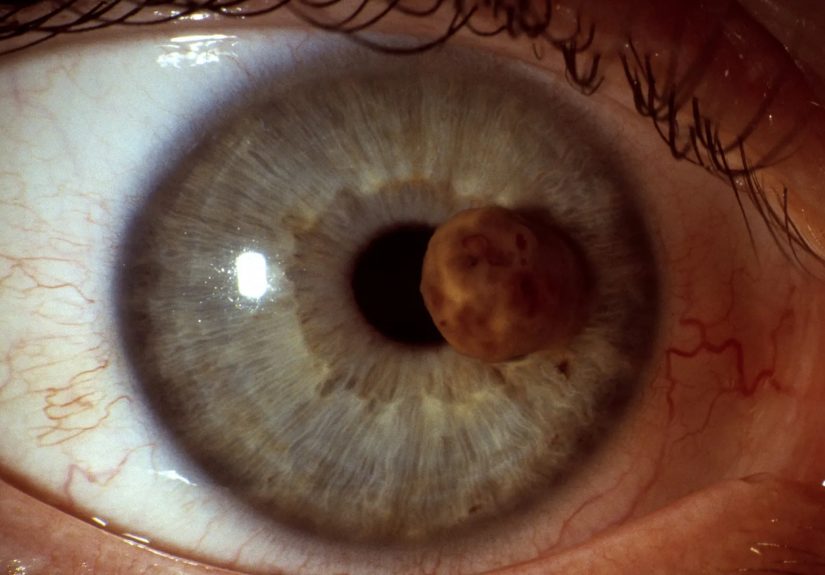
The eyelids are a surprisingly common place for skin cancer, especially nonmelanoma skin cancers like basal cell carcinoma. The skin there is thin, delicate, and frequently exposed to sunlight. According to dermatology experts, the lower eyelid is a particularly common site.
Eyelid skin cancer may look like a tiny pearly bump, a persistent irritation, a sore that will not heal, a lash-line change, or what seems like a stye that keeps coming back. Because the area is sensitive and the lesions can be small, people often assume the issue is cosmetic or infectious rather than cancerous.
Sunglasses help, but they are not the whole story. You still need broad-spectrum sunscreen around the eyes, as tolerated, and a hat when outdoors. If a spot near the eye keeps recurring or changing, do not wait it out indefinitely just because it is tiny. Small lesions in high-stakes locations can still cause big problems.
5. Under Your Nails
Yes, skin cancer can show up under a fingernail or toenail. This is one of the most surprising and most misunderstood places it can appear. A melanoma under the nail may look like a dark vertical streak, a widening brown or black band, or pigment extending onto the surrounding skin. Other nail-related skin cancers can also cause nail lifting, persistent irritation, or a sore that does not heal.
The classic mistake is assuming it is a bruise. A bruise usually grows out with the nail over time. A suspicious streak may stay put, widen, look irregular, or involve the skin around the nail. Another common mistake is blaming nail products or salon trauma without getting it checked.
This matters for everyone, but especially because melanoma in darker skin tones is more likely to appear on the palms, soles, and under or around the nails than on heavily sun-exposed skin. In short, the nail bed is not random trivia. It belongs on your self-exam checklist.
6. The Palms of Your Hands, Soles of Your Feet, and Between Your Toes
If you think skin cancer only happens where the sun shines, the palms and soles would like a word. Acral melanoma can develop on the palms, soles, and nail beds. It is rare overall, but it is a major reason doctors tell people to check places that do not seem “sun related.”
On the bottom of the foot, a melanoma may look like a dark patch, an irregular stain, a bruise-like area that does not make sense, or a spot with uneven color and border. Between the toes, it might be mistaken for irritation or fungus. On the palms, it may look like a strange new patch or discoloration. Because these areas deal with friction, sweat, and everyday wear and tear, unusual lesions are often brushed off for too long.
That delay can be serious. Many people do not inspect their feet carefully unless something hurts, and some dangerous lesions do not hurt early on. So when you do a skin check, look at the bottoms of both feet, heels, sides of the feet, between the toes, and around the toenails. Your feet have carried you this far. The least you can do is return the favor.
7. The Genital Area, Buttocks, and Skin Around the Anus
This is the section nobody loves reading, but it may be the one someone most needs. Skin cancer can develop in and around the genital area, buttocks, and anus. In people with darker skin tones especially, doctors warn that skin cancer may appear in areas that get little or no sun exposure, including these locations.
Changes here are often overlooked because people are embarrassed, assume the problem is a rash, ingrown hair, hemorrhoid, irritation, wart, or infection, or simply do not inspect the area regularly. A persistent sore, raised patch, dark spot, bleeding area, rough growth, or lesion that does not heal deserves medical attention.
This is not a reason to panic over every bump. It is a reason not to let embarrassment outrank common sense. Doctors have seen skin in every possible mood and location. Nothing you show them will ruin their week.
8. Old Scars, Chronic Sores, and Damaged Skin
Another unexpected place skin cancer can develop is in or near an old scar, burn scar, long-standing wound, or chronically inflamed area. Squamous cell carcinoma is the skin cancer most often linked to this kind of setting.
That means a spot that keeps breaking open, crusting, growing, or becoming raised within an old injury should not be ignored. People tend to assume old scars are just “weird forever,” which is fair up to a point. But a new change inside an old scar is different from the scar simply looking like itself.
The same goes for non-healing sores. If something has been there for weeks, keeps returning, or seems to improve and then reopen, it is time to stop negotiating with it and get an exam.
What Warning Signs Should You Watch For?
Whether the spot is on your shoulder or hiding under a toenail, the core warning signs are similar. Watch for anything new, changing, unusual, bleeding, crusting, painful, itchy, or not healing. Melanoma often follows the ABCDE rule:
- Asymmetry
- Border irregularity
- Color variation
- Diameter that is growing
- Evolving over time
But do not get stuck waiting for a spot to check every box. Some dangerous lesions do not read like textbook examples. The “ugly duckling” idea can be just as useful: if one spot looks different from the others on your body, pay attention.
How to Check the Places People Usually Miss
A proper skin self-exam is less about perfection and more about consistency. Once a month, look at your skin from head to toe in good light. Use a full-length mirror and a hand mirror. Part your hair with a comb or blow dryer to inspect the scalp. Check your ears, lips, eyelids, neck, chest, back, arms, hands, under the nails, buttocks, genital area, legs, feet, soles, and between the toes.
Take photos of spots you are watching so you can compare them over time. Ask a partner or family member to look at places you cannot easily see, like the scalp or back. And if you have a history of skin cancer, many moles, a strong family history, significant sun exposure, or an immune-suppressing condition, ask a dermatologist how often you should get professional skin exams.
Conclusion
The phrase “unexpected places you can get skin cancer” sounds like clickbait until you realize how medically true it is. Skin cancer is not limited to the obvious beach zones. It can show up on the scalp, ears, lips, eyelids, under the nails, on the palms and soles, around the genitals and buttocks, and inside old scars or chronic sores. The common thread is not just location. It is delay. These are the spots people miss, dismiss, or feel awkward checking.
The good news is that awareness changes outcomes. When you know where to look and what to watch for, you are far more likely to notice a problem early, when treatment is usually easier and more effective. So the next time you do a skin check, think beyond the obvious. Your skin is one organ, not a collection of neighborhoods with different rules. And yes, that includes the weird zip codes.
Experiences People Commonly Have Before They Realize It Could Be Skin Cancer
One of the most striking things about unexpected skin cancer locations is how ordinary the early experience can feel. A person may notice a spot on the scalp that catches on a comb and assume it is a stubborn scab. Weeks pass. Then months. They change shampoos, scratch at it absentmindedly, and maybe mention it during a haircut. Only later do they realize the spot has never truly healed.
Another common experience involves the lip. Someone thinks, “My lower lip is always dry in winter,” so they keep applying balm. The patch remains rough. It flakes, improves slightly, then returns. Because it does not seem dramatic, it falls low on the priority list. Many people seek help only when the area becomes sore, numb, crusted, or visibly different.
Nail-related changes create a different kind of confusion. A dark line under a nail often gets blamed on minor trauma, sports, or even nail cosmetics. People wait for it to grow out, but the streak stays, widens, or looks more uneven. What makes this especially tricky is that the person may feel perfectly fine otherwise. No major pain. No illness. Just a small, strange mark quietly refusing to leave.
The same pattern shows up on the feet. Someone notices a dark patch on the sole and assumes it is a bruise, callus, stain, or friction mark from shoes. Because the bottom of the foot is not an area most people examine closely, the lesion may go unmeasured and undocumented. By the time it looks clearly unusual, it has often been present for quite a while.
People also describe a lot of hesitation when the spot appears in a private area. A lesion on the genitals, buttocks, or around the anus may be dismissed as irritation, an ingrown hair, a rash, a hemorrhoid, or a wart. Embarrassment can slow everything down. Some people try over-the-counter creams, then wait to see if the problem settles. When it does not, they still postpone care because the location feels awkward to discuss. That hesitation is understandable, but it is not harmless.
Scars and chronic sores create yet another misleading experience. A person may have had a burn scar, surgical scar, or long-standing wound for years and assume any odd texture is just part of the old damage. Then one area becomes raised, crusty, painful, or persistently open. Because the skin was already abnormal, the new change does not always trigger alarm right away.
What ties these experiences together is not carelessness. It is normal human behavior. People explain things in the most familiar way first. Dry lips are dry lips. A scalp scab is a scalp scab. A dark toenail is probably a bruise. Most of the time, that logic works. But when a spot is persistent, evolving, or simply does not make sense, that is the moment to step out of guess mode and into exam mode.
The best lesson from these real-world patterns is this: skin cancer often enters the story disguised as something boring. That is exactly why noticing what lingers, changes, or refuses to behave normally matters so much.