Table of Contents >> Show >> Hide
- Why 19th-Century Deaths Could Be So Weird
- Bizarre Deaths That Defined the 1800s
- 1) The Politician vs. the Train: William Huskisson (1830)
- 2) “They Couldn’t Hit an Elephant…”: Major General John Sedgwick (1864)
- 3) The Courtroom Demonstration That Turned Fatal: Clement Vallandigham (1871)
- 4) The Mystery That Won’t Quit: Edgar Allan Poe (1849)
- 5) Shot, Then Slowly Killed by the Era: President James A. Garfield (1881)
- 6) A Science Experiment at the Edge of the Sky: The Zénith Balloon Tragedy (1875)
- 7) The Naturalist Who Became a Mystery Case: Robert Kennicott (1866)
- 8) The Daredevil Who Finally Met Gravity: Sam Patch (1829)
- 9) The Ax Murder That Became a Cultural Earworm: The Borden Case (1892)
- 10) A King and His Doctor Found in the Lake: Ludwig II of Bavaria (1886)
- 11) The “After-Death” That Got Weirder Than Death: Jeremy Bentham’s Auto-Icon (1832)
- What These Deaths Reveal About the 1800s
- Modern Experiences That Make These Stories Feel Real (500+ Words)
- Conclusion
The 19th century was the era of steam, steel, spectacleand “wait, you died how?” headlines.
Trains were new, anesthesia was a work in progress, newspapers were hungry, and safety regulations were mostly a
future person’s problem. Mix all that together and you get a century packed with deaths that feel less like
history and more like a darkly comic cautionary tale.
This isn’t a list of urban legends or “my cousin’s roommate’s ancestor” folklore. These stories come from
documented cases and credible historical reporting: accidents that happened in front of crowds, mysteries that
still make historians argue, and medical missteps that make modern readers whisper, “Please wash your hands,
sir.” Along the way, we’ll also look at why the 1800s produced so many strange endingsand why the public was
oddly fascinated by them.
Why 19th-Century Deaths Could Be So Weird
If you want to understand bizarre deaths in the 1800s, picture a world where technology sprinted ahead while
public safety jogged behind in a heavy coat. The Industrial Revolution didn’t just change how people workedit
changed how people got hurt. Steam engines, factory belts, gas lamps, and experimental “this will probably be
fine” inventions created brand-new ways to get killed.
Medicine added its own plot twists. Germ theory was gaining ground, but not everyone was listening. Surgery and
wound care could be as dangerous as the original injury, not because doctors didn’t care, but because the
science of infection control was still being adopted unevenly. In short: the 19th century was a place where a
survivable injury could still turn into a slow-motion tragedy.
And then there’s the media. Newspapers in the 1800s loved a dramatic death story. A public accident, a
mysterious collapse, a famous figure found in distressthese weren’t just tragedies. They were national
conversations, printed, reprinted, argued over, and remembered long after the funeral.
Bizarre Deaths That Defined the 1800s
Below are some of the strangest, most talked-about deaths connected to the 19th centuryeach one a reminder
that history didn’t always go out with quiet dignity. Sometimes it went out with a shriek, a headline, and a
collective “you’ve got to be kidding me.”
1) The Politician vs. the Train: William Huskisson (1830)
Imagine attending a grand opening for the future of transportation. There are dignitaries, speeches, crowds,
and the proud hum of new machinery. Now imagine that same event becoming famous because a prominent public
figure was struck by a locomotive.
That’s what happened to William Huskisson, a British statesman and Member of Parliament, during the opening
ceremony of the Liverpool and Manchester Railway. He was fatally injured in an accident involving a train,
and the incident became one of the most widely reported early railway tragediesan early reminder that
“modern progress” sometimes arrives with a side of mortal danger.
What makes this death so bizarre isn’t just the accidentit’s the symbolism. A new age of speed and industry
literally ran him down in front of the world. If the 19th century had a dark mascot, it might be that moment:
optimism on the platform, catastrophe on the rails.
2) “They Couldn’t Hit an Elephant…”: Major General John Sedgwick (1864)
History is full of ironic last words, but few are as brutally timed as Major General John Sedgwick’s.
During the Civil War, as sharpshooter fire worried his men, Sedgwick reportedly tried to calm them with a
dismissive linebasically, “Relax, they’re not that accurate.”
The version that stuck is the one you’ve probably heard: “They couldn’t hit an elephant at this distance.”
And then he was shotan instant punctuation mark that feels like the universe has a mean sense of humor.
The bizarre part here isn’t just the irony; it’s the way the quote became legend. It’s a reminder that 19th
century warfare wasn’t only brutalit was also full of unpredictable moments where confidence and catastrophe
lived in the same second.
3) The Courtroom Demonstration That Turned Fatal: Clement Vallandigham (1871)
If you’ve ever watched someone confidently say, “It’s not loaded,” and felt your soul leave your bodywelcome
to one of the 19th century’s most infamous legal tragedies.
Clement L. Vallandigham, a politician and lawyer, was involved in a murder case and attempted to demonstrate
how a gun could have discharged accidentally. In the process, he accidentally shot himself with a firearm
connected to the case and later died from the wound.
This death has everything: theatrical reenactment, fatal miscalculation, and the sickening logic of “proof”
achieved at the ultimate personal cost. It’s tragic, absurd, and unforgettablelike a courtroom drama written
by fate after three cups of terrible coffee.
4) The Mystery That Won’t Quit: Edgar Allan Poe (1849)
Edgar Allan Poe’s work is packed with eerie narrators, cryptic clues, and endings that make you reread the
story. His death, unfortunately, followed the brand.
Poe was found in Baltimore in distress and later died in a hospital. The circumstances were strange enough to
spark long-running debate: why he was in that state, what happened in the days before, and whether illness,
violence, or something even stranger played the starring role.
One theory often mentioned in historical discussions is “cooping,” a form of voter fraud in which victims
were kidnapped, drugged or intoxicated, disguised, and forced to vote multiple timesthen abandoned. Whether
that’s what happened to Poe remains unproven, but the sheer existence of the theory tells you something about
the era’s political chaos and the mystery swirling around his final days.
Poe’s death isn’t bizarre because it’s goofy; it’s bizarre because it remains unresolved. In the 1800s, a
famous man could die under suspicious circumstances and leave behind more questions than medical records.
5) Shot, Then Slowly Killed by the Era: President James A. Garfield (1881)
Some deaths are strange because of what caused them. Garfield’s is strange because of what shouldn’t
have.
President James A. Garfield was shot in 1881, but he didn’t die immediately. He suffered for weeks, with his
condition worsening over time. Modern analyses and historical reporting have highlighted how medical treatment
in that eraespecially the lack of consistent antiseptic techniquelikely contributed to fatal infection.
The bizarre cruelty here is the timeline: the 19th century was close enough to modern medicine to
almost save him, yet far enough away to fail him. It’s one of those moments that makes you realize
how thin the line was between survival and tragedy in an age when “sterile” wasn’t always standard practice.
6) A Science Experiment at the Edge of the Sky: The Zénith Balloon Tragedy (1875)
The 19th century loved big scientific swingssometimes literally. In 1875, the balloon Zénith made a
high-altitude ascent aimed at pushing the limits of human flight and scientific observation.
The problem was oxygen. At extreme altitude, the body’s warning system becomes unreliableconfusion, weakness,
unconsciousness. Two of the aeronauts, Joseph Crocé-Spinelli and Théodore Sivel, died from oxygen deprivation
during the flight. Another, Gaston Tissandier, survived but suffered lasting harm.
What makes this death feel so bizarre is the setting: not a battlefield, not a street, but the quiet upper
airan invisible killer wrapped in scientific ambition. It’s a reminder that “progress” in the 1800s was
sometimes paid for in blood, and sometimes paid for in breath.
7) The Naturalist Who Became a Mystery Case: Robert Kennicott (1866)
Robert Kennicott was a 19th-century naturalist associated with Smithsonian collecting work. He died young in
1866 under circumstances that later drew renewed attention.
What makes this story unusual is the afterlife of the investigation. Much later, researchers examined his
remains with modern techniques to better understand aspects of his health and environment. The case highlights
something uniquely “19th century meets modern world”: a death that becomes part historical mystery, part
scientific detective story.
In the 1800s, people didn’t just diethey sometimes became archives. Kennicott’s story shows how the past can
be re-opened, not to sensationalize tragedy, but to learn what the era couldn’t fully know at the time.
8) The Daredevil Who Finally Met Gravity: Sam Patch (1829)
The 19th century had influencers, toothey just didn’t have ring lights. Sam Patch was a famous daredevil
known for dramatic jumps, drawing crowds who came for the thrill of “this might go wrong.”
In 1829, Patch attempted a major leap into the Genesee River. He didn’t resurface. His body was recovered
later, sealing his story as both legend and warning.
What makes this death feel bizarre is how modern it seems: public spectacle, personal branding, and the risk
economylong before social media. People paid attention because it was dangerous. And then it proved exactly
how dangerous.
9) The Ax Murder That Became a Cultural Earworm: The Borden Case (1892)
Andrew and Abby Borden were found murdered in their home in Fall River, Massachusetts, in 1892. The brutality
of the killings, combined with the investigation and public fascination, turned the case into one of the most
notorious murder stories of the late 19th century.
While this isn’t “bizarre” in the sense of freak accidents, it’s bizarre in its cultural aftershock. The
case became so embedded in American folklore that it spawned rhymes and a long legacy of retellings. It’s a
death story that mutated into a kind of morbid pop cultureproof that the 19th century didn’t just produce
sensational events, it also produced sensational memory.
10) A King and His Doctor Found in the Lake: Ludwig II of Bavaria (1886)
Ludwig IIoften remembered today for his castles and his legendsdied in 1886 under circumstances that have
fueled debate ever since. He was declared mentally unfit and placed under supervision. Shortly after, Ludwig
and his psychiatrist, Bernhard von Gudden, were found dead in Lake Starnberg.
Officially, Ludwig’s death was ruled a suicide by drowning. But the presence of the doctor’s death alongside
the king’s, plus the political tensions around his removal from power, helped create a case that has never
truly settled into a single universally accepted explanation.
The bizarre part is the pairing: a monarch and the man assigned to evaluate him, both gone, in a scene that
reads like a thriller ending. The 19th century loved dramatic power strugglesand sometimes they ended
literally underwater.
11) The “After-Death” That Got Weirder Than Death: Jeremy Bentham’s Auto-Icon (1832)
Jeremy Bentham didn’t die in a freak accident. He died in 1832. But he left behind instructions for what
should happen to his body that made his legacy feel like a permanent museum exhibit with existential
commentary.
Bentham requested that his remains be preserved and displayed as an “Auto-Icon.” His skeleton was dressed,
positioned, and eventually displayed; a wax head replaced the real one for public presentation after the
preservation process went poorly. This isn’t a “bizarre death,” but it is a bizarre relationship with death:
the man essentially asked to become a conversation piece forever.
Why include this in a list of bizarre 19th-century endings? Because the century wasn’t just about how people
diedit was also about how society processed death: through public display, science, spectacle, and a growing
appetite for the strange.
What These Deaths Reveal About the 1800s
Taken together, these stories are more than weird trivia. They show the 19th century’s biggest themes in
miniature:
-
Industrial danger: New technologies (like trains) changed daily lifeand introduced new
catastrophic risks. -
The comedy of confidence: Sedgwick and Vallandigham remind us that bravado and certainty can
become lethal in seconds. -
Medical growing pains: Garfield’s story captures an era where doctors were dedicated, but
science hadn’t fully armed them yet. -
Public obsession: Poe and the Borden case reveal how quickly a death could become
entertainment, argument, and enduring myth. -
Science at the edge: The Zénith tragedy shows how the pursuit of knowledge sometimes outran
the body’s limits.
The 1800s weren’t uniquely “cursed.” They were uniquely transitional. When a society changes fast, accidents,
misunderstandings, and half-solved mysteries pile upand the dead often become the footnotes to progress.
Modern Experiences That Make These Stories Feel Real (500+ Words)
You don’t have to time-travel to feel the weirdness of 19th-century deaths. In fact, one of the strangest parts
about writing (or reading) this topic is how easily the past sneaks into the presentusually when you’re just
trying to enjoy a casual afternoon and history decides to whisper, “By the way, people used to die doing
that.”
Start with old newspapers. If you’ve ever scrolled a digital archiveespecially those massive collections where
you can search a name and suddenly see a person’s entire public life reduced to inkyou know the feeling.
One minute you’re reading about a “grand celebration,” the next you’re staring at a blunt paragraph describing a
body, an accident, or a tragic misunderstanding. The tone is often shockingly casual, like the 1800s were
writing, “Well, that happened,” before moving on to ads for corsets and miracle tonics. It’s a weird experience
because it makes you realize how common sudden death wasand how quickly the living had to normalize it.
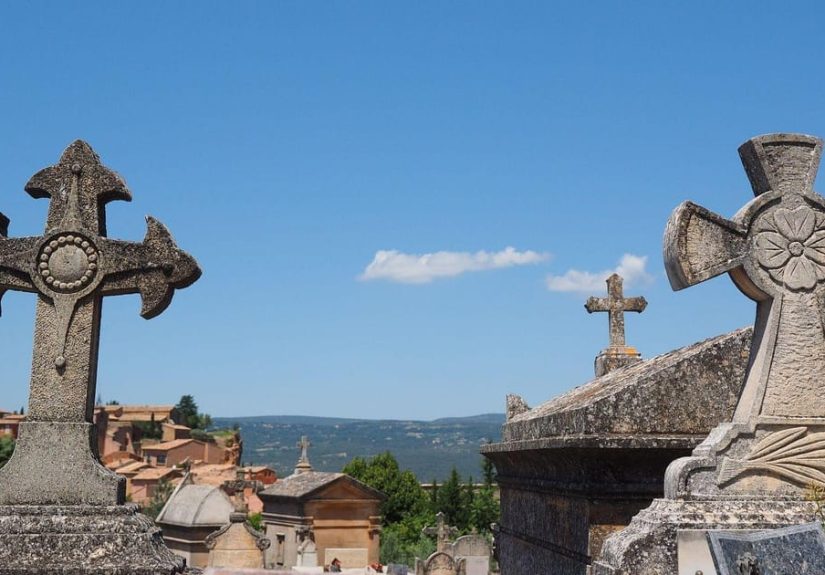
Cemeteries hit differently after that. Modern cemeteries can feel quiet and orderly, but older burial grounds
often read like a neighborhood history book with grim chapter titles: “Killed by accident,” “Died suddenly,”
“Lost at sea,” “Aged 23.” Walking among 19th-century headstones can be an unexpectedly emotional experience,
not because you know the individuals, but because the patterns become obvious. You start noticing how many
people died young, how often families lost multiple children, and how frequently death shows up as a sudden
interruption rather than a long goodbye.
Museums make it even more vividespecially transportation and medical exhibits. Standing in front of early
railroad artifacts or seeing how quickly trains evolved can feel thrilling, until you remember that many people
encountered these machines without the safety culture we now treat as non-negotiable. The 19th century built
marvels, but it also built hazards, and the line between “innovative” and “fatal” could be as thin as an
unguarded platform edge.
Medical history displays can be the most unsettling. It’s one thing to read that antiseptic methods weren’t
universally adopted; it’s another thing to see the instruments and realize how much suffering once happened
under the banner of “best practices.” The experience often flips from curiosity to gratitude: you leave feeling
thankful for boring modern hygiene rules, the kind nobody wants to talk about because they’re not dramatic.
Yet those “boring” rules are the difference between a survivable wound and a president dying slowly over weeks.
Then there’s the storytelling sidethe ghost tours, the local legends, the “true crime before it was a genre”
conversations. Sometimes these experiences can drift into exaggeration, but they still teach something real:
the 19th century produced deaths that people couldn’t stop talking about. Whether it was a famous writer with a
mysterious end, a shocking household murder, or a public accident that ruined a celebratory day, the stories
stuck because they were part fear, part fascination, and part warning.
The most surprising modern experience is how quickly you start seeing the present through the past. You step
onto a subway platform and think about early rail disasters. You hear a confident “don’t worry, it’s safe,” and
your brain immediately files it under “Vallandigham would like a word.” You watch a daredevil clip online and
realize that the risk-reward spectacle isn’t newit just has better cameras now. In that sense, the weirdness
of 19th-century deaths isn’t only a historical curiosity. It’s a mirror. The technology changes, the outfits
improve, but human behaviorambition, pride, curiosity, thrill-seekingstays stubbornly familiar.
And maybe that’s the real reason these stories endure. They’re not just bizarre endings. They’re reminders that
progress has always had sharp corners, and that history’s strangest deaths often happen when people think the
world is finally under controlright before it proves otherwise.






