Table of Contents >> Show >> Hide
- What Happened: The Red Sea Intercepts That Put USS Carney in the Spotlight
- Why the Red Sea Matters So Much (and Why Everyone Suddenly Has Opinions About It)
- Meet the USS Carney: Aegis, Radar, and the Art of Not Getting Hit
- Who Was Launching the Attacks, and Why?
- From Single Engagements to a Broader Maritime Campaign
- What This Means for Commercial Shipping (and Your Stuff)
- Why USS Carney’s Actions Became a Defining Example of Modern Naval Defense
- What Comes Next: Deterrence, Defense, and the Hard Work of Keeping Sea Lanes Open
- Conclusion: The USS Carney Moment Was About More Than One Ship
- Experiences: What It’s Like When a Destroyer Goes From “Routine Watch” to “Real-World Intercepts”
If you’ve ever wondered what “air defense” looks like when it’s not a neat diagram in a briefing slide, the USS Carney (DDG-64) offered a real-world demo: fast-moving drones, cruise missiles, tense minutes, and a crew doing the kind of job where “practice makes perfect” is not a motivational posterit’s a survival strategy.
In late 2023 and into 2024, the Red Sea became a headline factory as Iran-aligned Houthi forces in Yemen launched drones and missiles into one of the world’s busiest maritime corridors. The U.S. Navy’s response wasn’t just about one ship; it was about keeping commercial shipping lanes open, protecting mariners, and preventing a regional conflict from turning global trade into collateral damage. The USS Carney ended up at the center of multiple defensive actionsintercepting and downing aerial threats over open water, including drones and cruise missileswhile operating in a region where “calm seas” doesn’t always mean a calm day.
What Happened: The Red Sea Intercepts That Put USS Carney in the Spotlight
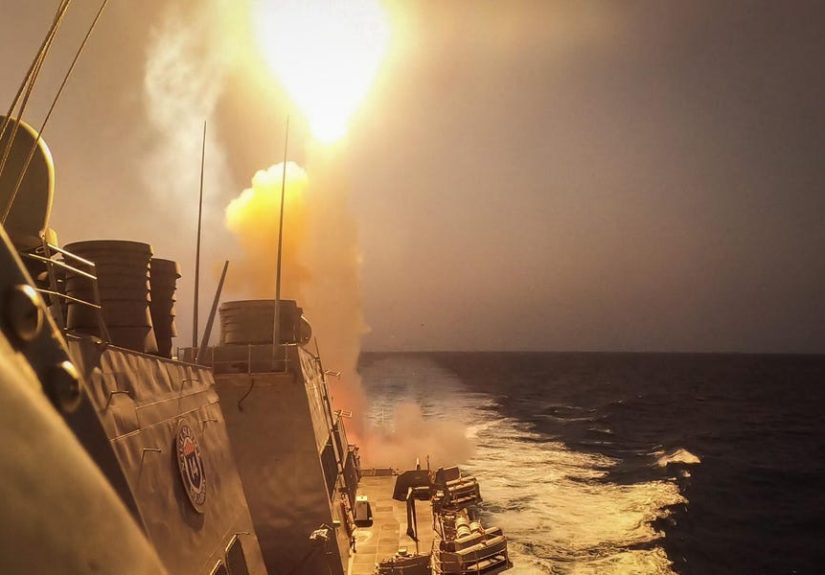
The incident most often associated with the “drones and cruise missiles” headline began on October 19, 2023, when U.S. officials said the guided-missile destroyer USS Carney, operating in the northern Red Sea, shot down multiple threats launched from Houthi-controlled areas of Yemendescribed publicly as three land-attack cruise missiles and several drones. In plain English: objects designed to fly long distances and ruin someone’s day were stopped before they could reach their target.
As reporting and official updates evolved, some outlets cited higher tallies for that defensive action, reflecting the fog-of-real-time reporting that comes with fast-moving engagements. What stayed consistent was the core reality: USS Carney engaged and destroyed airborne threats over the Red Sea, demonstrating how U.S. naval air defense works when it’s not hypothetical.
That wasn’t a one-off. By early December 2023, Carney again made news while responding to distress calls in the southern Red Sea, where commercial vessels reported attacks. During that response, U.S. officials said Carney shot down multiple drones while operating near endangered shipping.
Later accounts from the Navy described a prolonged engagement in which Carney’s crew downed a large number of drones and cruise missiles during an extended defensive periodan illustration of how quickly a “routine” patrol can become a marathon of detection, decision-making, and intercepts.
Why the Red Sea Matters So Much (and Why Everyone Suddenly Has Opinions About It)
The Red Sea is not just a pretty ribbon of water between Africa and the Arabian Peninsula. It’s a critical route connecting the Mediterranean (via the Suez Canal) to the Indian Ocean (via the Bab el-Mandeb Strait). When that corridor becomes dangerous, shipping companies reroute, costs rise, delivery timelines stretch, and everyone from manufacturers to holiday shoppers learns a new vocabulary word: “disruption.”
The Bab el-Mandeb choke point: small geography, big consequences
The Bab el-Mandeb is a narrow strait at the southern end of the Red Sea. If threats cluster there, ships have fewer options: transit with added risk, pause operations, or detour thousands of miles around Africa. That’s not just inconvenientit’s expensive, slower, and can ripple into price increases across supply chains.
Meet the USS Carney: Aegis, Radar, and the Art of Not Getting Hit
USS Carney is an Arleigh Burke-class guided-missile destroyer. Think of it as a multi-tool of modern naval warfare: it can defend against aircraft and missiles, track threats, escort high-value ships, and respond quickly to emerging danger. Its edge in these Red Sea engagements came from an integrated set of sensors and weaponsoften discussed under the umbrella of Integrated Air and Missile Defense (IAMD).
How a destroyer fights drones and cruise missiles
Drone and cruise missile defense is a layered problem. A ship like Carney relies on:
- Early detection through shipboard radar and regional sensing networks.
- Tracking and identification to determine what’s a threat, what’s neutral, and what’s merely a seabird having a dramatic day.
- Engagement decisionsfast, rules-based, and disciplinedbecause “wait and see” is not a strategy.
- Interceptors and ship weapons that match the threat type and range.
In publicly discussed Red Sea engagements, U.S. officials and defense reporting described the use of ship-based interceptors (such as Standard Missiles) against inbound threats. Depending on the situation, a destroyer may also rely on shorter-range defenses and, if needed, its deck gunbecause sometimes the best tool is the one that’s already loaded and ready.
Who Was Launching the Attacks, and Why?
The attacks were widely attributed to the Houthis, an Iran-aligned movement controlling significant territory in Yemen. Following the outbreak of the Israel–Hamas war in October 2023, the Houthis said their actions were connected to the conflict, and the region saw a spike in missile and drone activity affecting international shipping lanes. While the Houthis often claimed they were targeting Israel-linked shipping, many vessels in the area faced threats regardless of clear affiliationsan issue that increased anxiety for shipping companies and insurers alike.
The result: a dangerous mix of ideology, regional competition, and highly accessible strike technology (drones and missiles) playing out in a corridor that global commerce depends on.
From Single Engagements to a Broader Maritime Campaign
USS Carney’s intercepts were part of a larger shift: the Red Sea increasingly looked like an active defense environment rather than a routine transit lane. As attacks mounted, the U.S. and partners expanded maritime security efforts. One major step was the announcement of Operation Prosperity Guardian, a multinational initiative intended to bolster protection for commercial shipping and deter further attacks.
Around this period, U.S. Central Command and partner forces reported repeated defensive actions involving U.S. Navy ships and allied vesselsintercepting drones and missiles during attacks that unfolded over hours, sometimes involving large salvos. In other words: it wasn’t “one scary night.” It was sustained pressure.
Why “salvos” change everything
A single drone is a problem. A mixed wavemultiple drones plus cruise missilesbecomes a systems test. Defenders must allocate interceptors, manage timing, and maintain situational awareness across a wide battlespace. The operational reality is that crews aren’t just shooting; they’re prioritizing, coordinating, communicating, and staying ready for the next object on the radar.
What This Means for Commercial Shipping (and Your Stuff)
When warships like USS Carney intercept threats, the immediate goal is protection of life and vessels. The broader goal is stability: keeping trade moving so the world doesn’t pay an economic penalty for every missile launch.
Real-world impacts that go beyond the map
- Rerouting: Ships detour around Africa, adding days or weeks to travel time.
- Higher costs: Longer routes mean more fuel, more crew time, and higher insurance premiums.
- Supply chain delays: Components arrive late, manufacturing schedules slip, and “just-in-time” becomes “eventually.”
- Market uncertainty: Even rumors of escalation can shake shipping decisions and commodity prices.
That’s why the phrase “freedom of navigation” keeps showing up in official statements. It’s not just diplomatic poetryit’s the difference between predictable shipping costs and a global game of logistical roulette.
Why USS Carney’s Actions Became a Defining Example of Modern Naval Defense
Naval warfare is often imagined as ship-versus-ship. But in the Red Sea, the dominant pattern was ship-versus-unmanned threats and long-range weapons. Carney’s intercepts highlighted several modern realities:
1) Drones are cheap; defending against them is not
Drones are relatively low-cost compared to high-end interceptors. That imbalance forces militaries to think hard about layered defense, cost-effective options, and how to avoid spending a luxury-car’s worth of missile to stop a threat priced like a used scooter. (Not that the scooter is harmlessjust that economics matters when the threat repeats.)
2) The most important weapon may be integration
Intercepts don’t happen because someone “gets lucky.” They happen because sensors, decision systems, and weapons are integrated, and because crews train for complex scenarios. Official statements described these engagements as demonstrations of regional integrated air and missile defense architecturemeaning the ship wasn’t acting in a vacuum.
3) Ten hours is a long time to stay perfect
Sustained engagements described in later Navy storytelling underscore an underappreciated truth: endurance is tactical. A crew has to maintain focus, coordinate handoffs, manage fatigue, and keep decision-making sharp while the threat continues. It’s not a single cinematic moment. It’s many small correct choices in a row.
What Comes Next: Deterrence, Defense, and the Hard Work of Keeping Sea Lanes Open
The Red Sea crisis demonstrated how quickly regional conflict can spill into global infrastructure. As long as drone and missile launches remain an accessible tool for armed groups, navies will keep adapting: better detection, improved electronic warfare, more efficient intercept options, and tighter multinational coordination.
For shipping companies, the decisions will continue to be risk-based: route selection, convoy participation, insurance requirements, and real-time threat assessment. For policymakers, the challenge will be balancing deterrence and escalation risksprotecting commerce without turning every intercept into a step toward wider war.
Conclusion: The USS Carney Moment Was About More Than One Ship
“USS Carney downs drones and cruise missiles over the Red Sea” is a dramatic headline, but it also describes a strategic reality: modern sea lanes are contested by inexpensive unmanned systems and long-range weapons, and defending them requires discipline, integration, and constant readiness.
The Carney’s engagementsalong with the broader coalition responsewere a signal to adversaries and reassurance to commercial mariners: the world’s key maritime corridors are not supposed to become free-fire zones. The problem isn’t solved forever, but the message was clear: if you launch threats into one of the planet’s busiest shipping lanes, someone is watching the radarand someone is ready to respond.
Experiences: What It’s Like When a Destroyer Goes From “Routine Watch” to “Real-World Intercepts”
Let’s talk “experiences,” because the most interesting part of the USS Carney story isn’t just the equipmentit’s the human rhythm behind it. No, we’re not going to pretend you can hear dramatic music swelling in the background. Reality is stranger: it’s checklists, watch rotations, calm voices on the net, and the kind of focus that makes time feel both slow and fast at once.
First experience: the atmosphere changes before the action does. Sailors who’ve described high-tempo defensive situations often mention a shift that happens well before the intercept. The radar picture gets “busy.” Reports come in from other ships or commercial vessels. The combat information center becomes quieter in a very specific wayless casual conversation, more clipped confirmations. You can almost feel the ship collectively switching from “normal readiness” to “don’t-miss-anything readiness.”
Second experience: the work is intensely technicaland intensely ordinary. That sounds like a contradiction, but it’s not. In a missile defense scenario, the tasks are complex: track management, identification, engagement coordination, and continuous updates as the picture evolves. At the same time, the mechanics of it can look like people doing their jobs with professional calm: reading displays, confirming inputs, repeating key data, and executing procedures. It’s not chaos. It’s structured urgency.
Third experience: you don’t fight one threat, you fight a timeline. A drone or cruise missile isn’t just an objectit’s a countdown. Crews have to determine what matters most right now, what can wait, and what cannot. The “experience” here is decision-making under constraints: limited time, multiple contacts, and the responsibility of choosing how to respond in a way that protects both the ship and nearby civilian traffic. One reason modern destroyers are so valuable is that they can manage this timeline problem with layered optionsbut the crew still has to make it all work.
Fourth experience: endurance becomes part of the battle. When engagements stretch over hours, people rotate, but the mission doesn’t. There’s a special kind of fatigue that comes from sustained alertnessyour brain trying to stay sharp while your body insists it would like to be anywhere else (preferably asleep). The skill is maintaining precision anyway: repeating the process, staying disciplined, and not letting “we’ve already handled a lot” become “we can relax now.” In the Red Sea environment, “now” is exactly when the next thing might appear.
Fifth experience: the emotional swing comes later. In movies, everyone cheers after the intercept. In reality, the adrenaline often hits hardest after the immediate danger passes. People replay decisions, double-check what happened, and shift into documentation and reset. There’s pride, surebut also a practical awareness that every intercept is a lesson. What worked? What was slower than it should have been? What needs improvement for the next engagement? In official Navy storytelling about Carney’s high-intensity actions, you can see that mix: “We trained for this,” paired with “We hadn’t done anything exactly like this before.”
Finally: the strangest experience is realizing what you prevented. A successful intercept can feel almost anticlimactic because the worst-case scenario never arrives. No impact. No fire. No casualties. Just a radar track that disappears and a situation that de-escalates. That’s the paradox of defense: when you do it right, the headline is shorter than the list of disasters that didn’t happen.
Taken together, the “experience” of a ship like USS Carney defending against drones and cruise missiles isn’t one cinematic moment. It’s a long chain of professionalismhuman beings and machines working as a single systemso that commercial mariners can keep moving, and so that a global trade artery doesn’t become a permanent danger zone.