Table of Contents >> Show >> Hide
- What It Is (and Why “One Hole” Matters)
- Design DNA: Bond’s “Modern, With a Soul” Look
- Key Specs You’ll Actually Care About
- Installation: What to Know Before the Plumber Arrives
- Certifications and Standards: The Boring Stuff That’s Actually Reassuring
- Finishes: Chrome, Nickel, Brass, Dark Nickeland the Truth About Patina
- How to Style It So It Looks Intentional (Not Accidental)
- Who Should Buy It (and Who Should Walk Away Slowly)
- FAQ
- Real-World Experiences: on Living With the Bond Solo
- Conclusion
Some bathroom faucets whisper. The Waterworks Bond Solo Series One Hole Lavatory Faucet… well, it
doesn’t shout, but it definitely clears its throat in a very expensive accent. This is a streamlined, single-hole,
lever-handled lavatory faucet that’s built for modern bathrooms where every object is supposed to look “effortless”
(which usually means someone spent weeks obsessing over it). Bond’s vibe is clean and contemporary, but not cold
more “gallery opening” than “airport restroom.”
If you’re remodeling a primary bath, upgrading a powder room, or designing a space where the faucet is basically
jewelry for the sink, the Bond Solo is worth a closer look. Below, we’ll break down what it is, what the specs
actually mean in real life, how it installs, how to keep it looking sharp, and who should (and shouldn’t) put it
in their cart.
What It Is (and Why “One Hole” Matters)
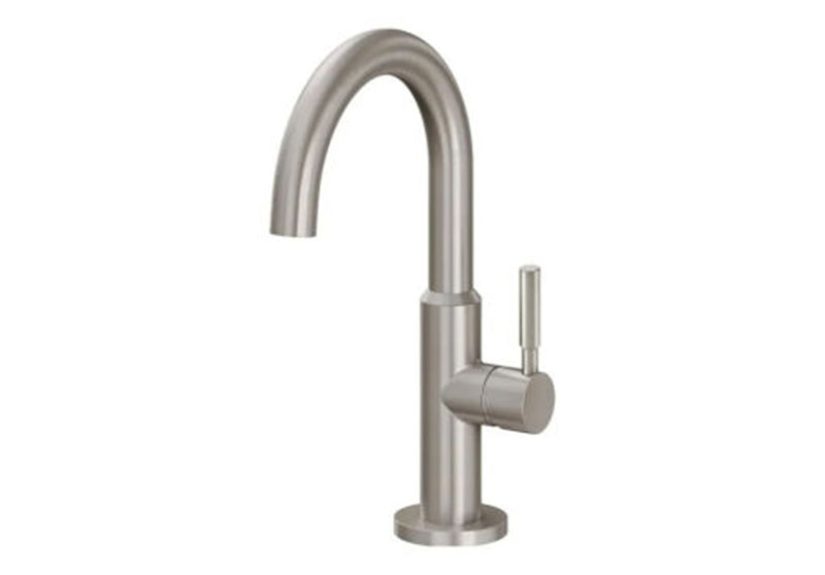
The Bond Solo Series One Hole Lavatory Faucet is a deck-mounted faucet designed to install through
a single hole in your countertop or sink deck. That “one-hole” format is popular for a reason: it looks tidy, frees
up counter space, and keeps the visual noise lowespecially in smaller bathrooms where the sink area is already
doing a lot of work.
This specific Bond Solo version uses a straight lever handle and is built around a modern mixing
cartridge. Translation: one handle controls both temperature and flow. You don’t need a choreography degree to wash
your handsjust a simple turn, and you’re in business.
Design DNA: Bond’s “Modern, With a Soul” Look
Waterworks describes Bond as drawing inspiration from the Aesthetic Movement, rare vintage lighters,
and modern industrial designan unusual trio that somehow makes sense once you see the shapes. The form is crisp
and architectural, with cylindrical elements and a controlled curve at the spout. It’s modern, but not sterile.
Think: minimalism with better taste in music.
The “Solo” idea is exactly what it sounds like: a single, confident statement piece rather than a multi-handle
spread. In a bathroom design plan, this faucet is often the calm, deliberate line that balances louder materials
like veined marble, patterned tile, or a vanity with dramatic hardware.
Key Specs You’ll Actually Care About
Flow Rate: Water-Smart Without Feeling Weak
This faucet is offered with a 1.2 gpm (gallons per minute) restricted flow rate. That’s comfortably
below the U.S. “standard” bathroom faucet flow of 2.2 gpm and even below the WaterSense program’s maximum for
labeled bathroom faucets (1.5 gpm). In day-to-day use, that usually means you still get a satisfying rinse, but you
aren’t blasting water like you’re pressure-washing your cuticles.
Valve + Handle Feel: The Good Kind of “Click”
Waterworks specifies a ceramic valve and describes the faucet as using a progressive mixing
cartridge with tactile feedbackso you may feel subtle “bumps” as you rotate through temperature ranges.
Ceramic valve tech is widely appreciated in modern faucets because it’s durable and helps reduce drips compared to
older washer-based designs. In plain English: fewer leaks, smoother operation, less late-night “drip… drip… drip…”
psychological warfare.
Materials: Brass Where It Counts
The faucet’s primary material is listed as brass, a common choice for high-end plumbing fittings
because it holds up well in wet environments and tends to age gracefully. If you’re paying luxury-faucet money,
you want a body that feels substantialnot like it could be mistaken for a toy if you squint.
Drain Included: A Small Detail That Saves a Headache
The faucet includes a universal push-touch drain (push to close, push again to open). It’s designed
to fit common drain-hole openings, which is one of those “boring” features that becomes deeply exciting the moment
you realize you don’t have to hunt for a matching drain at the last minute.
ADA-Friendly Basics
The technical documentation lists this model as ADA compliant. In practice, lever handles are often
favored for accessibility because they’re easier to operate than tight knobs and don’t require a strong grip.
Accessibility isn’t just for public buildingsit’s also a smart “future-proof” move for homes.
Installation: What to Know Before the Plumber Arrives
Let’s be honest: most of us want installation to be “two screws and a dream.” Real life is slightly more involved,
but the Bond Solo is straightforward for a professional installer. It’s designed for a single-hole deck mount and
uses 3/8" compression connector hoses for supply connectionscommon in many U.S. residential setups.
Compatibility checkpoints
- Hole size: commonly called out around 1-3/8" for the fittings hole.
- Deck thickness range: designed for typical vanity/countertop builds (always confirm your exact top thickness).
- Water pressure: the guidelines reference roughly 20–85 psi, with a recommended mid-range for best performance.
- Handle orientation: this straight lever configuration is typically intended for right-hand installation, so plan your sink layout accordingly.
- Spout behavior: the spout is listed as swiveling, which can be helpful on wider basins or when cleaning the sink.
A practical, non-scary install overview
- Shut off the water at the supply valves.
- Flush supply lines before final connection (this helps protect internal components).
- Feed hoses through the deck, seat the faucet/escutcheon, and secure from below.
- Connect hot/cold supplies and check for leaks.
- Install the push-touch drain, then connect the P-trap (typically sold separately).
- Remove and reinstall the aerator as directed when flushing lines and finishing setup.
One pro tip that shows up again and again in quality installation guidance: protect finished surfaces. Use the right
wrenching methods and avoid letting tools chew up the metal. Scratches on day one are a heartbreak you never truly
get overyou just learn to live with it and pretend it “adds character.”
Certifications and Standards: The Boring Stuff That’s Actually Reassuring
If you like your luxury with a side of “tested and verified,” you’ll appreciate that Waterworks lists compliance
with common plumbing standards (the kind that help ensure performance, safety, and material requirements for supply
fittings). The documentation also references NSF-related standards tied to materials in contact with
drinking water and lead content requirementsimportant details that are easy to overlook when you’re hypnotized by
a perfect nickel finish.
Finishes: Chrome, Nickel, Brass, Dark Nickeland the Truth About Patina
This model is commonly stocked in finishes like Chrome, Nickel, Brass, and Dark Nickel (availability
varies). Your finish choice is not just an aesthetic decisionit’s a lifestyle decision. Chrome is the classic:
bright, reflective, and generally forgiving. Nickel tends to read warmer and can look more “tailored.” Brass can
swing from crisp and glamorous to vintage and moody depending on the surrounding materials. Dark nickel brings
contrast and depth without going full-black.
Care matters because metal finishes aren’t all identical. Many premium finishes benefit from gentle cleaning:
mild soap, water, a soft cloth, and a thorough dryespecially in hard-water areas. If you choose a finish designed
to evolve (patina), your maintenance routine influences how it ages. That’s not a flaw; it’s part of the point.
You’re basically adopting a tiny, beautiful metal pet that occasionally needs wiping down.
How to Style It So It Looks Intentional (Not Accidental)
The Bond Solo faucet plays well with a wide range of sink styles, but it shines when you match proportions.
Here’s the designer math that keeps splashing down and elegance up:
- Spout reach vs. drain position: aim for the water stream to land near the drainnot on the back wall of the bowl.
- Spout height vs. bowl depth: higher spouts look airy, but too much height can increase splash in shallow basins.
- Finish coordination: repeat the faucet finish in one or two other places (mirror, lighting, hardware) for a cohesive look.
- Counter material: if you’re using natural stone, be cautious with putties and cleaners that can stain or etch.
Bond’s geometry pairs especially well with modern vanities, slab fronts, thin-profile countertops, and minimalist
mirrors. But it can also create a satisfying contrast in transitional spaceslike a traditional vanity with a modern
faucet that says, “Yes, I respect history, but I also own a smartphone.”
Who Should Buy It (and Who Should Walk Away Slowly)
This faucet makes sense if:
- You want a luxury, design-forward lavatory faucet with a clean one-hole profile.
- You care about precise detailing, solid materials, and premium feel.
- You like lower-flow performance that still feels practical for daily use.
- You’re building a bathroom where every visible component is part of a curated set.
Consider alternatives if:
- You prefer widespread (three-hole) styling with separate handles.
- Your sink layout demands a different handle orientation or spout geometry.
- You want the cheapest functional option and don’t care what it looks like (no judgmentsometimes life is about survival).
- You’re not willing to follow gentle-care cleaning routines in hard-water conditions.
FAQ
Is 1.2 gpm enough for normal handwashing?
For most people, yes. A 1.2 gpm lavatory faucet typically feels fine for handwashing and daily bathroom routines,
especially with a well-designed aerator that keeps the stream comfortable.
Does it come with a drain?
This Bond Solo configuration includes a universal push-touch drain, which can simplify purchasing and help maintain
a consistent look.
Is it hard to maintain?
Not if you keep it simple: gentle soap and water, soft cloth, and dry it to reduce spotting. Avoid abrasive pads
and harsh chemicals that can damage premium finishes.
Real-World Experiences: on Living With the Bond Solo
In real bathroomswhere toothpaste, makeup, and “I’m late!” collide dailythe Bond Solo’s biggest strength is that
it stays visually calm. People tend to notice it in the same way they notice a great watch: it looks “right,” even
if they can’t explain why. That curved spout and straight lever read clean from across the room, which matters more
than you’d think in compact powder rooms where every inch is in your face.
One common experience with a premium one-hole faucet is the countertop clarity it creates. With only
one hole and one handle, there’s less hardware clutter around the basin. That means fewer crevices for soap residue,
fewer places for water to pool, and fewer random specks of toothpaste to hide like they’re playing stealth mode.
Homeowners who hate wiping around multiple handles often describe one-hole setups as “weirdly satisfying,” which is
a phrase nobody expects to say about a faucetyet here we are.
The handle feel is another standout in day-to-day use. With a progressive mixing cartridge, the motion
tends to feel controlled rather than sloppy. In practical terms, you can usually find “pleasant warm” fasterwithout
overshooting into “why is it suddenly lava?” territory. Some users also like tactile feedback because it gives a
subtle sense of where you are in the temperature range. It’s a small detail, but in a primary bath you use multiple
times a day, small details add up fast.
Installers often talk about premium faucets differently than budget ones. The conversations shift from “Will this
strip if I look at it funny?” to “Okay, this is nicely machined.” That doesn’t mean installation is effortless
it still rewards careful work, proper flushing of supply lines, and protecting the finish during tightening. But
once it’s in, it tends to feel stable: less wobble, less rattling, fewer mystery noises. And yes, people do notice
when a faucet feels solid. They may not say it out loud, but they’ll subconsciously trust the whole bathroom more.
Then there’s the finish reality. In hard-water areas, even a beautiful faucet can look tired if you
let water dry on it daily. The best “real-life” habit is also the least glamorous: a quick wipe after use. Chrome
usually forgives more; nickel and darker finishes can make spots more visible depending on lighting. Brass is the
dramatic artist of the groupit can look stunning, but it will demand that you accept aging as part of the story.
People who embrace patina tend to love it (“It’s evolving!”). People who want everything frozen in time tend to
prefer finishes that stay consistent with minimal fuss.
Finally, the push-touch drain is one of those features you don’t brag aboutuntil you’ve lived with it. It’s quick,
intuitive, and doesn’t require a fiddly lift rod behind the faucet. For many homeowners, that’s a small but real
upgrade: fewer moving parts in your daily routine, and a cleaner look around the faucet base. The result is a sink
zone that feels modern, intentional, andmost importantlyeasy to use when your brain is only half awake.
Conclusion
The Waterworks Bond Solo Series One Hole Lavatory Faucet is for people who want a bathroom fixture that looks
architectural, operates smoothly, and feels genuinely premium in the hand. With a streamlined one-hole format,
a straight lever handle, a water-conscious 1.2 gpm flow rate, and thoughtful details like an included push-touch
drain, it’s designed to elevate everyday routines without turning your vanity into a control panel.