Table of Contents >> Show >> Hide
- What You’ll Find In This Post
- Why A Pet Photo Booth Beats “Hold Still!” Energy
- The Setup: A DIY Pet Photo Booth That Looks Like You Tried
- Our Low-Stress Photo Booth Flow (Because “Wholesome” Includes Comfort)
- The Best 21 Pet Photo Booth Pictures (Funny, Wholesome, and 100% Fridge-Worthy)
- Pro Tips For Funny And Wholesome Pet Photos (That Don’t Feel Forced)
- Extra: Of Real Photo Booth Lessons We Learned The Funny Way
- Final Takeaway
There are two kinds of pet photos in this world: the accidental masterpiece you captured while your dog was mid-zoomie, and the 47 blurry shots of a tail leaving the frame like it had somewhere important to be. We decided to stop gambling with the “maybe this one will be sharp” approach and set up a simple pet photo booth to capture the good stuff on purposegoofy faces, proud poses, and those blink-and-you’ll-miss-it moments that somehow feel like your whole relationship in one picture.
The goal wasn’t perfection. The goal was personality. We wanted funny pet photos that still feel wholesomelike something you’d text to a friend to make their day better, or print for your fridge because it’s medically impossible to frown at a cat in a tiny bow tie.
Why A Pet Photo Booth Beats “Hold Still!” Energy
A pet photo booth isn’t just a cute ideait’s a tiny controlled environment. Instead of chasing your dog around a living room with mixed lighting and a background full of laundry (no judgment; laundry is a lifestyle), you’re creating a consistent scene: same light, same backdrop, same “stage.” That consistency makes it easier to capture sharp, clean pet portraits and easier to repeat the process when your pet decides the best pose happens exactly once.
It also makes the experience more predictable for your pet. Predictable is good. Predictable means fewer sudden surprises, fewer spooky camera noises, and fewer moments where your cat looks at you like you tried to sell their dignity on the internet.
And yesthis can work for both dogs and cats. The trick is simple: you’re not forcing a performance. You’re setting the stage, then letting them be themselves on it. (Sometimes “themselves” is “lying down and refusing to participate,” which is still honest art.)
The Setup: A DIY Pet Photo Booth That Looks Like You Tried
1) Pick a backdrop that doesn’t fight for attention
Solid colors are your best friendthink white, light gray, beige, or a soft pastel. Patterns can be fun, but they can also turn your pet into a “Where’s Waldo?” situation. If your pet is dark, a lighter backdrop helps their face stand out. If your pet is light, a slightly darker neutral can add contrast.
Use what you have: a plain sheet, a roll of paper, or a large piece of fabric clipped to a curtain rod. The biggest upgrade is keeping the backdrop smooth and not wrinkled like it just lost a fight with a dryer.
2) Choose soft, even lighting (no interrogation vibes)
The easiest “studio” light is a big window with indirect daylight. Aim for soft light, not harsh sunbeams that create dramatic shadows under the eyes. If you need extra brightness, use continuous lights (like an LED panel or a lamp bounced off a wall) rather than a sudden flash.
Pro tip: If you can see clean catchlights (little reflections) in their eyes, your lighting is doing its job. Bonus: catchlights make pets look more alive and expressive, which is ideal when you’re trying to capture that “I am innocent and have never chewed a single shoe” face.
3) Camera choices: phone, DSLR, or “whatever’s charged”
A smartphone can absolutely workespecially if you use portrait mode carefully and tap to focus on the eyes. If you have a camera with manual controls, a faster shutter speed helps freeze wiggles, tail wags, and the infamous head shake that always happens right when you press the button.
- Phones: Use burst mode, good window light, and keep the lens clean.
- Cameras: Use continuous autofocus if available and shoot in bursts.
- Tripod: Optional, but helpful for framing consistency and hands-free treat delivery.
4) Props: keep it simple, safe, and washable
The best props don’t overwhelm your pet. A bandana, a bow tie, a paper crown, a seasonal scarfsmall items that add a “theme” without restricting movement. Avoid anything that can be chewed apart easily or that has tight elastic. Comfort wins every time.
5) Treat logistics (also known as “bribery, but make it wholesome”)
Put treats in a small bowl near the camera so your pet looks in the right direction. For dogs, you can hold a treat just above the lens for quick eye contact. For cats, toys often work better than snacksespecially wand toys to guide gaze without getting your fingers too close to the action.
Our Low-Stress Photo Booth Flow (Because “Wholesome” Includes Comfort)
- Let them explore first: We set up everything, then let the pet sniff around with no photos taken.
- Start with easy wins: One or two quick shots, then treats and praise, then a short break.
- Watch body language: If we saw signs of stress (tucked tail, flattened ears, intense avoidance, tail twitching, heavy panting), we slowed down or stopped.
- Short sessions: Five minutes can be plenty. Ten minutes is heroic. Twenty minutes is a documentary.
- End on a positive note: Treat, play, and a little “you did great” hypeso next time they don’t run when they see the backdrop.
This approach isn’t just kinderit makes your photos better. Relaxed pets give you softer eyes, natural posture, and expressions that look like them, not like they’re being held hostage by the concept of photography.
The Best 21 Pet Photo Booth Pictures (Funny, Wholesome, and 100% Fridge-Worthy)
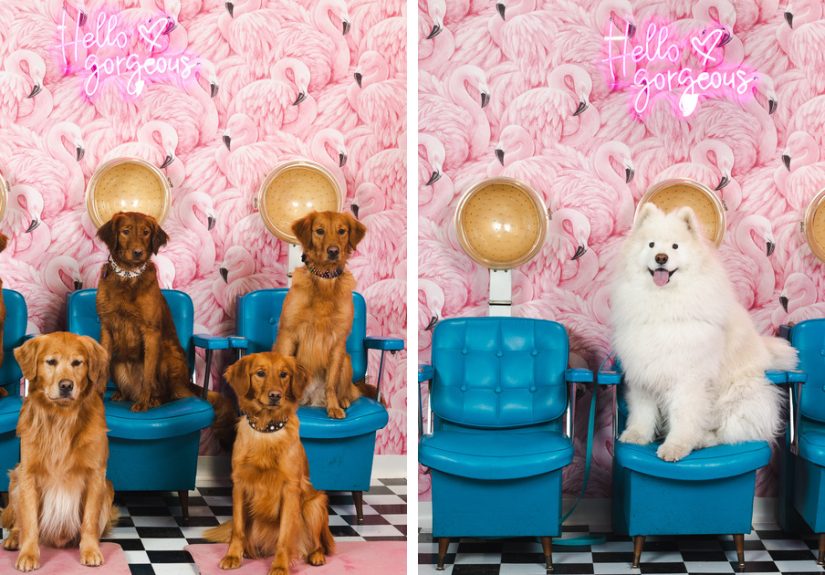
Below are our favorite “photo booth moments.” Each one includes a caption vibe and an alt-text idea so you can keep things accessible when you publish. Swap in your real image filenames and you’re ready to roll.


Pro Tips For Funny And Wholesome Pet Photos (That Don’t Feel Forced)
Focus on the eyes (that’s where the story lives)
Whether you’re using a phone or a camera, focus on the eyes. It’s the fastest way to make a photo feel sharp and emotionally “there.” If your pet is wiggly, use burst mode and pick the best frame later. It’s not cheatingit’s strategy.
Get on their level
Eye-level shots feel more personal and more “inside the moment.” Shooting from above can be cute (hello, puppy eyes), but eye-level portraits often look more intentionallike a real pet studio session instead of a drive-by snapshot.
Use soft light and avoid startling them
Pets tend to do better with gentle, consistent lighting. A sudden bright flash can spook some animals, and even when it doesn’t, harsh light can create odd shadows and shiny eyes. If you need more light, add continuous light and diffuse it (bounce it off a wall, or soften it with a shade).
Let props be optional, not mandatory
Some pets love accessories. Some pets will act like you just placed a curse upon their ancestors. If a hat, bow, or bandana causes visible stressears back, stiff posture, frantic pawingskip it. The photo booth is supposed to capture their personality, not their revenge plot.
Watch for stress signals and choose comfort over “one more shot”
A good photo booth session respects the pet’s limits. Common signs a pet needs a break can include avoidance, tucked tail, flattened ears, panting when it’s not hot, lip licking, excessive yawning, tail twitching in cats, dilated pupils, or a tense body. When you see these, pause and reset: lower expectations, reduce noise, offer a treat, or call it done for the day.
Keep the background clean so the joke lands
Funny pet pictures work best when the viewer’s eye goes straight to the expression. The cleaner your backdrop, the more the tiny crown, the head tilt, and the soulful stare do the heavy lifting.
Extra: Of Real Photo Booth Lessons We Learned The Funny Way
Setting up the booth was the easy part. The real education started the moment we invited the pets in and realized we had created a “Suspicious New Corner” in the house. The first lesson: give them time to investigate. We thought we’d set the backdrop, hit record, and capture instant magic. Instead, we got ten minutes of sniffing, a slow circle around the light stand, and one cat sitting with their back to us like a tiny furry protest.
The second lesson was about sound. Camera beeps, click noises, even the crinkle of a treat bag can flip the vibe. When we turned off unnecessary sounds and moved more slowly, the whole session felt calmer. It wasn’t just better for the petsit made us more patient, too. Funny enough, patience is a photography tool nobody lists on the gear page, but it should be right next to “extra batteries.”
Lesson three: short sessions beat long sessions. We tried a “let’s do a full shoot” approach once. The results were… a documentary about how quickly enthusiasm can evaporate. After that, we switched to mini-sessions. Five minutes, a handful of treats, a few great frames. The photos looked more natural because the pets never had time to get tired of the whole idea.
Lesson four: props are less important than timing. Our best “wholesome” shots didn’t come from a complicated setup. They came from catching tiny expressions: the split-second head tilt, the gentle paw on a toy, the blink that looks like a wink. The props helped, surebut they were seasoning, not the meal. We also learned that the cutest accessories are the ones pets tolerate comfortably. A soft bandana? Great. A stiff hat that slides into their eyes? Absolutely not. The best photo is the one where they look relaxed and like themselves.
Lesson five: you can’t force a mood, but you can invite one. When we lowered our expectations, the pets rose to the occasion. We stopped trying to “pose” them like tiny models and started rewarding any calm moment near the backdrop. The vibe shifted from “perform for the camera” to “hang out here and good things happen.” And that’s when we got the shots that felt like real personality: silly, sweet, a little chaotic, and completely lovable. In other words: exactly why we wanted a pet photo booth in the first place.