Table of Contents >> Show >> Hide
- What Is Retinal Imaging, Exactly?
- What Can Retinal Imaging Detect in the Eyes?
- A Window to the Rest of the Body: Systemic Diseases Retinal Imaging Can Reveal
- How Retinal Imaging Works During an Eye Exam
- Who Should Consider Retinal Imaging?
- The Future: AI, Big Data, and Retinal “Biomarker” Panels
- Real-World Experiences: What Retinal Imaging Can Reveal in Everyday Life
- Bottom Line: Why Retinal Imaging Matters
If eyes are the windows to the soul, then the retina is the high-definition screen at the back of that window.
Retinal imaging is like taking a detailed screenshot of that screen – and modern medicine has learned to “zoom in” on it
to detect a surprising number of eye and whole-body health problems long before you feel anything is wrong.
In this guide, we’ll walk through what retinal imaging is, what diseases it can detect, and why it has become such a powerful,
noninvasive tool for catching eye disease and even systemic conditions like diabetes, hypertension, cardiovascular disease,
and possibly Alzheimer’s disease. We’ll keep things clear, practical, and just nerdy enough to impress your eye doctor.
What Is Retinal Imaging, Exactly?
Retinal imaging refers to a family of tests that take highly detailed pictures of the back of your eye –
especially the retina, macula, and optic nerve. These images allow eye-care professionals to see tiny blood vessels,
nerve layers, and other structures that are impossible to view with the naked eye.
Common retinal imaging technologies include:
-
Fundus photography: A specialized camera captures color photos of the retina.
This is the classic wide-angle “orange” picture you may have seen if your optometrist showed you your eye on a computer screen. -
Optical coherence tomography (OCT): Often described as an “optical ultrasound,”
OCT uses light waves to create cross-sectional slices of the retina, showing the thickness and health of each layer in micrometer detail. -
OCT angiography (OCTA): A newer, dye-free technique that maps blood flow through tiny retinal vessels,
revealing early microvascular changes in diabetes, hypertension, and other systemic diseases. -
Fluorescein angiography: A fluorescent dye is injected into a vein and photographed as it travels through retinal blood vessels,
highlighting leaks, blockages, and abnormal new vessels. -
Ultra-widefield imaging: Captures a very large portion of the retina in a single image,
helping detect peripheral problems that a traditional snapshot might miss.
Most modern eye exams rely on some combination of these tools. The main goal: catch damage early,
track changes over time, and guide treatment before vision loss becomes permanent.
What Can Retinal Imaging Detect in the Eyes?
Let’s start with the “obvious” part – eye diseases. Retinal imaging is outstanding at spotting
early changes in the retina, macula, and optic nerve that would otherwise remain silent until vision is already damaged.
1. Diabetic Retinopathy
Diabetic retinopathy is one of the leading causes of blindness in working-age adults.
High blood sugar damages tiny retinal blood vessels, causing them to leak, close off, or grow fragile new branches.
The scary part? You can have significant damage with little or no noticeable symptoms at first.
Retinal imaging can reveal classic signs of diabetic retinopathy – microaneurysms, tiny hemorrhages,
exudates (fatty deposits), and abnormal new vessels – long before you notice blurry vision.
OCT can also pick up diabetic macular edema, a swelling in the central retina that seriously affects fine detail vision.
Because the condition is so tightly tied to blood sugar control, these images also help your doctor
coordinate care with your primary provider or endocrinologist and adjust treatment in time to preserve sight.
2. Age-Related Macular Degeneration (AMD)
AMD affects the macula, the small central area responsible for sharp, detailed vision.
Early AMD may show up as small yellowish deposits called drusen and subtle changes in the retinal pigment layer.
You might still be reading and driving just fine – but your retina is already sending up flares.
Fundus photos can show drusen and pigment changes, while OCT reveals thinning or disruption of macular layers
and the presence of fluid under or within the retina in “wet” AMD.
Detecting AMD early is critical because timely treatment of wet AMD can mean the difference between
maintaining functional vision and profound central vision loss.
3. Glaucoma and Optic Nerve Damage
Glaucoma is often called the “silent thief of sight” because it usually progresses slowly and painlessly until peripheral vision is lost.
Retinal imaging, especially OCT, has changed the game by letting doctors measure the thickness of the retinal nerve fiber layer
and detect damage years before you notice changes.
Digital photos of the optic nerve can show a deepening or widening of the optic cup (the pale center of the nerve head),
while OCT tracks subtle thinning over time. Automated analysis can compare your optic nerve to age-matched norms,
flagging suspicious trends early so treatment can start before significant vision loss.
4. Retinal Tears, Detachments, and Vascular Occlusions
Retinal imaging can also capture acute events such as:
- Retinal tears and detachments: Visible as abnormal elevations, folds, or breaks in the retina.
- Retinal vein or artery occlusions: Sudden blockages that cause distinctive patterns of swelling, hemorrhage, or pallor.
- Macular holes or epiretinal membranes: Structural changes that can be mapped in fine detail on OCT.
These conditions are usually symptomatic – think sudden floaters, flashes, or a “curtain” over part of your vision –
but imaging is essential for confirming the diagnosis and planning treatment.
A Window to the Rest of the Body: Systemic Diseases Retinal Imaging Can Reveal
The retina isn’t just about vision. Because it’s packed with tiny blood vessels and nerve tissue,
it also reflects what’s going on in the rest of your body.
Many researchers call retinal imaging a “window into systemic health,” and they’re not exaggerating.
1. Hypertension and Hypertensive Retinopathy
Chronically high blood pressure can cause characteristic changes in retinal vessels – narrowing,
thickening of vessel walls, and arteriovenous “nicking” where arteries cross veins.
Severe or uncontrolled hypertension may also cause flame-shaped hemorrhages, cotton-wool spots, or swelling of the optic nerve.
These changes, visible on fundus photography or OCT, can be an early warning that blood pressure is not adequately controlled
and that the heart, kidneys, and brain may be at risk.
2. Cardiovascular Disease and Stroke Risk
Multiple studies have linked subtle retinal vascular changes – such as microaneurysms, vessel caliber alterations,
capillary dropout, and reduced perfusion – with an increased risk of heart attack, heart failure, and stroke.
Advanced techniques like OCTA make it possible to quantify retinal microcirculation and track changes over time,
while AI algorithms are being trained to predict cardiovascular events based solely on retinal photos.
We’re not yet at the point where your eye exam replaces a cardiology workup,
but retinal imaging is rapidly becoming part of the early-warning toolkit for vascular disease.
3. Diabetes and Metabolic Health
We already mentioned diabetic retinopathy as an eye disease, but retinal imaging can also serve as a
systemic diabetes indicator. The presence and severity of diabetic changes in the retina often correlate
with how long someone has had diabetes and how well their blood sugar has been controlled.
Some screening programs now use portable fundus cameras or even smartphone-based systems to photograph retinas in primary-care clinics,
allowing remote specialists or AI tools to flag patients who need prompt eye care or tighter metabolic control.
4. Neurological and Neurodegenerative Disorders
The retina is essentially neural tissue – an extension of the brain that happens to be visible through the pupil.
This makes it an attractive place to look for early signs of brain diseases such as Alzheimer’s and other dementias.
Research has shown that people with Alzheimer’s may have thinning of specific retinal layers,
reduced vessel density on OCTA, and even deposits of amyloid-beta and tau proteins in the retina.
While retinal biomarkers for Alzheimer’s are not yet standard in everyday practice,
clinical trials are actively exploring their use for early detection and monitoring.
Similar retinal changes may also help detect or track conditions like multiple sclerosis,
Parkinson’s disease, and other neurodegenerative disorders, although this is still an emerging field.
5. Other Systemic Conditions
Beyond the big hitters, retinal imaging can provide clues to:
-
Chronic kidney disease: Microvascular changes in the retina often mirror those in the kidneys,
reflecting shared vascular damage. - Autoimmune and inflammatory diseases: Conditions like lupus or sarcoidosis may cause retinal vasculitis or other inflammatory lesions.
- Blood disorders and cancers: Leukemia, anemia, and certain malignancies may show up as characteristic retinal hemorrhages or infiltrates.
In other words, your retina is not just an innocent bystander – it’s a live status screen for your microvascular and neurologic health.
How Retinal Imaging Works During an Eye Exam
So what actually happens when you get retinal imaging at the optometrist or ophthalmologist?
-
Pupil preparation: Depending on the technology, your pupils may or may not need dilation.
Many modern fundus cameras and OCT devices can capture useful images through undilated pupils,
though dilation still gives the widest and clearest view. -
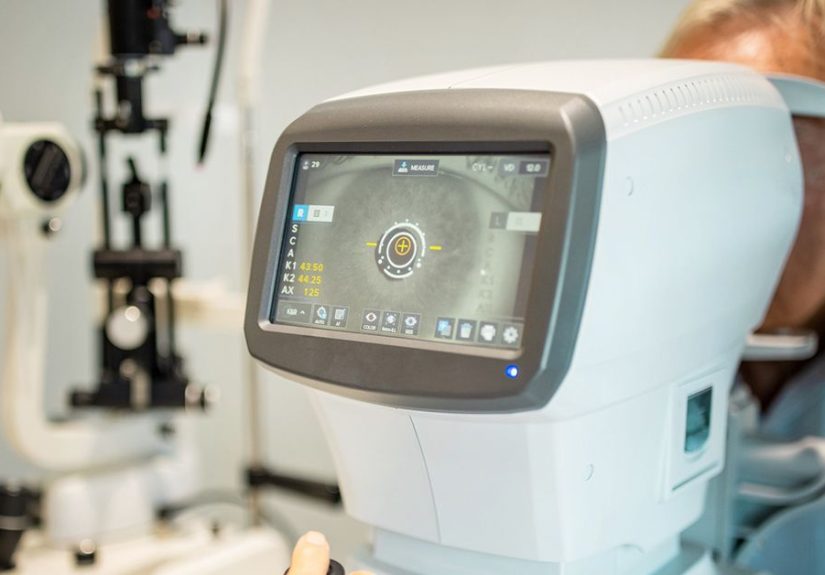
Image capture: You rest your chin on a support and look at a target light.
The camera takes a quick snapshot or scan – often accompanied by a brief flash – in a few seconds. -
Image review: Your eye-care provider reviews the images, often zooming in on the macula, optic nerve, and blood vessels,
and may compare them to prior visits to track progression. -
Risk discussion and next steps: If any abnormalities are found, your doctor may recommend
more frequent monitoring, further imaging, or treatment – and, if systemic disease is suspected, coordination with your primary physician or specialist.
The tests are noninvasive, generally painless, and usually quite fast.
Mild light sensitivity or temporary blurriness from dilation is about as bad as it gets for most people.
Who Should Consider Retinal Imaging?
Retinal imaging is now common in routine eye exams, but it’s especially important if you:
- Have diabetes or prediabetes.
- Have hypertension, high cholesterol, or a history of cardiovascular disease or stroke.
- Are over age 50, particularly with a family history of AMD or glaucoma.
- Have a family history of retinal disease or sudden vision loss.
- Experience new floaters, flashes, or unexplained visual changes.
- Have neurologic symptoms that raise concern for conditions like MS or dementia.
For many people, yearly or bi-yearly imaging – alongside a comprehensive dilated exam –
acts as a baseline that makes it much easier to catch small but important changes over time.
The Future: AI, Big Data, and Retinal “Biomarker” Panels
As imaging devices become faster and higher-resolution, and as AI tools learn to analyze millions of retinal images,
we’re moving toward a world where a quick glance at your retina might help predict your risk of eye disease, heart disease,
stroke, and cognitive decline – all in one scan.
That doesn’t mean retinal imaging replaces traditional blood tests, imaging, or neurological evaluations.
But as a low-risk, noninvasive, repeatable test, it fits perfectly into preventive medicine and personalized health monitoring.
Real-World Experiences: What Retinal Imaging Can Reveal in Everyday Life
Beyond clinical trial data and fancy acronyms, retinal imaging often changes real people’s lives in very down-to-earth ways.
Here are some illustrative scenarios that mirror what patients and clinicians commonly report.
1. The “I Feel Fine” Patient with Silent Diabetic Retinopathy
Imagine a 52-year-old office worker with type 2 diabetes. They feel okay, their glasses seem fine,
and they only booked their eye exam because their spouse nagged them. During the visit, the optometrist takes fundus photos and OCT scans.
On the big screen, small red dots and yellowish spots appear around the macula – classic signs of early diabetic retinopathy and mild macular swelling.
Vision is still 20/20, but the retina is clearly under stress.
Because the changes are caught early:
- The eye doctor recommends closer follow-up and, if needed, treatment to control swelling.
- The patient’s primary provider adjusts diabetes medications and emphasizes tighter blood sugar, blood pressure, and cholesterol control.
- Two years later, follow-up imaging shows stable or improved findings instead of severe, vision-threatening damage.
Without retinal imaging, those early changes might have been missed, and the first “symptom” could have been permanent vision loss.
2. An Eye Exam that Flags Cardiovascular Risk
Another common scenario: a middle-aged patient with borderline blood pressure shows up for a routine exam.
They have no chest pain, no shortness of breath, and only mild, occasional headaches.
Fundus photos reveal narrowed retinal arteries, subtle arteriovenous nicking, and a few cotton-wool spots –
tiny areas of nerve fiber damage caused by poor blood flow. The eye doctor recognizes this pattern as hypertensive retinopathy
and strongly recommends follow-up with a primary-care physician or cardiologist.
The patient’s blood pressure turns out to be much higher than expected, and further workup finds left ventricular hypertrophy and elevated cardiovascular risk.
Because retinal imaging raised a red flag, the patient starts treatment sooner – potentially preventing a heart attack or stroke down the line.
3. Tracking Macular Degeneration Over Time
Consider an older adult with early dry AMD. Their first OCT shows a few drusen and mild changes in the macular layers,
but central vision is still good. They quit smoking, start using an Amsler grid, and follow their doctor’s advice on
nutrition and UV protection.
Every year, OCT and fundus photos are repeated. If fluid or new abnormal vessels appear, indicating conversion to wet AMD,
treatment can be started quickly with anti-VEGF injections to preserve central vision.
In this way, retinal imaging doesn’t just detect disease – it becomes a storybook showing how the retina responds to time,
lifestyle, and treatment decisions.
4. Emerging Use in Brain Health Discussions
Some clinics involved in research are already using OCT and OCTA as part of early-dementia studies.
A patient complaining of “brain fog” might have normal basic cognitive screening, but subtle thinning of retinal nerve layers
or reduced vessel density could qualify them for a research trial or prompt closer long-term monitoring.
While these findings are not diagnostic on their own, they’re part of a bigger puzzle that researchers are eager to solve –
how to spot neurodegenerative disease before major brain damage occurs.
Bottom Line: Why Retinal Imaging Matters
Retinal imaging started as a way to take better pictures of the back of the eye.
It has evolved into a powerful, noninvasive, multi-purpose tool that can:
- Detect eye diseases like diabetic retinopathy, AMD, glaucoma, and retinal tears early.
- Provide clues to systemic conditions such as hypertension, cardiovascular disease, diabetes, kidney disease, and blood disorders.
- Offer promising biomarkers for neurodegenerative diseases, including Alzheimer’s, in ongoing research.
- Track disease progression and treatment response over time with precise, quantitative measurements.
- Support AI-driven risk prediction models for personalized, preventive care.
If your eye-care provider offers retinal imaging, it’s more than just a cool picture to post on your fridge.
It’s a snapshot of your visual and systemic health, and in many cases, it can give you a head start on protecting your sight –
and maybe even your heart and brain – for years to come.
SEO JSON Meta