Table of Contents >> Show >> Hide
- What Is Rosé Wine?
- How Rosé Is Made
- Why Rosé Colors Vary So Much
- Is Rosé Sweet or Dry?
- Common Rosé Grapes to Know
- Famous Rosé Styles and Regions
- What Rosé Tastes Like
- Rosé Myths That Need to Retire
- How to Read a Rosé Label
- Rosé in Culture: Why People Keep Coming Back to It
- Extended Section: Experiences and Impressions Related to Rosé
- Conclusion
Rosé is the pink middle child of the wine world: not as brooding as red, not as crisp-and-businesslike as white, and definitely tired of being introduced as “summer water.” That nickname may be catchy, but it does rosé a little dirty. Rosé is not a joke bottle, not a fashion accessory, and not simply red wine in a pastel outfit. It is a serious wine style with real technique, regional identity, and a flavor range that can swing from bone-dry and citrusy to rounder, fruitier, and more structured.
So, what is rosé, exactly? At its core, rosé is wine made mostly from red grapes, but with limited contact between the juice and the grape skins. That short skin contact is what gives rosé its signature pink color. The result is a wine that often carries some of the berry character of red wine, but with less tannin, less weight, and a brighter overall personality. In other words, rosé is not confused. It knows exactly what it is.
This complete guide breaks down how rosé is made, why the color varies so much, whether rosé is sweet or dry, which grapes are commonly used, what famous rosé regions matter, and how to read a bottle label without feeling like you need a decoder ring and a French dictionary.
What Is Rosé Wine?
Rosé wine is a category of wine defined mainly by color and production style. Most rosé starts with red wine grapes such as Grenache, Syrah, Mourvèdre, Pinot Noir, Sangiovese, Tempranillo, or Zinfandel. The difference is not the grape alone but how the grapes are handled after harvest.
When winemakers make red wine, the juice spends a longer time in contact with skins, seeds, and sometimes stems. That contact extracts deep color, tannin, and structure. When they make rosé, the contact time is much shorter. Sometimes it lasts only a few hours. Sometimes it stretches longer, depending on the style the producer wants. Either way, the goal is pink, not crimson.
That is why rosé can show flavors associated with red grapes, like strawberry, cherry, watermelon, raspberry, or blood orange, while still feeling lighter and more lifted than a typical red. It is also why rosé can vary so dramatically from one bottle to the next. A pale Provençal rosé and a deeper Cerasuolo d’Abruzzo may both be rosé, but they do not arrive with the same mood.
How Rosé Is Made
1. Short Skin Contact
The classic way to make rosé is straightforward: crush red grapes, allow the juice to sit with the skins briefly, then separate them before too much color and tannin are extracted. This method explains why rosé is pink instead of red. The skins do the coloring, but only for a limited time.
2. Direct Press
In the direct press method, red grapes are pressed gently and the juice has only minimal contact with the skins. This often produces a paler rosé, frequently associated with delicate, crisp, and fresh styles. Many famously pale rosés fall into this orbit, though pale color alone does not guarantee a specific taste.
3. Saignée
Saignée, a French term meaning “to bleed,” is another production method. In this case, a portion of juice is drained from a tank intended for red wine early in the process. That juice becomes rosé, while the remaining red wine becomes more concentrated. Saignée rosé can be fuller, darker, and more intense than direct-press styles. It is often where rosé puts on a blazer and says, “Actually, I contain structure.”
4. Blending
A common myth is that rosé is simply red wine mixed with white wine. In still wine, that is generally not the standard method for quality rosé. There are limited exceptions in some sparkling wine traditions, where blending can be part of the process. But for still rosé, the pink color usually comes from controlled skin contact, not a lazy afternoon chemistry experiment.
Why Rosé Colors Vary So Much
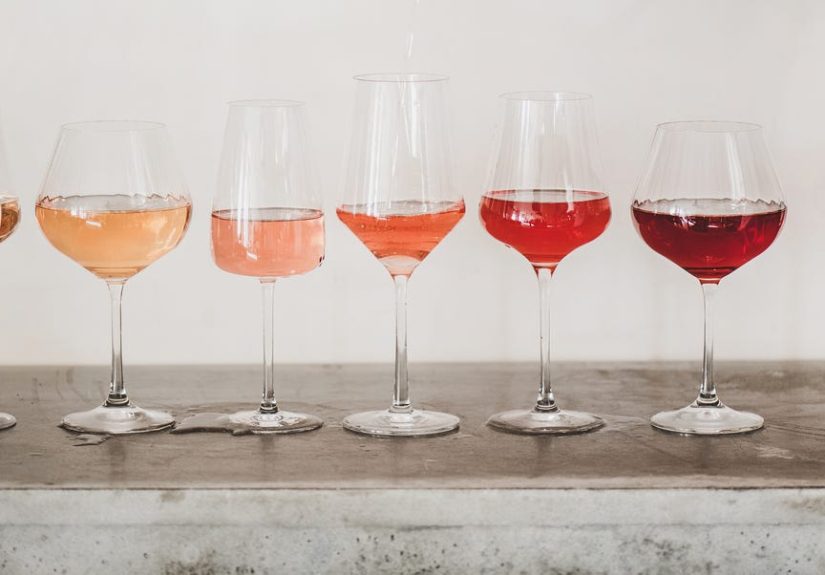
Rosé can look pale salmon, copper, onion-skin, coral, bright pink, or almost ruby. That color range is not random. It usually reflects a combination of grape variety, ripeness, winemaking choices, and skin-contact time.
Lighter rosés are often associated with delicate extraction and subtle aromatics. Darker rosés may suggest more body, more texture, and sometimes more savory depth. But color does not tell the whole story. A deeper pink bottle is not automatically sweet, and a very pale bottle is not automatically superior. Rosé has spent too long being judged like a paint swatch.
Different grapes naturally produce different shades and flavor profiles. Pinot Noir rosé can lean elegant and lifted. Grenache-based rosé often brings red fruit and citrus. Mourvèdre can add savory structure. Sangiovese rosato may show tart cherry and herbal edges. Zinfandel-based blush wines can move into softer, sweeter territory depending on how they are made.
Is Rosé Sweet or Dry?
This is one of the biggest rosé questions, and the honest answer is: it depends. Rosé can be dry, off-dry, or sweet. Many of the most widely respected rosés on the market are dry. They show fruit, yes, but fruitiness is not the same thing as sugar. Strawberry aroma does not mean strawberry syrup.
A lot of confusion comes from older pink wine stereotypes, especially in the United States, where White Zinfandel helped many drinkers first encounter rosé-style wine. White Zinfandel became massively popular and is often sweeter than the dry rosés people now associate with Provence, Bandol, or many modern California producers.
So if someone says, “I don’t like rosé because it’s too sweet,” what they usually mean is, “I had one sweet pink wine once and my brain has filed a permanent complaint.” In reality, rosé spans a broad spectrum. Dry rosé is common. Sweet rosé exists too. The label, producer, region, and style matter more than the color alone.
Common Rosé Grapes to Know
Grenache
Grenache is one of the most important rosé grapes in the world, especially in southern France. It often brings juicy red berry notes, citrus peel, and a rounded texture.
Syrah
Syrah can contribute darker fruit, spice, and more savory tones. In blends, it often adds backbone and a little swagger.
Mourvèdre
Mourvèdre is often linked with more structured rosé styles, particularly in places like Bandol. It can offer herbal, mineral, and savory dimensions that feel more serious and age-worthy.
Pinot Noir
Pinot Noir rosé is often floral, red-fruited, and elegant, with styles ranging from very delicate to surprisingly textured depending on region and producer.
Sangiovese
Sangiovese rosato can bring tart cherry, cranberry, and subtle herbal notes. It tends to feel energetic and food-minded, even when you are only analyzing it on paper and not at a dinner table.
Tempranillo
Used in Spanish rosado, Tempranillo can deliver deeper fruit, spice, and a broader mouthfeel.
Zinfandel
Zinfandel is famous in the U.S. rosé conversation because of White Zinfandel. Depending on how it is made, it can lean light and fruity or noticeably sweet.
Famous Rosé Styles and Regions
Provence, France
Provence is the global reference point for pale, dry rosé. These wines are often delicate in color, with notes that can suggest citrus, melon, herbs, and red berries. Provence helped shape modern rosé expectations, for better and for worse. The good: it popularized dry rosé. The bad: it convinced many people that all great rosé must look like sunset in a seashell.
Bandol, France
Bandol rosé often has more structure, frequently influenced by Mourvèdre. These wines can feel savory, mineral, and more substantial than lighter styles.
Tavel, France
Tavel is famous for producing rosé only. Its wines are typically deeper in color and more powerful than the whisper-pink bottles many consumers first imagine.
Loire Valley, France
The Loire offers multiple rosé expressions, from dry and crisp to softer and slightly sweeter depending on appellation and grape mix.
Spain
In Spain, rosé is commonly labeled rosado. Styles can range from fresh and bright to darker, fruit-forward versions made with grapes such as Tempranillo and Garnacha.
Italy
Italian rosato is another broad category. One standout is Cerasuolo d’Abruzzo, a rosé that often behaves with more depth and personality than people expect from pink wine.
California and the United States
American rosé now includes far more than White Zinfandel. Producers in California, Oregon, Washington, and New York have expanded the category with dry rosés made from Grenache, Pinot Noir, Mourvèdre, Cabernet Franc, and other grapes. The U.S. rosé scene has grown up quite a bit. It still knows how to have fun, but now it also reads the back label.
What Rosé Tastes Like
Rosé tasting notes often include strawberry, raspberry, cherry, watermelon, pink grapefruit, blood orange, peach, melon, rose petal, and fresh herbs. Some rosés are crisp and citrusy. Some are floral. Some are savory and mineral. Some are richer and almost red-wine-adjacent in texture.
The best way to think about rosé flavor is not as one fixed profile but as a family resemblance. Rosé usually combines freshness with fruit, but the exact balance depends on grape variety, climate, region, and method. Warm-climate rosés may feel riper and broader. Cooler-climate examples may feel sharper and more linear.
Rosé Myths That Need to Retire
Myth 1: Rosé Is Just a Summer Trend
Rosé became heavily marketed as a warm-weather lifestyle drink, but that image is much smaller than the category itself. Serious rosés are made all over the world and can show structure, complexity, and regional character.
Myth 2: Rosé Is Always Sweet
Nope. Many rosés are dry. The pink color may suggest candy to some people, but the glass often says citrus, herbs, and mineral tension instead.
Myth 3: Paler Means Better
Not necessarily. Pale rosé is fashionable, but deeper rosés can be outstanding. Color is a clue, not a quality score.
Myth 4: Rosé Is Less Serious Than Red or White
Also false. Rosé involves intentional winemaking choices and can reflect terroir, grape character, and house style just as clearly as other categories.
How to Read a Rosé Label
If you want to understand a rosé bottle quickly, start with four clues: region, grape, dryness cues, and vintage.
Region tells you a lot. Provence usually signals pale and dry. Tavel can imply deeper color and more body. Cerasuolo d’Abruzzo may point to a fuller, more vivid style.
Grape variety gives additional hints. Grenache suggests bright fruit and softness. Pinot Noir can mean elegance. Mourvèdre may hint at savory structure.
Dryness language matters too. Terms such as “dry,” “brut” for sparkling rosé, or regional styles associated with dryness can be useful. Sweetness, when present, may be signaled more clearly on some retail-facing labels than on traditional European ones.
Vintage is worth noting because many rosés are prized for freshness and youth, though some structured examples can evolve.
Rosé in Culture: Why People Keep Coming Back to It
Rosé has unusual cultural power for a wine style. It sits at the crossroads of approachability and complexity. Beginners often find it less intimidating than red wine. More experienced wine drinkers appreciate that it can show nuance without theatrics. It does not need to thunder. Sometimes a raised eyebrow and a well-timed citrus note are enough.
Part of rosé’s appeal is visual, of course. Humans are very persuadable by color, and rosé has excellent public relations. But the deeper reason for its staying power is that it can feel both easygoing and thoughtful. It does not demand a special occasion, yet it can absolutely belong in one.
Extended Section: Experiences and Impressions Related to Rosé
Rosé has built a reputation that goes beyond flavor. It often appears in experiences people remember because it lives comfortably in social, cultural, and seasonal spaces. Walk into a restaurant with outdoor seating in late spring, and rosé is often part of the visual language before anyone says a word. Not because every pink bottle is magical, but because rosé has become shorthand for ease, brightness, and a certain relaxed confidence.
In travel culture, rosé is tied closely to place. Provence is the obvious example, where pale pink wine has become part of the region’s international image. But the experience is not only about postcard views and glamorous tables. It is also about how a regional product can shape a wider expectation. Many people encounter rosé first as an atmosphere before they understand it as a category. They remember a terrace, a seaside lunch, a long conversation, or a bottle on a shop shelf that looked lighter and more inviting than everything around it. Rosé is very good at making first impressions.
There is also the experience of discovery. A lot of people come to rosé with assumptions. They expect sweetness and are surprised by dryness. They expect simplicity and find texture. They expect one generic “pink wine” flavor and instead run into a whole lineup of personalities: crisp and citrusy, floral and delicate, savory and herbal, deeper and more structured. Rosé has a way of gently embarrassing overconfidence. It smiles politely while proving that categories are bigger than stereotypes.
For many wine learners, rosé becomes a gateway into understanding how production changes outcome. It is one thing to hear that grape skins affect color and structure. It is another to compare styles and realize that a few extra hours of skin contact can change the entire mood of a wine. Rosé teaches that winemaking is not only about grape variety. It is also about decisions, timing, intention, and regional tradition.
Rosé also has a curious social flexibility. It can appear in casual settings without seeming too serious, yet it also shows up in higher-end conversations about region, technique, and quality. Few wine styles move between those worlds as smoothly. One person sees a friendly pink bottle. Another sees direct press versus saignée, Mediterranean grape blends, and appellation history. Rosé can handle both audiences without becoming pretentious or painfully eager to impress.
That flexibility helps explain why rosé has remained relevant. Trends come and go, but wines that can speak to both newcomers and enthusiasts tend to stick around. Rosé’s best experiences are often tied to that balance. It feels accessible, but it rewards curiosity. It photographs well, but it is more than decoration. It can be playful, but it does not have to be shallow. In a world that loves easy labels, rosé keeps offering a more interesting answer.
Maybe that is the real charm of rosé. It reminds people that wine categories are not fixed personalities from a high school movie. Red is not always intense. White is not always simple. Rosé is not always sweet or frivolous. The experience of learning rosé is often the experience of unlearning lazy assumptions. And frankly, that is a pretty elegant trick for a pink wine that so many people once underestimated.
Conclusion
Rosé is not a watered-down red, a dressed-up white, or a single flavor profile in a pretty bottle. It is a broad and serious wine category made mostly from red grapes, shaped by short skin contact, grape choice, region, and winemaking style. It can be pale or vivid, delicate or structured, dry or sweet, classic or modern. The smartest way to approach rosé is to stop treating it like one thing. It is many things, and that is exactly why it remains so compelling.