Table of Contents >> Show >> Hide
- Why Do Employers Ask Weird Interview Questions?
- How to Answer a Weird Interview Question Without Panicking
- 30 Weird Interview Questions and What Happened
- 1. “If you were a cereal, which cereal would you be?”
- 2. “How would you sell hot chocolate in Florida?”
- 3. “What would you do if you found a penguin in the freezer?”
- 4. “How many golf balls fit in a school bus?”
- 5. “If you could be any kitchen utensil, what would you be?”
- 6. “What is your spirit office supply?”
- 7. “Would you rather be liked or respected?”
- 8. “Teach me something in two minutes.”
- 9. “If aliens landed and asked what our company does, what would you say?”
- 10. “What song describes your work ethic?”
- 11. “If you were a superhero, what would your weakness be?”
- 12. “How would you survive on Mars with only office supplies?”
- 13. “What is the color of money?”
- 14. “If you had to delete one state, which would it be?”
- 15. “Are you more of a hunter or a gatherer?”
- 16. “What would you name your autobiography?”
- 17. “If I gave you an elephant and you couldn’t sell it or give it away, what would you do?”
- 18. “What would you do if your manager asked you to do something impossible?”
- 19. “If you were a brand, what would your slogan be?”
- 20. “How would you explain Wi-Fi to a five-year-old?”
- 21. “What is your least favorite vegetable?”
- 22. “If you could invite three historical figures to dinner, who would they be?”
- 23. “What would you do if you saw a coworker steal a dollar?”
- 24. “Can you spell ‘diverticulitis’?”
- 25. “What would you do if a customer challenged you to a dance battle?”
- 26. “How many people are using social media in this city right now?”
- 27. “If your life were a spreadsheet, what would the tabs be?”
- 28. “Would you break a rule to satisfy a customer?”
- 29. “What would your previous boss say is annoying about you?”
- 30. “Why shouldn’t we hire you?”
- What These Weird Interview Questions Really Reveal
- Red Flags: When Weird Interview Questions Go Too Far
- How Candidates Can Prepare for Oddball Interview Questions
- What Employers Should Learn From These Stories
- Extra Experiences: The Awkward, Funny, and Surprisingly Useful Side of Weird Interviews
- Conclusion
Job interviews are supposed to be professional, polished, and slightly nerve-rackinglike a first date where one person holds your résumé and asks about your five-year plan. But sometimes, interviews take a sharp left turn into the land of bizarre questions. One minute you are explaining your work experience, and the next you are being asked how many basketballs fit inside a school bus, what kind of soup represents your personality, or whether you would rather fight one horse-sized duck or one hundred duck-sized horses.
Strange job interview questions are not always random. Employers may use unusual prompts to see how candidates think under pressure, communicate ideas, solve problems, or react when the script disappears. The best weird interview questions can reveal creativity and composure. The worst ones simply make everyone in the room wonder whether lunch was too spicy.
This article gathers 30 weird interview question examples and explains what happened, what the interviewer may have been testing, and what job seekers can learn from the experience. Some are funny, some are awkward, and some are red flags wearing a tiny HR-approved hat.
Why Do Employers Ask Weird Interview Questions?
Oddball interview questions became popular because they seem to push candidates beyond rehearsed answers. A hiring manager may already know what you will say when asked about your strengths, weaknesses, and teamwork skills. But when they ask, “If you were a kitchen appliance, which one would you be?” they are trying to catch a glimpse of how you think in real time.
In theory, these questions can test several traits: creativity, problem-solving ability, humor, confidence, flexibility, and communication style. In practice, they work best when connected to the job. A product designer may reasonably be asked how they would improve a broken vending machine. A customer service candidate may be asked how they would calm down an angry customer who believes the moon controls refund policies. But if a software engineer is asked to sing the company mission statement, that may be less “innovative hiring” and more “please escort me to the exit.”
Experts increasingly recommend structured, job-related interviews over gimmicky brainteasers. Questions tied to real work situations usually predict performance better than puzzles that reward candidates who have already heard the answer. Still, weird questions survive because they are memorable, conversational, and occasionally usefulwhen handled with care.
How to Answer a Weird Interview Question Without Panicking
The golden rule is simple: do not freeze just because the question is odd. Interviewers are often less interested in the “correct” answer and more interested in your reasoning. Take a breath. Smile if appropriate. Buy a few seconds by saying, “That’s an interesting onelet me think it through.” Then answer with structure.
For example, if asked, “How many windows are in New York City?” you do not need the exact number. You can estimate by breaking the problem into categories: residential buildings, offices, schools, stores, and public spaces. If asked, “What animal would you be?” choose one and connect it to job-relevant qualities. “I’d be a border collie because I’m energetic, focused, and happiest when solving problems with a team.” Congratulationsyou have turned a zoo question into a workplace answer.
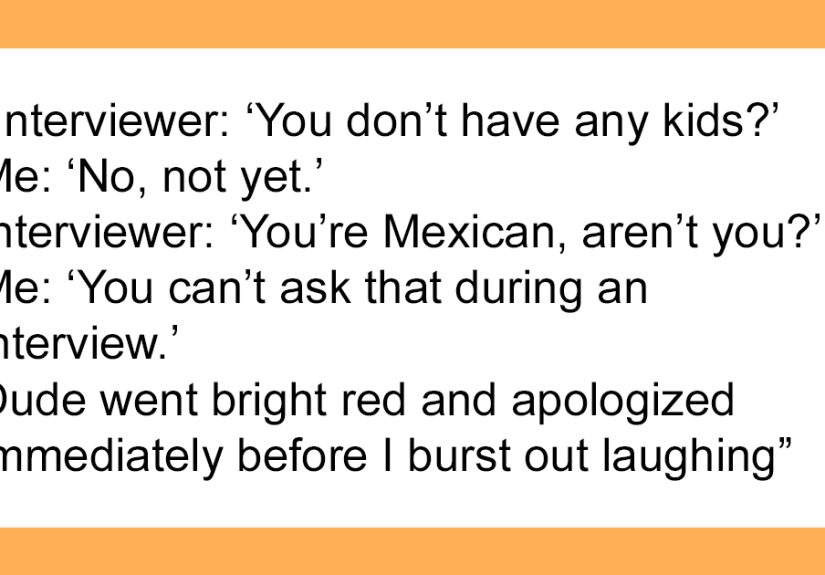
Also, know the difference between weird and inappropriate. A question about your favorite cereal is odd but harmless. A question about your age, marital status, religion, disability, pregnancy plans, or family responsibilities may cross legal and ethical lines. In that case, redirect politely: “I’m confident I can meet the requirements of the role. Could I share how my experience fits the schedule and responsibilities?”
30 Weird Interview Questions and What Happened
1. “If you were a cereal, which cereal would you be?”
The candidate answered, “Cheerios, because I’m dependable, easy to work with, and nobody panics when I enter the room.” The interviewer laughed and later said the answer showed quick thinking. Lesson: pick something simple and connect it to professional traits.
2. “How would you sell hot chocolate in Florida?”
The applicant suggested branding it as a dessert drink, selling it iced, and targeting holiday nostalgia. They got the marketing internship. Lesson: weird sales questions are often creativity tests in disguise.
3. “What would you do if you found a penguin in the freezer?”
The candidate said they would first check if the penguin was safe, then figure out whether it belonged to a zoo, a prank, or a very confused delivery service. The interviewer wanted to hear prioritization: safety, facts, action.
4. “How many golf balls fit in a school bus?”
The candidate did not know, so they estimated the bus volume, subtracted space for seats, and divided by golf ball volume. The math was rough, but the process was clear. Lesson: with brainteasers, explain your assumptions.
5. “If you could be any kitchen utensil, what would you be?”
The applicant chose a spatula because it is flexible, practical, and saves pancakes from disaster. The hiring manager loved the humor. Lesson: a light touch can make a strange answer memorable.
6. “What is your spirit office supply?”
The candidate said, “A sticky notesmall, useful, and very good at reminding people what matters.” They did not get the job, but they did get a compliment for originality. Lesson: not every good answer leads to an offer, and that is okay.
7. “Would you rather be liked or respected?”
The applicant answered, “Both matter, but if I must choose, respected. Respect creates trust; likability helps maintain it.” This turned a tricky personality question into a leadership answer.
8. “Teach me something in two minutes.”
The candidate taught the interviewer how to fold a fitted sheet. Nobody became a linen wizard, but the candidate demonstrated clear instructions and calm delivery. Lesson: choose something simple and teachable.
9. “If aliens landed and asked what our company does, what would you say?”
The applicant explained the company’s product in plain language, avoiding jargon. That was the point. Lesson: if you can explain a business to aliens, you can probably explain it to customers.
10. “What song describes your work ethic?”
The candidate chose “9 to 5” and joked that Dolly Parton had already written the employee handbook. The interviewer laughed, but the candidate also explained that consistency and accountability mattered to them.
11. “If you were a superhero, what would your weakness be?”
The applicant said, “Taking on too much because I want to help.” Then they explained how they use prioritization tools to manage workload. Lesson: this is basically the classic weakness question wearing a cape.
12. “How would you survive on Mars with only office supplies?”
The candidate asked clarifying questions: “Do I have oxygen? How long do I need to survive? What supplies are available?” The interviewer appreciated the problem-solving approach. Lesson: asking smart questions can be better than rushing into a dramatic answer.
13. “What is the color of money?”
The candidate answered, “Green in the U.S., but the real answer depends on contextprofit, trust, and value all have different colors.” It sounded philosophical, but it worked for a finance-adjacent role.
14. “If you had to delete one state, which would it be?”
The applicant refused to insult any state and instead said, “I’d rather merge duplicate paperwork systems than delete people’s homes.” The interviewer admitted it was meant to test tact. Lesson: do not take every weird premise literally.
15. “Are you more of a hunter or a gatherer?”
The candidate said they were both: hunter when pursuing new leads, gatherer when collecting data before making decisions. It was a tidy answer for a sales role. Lesson: binary questions do not always require binary thinking.
16. “What would you name your autobiography?”
The applicant answered, “Figuring It Out, But Faster Each Time.” The title was funny and humble, and it opened a conversation about learning from mistakes.
17. “If I gave you an elephant and you couldn’t sell it or give it away, what would you do?”
The candidate said they would assess cost, safety, space, legal requirements, and potential nonprofit partnerships. The interviewer was testing practical thinking, not elephant enthusiasm.
18. “What would you do if your manager asked you to do something impossible?”
The applicant said they would clarify the goal, explain constraints, offer alternatives, and document the agreed path. That answer turned a strange scenario into a strong workplace response.
19. “If you were a brand, what would your slogan be?”
The candidate answered, “Clear work, calm process.” It matched their project management background and made them sound reassuring. Lesson: personal branding questions reward concise self-awareness.
20. “How would you explain Wi-Fi to a five-year-old?”
The applicant said, “It’s invisible strings that help your tablet talk to the internet.” The interviewer wanted communication skill. Simple won.
21. “What is your least favorite vegetable?”
The candidate answered honestlybeetsand joked that they taste like dirt with ambition. The room laughed. Then the interviewer explained they wanted to see personality. Lesson: harmless humor can humanize you.
22. “If you could invite three historical figures to dinner, who would they be?”
The applicant chose a scientist, a civil rights leader, and a comedian, then explained what each person could teach about curiosity, courage, and communication. The answer showed values without sounding rehearsed.
23. “What would you do if you saw a coworker steal a dollar?”
The candidate said they would consider context but not ignore dishonesty. They would follow company policy and avoid public accusations. Lesson: ethics questions often hide inside tiny hypotheticals.
24. “Can you spell ‘diverticulitis’?”
The candidate asked for the word in a sentence, spelled it slowly, and got it right. The role involved medical documentation, so the question was strange but relevant. Lesson: weird is not always useless.
25. “What would you do if a customer challenged you to a dance battle?”
The applicant said, “I’d politely decline unless dancing was in the job description, then redirect to the customer’s actual need.” The interviewer wanted boundary-setting and customer service instincts.
26. “How many people are using social media in this city right now?”
The candidate estimated population, smartphone usage, likely active users, and time of day. Again, the exact answer mattered less than the method.
27. “If your life were a spreadsheet, what would the tabs be?”
The applicant said: Goals, Budget, Learning, Family, Health, and “Random Ideas That Seemed Brilliant at Midnight.” The interviewer enjoyed the answer because it showed organization and personality.
28. “Would you break a rule to satisfy a customer?”
The candidate answered, “Not a safety, legal, or ethical rule. But I would look for flexible solutions inside policy.” This is a strong answer because it balances service with judgment.
29. “What would your previous boss say is annoying about you?”
The applicant said, “I ask a lot of clarifying questions early, but it prevents confusion later.” That transformed a negative prompt into a strength with self-awareness.
30. “Why shouldn’t we hire you?”
The candidate paused, then said, “You shouldn’t hire me if you need someone who prefers routine over improvement. I tend to look for better systems.” The interviewer smiled. It was risky, but it fit the role.
What These Weird Interview Questions Really Reveal
Looking across these 30 examples, a pattern appears. Weird questions usually fall into five categories. First are creativity questions, such as choosing a cereal, animal, or slogan. Second are estimation questions, like counting golf balls, windows, planes, or social media users. Third are ethics questions, where a tiny scenario tests honesty and judgment. Fourth are communication questions, asking candidates to explain something simply. Fifth are culture-fit questions, which may reveal personality but can also become vague or unfair if not handled carefully.
The best answers are not necessarily the funniest. They are clear, calm, and connected to the job. A good candidate shows how they think. A good interviewer explains why the question matters. When both sides understand the purpose, even a penguin-in-the-freezer question can become useful instead of ridiculous.
Red Flags: When Weird Interview Questions Go Too Far
Some strange interview questions are playful. Others are warning signs. If an interviewer asks about your family plans, religion, health, age, marital status, disability, or personal background in a way that does not relate to the job, proceed carefully. Employers should focus on whether you can perform the role, meet legitimate work requirements, and bring the necessary skills.
A question can also be a red flag if it feels designed to embarrass you. “Sing for us,” “Tell us your most humiliating secret,” or “Convince me you deserve this job while I ignore you” may indicate a workplace that confuses pressure with professionalism. Interviews should challenge candidates, not haze them.
How Candidates Can Prepare for Oddball Interview Questions
You do not need to memorize answers to every weird job interview question on Earth. That would require a spreadsheet, a therapist, and possibly a snack drawer. Instead, practice a flexible response method:
Pause before answering
A short pause makes you look thoughtful, not confused. Say, “Let me think about that for a moment.” This gives your brain time to put on shoes.
Clarify the question
If the prompt is vague, ask a follow-up question. “Are you looking for a practical answer or a creative one?” This shows confidence and communication skills.
Show your reasoning
For puzzles and estimates, explain assumptions step by step. The interviewer wants to see your process, not your ability to magically know the number of pigeons in Chicago.
Connect back to the role
Whenever possible, link your answer to teamwork, customer service, leadership, analysis, adaptability, or another job-related skill.
Stay professional
Funny is great. Offensive is not. Keep humor clean, brief, and relevant. You want to be remembered as witty, not as “the candidate who declared war on beets for seven minutes.”
What Employers Should Learn From These Stories
Oddball questions can be useful, but only when they serve a purpose. A hiring team should know what trait each question is evaluating and how answers will be judged. Otherwise, the interview becomes a personality lottery. Candidates who share the interviewer’s humor may score higher even if they are not better qualified.
Employers should also use consistent questions for candidates applying to the same role. Structured interviews help reduce bias and make hiring decisions easier to defend. A creative prompt can still be structured. For example, every candidate for a customer support role might be asked, “A customer is angry because they misunderstood a policy. What do you do?” That is more useful than asking one candidate about penguins and another about soup.
Extra Experiences: The Awkward, Funny, and Surprisingly Useful Side of Weird Interviews
Anyone who has sat through enough interviews eventually collects a few stories. Some interviews feel like business meetings. Others feel like escape rooms with fluorescent lighting. The strange thing is that the weirdest questions often become the most memorable moments, even years later.
One common experience is the “accidental personality test.” A candidate walks in ready to discuss revenue growth, software tools, or customer retention, and the interviewer asks, “What kind of tree are you?” At first, it feels silly. But the candidate who says, “An oak, because I’m steady and dependable,” may leave a better impression than the candidate who says, “I don’t understand how this relates to quarterly reporting.” The second candidate may be right, but the first one understood the social moment.
Another experience is the “brainteaser ambush.” This happens when an interviewer asks a puzzle with no warning: “How many gas stations are in the United States?” The candidate may panic because they think there is a hidden exact answer. Usually, there is not. The smart move is to estimate out loud: population, cars per household, fuel demand, stations per city, rural coverage, and so on. Even if the final number is wildly off, the answer can still show structured thinking.
Then there is the “too personal” interview question. A candidate may be asked, “Do you have kids?” or “Are you planning to start a family?” Sometimes the interviewer is making awkward small talk. Sometimes they are crossing a serious line. Either way, candidates do not have to answer directly. A polished response might be, “I’m fully able to meet the schedule and responsibilities of this position.” That keeps the conversation focused on work without turning the interview into a courtroom drama.
Funny questions can also reveal company culture. If the whole team laughs warmly and the question connects to creativity, the workplace may be relaxed and collaborative. If the interviewer asks bizarre questions with a stone face and seems to enjoy watching candidates squirm, that may reveal something else. Interviews are two-way evaluations. The company is not just choosing you; you are deciding whether you want to spend your weekdays there without developing an eye twitch.
The best experience with weird interview questions happens when the question opens a real conversation. A prompt like “Teach me something quickly” can reveal communication skills. “What would you improve about our product?” can show preparation and insight. “Tell me about a time you changed your mind” can uncover humility and growth. These questions may be unexpected, but they are not pointless.
In the end, the weirdest job interview questions teach a practical lesson: preparation matters, but flexibility matters more. You can rehearse your résumé summary, your strengths, and your proudest achievements. But when someone asks what office supply represents your leadership style, you need a different skill. You need composure, humor, and the ability to turn a strange moment into a useful answer.
Conclusion
Weird interview questions are not going away. They are too tempting, too memorable, and sometimes too useful. But the best ones are not random party tricks. They help employers understand how candidates think, communicate, adapt, and solve problems. For job seekers, the secret is not to find the perfect answer. It is to stay calm, explain your reasoning, protect your boundaries, and connect your response to the role.
So if your next interviewer asks what kind of soup you would be, do not panic. Take a breath. Smile. Choose tomato basil if you must. Then explain that you are warm, reliable, adaptable, and excellent with grilled cheese-level teamwork.