Table of Contents >> Show >> Hide
- The short answer (for busy humans)
- What does “L2” actually mean?
- How far away is the James Webb Space Telescope?
- So… what kind of orbit is Webb in?
- Why NASA parked Webb at L2 instead of near Earth
- Where is Webb “right now”?
- Can you see the James Webb Space Telescope from Earth?
- How does Webb stay in that orbit (and what happens if it doesn’t)?
- Common myths about Webb’s location (let’s retire them politely)
- Why Webb’s location is part of its superpower
- Conclusion
- Extra: of “experience” to make the location feel real
If you’re picturing NASA’s James Webb Space Telescope (JWST) circling Earth like a very expensive, very delicate pigeon… I have news. Webb is not hanging out in low-Earth orbit. It’s not “above” your state. And it definitely isn’t doing flybys of the International Space Station for fun.
Webb lives in a place that sounds like a sci-fi address: Sun–Earth Lagrange Point 2, usually shortened to L2. It’s about 1 million miles from Earth, on the far side of our planet away from the Sun. And even that isn’t the whole story, because Webb doesn’t sit at L2 like it’s parked in a celestial driveway. It orbits around L2 in a looping path called a halo orbit.
The short answer (for busy humans)
Where is JWST? Webb is in a halo orbit around the Sun–Earth L2 point, roughly 1.5 million kilometers (about 1 million miles) from Earth, traveling around the Sun in step with Earth. It’s far enough to stay cold and stable, close enough to phone home with science data like an overachieving deep-space intern.
Quick facts you can drop at parties
- Not an Earth orbit: Webb orbits the Sun, not Earth.
- Neighborhood: Near Sun–Earth L2, on Earth’s night side (opposite the Sun).
- Distance: ~1.5 million km from Earth (distance varies).
- Local commute: A halo orbit around L2 that takes about 168 days per loop.
- Signal time: Roughly 5 seconds one-way at ~1.5 million km (give or take).
What does “L2” actually mean?
L2 is one of five Lagrange points in the Sun–Earth systemregions where gravity and orbital motion team up so that a spacecraft can stay in a predictable relationship with Earth as we all go around the Sun. Think of it less like a “spot” and more like a gravitationally convenient zone where orbital math gets a little friendlier.
Specifically, Sun–Earth L2 sits on a line extending from the Sun through Earth and out the other side the “anti-sunward” direction. From Webb’s perspective, that arrangement is gold: it can keep the Sun, Earth, and Moon mostly on the same side of its giant sunshield.
Why the “far side of Earth” matters
Webb is an infrared telescope. Infrared astronomy is basically “let’s detect heat signatures from the universe.” Which means the telescope itself needs to be very cold. If Webb were close to Earth, it would constantly fight the heat and glow from Earth and the Moonplus the Sun would be doing its usual “I am a giant fusion reactor” routine.
At L2, Webb can keep its sunshield between its sensitive instruments and the bright, warm objects nearby. That stable thermal environment is a huge part of why Webb can see faint, distant galaxies and subtle features in exoplanet atmospheres.
How far away is the James Webb Space Telescope?
The headline number you’ll hear most often is: about 1.5 million kilometers (about 1 million miles) from Earth. That’s roughly four times the distance to the Moon. Far enough that you can’t send astronauts with a wrench and a pep talk (sorry), but close enough to maintain frequent communications.
Distance: it’s not a single number
Webb doesn’t sit exactly on L2. It orbits around it. In that halo orbit, its distance relative to L2 and Earth changes over time. So if you check a tracker, you may see Webb’s Earth distance gently drifting up and down. That’s normalWebb is doing orbital choreography, not wandering off like a confused Roomba.
So… what kind of orbit is Webb in?
Webb is in a halo orbit around Sun–Earth L2. Picture a looping path that circles around the L2 region rather than sitting on it. One reason is practical: if Webb were exactly at L2, it could slip into Earth’s shadow during certain alignments, which would mess with power and thermal stability.
The “halo orbit” explained like you’re not trying to earn a physics degree
A halo orbit is a three-dimensional loop around the L2 region. It helps Webb:
- Avoid eclipses (so solar power stays reliable).
- Keep the sunshield aimed to block heat and light from the Sun, Earth, and Moon.
- Maintain consistent communications geometry back to Earth.
Webb completes one “lap” around L2 in about 168 days, while Earth and Webb together complete a trip around the Sun every year. In other words: Webb has a local loop (around L2) and a global loop (around the Sun), and it’s doing both at once like a multitasking champion.
Why NASA parked Webb at L2 instead of near Earth
The simplest answer: infrared telescopes hate heat. Webb’s entire designsunshield, instruments, mission planleans hard into staying cold and stable. L2 is the best balance of “cold enough to do the job” and “close enough to talk to us.”
1) Thermal stability (Webb’s happy place)
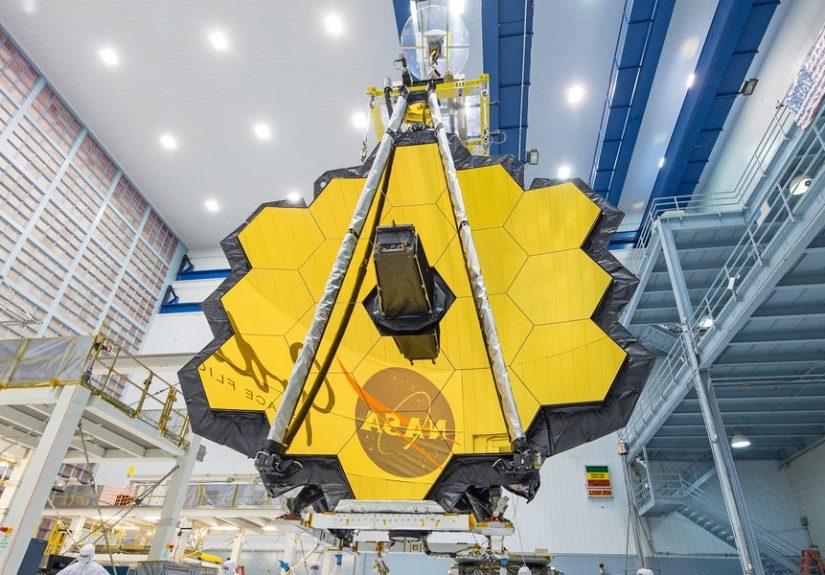
Webb’s sunshield is hugeabout the size of a tennis courtand it works best when it can keep bright objects on one side. At L2, the Sun, Earth, and Moon stay roughly in the same direction, so Webb can keep its heat-sensitive side in permanent shade.
2) A big, useful chunk of the sky is visible at any moment
Webb can’t point just anywhere at any time. It has to keep the sunshield properly oriented, which means it observes targets within a specific “field of regard.” At any given moment, Webb can access a large portion of the sky (around ~40%), and as it moves along with Earth’s orbit, that observable region sweeps across nearly the whole sky over time. There are also Continuous Viewing Zones that stay observable year-round near the ecliptic poles.
3) Communication is still practical
Webb sends science data and engineering telemetry back to Earth through NASA’s Deep Space Network. At roughly a million miles away, commands and data are delayed by only a few secondsnot instant, but totally manageable. (It’s basically the opposite of yelling across a football field: the universe yells back, politely, in infrared.)
4) The tradeoff: no astronaut service calls
Hubble got astronaut servicing missions because it orbits Earth. Webb is too far away for that kind of repair or upgrade with today’s crewed spacecraft capabilities. So NASA built Webb to be robust, and mission operations focus on careful planning, calibration, and fuel management.
Where is Webb “right now”?
In practical terms, Webb is always “near L2,” trailing Earth on the night side, and looping in its halo orbit. If you want the live numbersthe current distance, speed, and position along its orbitNASA maintains an official interactive tracker commonly known as “Where is Webb?”. There’s also an official tool that shows what Webb is observing (current, upcoming, and recent targets), which is great if you like your astronomy with a side of “what’s the telescope doing today?”
Important nuance: because Webb is so far away and close to the Sun’s direction from our viewpoint, it’s not something you’ll casually spot from your backyard like a bright satellite pass. Webb’s “where” is best understood as an orbital relationship: it stays aligned with Earth and the Sun while it cruises around the Sun in sync with us.
Can you see the James Webb Space Telescope from Earth?
For most people: no, not in any satisfying way. Webb is far, faint, and usually appears close to the Sun’s direction from Earth, which is not exactly ideal for casual viewing. Even with serious amateur equipment, “seeing” Webb is more of a technical challenge than a fun weekend project.
The good news is that Webb is extremely visible in the way that matters: through its data. You can experience Webb by exploring its images, spectra, and science releasesarguably the best kind of “seeing,” because it comes with galaxies and doesn’t require squinting.
How does Webb stay in that orbit (and what happens if it doesn’t)?
L2 is not a magical “fuel-free forever” location. Webb still needs occasional station-keeping maneuvers. Tiny nudges from thrusters keep it in the desired halo orbit. Webb also uses reaction wheels to point precisely, and periodically it must “dump” built-up momentum using thrusters (because even in space, physics loves collecting tabs you must eventually pay).
Fuel matters (but Webb had a good start)
Webb’s operational lifetime depends heavily on propellant usage for station-keeping and momentum management. After launch and early trajectory corrections, NASA reported Webb’s fuel situation looked better than baseline expectations, improving the odds for an extended mission life beyond the minimum plan.
Common myths about Webb’s location (let’s retire them politely)
Myth 1: “Webb is parked at L2.”
Reality: Webb orbits around L2 in a halo orbit. L2 is more like a gravitational reference point than a parking space.
Myth 2: “It orbits Earth like Hubble.”
Reality: Webb orbits the Sun, staying near Earth by sharing Earth’s annual path around the Sun.
Myth 3: “If L2 is stable, it needs no fuel.”
Reality: L2 is “helpful,” not “hands-free.” Webb still performs station-keeping and momentum unloading maneuvers.
Why Webb’s location is part of its superpower
Webb’s greatest hitspeering into early galaxy formation, studying starbirth behind dusty curtains, probing exoplanet atmospheres depend on one core requirement: stay cold, stay stable, stay shielded. L2 makes that possible. The location isn’t trivia; it’s a design feature that turns Webb into the infrared powerhouse it is.
Conclusion
So, where is NASA’s James Webb Telescope? It’s in a carefully maintained halo orbit around Sun–Earth L2, about 1 million miles from Earth, orbiting the Sun in sync with us while keeping its sunshield between its instruments and the bright chaos of the inner Solar System.
If you want the exact “right now” numbers, the official NASA tracking tools will give you Webb’s live distance and position, plus what it’s observing. But the bigger picture is this: Webb isn’t “far away” just to be dramatic. It’s far away because the universe is faint in infrared, and Webb needs the coldest, calmest seat in the house.
Extra: of “experience” to make the location feel real
Here’s a surprisingly relatable way to experience Webb’s location without building your own rocket (strongly recommended): treat it like a faraway pen pal with excellent taste in galaxies.
Start with the official “Where is Webb?” tracker and make it a tiny ritual. Check it once in the morning like you’d check the weather. You’ll notice the distance isn’t fixedsome days Webb is a bit farther, some days a bit closerbecause that halo orbit is a looping route, not a static dot. That one detail alone tends to “click” the whole L2 concept into place. It’s not parked. It’s dancing.
Then do the most human thing possible: explain it to someone who didn’t ask. Try saying, “Webb is a million miles away behind Earth.” Watch the eyebrows rise. Now add, “But it’s not behind Earth like hiding; it’s behind Earth so its sunshield can block the Sun, Earth, and Moon all at once.” At this point you will either be awarded honorary science communicator status or politely handed a snack to keep you busy.
If you want the location to feel even more concrete, compare it to the Moon. The Moon is about 239,000 miles away. Webb is roughly four times farther. That means if the Moon were your neighbor across the street, Webb would be the friend who lives across town not unreachable, but definitely not “I’ll just swing by” distance. And because signals travel at the speed of light, “across town” in space still means a few seconds of delay. That’s why real-time joystick piloting isn’t the vibe; Webb is operated through planned commands and careful sequencing.
Next, pair Webb’s location with its observing schedule. Use the “What is Webb Observing?” tool and pick a target you recognizeOrion, a famous exoplanet system, a galaxy you’ve seen in NASA images. The feeling is oddly grounding: Webb is out there near L2, but it’s looking somewhere very specific, on purpose, right now. The location becomes part of the story: it’s far enough to stay cold, stable enough to point precisely, and connected enough to send the data back.
Finally, make it fun. Create your own “L2 mental map”: Sun on one side, Earth in the middle, Webb out beyond Earth on the night side, sunshield facing the bright stuff, telescope facing the deep stuff. If you’re into museums or planetariums, look for Webb exhibits or showsseeing a scale model of that sunshield and mirror makes the L2 choice feel inevitable, like the only sensible place to put something that needs to be colder than a cosmic refrigerator.
The best part: you don’t need to physically see Webb to feel connected to it. Its location is a strategy, and its strategy produces images and spectra that land on your screen. In a way, “Where is JWST?” has two answers: it’s near L2… and it’s also wherever your curiosity happens to be clicking next.






