Table of Contents >> Show >> Hide
- Why Window Planter Boxes Work So Well
- Start With the Right Window Box
- The Secret Formula for a Beautiful Display
- How To Choose the Best Plants for Window Planter Boxes
- How To Plant a Window Box the Right Way
- Design Tips That Make Window Boxes Look Professional
- How To Keep Window Planter Boxes Looking Great
- Seasonal Ideas for Window Box Displays
- Common Mistakes To Avoid
- Final Thoughts on Creating the Best Window Box Display
- Experience and Practical Observations From Real Window Box Gardening
- SEO Tags
Window planter boxes do something magical. They make a house look more polished, more cheerful, and a little more like the kind of place where people casually bake pies while bluebirds sing backup vocals. Even if reality is more “forgot to water the basil again,” a great window box still adds instant charm.
The good news is that creating the best display is not reserved for master gardeners with color-coded pruning shears. A gorgeous window planter box usually comes down to a few smart choices: the right box, the right plants, the right placement, and a care routine you can actually keep up with. Once those pieces click, your windows go from plain and forgettable to the stars of the front elevation.
In this guide, you’ll learn how to design window planter boxes that look balanced, grow well, and stay attractive longer than one dramatic week in May. We’ll cover plant combinations, layout tips, seasonal refreshes, and common mistakes that turn beautiful boxes into botanical soap operas.
Why Window Planter Boxes Work So Well
Window planter boxes are one of the easiest ways to boost curb appeal without rebuilding your entire landscape. They add color at eye level, soften hard exterior lines, and make even a simple facade feel finished. Better yet, they give you a garden in miniature. That means you can be creative with color, texture, fragrance, and even edible plants without sacrificing much space.
They also let you garden with intention. A front window box can be bright and welcoming. A kitchen window box can be filled with herbs. A shady side window can become a cool-toned display with trailing greenery and soft blooms. Think of each box as a tiny stage. Every plant has a role, and when the cast is right, the show is excellent.
Start With the Right Window Box
Choose the best size and proportion
A window planter box should look like it belongs to the window, not like it was borrowed from another house in a hurry. A good rule of thumb is to choose a box that is close to the width of the window, or just a little shorter. Depth matters too. A box that is too shallow dries out quickly and limits your plant choices. A deeper box gives roots more room and usually looks fuller and more substantial.
If you want a lush display, do not squeeze large plants into a tiny container and expect them to smile about it. More root room usually means healthier growth, more stable moisture, and less daily drama in hot weather.
Pick a material that fits your style
Wood window planter boxes feel classic and warm. Metal boxes can look sleek or farmhouse-inspired, depending on the finish. Resin and plastic boxes are practical, lightweight, and often easier to maintain. If you love the look of a heavy material but not the actual back-breaking heaviness, high-quality resin is a smart compromise.
Whatever you choose, make sure it can handle outdoor weather and has proper drainage. Beauty is lovely, but a beautiful box without drainage is basically a swamp with ambition.
Do not ignore mounting and weight
This is the unglamorous but important part. Once you add potting mix, water, and mature plants, window boxes get heavy fast. Secure mounting matters. If the box is attached beneath a window, it should be anchored properly with hardware strong enough to support the full saturated weight. A dreamy display loses some charm if it tries to leave the building.
The Secret Formula for a Beautiful Display
Use the “thriller, filler, spiller” approach
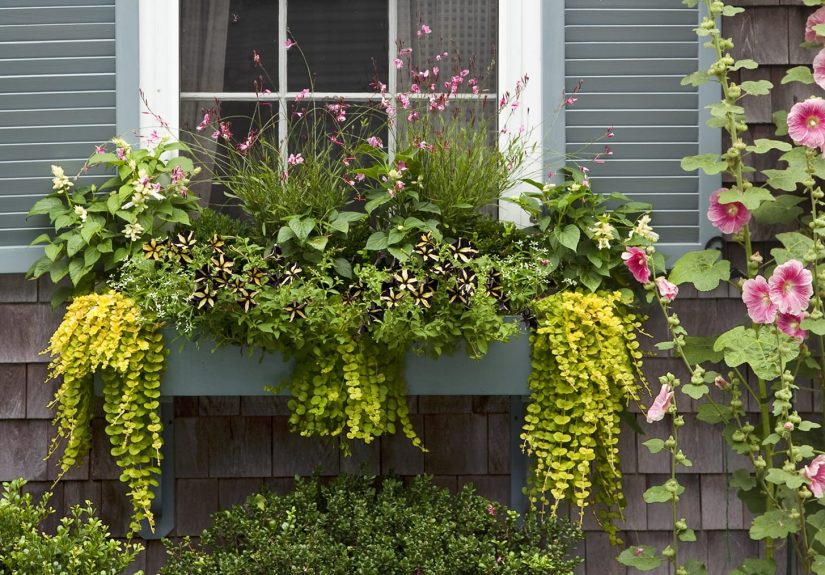
Gardeners love this formula because it works. The thriller is your focal point, the plant that adds height or bold structure. The filler creates body and fullness in the middle. The spiller trails over the edge to soften the box and make the whole arrangement feel generous.
In a window box, the idea is the same, but the proportions may be a little flatter than in a round patio pot. You still want vertical interest, but not so much height that the display blocks the window or looks top-heavy. In most cases, your thriller should be modest, your fillers should do most of the visual work, and your spillers should bring the romance.
Repeat plants for a cleaner look
One of the easiest mistakes is trying to fit an entire garden center into one box. More variety does not always mean more beauty. Repeating the same plants or colors often creates a stronger, more elegant display. Instead of twelve different flowers fighting for attention, use three or four plant types and let them echo across the length of the box.
That repetition helps the design feel intentional. It also makes maintenance easier because plants with similar habits and needs are more likely to get along.
Match light and water needs
This is the part where plant compatibility matters more than color obsession. If one plant loves full sun and another wants shade, one of them will end up deeply offended. The same goes for moisture preferences. Group plants that like the same light, water, and general growing conditions. That way, your display looks good and stays healthy instead of turning into a passive-aggressive experiment.
How To Choose the Best Plants for Window Planter Boxes
Best plants for sunny window boxes
If your box gets six or more hours of direct sun, lean into sun-loving performers. Good choices include petunias, calibrachoa, geraniums, lantana, angelonia, sweet potato vine, and trailing verbena. These plants are reliable, colorful, and generally happy to put on a long-season show.
For a classic sunny combination, try upright angelonia as the thriller, geraniums or petunias as fillers, and calibrachoa or sweet potato vine as spillers. It is bright, energetic, and hard to mess up.
Best plants for shady window boxes
Shade is not a gardening punishment. It just calls for a different cast. Begonias, impatiens, coleus, fuchsia, asparagus fern, and trailing ivy can create gorgeous shady window planter boxes with plenty of texture and color.
A lovely shade recipe might include coleus for bold foliage, white begonias for brightness, and trailing ivy for movement. Shade boxes often shine when foliage does more of the heavy lifting, so do not feel pressured to chase nonstop flowers.
Best edible plants for a practical display
Window planter boxes can also be useful, which is very satisfying. Herbs such as basil, thyme, parsley, oregano, and chives work beautifully in sunny boxes. Strawberries can also be charming, especially in a cottage-style home. Nasturtiums add trailing color and edible flowers. Leaf lettuce can work in cooler seasons if the box is deep enough.
If you go the edible route, use a quality potting mix, keep watering consistent, and do not overcrowd. Kitchen herbs are wonderful, but they still need elbow room.
How To Plant a Window Box the Right Way
Use potting mix, not garden soil
This is one of the biggest rules in container gardening. Garden soil is too heavy for window planter boxes. It compacts easily, drains poorly, and can leave roots struggling. A high-quality potting mix is lighter, drains better, and gives roots the air and moisture balance they need.
If the box is large, you can mix in compost for extra organic matter, but the main growing medium should still be intended for containers.
Make sure drainage is excellent
Every box needs drainage holes. Every single one. If the planter does not have them, add them before planting. Water should be able to move through the box rather than pool around roots. Most window box disasters can be traced to one of two things: too little water or too much water. Drainage helps prevent the second one from staging a hostile takeover.
Do not plant too tightly
It is tempting to pack a box for instant fullness, especially when young nursery plants look small and innocent. But plants grow. Giving them some space improves airflow, reduces disease risk, and allows the final arrangement to develop naturally. You can plant a little closer for a faster show, but be prepared to prune and pinch as the season moves on.
Fertilize with a plan
Window planter boxes are high-performance gardens in a small space. That means nutrients run out faster than they do in the ground. Mixing a slow-release fertilizer into the potting mix at planting time is a smart start. During the growing season, many flowering plants benefit from regular liquid feeding, especially heavy bloomers like petunias.
The key is consistency, not overkill. More fertilizer does not always mean more flowers. Sometimes it just means leaves with big opinions.
Design Tips That Make Window Boxes Look Professional
Consider your house color and style
Your window planter boxes should complement the house, not compete with it. Red brick homes often look wonderful with whites, purples, blues, and soft pinks. White or neutral exteriors can handle bolder combinations such as hot pink, lime, deep purple, and chartreuse. Cottage-style homes welcome a looser, more romantic look, while modern homes often suit tighter palettes and cleaner plant repetition.
If you are unsure, start with two main colors and one foliage tone. That gives you harmony without making the box feel flat.
Think about the view from inside
Window boxes are unusual because they are enjoyed from both sides. From the street, they add curb appeal. From indoors, they frame the window and become living decor. That means height matters. You want enough fullness to look generous from outside, but not so much that the box blocks light or creates a leafy privacy screen you did not ask for.
Use foliage like a designer
Flowers get most of the applause, but foliage often does the real work. Coleus, licorice plant, sweet potato vine, dusty miller, and small grasses can add contrast, softness, or drama even when blooms pause. A display with strong foliage usually looks better longer because it still has structure between flower flushes.
How To Keep Window Planter Boxes Looking Great
Water consistently
Window boxes dry out faster than in-ground beds, especially in heat, wind, and full sun. Check moisture often. In many cases, watering when the top inch or two of the potting mix feels dry is a good rhythm. During summer, some boxes may need water daily. During mild weather, much less.
The goal is deep, thorough watering, not a polite little sprinkle that dampens the top and calls it a day. Water until excess begins to drain, then let the box breathe.
Deadhead and trim regularly
If you want a box that looks polished instead of exhausted, spend a few minutes each week removing spent blooms, yellow leaves, and runaway stems. Petunias, calibrachoa, geraniums, and many other annuals respond well to grooming. A little trimming keeps the arrangement balanced and encourages fresh growth.
Refresh when needed
Even the best display changes over time. Some spring plants fade in summer. Some summer plants look glorious until fall cools things down. Swapping tired plants for fresh ones is not cheating. It is smart gardening. Seasonal refreshes keep your window planter boxes interesting and help them perform better across a longer stretch of the year.
Seasonal Ideas for Window Box Displays
Spring
Think pansies, violas, alyssum, trailing ivy, and herbs. Spring boxes can be cheerful, fragrant, and a little playful after winter’s long gray stretch.
Summer
This is peak showtime. Petunias, calibrachoa, geraniums, lantana, coleus, sweet potato vine, and angelonia are strong choices for a full, colorful summer display.
Fall
Switch to ornamental kale, mums, small grasses, trailing ivy, and warm-toned accents. Tuck in mini pumpkins if you want seasonal flair without going full scarecrow musical.
Winter
In cold climates, evergreen boughs, pinecones, berry stems, magnolia leaves, and decorative twigs can keep the boxes attractive long after the flowers retire. No watering schedule, no deadheading, no arguments.
Common Mistakes To Avoid
One, choosing plants based only on color and ignoring sun exposure. Two, skipping drainage holes. Three, using garden soil instead of potting mix. Four, underestimating how heavy a planted box becomes. Five, planting too many species with totally different needs. Six, forgetting that maintenance is part of the display.
The best window planter boxes are not just pretty on planting day. They are designed to keep looking good. That means building beauty on top of practical choices.
Final Thoughts on Creating the Best Window Box Display
If you want window planter boxes that truly stand out, focus on the basics first: size, drainage, secure mounting, compatible plants, and a balanced design. Then add personality through color, foliage, seasonal swaps, and a style that fits your home. That is the real secret. The most beautiful boxes are not random explosions of flowers. They are thoughtful little landscapes.
And once you get one right, be warned: window boxes are delightfully addictive. Today it is one kitchen window. Tomorrow it is every window, the porch rail, and possibly a lecture to your neighbors about the emotional power of calibrachoa. Gardening has a way of escalating.
Experience and Practical Observations From Real Window Box Gardening
One of the most interesting things about window planter boxes is how quickly they teach you to pay attention. In a large garden bed, a missed watering or a slightly awkward color combination can hide for a while. In a window box, everything is visible. If the plants are thriving, the whole house looks brighter. If they are struggling, the evidence is hanging right under the window like a public performance review.
Many gardeners discover that the first box they plant is not the one that teaches them the most. The second one usually does. That is when you start noticing the small details that separate a nice display from a truly polished one. You realize that trailing plants need room to spill naturally instead of being crammed into the front edge like commuters on a packed train. You notice that one bold foliage plant can do more for structure than three extra flowering plants. You learn that “full sun” in theory and “afternoon sun bouncing off light siding in July” are two very different experiences.
There is also the matter of watering, which tends to humble everyone equally. A window box in spring may seem easy and forgiving, then summer arrives with wind and heat and suddenly the same planter behaves like a needy houseguest. Gardeners who do best usually create a simple routine. Morning checks help. Touching the soil helps. Looking closely helps. Guessing from across the yard while holding coffee rarely helps.
Another common experience is discovering that foliage is often the hero. At first, many people shop for flowers only. They want the brightest blooms, the biggest color splash, the most cheerful display possible. Then a few weeks later, they notice that the box still needs shape when the flowers pause between bloom cycles. That is when coleus, ivy, licorice plant, and sweet potato vine start earning respect. Flowers bring excitement, but foliage keeps the design from falling apart on an ordinary Tuesday.
There is also a surprising emotional side to window boxes. People tend to think of them as decoration, but they often become part of daily life. You pass them every time you leave the house. You see them through the kitchen window while making dinner. Visitors notice them. Neighbors comment on them. Children point at butterflies landing on them. Herbs clipped from a sunny box somehow make dinner feel more competent. Even a small display can make a home feel more cared for and more alive.
Perhaps the best lesson from experience is that the “perfect” window box is rarely the fanciest one. It is the one that suits the house, the light, the season, and the gardener’s actual habits. A simple box planted with restraint and maintained regularly will almost always outperform an overcomplicated masterpiece that gets ignored after week two. In other words, the best display is not about showing off. It is about creating something beautiful enough to enjoy and practical enough to keep thriving.