Table of Contents >> Show >> Hide
- What Are “Millennial Poses,” Exactly?
- Why These Poses Feel Dated Now
- Why People Still Use These Poses
- What To Do Instead: Modern Alternatives That Actually Work
- The Bigger Conversation: Why This Trend Went Viral
- Do People Really Need To Stop Doing These Poses?
- Real-World Experiences: Why This Topic Feels So Relatable
- Conclusion
- SEO Tags
Every generation leaves fingerprints on the camera roll. Boomers gave us formal family portraits where everyone looked like they were applying for a passport. Gen X mastered the “I swear I didn’t know this photo was being taken” vibe. Millennials? We gave the internet duck lips, dramatic selfie angles, and enough side-body arm geometry to confuse a math teacher.
That is exactly why the conversation around so-called “millennial poses” blew up. A woman called out the photo habits many people still default to without even realizing it, and the reaction was immediate: laughter, mild emotional damage, and a chorus of people saying, “Wait… I still do that in every picture.” The reason the topic struck such a nerve is simple. These poses are not just about vanity or trends. They are little fossils from the early social media era, when MySpace angles, digital camera memory limits, and heavily filtered selfies shaped how people thought they were supposed to look in photos.
This is what makes the topic more interesting than basic internet snark. The discussion is not really about shaming millennials for aging on the timeline. It is about how camera culture changes. The “best” pose in 2011 is not necessarily the best pose in 2026, just like side parts, skinny scarves, and aggressively inspirational wall quotes have all had their day. Some of these poses now look dated because photo culture has moved toward something looser, more natural, and less obviously engineered.
So what exactly are these “millennial poses” people keep calling out? Why do they feel old-fashioned now? And what should people do instead if they want photos that look confident, flattering, and modern without trying too hard? Let’s get into it, gently but honestly, because the camera roll deserves closure.
What Are “Millennial Poses,” Exactly?
When people talk about “millennial poses,” they usually mean a cluster of photo habits that were shaped by early selfie culture and the first big wave of image-driven social media. These are not random gestures. They were survival tactics from a different internet era.
Back then, people were taking photos on digital cameras, posting albums on Facebook, perfecting mirror selfies, and trying to make every shot count. You did not have unlimited attempts. You did not have an AI cleanup tool. You definitely did not have a teenager standing nearby saying, “That pose is giving 2013.” So people developed go-to moves that felt safe and flattering.
The most commonly called-out examples include:
1. The super-high camera angle
This is the classic selfie-from-above move. The phone floats somewhere near the ceiling, your face looks smaller, your eyes look bigger, and the rest of your body suddenly appears to belong to a much shorter cousin. It was popular because it could slim the face and hide a double chin. The downside is that it can distort proportions and make the whole image feel staged.
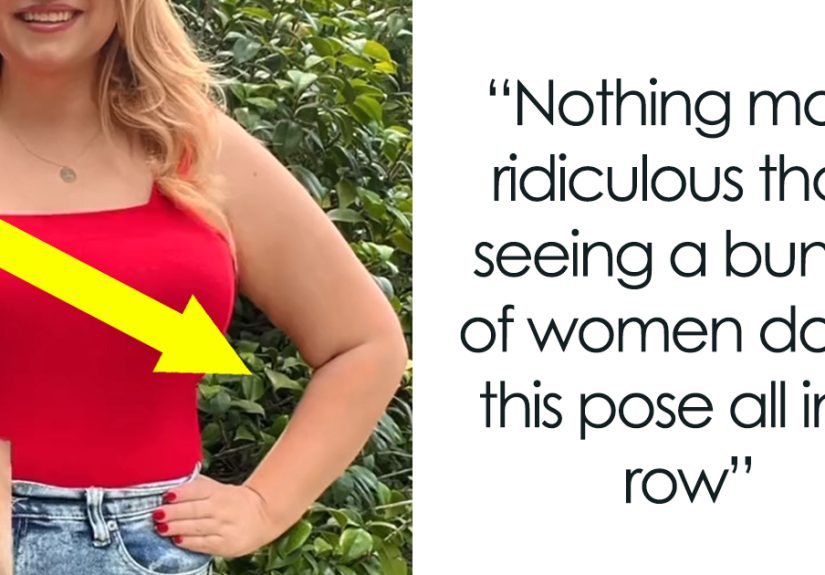
2. The teapot pose
One hand on the hip, elbow kicked out like it is trying to catch its own spotlight. This pose became popular because it created space between the arm and the body, which people believed made the arm look slimmer. The problem is that when the elbow juts too far out, the pose can look stiff, overly rehearsed, and slightly like you are about to lecture the room about budget cuts.
3. Duck lips
Ah yes, the pout that launched a thousand albums. Duck lips once signaled confidence, flirtiness, and photo awareness. Now they often read as overly forced. The modern camera tends to prefer softer facial expressions, more relaxed mouths, and less “I practiced this in a mirror next to a zebra-print shower curtain.”
4. Heavy filters and face-tuning
This one deserves a bonus mention because it was a major part of millennial image culture. Early social media rewarded highly edited photos. But today, over-filtered pictures often feel less polished and more uncanny. A little cleanup is one thing. A face with the texture of a ceramic plate is another.
Why These Poses Feel Dated Now
The internet moves fast, but pose trends move even faster because they are tied to bigger changes in beauty standards, technology, and social behavior. What once looked camera-ready can start to feel old the moment a new generation decides it is cringe. And if the internet has one favorite hobby, it is assigning cringe across generational lines like it is a civic duty.
Millennial poses feel dated now for three big reasons.
Photo culture has become more casual
Modern photo aesthetics lean toward ease. People want images that look lived-in rather than engineered. That does not mean they are truly candid. Let’s not get carried away. Many “casual” photos still involve ten attempts, a strategic body turn, and one friend crouching like a sports photographer near a parking meter. But the goal is to look less posed, not more.
Phone cameras changed the game
Today’s smartphones are dramatically better at handling lighting, depth, focus, and detail than the devices people were using in the early social media years. Because the technology is stronger, people do not need the same defensive maneuvers. They can stand more naturally, lower the camera a bit, use portrait mode, and still get a flattering shot.
Generational style codes always shift
Every era reacts against the one before it. If millennials built a photo identity around looking polished and “on,” younger users often respond by looking detached, understated, or almost anti-performative. One generation says, “Give me my angle.” The next says, “I will barely acknowledge the lens.” Neither approach is morally superior. They are just style languages.
Why People Still Use These Poses
Before anyone throws their peace sign into the sea, it is worth saying this: people keep using these poses because they worked for them. They were not invented by villains. They were invented by ordinary people trying to look good in a medium that can be weirdly unforgiving.
Many people stick with one pose because it feels reliable. They know where to put their hands. They know how their jaw looks. They know that one camera angle that has saved them from twenty-seven bad tagged photos. That is not vanity. That is muscle memory mixed with self-protection.
And honestly, there is something charming about that. The problem is not having a familiar pose. The problem is letting one old pose become your whole personality whenever a camera appears. If every photo starts to look like it was taken at the same brunch in 2014, it may be time for a refresh.
What To Do Instead: Modern Alternatives That Actually Work
If you want better photos without looking like you took a master class in trying too hard, the answer is not to stand there like a startled lamppost. The answer is to swap outdated habits for small, modern adjustments.
Use a more natural camera height
Instead of shooting from way above your face, try keeping the camera closer to eye level or just slightly above. For full-body shots, a camera closer to waist or torso level often creates better proportions. Your body will look more balanced, and the photo will feel less like a relic from peak selfie panic.
Turn slightly instead of facing the camera straight on
A slight angle tends to be more flattering than standing fully square to the lens. Turn your torso a little, shift your weight, and let the pose breathe. This creates shape without forcing the issue. It is subtle, which is exactly why it works.
Relax the arms
Hands on hips are not illegal. They just need an update. Rather than flinging the elbow out into another zip code, try softer arm positions: a thumb in a pocket, one hand on a thigh, both hands loosely behind you, or one arm relaxed with a gentle bend. The goal is space, not drama.
Think soft expression, not performance face
You do not need to grin like you just won a free cruise, but you also do not need to purse your lips like you are tasting imaginary soup. A soft smile, relaxed mouth, or calm expression usually photographs better because it looks like your actual face. Revolutionary concept, I know.
Fix posture before anything else
A better pose often starts with posture, not gimmicks. Stand tall, roll your shoulders back softly, and bring your chin slightly forward rather than tipping it way up. Good posture reads as confident. Bad posture reads as “someone took this photo right after I checked an email I should not have opened.”
Use less editing
Natural-looking light, cleaner composition, and a little contrast will age far better than a beauty filter that erases your pores, your history, and possibly your soul. Photos usually look best when they still resemble a human being who exists in daylight.
The Bigger Conversation: Why This Trend Went Viral
The reason this story spread so widely is that it hit the sweet spot between comedy and self-recognition. People love trend callouts when they feel just personal enough to sting and just harmless enough to laugh about. “Millennial poses” sits right in that zone.
It also taps into a bigger cultural truth: photos are social signals. A pose tells people whether you want to appear polished, carefree, playful, ironic, glamorous, approachable, mysterious, or completely done with everyone in a ten-foot radius. That is why generations end up being identified by their camera habits. Poses are body language plus internet history.
Millennials were trained by the rise of the selfie, celebrity tabloid culture, Facebook albums, and early Instagram perfection. Newer aesthetics tend to prefer less obvious posing, softer editing, and a cooler emotional distance. That difference is not random. It reflects how each generation learned to perform identity online.
In other words, the pose is never just a pose. It is a tiny cultural artifact wearing lip gloss.
Do People Really Need To Stop Doing These Poses?
Yes and no.
If the question is whether people should be publicly banned from doing duck lips at a birthday dinner, obviously no. The world has bigger problems. If a pose makes you feel fabulous, keep it. Confidence beats trend obedience almost every time.
But if the question is whether people should update the poses they use on autopilot, the answer is probably yes. Not because millennials are wrong for existing in photographs, but because style evolves. Refreshing your approach can make your photos look more modern, more comfortable, and more like you now rather than you in a digital scrapbook from twelve years ago.
The smartest takeaway is not “stop doing millennial poses forever.” It is “learn why you do them, then choose better on purpose.” That is the difference between posing out of habit and posing with awareness.
Real-World Experiences: Why This Topic Feels So Relatable
Part of what makes this entire conversation so funny is how universal it is. Almost everyone has lived through a photo era they can no longer defend with a straight face. There is always a folder somewhere full of images that once felt elite and now look like evidence. The millennial pose debate works because it is not abstract. It shows up at weddings, work events, girls’ trips, engagement parties, family reunions, and random sidewalk photos outside restaurants with neon signs.
Take the classic group photo scenario. One person says, “Everybody squeeze in,” and suddenly the millennials in the picture activate ancient reflexes. A peace sign appears. Someone tilts their body sideways. Another person hikes the camera upward as if the ceiling fan has the best lighting in the building. Nobody planned this. It just happens. Years of social media conditioning take over like a sleeper agent program, except the mission is looking thinner in a chain restaurant parking lot.
Then there is the work event photo, which may be the most revealing of all. You can almost see the generational split without checking anyone’s age. Some people stand naturally with relaxed shoulders and soft expressions. Others immediately lock into their “best side,” angle one hip, and deliver a face they have trusted since the Obama administration. The funniest part is that the old pose usually appears in under two seconds. Muscle memory is undefeated.
There is also a deeply human side to this. Many people are not doing these poses because they are trying to be trendy. They are doing them because the camera makes them nervous. A familiar pose gives them a sense of control. It is the photo equivalent of ordering the same meal at a restaurant because it has never betrayed you. Once you understand that, the whole topic becomes less about mockery and more about confidence. People are usually just trying to protect themselves from a bad picture that might live online forever.
That is why updates matter. When someone learns a better angle, softer posture, or more relaxed hand placement, it can completely change their experience of being photographed. They stop bracing for the image and start participating in it. They look less tense because they feel less tense. And suddenly the photo does not look like a negotiation between insecurity and geometry. It looks like a person having a moment.
In that sense, the “millennial poses” conversation is actually useful. It gives people permission to retire old habits without embarrassment. You are not betraying your generation by lowering the camera, relaxing your elbow, or letting your mouth behave like a normal mouth. You are just evolving. And really, that is the healthiest possible ending for any trend: keep the humor, lose the panic, and walk away with better pictures.
Conclusion
The woman who called out “millennial poses” did more than roast a few familiar photo habits. She opened a bigger conversation about how camera culture changes, how online aesthetics shape real-life body language, and why so many people cling to poses that once helped them feel safe and flattering. The high selfie angle, the teapot arm, the duck lips, and the over-filtered finish all belong to a specific social media chapter. That chapter mattered. It taught a generation how to perform for the lens.
But photo style does not stand still. Today’s strongest pictures usually rely on balance, posture, softer expressions, relaxed arms, and a little less obvious effort. In other words, the modern goal is still to look good, just without announcing, “Attention everyone, I am now doing my pose.” And honestly, that is progress.
If you still use one of these old standbys, there is no need for shame. The best photo advice is not to erase your personality. It is to update your habits so the camera sees the version of you that exists now. Retire what feels forced. Keep what feels natural. And if a peace sign slips out once in a while, consider it a tribute to history.