Table of Contents >> Show >> Hide
- The Backyard Mix-Up That Became Internet Gold
- Why Two Cats Can Suddenly Look Like Twins
- What This Story Reveals About Outdoor Cat Risks
- The Human Side of the Chaos
- How To Tell Which Cat Is Yours Before a Mini Disaster Happens
- Safer Ways To Give Cats Outdoor Time
- Why This Story Stuck With So Many Readers
- Experiences Cat Owners Will Recognize Immediately
- Conclusion
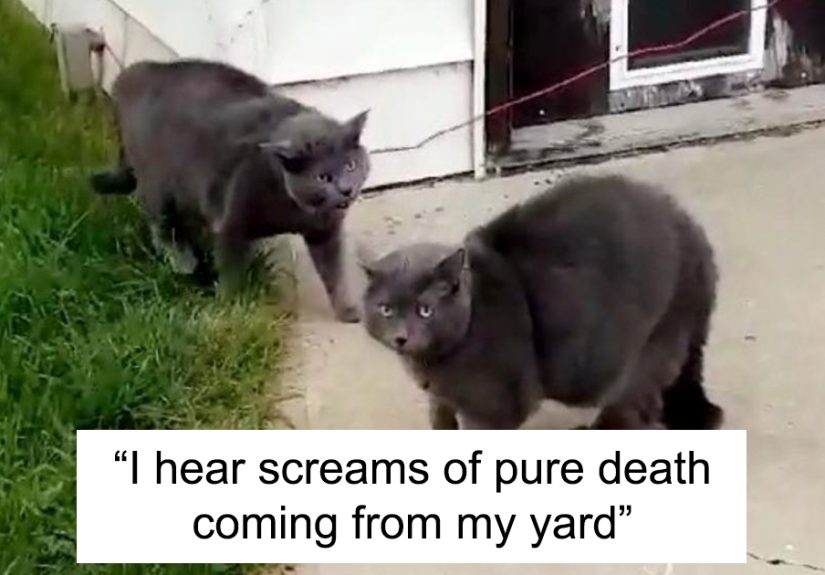
Some internet stories are funny because they are ridiculous. Others are funny because they are just one bad decision away from becoming a full-blown neighborhood opera. This cat story somehow manages to be both. One minute, a woman lets her determinedly outdoorsy cat enjoy the yard. The next, she hears the kind of scream that makes every pet owner levitate out of their chair. She rushes outside expecting a routine feline disaster and instead finds something much stranger: two nearly identical cats, both puffed up, both furious, both apparently auditioning for the role of “most dramatic creature in the zip code.”
And there was the real problem. She could not immediately tell which cat was hers.
That detail is what turned a simple backyard spat into a perfectly chaotic pet story. It is also what makes the moment so relatable. If you have ever owned a cat, you already know they can move from “sleepy loaf” to “tiny warlord” in half a second. Add identical coloring, fluffed-up fur, a slipped harness, and human panic, and suddenly the whole scene feels like a sitcom written by a raccoon with a caffeine problem.
But beneath the humor, this story also taps into something real about cat behavior, outdoor risks, and the eternal optimism of owners who think, “It’ll just be a quick little supervised yard break.” Famous last words, frankly.
The Backyard Mix-Up That Became Internet Gold
The viral post that inspired this headline came from a woman whose chunky cat, Loki, had a history of finding loopholes in every outdoor setup. A leash did not quite solve the problem. A breakaway collar did not fully solve the problem. A harness did not exactly solve the problem either, because cats, as a species, appear to treat containment systems as personal insults.
Then came the commotion. She heard awful shrieking outside, ran to investigate, and discovered Loki squared off against another cat that looked so much like him she genuinely could not tell them apart at first. Both cats were large, both were fluffed up, and both looked ready to settle the matter with claws, attitude, and absolutely no interest in conflict resolution. That is the kind of visual confusion that makes your brain stop filing paperwork and start free-styling.
What followed was exactly the kind of frantic decision-making most people make when adrenaline takes over. She tried to separate them. She got scratched. The mystery cat escaped. Loki made it inside. The owner later got medical treatment for the wound, including a tetanus shot and antibiotics. That final detail matters because it turns a funny online anecdote into a useful reminder: cat fights may look cartoonish from a distance, but the injuries they cause are not cartoonish at all.
Why Two Cats Can Suddenly Look Like Twins
Anyone laughing at the phrase “couldn’t tell who was who” should pause for one second and imagine two angry tabbies in combat mode. Cats look very different during a confrontation than they do curled on the couch pretending not to care about you. Fur stands up. Tails puff out. Bodies arch. Ears flatten. Their whole silhouette changes. A cat that normally looks compact can suddenly resemble a feather duster with trust issues.
That matters because people often identify their pets by outline, movement, and expression as much as color or markings. In a tense moment, those familiar cues vanish. If the other cat has similar fur, body shape, or size, your confidence can disappear fast. Throw in poor lighting, fast movement, and your own panic, and you are not failing some cat-owner exam if you hesitate. You are having a very normal human response to a very ridiculous feline problem.
There is also a broader lesson here. A collar, a visible tag, or another immediately recognizable marker can make a huge difference in moments like this. Microchips are excellent and strongly recommended, but they are not visible from ten feet away while two cats are screaming in a shrubbery duel. If your cat ever gets outdoor access, visible identification is not just about being found later. It can help in the exact moment something goes wrong.
What This Story Reveals About Outdoor Cat Risks
The internet loved this story because it was absurd. Veterinarians and cat-rescue people probably read it and muttered, “Yes, and this is why we keep saying outdoor access gets complicated fast.” Cats that roam, even briefly, can run into other cats, wildlife, parasites, traffic, toxic substances, and territorial fights. The problem is not that every outdoor moment ends in disaster. The problem is that disaster does not send a calendar invite first.
Fight wounds are especially tricky because they can look minor at first. A small puncture can become an abscess, and bite wounds are also one of the reasons outdoor cats face greater exposure to infections and diseases spread through aggressive encounters. Human injuries matter too. Cat bites and scratches can become infected quickly, which is why doctors and public-health experts advise prompt cleaning and medical attention when needed.
That is what gives this story its strange double identity. On one level, it is a comedy. On another, it is a case study in why “just the yard for a few minutes” is not always as simple as it sounds.
The Human Side of the Chaos
One reason this story took off is that it captures a very particular kind of pet-owner panic: you know you should act calmly, but your brain has already turned into microwave static. In theory, maybe you grab a towel, create distance, make noise, or use water to interrupt the standoff without reaching into the middle of it. In reality, you are looking at two furious fluff-bombs and trying to remember whether you have ever made a good decision under pressure. Spoiler: probably not your best quarter.
There is something deeply charming about the owner’s confusion because it feels honest. She was not a villain in a cautionary tale. She was just a person trying to manage a cat who loved the outdoors a little more than the household risk-assessment team would prefer. That honesty is why the story resonates. It does not read like a perfect-owner fantasy. It reads like real life, where pets are weird, owners improvise, and hindsight always arrives wearing a smug expression.
And yet the aftermath matters as much as the laugh. The cat got back inside. The owner got treatment. The incident became a reminder that even funny pet stories often have a practical lesson tucked inside the punchline.
How To Tell Which Cat Is Yours Before a Mini Disaster Happens
If this story made you laugh and then immediately scan your own cat in suspicion, good. A little preparation goes a long way.
Use visible identification
A breakaway collar with a clear ID tag gives good Samaritans, neighbors, and frazzled owners something immediate to recognize. If your cat is outside, even in a yard, visible ID is your first line of visual clarity.
Microchip anyway
Visible ID helps in the moment. A microchip helps when the moment goes completely off-script. Animal welfare and veterinary groups consistently recommend both, not one or the other. If the collar comes off, the microchip is still there. If someone finds the cat before a scanner is available, the collar still helps.
Know your cat’s body language and quirks
Maybe your cat has a distinctive walk, a notch in one ear, a white toe, a nick in the nose, or the dignified gait of a retired nightclub owner. These little details are more useful than people realize. In a stressful moment, habits and movement patterns can be easier to recognize than coat patterns.
Do not grab the fight with your bare hands
That part of the story is painfully relatable and absolutely worth avoiding. When cats are in full fight mode, they are not carefully assigning blame. Hands, legs, and innocent bystanders all become part of the action. Create separation safely instead of reaching into the center of the tornado.
Safer Ways To Give Cats Outdoor Time
Here is the good news for the many owners whose cats stare at the back door like tiny union organizers demanding better access to the outside world: the choice is not just “indoors forever” or “total free-range goblin.” There are middle-ground options.
Try supervised outdoor access
Some cats do well with closely supervised yard time, especially when the area is secure and the owner is actually watching. Not “watching” while scrolling on a phone and assuming the cat is doing poetry in the grass. Watching watching.
Use a properly fitted harness and leash
Harness walks can work, though many cats respond to a harness as though they have suddenly forgotten how legs function. Training takes patience. The goal is not to drag your cat through a confidence-building exercise they did not consent to. It is to help them become comfortable enough to explore safely.
Build or buy a catio
If cats could design luxury real estate, the catio would be high on the list. It offers fresh air, visual stimulation, and sunshine without the same exposure to traffic, fights, and roaming hazards. For many owners, it is the sweet spot between enrichment and sanity.
Enrich indoor life so the yard is not the only thrill left on Earth
Window perches, puzzle feeders, climbing shelves, toys that mimic hunting, hiding spots, and rotating play routines all help. A bored cat will often campaign for the outside like it is running for office. A stimulated cat is still dramatic, but at least the platform is less chaotic.
Why This Story Stuck With So Many Readers
Plenty of viral pet stories vanish in a week. This one lingered because it feels like a perfect collision of comedy and truth. The image is instantly funny: two round, enraged cats glaring at each other while a horrified human tries to identify her own pet in real time. But the scene also speaks to something many cat owners understand. Cats are not easy little accessories with predictable settings. They are clever, determined, emotional, territorial creatures with a talent for turning ordinary afternoons into folklore.
The story also works because it strips away the polished fantasy of pet ownership. There is no angelic soundtrack here. No slow-motion reunion. Just noise, panic, confusion, and one person realizing too late that her cat had apparently found a doppelganger enemy. It is pet ownership at its most honest: absurd, stressful, funny, and full of love all at once.
And maybe that is why readers could not resist it. Beneath the headline, it is not really just about two lookalike cats. It is about the universal experience of loving an animal so much that you run headfirst into nonsense for them without a second thought.
Experiences Cat Owners Will Recognize Immediately
If you spend enough time around cat people, stories like this start sounding less like rare events and more like a genre. Almost every owner has some version of the “I looked away for one minute and my pet created theater” memory. Maybe it was not a backyard twin-cat showdown. Maybe it was hearing a crash in the kitchen and finding your orange cat inside a cereal cabinet like he had been paying rent there for years. Maybe it was realizing the cat you were baby-talking through the window was not your cat at all, just a suspiciously similar neighborhood visitor judging your decor choices.
That is part of what makes the doppelganger-cat story so satisfying. It feels exaggerated, but not impossible. Cat owners know how quickly confidence evaporates when a normal situation gets weird. You think you know your pet perfectly until the lighting changes, the fur puffs up, and some random cat from three houses over wanders into the frame like an understudy who finally got their chance.
Many people have experienced the less dramatic version of this exact confusion. A cat slips out the door, and suddenly every tabby in the neighborhood looks like your tabby. Every black cat becomes your black cat. Every fluffy gray loaf becomes your fluffy gray loaf. You start squinting at tails, listening for meows, and hoping your own pet has enough decency to answer to their name for once in their life. Naturally, that is often the exact moment they decide not to.
There is also the emotional whiplash of outdoor cat moments. One second you are smiling because your cat looks happy sniffing the breeze. The next second you are negotiating with destiny over a shriek from the hedges. Owners who have dealt with surprise fence-jumping, accidental harness escapes, stand-offs with neighborhood cats, or emergency vet visits after what looked like a tiny scratch know this feeling well. It is not that people are careless. Often, it is that cats are astonishingly creative problem-solvers when the problem is “my human made a boundary.”
And then there is the universal post-chaos replay. After the event, you become an expert in all the things you should have done. You should have noticed the loose strap. You should have stayed closer. You should have had treats in your pocket, a towel by the door, a better plan, better timing, better instincts, and perhaps a small crisis management team. But in real life, you had one pair of shoes, one racing heartbeat, and a cat determined to turn your yard into a live-action identity puzzle.
That is why stories like this spread so easily. They are funny, yes, but they also make owners feel seen. Loving a cat means living with equal parts affection, confusion, admiration, and occasional humiliation. They can be graceful one second and pure nonsense the next. They can make you laugh while also teaching you to update a microchip registry, tighten a harness, or rethink what “supervised outdoor time” really means. In other words, they are adorable little chaos consultants, and every now and then they leave you with a story so absurd that the only reasonable response is to tell the internet.
Conclusion
The story of the woman who ran outside and found two identical-looking cats mid-scream works because it is hilarious, but it lasts because it is also useful. It reminds us that cats can change shape, mood, and velocity in a blink. It reminds us that outdoor access, even in a yard, can get complicated fast. And it reminds us that visible ID, microchips, safer outdoor setups, and quick medical follow-up after bites or scratches are not boring pet-parent chores. They are the things that keep a ridiculous afternoon from turning into a much worse one.
Most of all, it reminds us why cat stories dominate the internet in the first place. Cats are dramatic, mysterious, highly committed to their own agendas, and fully capable of turning one ordinary afternoon into a legend. All they need is a yard, a rival, and a human who loves them enough to run straight into the chaos.