Table of Contents >> Show >> Hide
- What Is a Yoga Inversion?
- Benefits of Yoga Inversions (What They Canand Can’tDo)
- Who Should Avoid Inversions (or Get Medical Clearance First)
- How to Practice Yoga Inversions Safely
- A Simple Progression Plan (So You Don’t Skip From 0 to Handstand)
- Inversion Pose Menu (Pick Your Level)
- Two Mini Sequences You Can Actually Use
- FAQs About Yoga Inversions
- Real-World Inversion Experiences: What It Can Feel Like (About )
- Conclusion
Going upside down in yoga can feel equal parts empowering and ridiculous (in a good way). One minute you’re calmly breathing;
the next you’re negotiating with gravity like, “Let’s keep this relationship respectful.” That’s the magic of a yoga inversion:
it flips your perspectivesometimes literallywhile challenging strength, balance, and focus.
This guide breaks down what inversions are, what benefits are realistic (and which ones are basically yoga folklore),
how to practice them safely, and beginner-friendly options that don’t require you to audition for the circus.
What Is a Yoga Inversion?
A yoga inversion is any posture where your heart is above your head, or your head is below your heart. That can mean
a full-on upside-down pose like Handstand, but it also includes gentler “head-below-heart” positions like Downward-Facing Dog
and Standing Forward Fold.
Types of inversions (from “cozy” to “whoa”)
- Gentle inversions: Legs Up the Wall (Viparita Karani), supported bridge variations
- Partial inversions: Downward-Facing Dog, Standing Forward Fold, Dolphin Pose
- Full inversions: Headstand, Forearm Stand, Handstand, Shoulder Stand (advanced and technique-dependent)
Important note: inversions are optional. You can do yoga for a lifetime without ever doing a Headstand and still get stronger,
calmer, and more flexible. Inversions are a spice, not the whole meal.
Benefits of Yoga Inversions (What They Canand Can’tDo)
1) May help reduce lower-leg swelling and feel restorative
One of the most practical benefits shows up in gentle inversions like Legs Up the Wall. When your legs are elevated,
fluid that tends to pool in the lower legs can shift back toward circulation. Many people notice their legs feel lighter afterward,
especially after long periods of sitting or standing.
2) Builds strength in the places “regular life” ignores
Inversions challenge your shoulders, upper back, core, wrists, and stabilizer muscles. Even working on prep shapes (like Dolphin or
wall-supported drills) can strengthen the shoulder girdle and teach your core to stabilize under load.
3) Improves balance, body awareness, and coordination
Being inverted forces you to pay attention: where your weight is, how you distribute pressure through hands/forearms, and how your
pelvis and ribs stack. That “inner GPS” (proprioception) gets an upgrade.
4) Can support stress relief and moodespecially with slower, supported options
Yoga as a whole is linked with stress management and mental well-being, and many people find gentle inversions calmingpartly because
they encourage slower breathing and a pause from constant stimulation. If full inversions feel activating or scary, supported options
can give you the “reset” without the adrenaline spike.
5) The “detox” claim needs a reality check
You’ll sometimes hear that inversions “detox” the body or “drain lymph.” Here’s the grounded version: your body already has excellent
systems for filtering and clearing waste (hello, liver and kidneys). The lymphatic system moves best with muscular contraction and movement.
Inversions may change fluid dynamics temporarily, but they’re not a substitute for hydration, sleep, movement, and medical care.
Who Should Avoid Inversions (or Get Medical Clearance First)
Inversions aren’t a “no one can do this” situationbut they’re also not a “everyone should do this” situation. If any of the following
apply, play it safe and talk to a clinician and/or a qualified yoga teacher who can modify your practice.
Eye conditions (especially glaucoma)
Head-down yoga positions can raise intraocular pressure (pressure inside the eye). That’s a big deal for anyone with glaucoma
or other eye conditions where pressure management matters. In that case, it’s typically recommended to avoid head-down inversions and choose
upright alternatives.
Uncontrolled high blood pressure, certain heart conditions, or stroke risk concerns
Inversions can increase cardiovascular demand and may not be appropriate if your blood pressure isn’t well controlled or if you have certain
heart conditions. If your clinician has given you exercise limits, inversions should be discussed as part of that plan.
Pregnancy
Pregnancy changes balance, blood volume, and joint laxity. Many prenatal programs avoid advanced inversions (especially those with fall risk or
heavy pressure through the neck). If you already have a strong inversion practice, you still want individualized guidance from your prenatal care
team and an experienced instructor.
Neck, shoulder, wrist injuries (or osteoporosis/low bone density)
Some inversions can load the neck/shoulders or strain wrists. If you have an injury history, dizziness/vertigo, recent surgery, or low bone density,
modifications are essentialand some poses may be off the menu.
How to Practice Yoga Inversions Safely
Step 1: Choose the right inversion for your goal
- If you want relaxation: Legs Up the Wall, supported Bridge, gentle forward folds
- If you want strength: Dolphin, plank variations, wall-supported Handstand drills
- If you want skill-building: short, structured inversion practice with a teacher
Step 2: Warm up the joints you’ll rely on
A safe inversion practice usually includes wrist prep (if weight-bearing), shoulder mobility, core activation, and steady breathing.
Think of it as sending your body a calendar invite: “Dear shoulders, we will be working together shortly.”
Step 3: Use props and the wall like they’re part of the practice (because they are)
Props aren’t “cheating.” Props are engineering. A wall can reduce fear and improve alignment, blocks can bring the floor closer,
and blankets can make supported inversions more comfortable.
Step 4: Start with gentle inversions before chasing the big ones
Beginner-friendly inversion: Legs Up the Wall
- Sit sideways next to a wall, then lower onto your back and swing your legs up.
- Adjust your distance from the wall so hamstrings aren’t screaming.
- Rest arms comfortably, soften your face, and breathe slowly for 3–10 minutes.
- To come out, bend knees, roll to one side, and pause before standing.
This pose is popular because it’s accessible, restorative, and often feels great after a long daywithout requiring you to balance upside down.
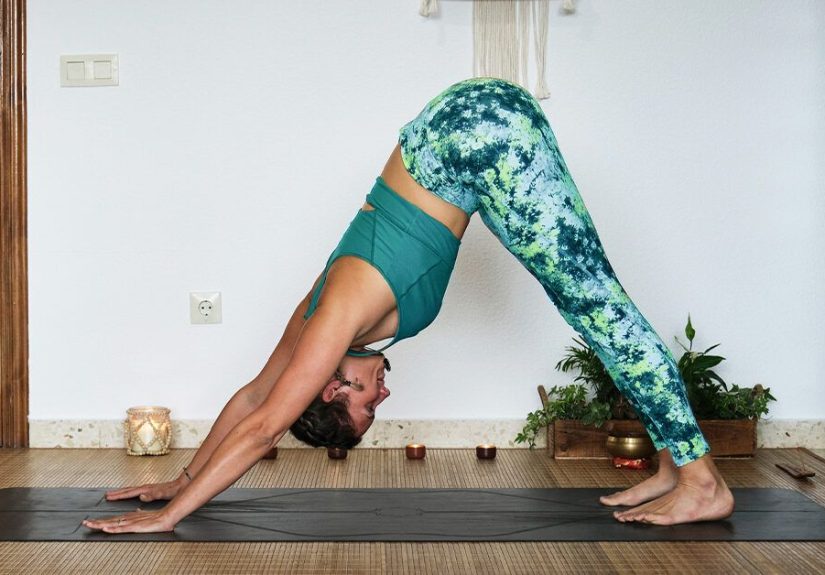
Partial inversion: Downward-Facing Dog (with options)
- Bend knees to keep the spine long (tight hamstrings are common and not a moral failure).
- Press through hands evenly; keep head relaxed, gaze toward feet or knees.
- If wrists complain, try Dolphin (forearms down) or elevate hands on blocks.
Step 5: Know when to stop
Come down immediately if you feel pressure, sharp pain, tingling that doesn’t ease, dizziness, or discomfort in the head/eyes/neck.
Your nervous system is not a video game bossyou don’t “power through” warning signs.
A Simple Progression Plan (So You Don’t Skip From 0 to Handstand)
Weeks 1–2: Comfort and control
- Legs Up the Wall: 3–8 minutes
- Downward Dog: 3–5 rounds of 20–40 seconds
- Dolphin: 2–4 rounds of 15–25 seconds (or shorter)
- Core stability: dead bugs, plank variations (short holds)
Weeks 3–4: Strength + technique (with support)
- Wall-supported L-shape handstand drill (hands on floor, feet on wall): short, controlled holds
- Shoulder stability: scapular push-ups, forearm plank pulses
- Balance practice: one-legged chair pose or standing balance drills
If your goal is a full inversion (Headstand/Handstand/Forearm Stand), the safest “how-to” is:
learn with a qualified teacher, build strength gradually, and use the wall to reduce risk.
Inversion Pose Menu (Pick Your Level)
Beginner
- Legs Up the Wall (Viparita Karani)
- Standing Forward Fold (with blocks)
- Downward-Facing Dog (bent knees, hands elevated if needed)
- Supported Bridge (hips lifted, supported with a block if comfortable)
Intermediate
- Dolphin Pose
- Wall-supported L-shape drills (strength + alignment practice)
- Forearm balance preparations (with wall guidance)
- Supported Shoulder Stand variations (only with proper setup and instruction)
Advanced
- Handstand (Adho Mukha Vrksasana)
- Forearm Stand (Pincha Mayurasana)
- Headstand (Sirsasana)
Advanced inversions aren’t “advanced” because they look cool (though, yes, they look cool). They’re advanced because they require
reliable strength, technique, and body awarenessplus an honest willingness to bail out safely.
Two Mini Sequences You Can Actually Use
Morning “Wake Up, Body” (8–10 minutes)
- Cat-Cow: 5 slow rounds
- Downward Dog: 30 seconds
- Low lunge (each side): 30 seconds
- Dolphin: 15–20 seconds (optional)
- Standing Forward Fold: 45 seconds
- Mountain Pose breathing: 5 slow breaths
Evening “Unplug and Unwind” (10–12 minutes)
- Child’s Pose: 1 minute
- Supine twist (each side): 45 seconds
- Legs Up the Wall: 5–10 minutes
- Easy breathing lying down: 5 slow breaths
FAQs About Yoga Inversions
How long should I hold an inversion?
Start small. For partial inversions, 15–40 seconds is plenty at first. For Legs Up the Wall, 3–10 minutes is common if it feels comfortable.
Longer doesn’t automatically mean betterquality matters more than bragging rights.
Do inversions send “extra blood to the brain” and make you smarter?
You will feel a change in pressure and sensation, but the body tightly regulates brain blood flow. If inversions dramatically flooded your brain,
that would be dangerous. The “clear head” feeling is more likely from focus, breath, and the nervous system shift.
Are inversions good for circulation?
Gentle inversions can support venous return and reduce lower-leg swelling in some people. But if you have vascular or cardiovascular conditions,
the “it helps!” story needs to be personalized by a medical professional.
What’s the safest inversion for most people?
Legs Up the Wall is often the most approachable. It’s low risk, doesn’t load the neck, and can feel amazing. Still, if you have
glaucoma, certain heart conditions, uncontrolled high blood pressure, or spine issues, you should get individualized guidance.
Real-World Inversion Experiences: What It Can Feel Like (About )
If you’re new to inversions, your first experience may be less “Zen master” and more “human burrito learning physics.” That’s normal.
Many people start with Legs Up the Wall because it’s the friendliest gateway to going upside down: you’re supported, you can breathe,
and your biggest challenge is resisting the urge to check your phone every 12 seconds.
A common early surprise is how loud your body can be when you finally pause. People often report noticing a gentle pulsing or warmth
in the legs as they relax, or a shift in the low back when the pelvis is supported. Desk workers sometimes describe it as the moment their hips
stop holding a grudge. Athletes often like it after training because it feels like a resetless “I’m fixing everything,” more “I’m giving my system
a chance to settle.”
Partial inversions like Downward-Facing Dog can bring a different kind of experience: not so much relaxation as a clear, honest mirror.
If your shoulders are tight, you’ll know. If your hamstrings are stiff, you’ll know. If you’ve been ignoring your core, congratulations
Dog Pose has now entered the chat. Many practitioners notice that the pose gets more comfortable when they stop trying to “force straight legs”
and instead prioritize a long spine and steady breath. That shiftchoosing sensation and alignment over appearancecan be a sneaky life lesson.
When people begin inversion drills at the wall (like an L-shape), the emotional side often shows up right alongside the physical work.
Being upside down can feel vulnerable. Some folks feel energized; others feel cautious or even anxious. The most consistent “win” isn’t the
moment you kick upit’s the moment you can choose to come down calmly. That’s confidence built on skill, not on hype.
Over time, many people describe a distinct mental pattern: inversions demand presence. When you’re balancing or holding a shape that requires
attention, your brain doesn’t have as much bandwidth for doom-scrolling your to-do list. Even a short, supported inversion can feel like closing
37 browser tabs in your mind. And if you practice regularly, you may notice the benefits show up off the mat: steadier breathing when stressed,
better awareness of posture at your desk, and a healthier relationship with “progress” that looks more like patience than pressure.
The best part? The ceiling becomes a teacher. It doesn’t care about your goals. It just sits there, quietly reminding you that balance is less about
perfection and more about tiny, constant adjustmentsplus the wisdom to rest when your body says, “We’re done for today.”
Conclusion
Yoga inversions can be energizing, strengthening, and surprisingly calmingwhen chosen wisely and practiced safely. Start with gentle inversions,
build strength and control, and treat advanced inversions as a skill you earn over time (preferably with expert guidance). Your yoga practice
doesn’t need to be upside down to be effective, but if you want to explore inversions, you can do it in a way that’s both fun and smart.