Table of Contents >> Show >> Hide
- Why Do Calendars Get So Weird?
- 10 Bizarre Calendars From History
- 10. The International Fixed Calendar: Thirteen Months of Perfect Order
- 9. The Egyptian Calendars: When One Calendar Isn’t Enough
- 8. The Mayan Calendars: Time as Interlocking Gears
- 7. The Positivist Calendar: Months Named for Great Minds
- 6. The Soviet Revolutionary Calendar: Goodbye Weekend, Hello Chaos
- 5. The Chinese Lunisolar Calendar: Years That Refuse to Stay the Same Length
- 4. The Ethiopian Orthodox Calendar: Thirteen Months and a Different Year
- 3. The French Revolutionary Calendar: Time, But Make It Republican
- 2. The Roman Calendar: The Original Hot Mess
- 1. The Aztec Calendar: Sacred Cycles and the Threat of Cosmic Doom
- What These Strange Calendars Reveal About Us
- Living With Bizarre Calendars: Experiences and Thought Experiments
- Conclusion
If you think remembering which months have 30 or 31 days is hard, spare a thought for the people who lived under
calendars with wandering months, unlucky “bonus” days, five-day weeks, and even years that lasted 445 days.
Throughout history, humans have tried to tame time, and sometimes the result has been downright bizarre.
Inspired by the spirit of a classic Listverse countdown, this article dives into ten of the strangest calendars ever
invented. From revolutionary experiments that tried to erase religion to sacred systems built around gods, stars, and
harvests, these calendars show just how weird the human relationship with time can get.
Why Do Calendars Get So Weird?
Calendars are supposed to do something fairly simple: keep our sense of dates in step with the natural cycles of the
Sun, Moon, and seasons. In practice, that job is a mathematical headache. A solar year isn’t a tidy whole number of
days, the Moon has its own rhythm, and societies often want their festivals and workweeks to line up with religious,
political, or economic needs.
Every time people try to “fix” those mismatches, someone proposes a new calendar that promises perfect order,
spiritual harmony, or higher productivity. Some of these systems stick. Others become fascinating historical curiosities
– which is where our list begins.
10 Bizarre Calendars From History
10. The International Fixed Calendar: Thirteen Months of Perfect Order
Imagine a world where every month has exactly 28 days, every month starts on the same weekday, and the phrase,
“What day does the 13th fall on this month?” never needs to be spoken again. That was the dream behind the
International Fixed Calendar, designed in the early 1900s by British engineer Moses B. Cotsworth.
The year was split into 13 months of 28 days, each month forming a perfect 4×7 grid of weeks. A brand-new thirteenth
month called Sol was inserted between June and July. To reach 365 days, the calendar added a special
“Year Day” at the end of December that belonged to no month and no weekday. In leap years there was an extra “Leap Day”
in the middle of the year, also outside the weekly cycle. The payoff: every date would always fall on the same
weekday year after year.
This wasn’t just a theoretical curiosity. Eastman Kodak, the photography giant, used the International Fixed Calendar
internally from 1928 until 1989 because it made accounting, scheduling, and payroll wonderfully predictable. Still,
the rest of the world found the idea of monthless days and a 13th month a bit too spooky, and the reform never went
global.
Today, calendar nerds still adore it, but everyone else seems willing to put up with February instead.
9. The Egyptian Calendars: When One Calendar Isn’t Enough
The ancient Egyptians didn’t settle for one calendar – they juggled several. Early on, they used a lunar calendar
tied to the phases of the Moon and the flooding of the Nile. Over time, this proved too imprecise for administration,
so they created a civil solar calendar of 365 days: 12 months of 30 days, plus five extra festival days at the end of
the year that technically weren’t part of any month.
This civil calendar was elegantly simple but flawed. A true solar year is about 365.25 days, so the Egyptian year
slowly drifted through the seasons, losing roughly one day every four years. After centuries, New Year’s Day could
wander through the agricultural seasons like a tourist who lost the map. Yet Egyptians kept using it because it made
accounting and recordkeeping easy, while religious and agricultural activities could be timed using other systems.
The truly bizarre part is how normal this drift apparently felt. Instead of patching the system with leap years,
Egyptians embraced a kind of cosmic “slow motion” misalignment: festivals and official dates kept looping through the
seasons over long spans of time. For a civilization otherwise obsessed with order and cosmic balance, it was a
surprisingly laid-back approach to the calendar.
8. The Mayan Calendars: Time as Interlocking Gears
If the International Fixed Calendar was designed for neat spreadsheets, the Mayan calendars were designed for
eternity. The Maya didn’t use one calendar; they used three interconnected systems:
-
The Tzolk’in: a 260-day sacred cycle combining 20 day names with numbers 1–13, mainly used for
ritual and divination. -
The Haab’: a 365-day “vague” year with 18 months of 20 days plus a five-day period often considered
ominous or unlucky. -
The Long Count: a running tally of days since a mythological creation date in 3114 BCE, used to
place events in vast cosmic cycles.
By combining the Tzolk’in and Haab’, the Maya produced a 52-Haab’ “Calendar Round,” a cycle of 18,980 days in which a
specific combination of sacred and civil dates repeats only once in 52 solar years. That made it a powerful tool for
anchoring rituals, dynastic events, and prophecies on a grand timescale.
In modern pop culture, the Long Count got dragged into the 2012 doomsday panic. In reality, Maya inscriptions describe
the end of one Great Cycle and the start of another, more like flipping to a new cosmic chapter than burning the
entire book. It’s less “end of the world” and more “your calendar ran out of pages, time to buy a new one.”
7. The Positivist Calendar: Months Named for Great Minds
In the 1840s, French philosopher Auguste Comte looked at the Catholic saint-filled calendar and thought, “That’s nice,
but what if we made it even more about people?” The result was the Positivist Calendar, a 13-month,
364-day system where every month and every day honored a notable historical figure.
Each month was named after an influential person or concept – Moses, Homer, Aristotle, Archimedes, Caesar, Saint Paul,
Charlemagne, Dante, Gutenberg, Shakespeare, Descartes, Frederick, and Bichat. Every month had exactly 28 days
(four tidy weeks). That still left one or two “festival” days each year which floated outside the weekly cycle and
were devoted to the dead or, in leap years, particularly to honoring women.
Comte even imagined days dedicated to “villains” of history so future generations could remember whom to blame. It was
part calendar reform, part philosophical fan club, and part moral education tool. Unsurprisingly, no government ever
adopted it officially. Most people weren’t ready to celebrate their dentist’s appointment on “Bacon 7, Month of
Shakespeare.”
6. The Soviet Revolutionary Calendar: Goodbye Weekend, Hello Chaos
After the Russian Revolution, the new Soviet state wasn’t just interested in changing politics – it wanted to change
how people experienced time itself. In 1929, they introduced a radical work calendar designed to keep factories running
almost nonstop and break traditional religious rhythms tied to the seven-day week.
The first version used a continuous five-day week. Workers were assigned one of five colors or
symbols and took their rest day when that color came up, regardless of what their family or friends were doing.
Months were reshaped into six five-day “weeks,” with a handful of extra days at the end of the year having no weekday
at all.
The plan looked efficient on paper. In real life, it was a social disaster. Families rarely had the same day off,
religious observance became difficult, and machines, never given a regular rest, wore out quickly. The government
later tried a six-day week variation and eventually admitted defeat, officially restoring the familiar seven-day week
in 1940.
The bizarre Soviet experiment turned the calendar into a political weapon – and proved just how much people value the
simple idea of “we all rest on the same day.”
5. The Chinese Lunisolar Calendar: Years That Refuse to Stay the Same Length
The traditional Chinese calendar looks tame at first glance: it has twelve months and marks New Year with fireworks,
lanterns, and dumplings. Under the hood, though, it’s a beautifully complicated lunisolar system that refuses to pack
its years into a neat number of days.
Months are tied to the Moon’s phases, so they have either 29 or 30 days. A regular year has 12 months; a leap year has
13. Depending on how the Moon and Sun line up, a common year can have 353, 354, or 355 days, while a leap year stretches
to 383–385 days. A leap month is inserted roughly every three years, and it shares the same name as the previous month,
which is a great way to confuse anyone keeping a diary.
On top of that, years are identified by a 60-year cycle combining “Heavenly Stems” and “Earthly Branches,” producing
familiar zodiac combinations like “Wood Dragon” or “Metal Rat.” The result is a calendar that tracks seasons, lunar
cycles, and cultural symbolism all at once.
Today, China uses the Gregorian calendar for civil life, but the traditional calendar still rules for festivals,
weddings, and astrology – proof that a system can be wildly complex and yet so culturally beloved that no one wants
to let it go.
4. The Ethiopian Orthodox Calendar: Thirteen Months and a Different Year
Step off a plane in Addis Ababa and you might find yourself seven or eight years “in the past.” Ethiopia uses a
calendar related to the ancient Coptic system, and its year count doesn’t match the Gregorian one used in most of the
world. For part of the year, Ethiopia’s date is seven years behind; for the rest, it’s eight.
The Ethiopian calendar has 12 months of 30 days plus a thirteenth month, Pagumen, which contains five
days in ordinary years and six days in leap years. Leap years come every four years without exception, like the old
Julian calendar. New Year falls in September by Gregorian reckoning, often lining up with the end of the rainy season.
This isn’t just a liturgical relic. Ethiopians actively use this calendar in daily life, and many wall calendars in
the country show both dates side by side to keep everyone sane when dealing with international travel, contracts, or
global holidays.
For visitors, it’s a mind-bending experience: you can literally celebrate the “millennium” years after the rest of the
world already has – and with an extra month each year to boot.
3. The French Revolutionary Calendar: Time, But Make It Republican
During the French Revolution, reformers decided that changing the government wasn’t enough; they needed to rewrite
time itself. In 1793, France adopted a new calendar meant to break with the monarchy and the Catholic Church and to
embody rational, secular values.
The French Revolutionary (or Republican) Calendar divided the year into 12 months of 30 days each.
Each month contained three “décades” – 10-day weeks. Only the tenth day, décadi, was a rest day. At the end
of the year, five (or in leap years, six) extra festival days were added, celebrating virtues and national ideals.
Month names like Brumaire (“fog”), Ventôse (“wind”), and Floréal (“flowers”) tied the
calendar to seasonal changes instead of saints.
There was even a push to decimalize time itself, with proposals for 10-hour days and 100-minute hours. That part
never truly caught on outside experimental clocks, but the calendar itself was used for about 12 years before being
abolished in 1806. It briefly returned during the Paris Commune in 1871, then vanished again.
In theory, it was logical and poetic. In practice, peasants still needed Sundays, priests still existed, and no one
wanted a nine-day workweek. The experiment was too radical even for a revolution.
2. The Roman Calendar: The Original Hot Mess
Before Julius Caesar cleaned things up, the Roman calendar was what happens when you let politics and superstition
drive timekeeping. Traditionally attributed to King Romulus, the earliest version had only ten months totaling 304
days, with an uncounted chunk of “winter” just sort of hanging off the end of the year.
Later reforms added January and February, bringing the total to 12 months and around 355 days. To keep the calendar
roughly in line with the seasons, Rome occasionally slipped in an extra month called Mercedonius. The problem?
The decision of when (or whether) to add this month was controlled by priests and often used for political advantage.
If you liked the current consul, stretch his term with a longer year. If not, “oops, no leap month this time.”
By the time Caesar took charge, the calendar was so out of sync with the seasons that drastic surgery was required.
The year 46 BCE was stretched to a staggering 445 days – remembered as the “year of confusion” – to reset things
before the new Julian calendar began. It’s probably the most chaotic “calendar update” in human history.
The bizarre nature of the Roman system is a great reminder that even something as basic as “what year is it?” can
become a political bargaining chip.
1. The Aztec Calendar: Sacred Cycles and the Threat of Cosmic Doom
Topping our list is the intricately structured and deeply symbolic Aztec calendar. More than just a way to track
planting seasons, it was woven into religion, politics, and a looming fear that the universe could end if humans
didn’t keep up their side of the bargain.
The Aztecs used two interlocking calendars:
-
The xiuhpohualli, a 365-day solar year divided into 18 months of 20 days plus five ominous “empty”
days viewed as unlucky. -
The tonalpohualli, a 260-day sacred cycle combining 20 day signs and the numbers 1–13. Each day
had a specific spiritual meaning and was associated with particular deities, making it crucial for choosing dates
for rituals, wars, and coronations.
Every 52 years, the two calendars synchronized in a moment known as the “binding of the years.” The Aztecs believed
that at this point, the world was at risk of ending. To prevent cosmic catastrophe, they performed the New Fire
ceremony: all fires in the capital were extinguished, a human sacrifice was made on a mountaintop, and a new sacred
fire was lit and carried back to relight the city.
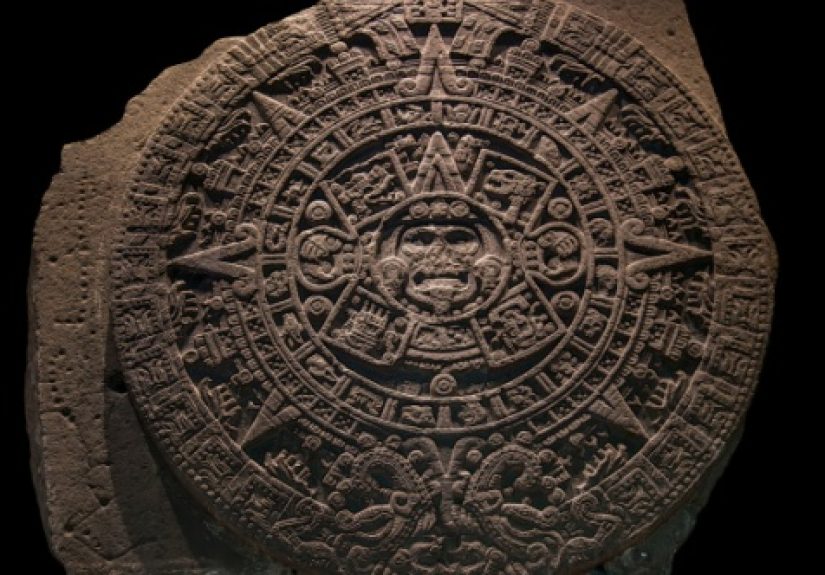
Even today, the famous Aztec Sun Stone – often mistaken for a simple “calendar” – reminds us that for the Aztecs,
keeping time wasn’t just practical. It was a matter of survival.
What These Strange Calendars Reveal About Us
For all their differences, these calendars share a few big themes:
-
Power and ideology: The French Revolutionary and Soviet calendars tried to reshape society by
reshaping time. If you control people’s weeks and holidays, you control their rhythms of work, worship, and rest. -
Religion and meaning: The Mayan, Aztec, Ethiopian, and Chinese systems all embed religious or
cosmological ideas in the way days and years are counted. The calendar becomes a sacred map of the universe. -
Practical headaches: Egypt wanted a simple administrative calendar, Rome wanted political wiggle
room, Kodak wanted neat quarters. Every calendar is a compromise between math, nature, and human convenience.
When you look closely, our own Gregorian calendar is just another patchwork solution: a cleaned-up descendant of the
Roman mess, adjusted by Pope Gregory XIII to fix Easter and seasonal drift. Someday, people may look back at our
leap-year rules and say, “Wow, that was weird too.”
Living With Bizarre Calendars: Experiences and Thought Experiments
It’s one thing to read about these calendars from a safe distance. It’s another to imagine living under them. Picture
yourself as a shopkeeper in revolutionary Paris. Yesterday it was “3 Brumaire, Year II.” Today it’s “4 Brumaire,” and
you’re nine days away from your single rest day. Your customers are still thinking in terms of Sundays, but the
government expects you to use decades and décadis. Your sense of weekend, market days, and church services
has been forcibly scrambled.
Or imagine being a factory worker in the early Soviet Union assigned to the yellow “team” on the five-day week.
Your spouse is green. Your closest friend is blue. You rarely share the same day off, and family gatherings require
spreadsheet-level planning. It’s technically more “efficient,” but emotionally exhausting. You don’t just lose Sunday;
you lose the comfort of a shared pause with your community.
Now shift to ancient Mesoamerica. As a Maya or Aztec ritual specialist, your job isn’t just to know what day it is –
it’s to understand what that day means. The number of the day, its symbol, its place in the cycle, and its
association with specific gods can guide everything from when to plant crops to when to crown a king. Time is not a
neutral backdrop; it has personality, luck, and mood. People might ask you, “Is next week an auspicious time for a
marriage?” and your answer is rooted in overlapping cycles rather than a simple calendar grid.
Travel to modern Ethiopia and you’ll have a more down-to-earth experience of calendar clash. You might schedule a
meeting for “September 11” on your phone, only to discover that locally it’s New Year’s Day in the Ethiopian calendar,
a major holiday. Locals may casually mention that it’s 2017 when your passport says 2025. Every cross-cultural event
– weddings, business contracts, school terms – has to be negotiated across two time systems.
Even as a 21st-century observer, you can “try on” these calendars mentally. Convert your birthday into the Chinese
sexagenary cycle or the Mayan Long Count. Look up what Discordian “season” a big life event fell in. Think about what
it would feel like if your job used the International Fixed Calendar while the rest of your life still followed the
Gregorian. Very quickly, you realize that a calendar isn’t just a tool – it shapes how you experience aging, holidays,
deadlines, and even identity.
Those thought experiments underline a simple truth: these bizarre calendars aren’t just mathematical curios. They are
experiments in organizing human life. Some failed spectacularly. Others quietly persisted alongside newer systems.
All of them remind us that our familiar 12 months and seven-day weeks are not inevitable. They’re just the version of
“weird” that won.
Conclusion
From 13-month business schemes to sacred cycles guarded by gods, humanity has tried almost every imaginable way to
slice up the year. Some calendars aimed at efficiency, others at cosmic harmony, and a few tried to reshape society
itself. In the end, the strangest thing might not be any one calendar, but the fact that we expect time – an
indifferent flow of days and seasons – to fit neatly into our boxes at all.
Next time you grumble about daylight saving time or a leap year, remember: at least you’re not stuck in a 445-day
Roman “year of confusion,” working a nine-day French week, or waiting for a ceremonial human sacrifice to make sure
the Sun comes up tomorrow.