Table of Contents >> Show >> Hide
- How to Use This List (So It Actually Works)
- The 10 Great Toning Exercises
- 1) Bodyweight Squat
- 2) Forward or Reverse Lunge
- 3) Push-Up (All Levels)
- 4) High Plank
- 5) Side Plank (or Modified Side Plank)
- 6) Glute Bridge
- 7) Single-Arm Row (Dumbbell or Band)
- 8) Standing Shoulder Press (Dumbbells, Band, or Single Weight)
- 9) Hip Hinge (Deadlift Pattern)
- 10) Bird Dog (Core Stability Classic)
- A Simple Full-Body Toning Workout (No Drama, Just Results)
- What “Toned” Really Feels Like: of Real-World Experience
- Conclusion: Your Best “Everyone” Plan
“Toning” is one of those fitness words that sounds like it should come with a setting: Abs: medium. Arms: extra crispy. But in real life, muscle tone is mostly a combo of two things:
- Building (or keeping) lean muscle through strength training
- Reducing overall body fat so those muscles show up to the party
Here’s the good news: you don’t need fancy machines, a complicated split routine, or a gym playlist that makes you feel like you’re in a spy movie. You need consistent, basic movements done with solid form, enough challenge, and a plan you can stick with.
Quick reality check: You can’t “spot reduce” fat in one area by hammering one exercise (sorry, 1,000 crunches a day). Targeted moves can strengthen specific muscles, but fat loss is a whole-body situation. That’s why the best toning workouts mix big compound exercises, core stability, and progressive overload. (And yes, it’s still okay to do crunches if you like themjust don’t expect them to negotiate directly with belly fat.)
How to Use This List (So It Actually Works)
How often should you do toning exercises?
For general health and visible results, most people do best with 2–3 strength workouts per week, plus walking/cardio on other days. National guidelines commonly recommend muscle-strengthening work at least 2 days per week alongside regular aerobic activity. The sweet spot is consistency, not perfection.
Warm-up and safety basics (boring but important)
- Warm up 3–8 minutes (marching, arm circles, light squats, gentle lunges).
- Use controlled reps. If you have to fling your body like you’re escaping a swarm of bees, the weight/reps are too much.
- Stop if you feel sharp pain. Muscle effort = normal. Sharp/joint pain = not the vibe.
- Hydrate and give muscles a day off before repeating the same hard workout.
Progressive overload (the “secret” sauce)
Your body adapts. So if you want more tone, you need a tiny bit more challenge over time. That can look like:
- +1–2 reps per set
- an extra set
- slower tempo (3 seconds down, 1 second up)
- more range of motion
- adding resistance (dumbbells, bands, a backpack… your laundry basket has potential)
The 10 Great Toning Exercises
Each move below includes what it works, how to do it, and options for beginners and for leveling up. Pick 6–10 moves for a full-body session.
1) Bodyweight Squat
Why it tones: Squats train the big lower-body muscles (quads, glutes, hamstrings) and teach strong movement mechanics that carry over to real lifelike standing up from chairs without sounding like you’re 97.
How to do it:
- Stand with feet about shoulder-width (comfort matters), toes slightly out if needed.
- Brace your core like you’re about to cough.
- Send hips back and down, keeping your chest tall.
- Keep knees tracking in line with toes; stand by pressing through your whole foot.
Common fixes: Knees collapsing inward → think “spread the floor.” Rounding low back → squat to a comfortable depth and keep the torso braced.
Make it easier: Sit-to-stand from a chair.
Make it harder: Goblet squat holding a dumbbell/kettlebell/backpack.
Suggested dose: 2–4 sets of 8–15 reps.
2) Forward or Reverse Lunge
Why it tones: Lunges train legs and glutes one side at a time, which helps balance, coordination, and “why is my left side always weaker?” honesty.
How to do it:
- Stand tall, brace your core.
- Step forward (or backward), landing softly.
- Lower with control until both knees are bent comfortably.
- Push through the front foot to return to standing.
Common fixes: Wobbling → slow down and narrow your range of motion. Knee pain → try a shorter step and keep the front knee tracking over toes.
Make it easier: Split squat (feet stay planted). Hold onto a wall/chair for balance.
Make it harder: Add dumbbells or do walking lunges.
Suggested dose: 2–3 sets of 6–12 reps per side.
3) Push-Up (All Levels)
Why it tones: Push-ups build chest, shoulders, triceps, and core stability. It’s basically a moving plank that earns you bragging rights.
How to do it:
- Start in a strong plank: hands under shoulders, body in a straight line.
- Squeeze glutes and thighs; keep ribs “down” (don’t sag).
- Lower under control, elbows angled comfortably (not flared straight out).
- Press the floor away to return to the top.
Common fixes: Hips drooping → tighten glutes/core. Neck craning → look slightly ahead of your hands.
Make it easier: Incline push-up (hands on counter/bench) or knee push-up.
Make it harder: Slower lowering (3 seconds down) or deficit push-up on handles/books.
Suggested dose: 2–4 sets of 5–12 reps (quality first).
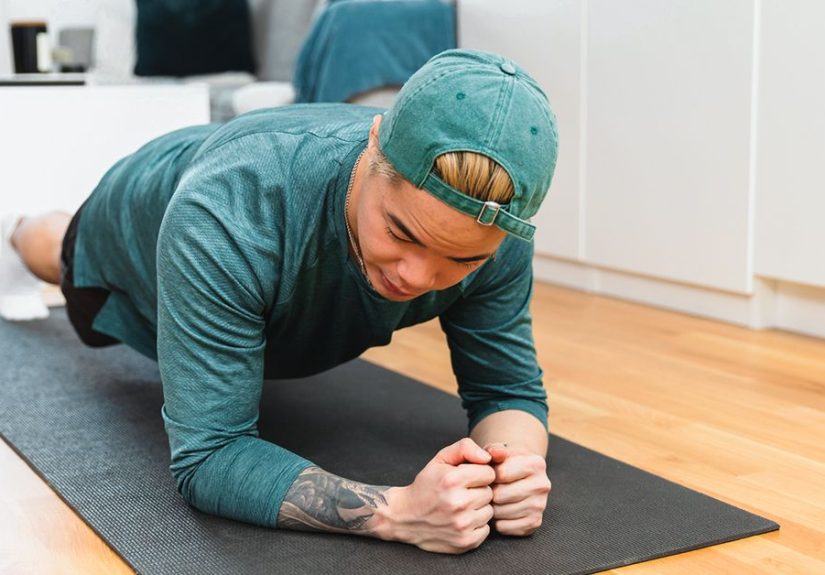
4) High Plank
Why it tones: Planks train deep core stability, shoulders, and gluteshelpful for posture and for making your spine feel supported during other lifts.
How to do it:
- Hands under shoulders, legs straight, feet about hip-width.
- Brace core; squeeze glutes; keep body in a straight line.
- Hold while breathing slowly (don’t turn into a statue).
Common fixes: Shoulders aching → bring hands directly under shoulders and push the floor away. Low back sagging → tighten glutes and shorten the hold.
Make it easier: Plank from knees or elevated plank on a bench.
Make it harder: Shoulder taps (slow, minimal hip sway).
Suggested dose: 2–4 holds of 20–45 seconds.
5) Side Plank (or Modified Side Plank)
Why it tones: Side planks hit the obliques and help stabilize the spine and hips. This is the move that makes you feel your “side core” in a very personal way.
How to do it:
- Lie on your side, elbow under shoulder.
- Lift hips so your body forms a straight line.
- Keep ribs stacked (don’t rotate forward) and breathe.
Make it easier: Bend the bottom knee (modified side plank).
Make it harder: Full side plank with straight legs or add a reach-through rotation (controlled).
Suggested dose: 2–3 holds of 15–40 seconds per side.
6) Glute Bridge
Why it tones: Bridges train glutes and hamstrings while teaching hip extensiongreat for posture, athletic movement, and counteracting “chair life.”
How to do it:
- Lie on your back, knees bent, feet flat about hip-width.
- Brace your core gently so the low back feels supported.
- Drive through heels and squeeze glutes to lift hips.
- Pause at the top, then lower slowly.
Common fixes: Feeling it mostly in low back → reduce height and focus on squeezing glutes, not arching.
Make it easier: Smaller range of motion or slower reps.
Make it harder: Single-leg glute bridge or add weight (dumbbell/backpack across hips).
Suggested dose: 2–4 sets of 10–20 reps.
7) Single-Arm Row (Dumbbell or Band)
Why it tones: Rows strengthen the back, rear shoulders, and armskey for posture and balancing all that pushing work. Think “anti-slouch training.”
How to do it:
- Support one hand/knee on a bench/chair (or hinge forward with a hand on a sturdy surface).
- Keep spine long and core braced.
- Pull elbow toward your ribs; pause; lower with control.
Common fixes: Shrugging → keep shoulder down and back; lead with elbow, not hand.
Make it easier: Use a lighter weight/band and slow tempo.
Make it harder: Add a pause at the top (1–2 seconds).
Suggested dose: 2–4 sets of 8–15 reps per side.
8) Standing Shoulder Press (Dumbbells, Band, or Single Weight)
Why it tones: Overhead pressing builds shoulders and triceps while demanding a stable coreespecially when standing.
How to do it:
- Stand tall with weights at shoulder height; brace core and squeeze glutes lightly.
- Press overhead in a smooth path; don’t over-arch your low back.
- Lower with control to start.
Common fixes: Low-back arching → ribs down, glutes on, use lighter weight.
Make it easier: Seated press with back support or use a resistance band.
Make it harder: Single-arm press (one side at a time) for extra core work.
Suggested dose: 2–4 sets of 6–12 reps.
9) Hip Hinge (Deadlift Pattern)
Why it tones: Hip hinges train glutes, hamstrings, and back strength. It’s the pattern behind deadlifts and safe lifting mechanicsaka “how to pick up a box without your back filing a complaint.”
How to do it (bodyweight or light weight):
- Stand tall, feet hip-width; soften knees slightly.
- Push hips back like you’re closing a car door with your butt.
- Keep spine long; feel tension in hamstrings.
- Stand by squeezing glutes and driving hips forward (no hyperextension).
Common fixes: Squatting instead of hinging → keep shins more vertical, emphasize hips moving back.
Make it easier: Practice with a dowel/broomstick along your back for alignment.
Make it harder: Romanian deadlift with dumbbells or a loaded backpack.
Suggested dose: 2–4 sets of 8–12 reps.
10) Bird Dog (Core Stability Classic)
Why it tones: Bird dog trains core stability and glute engagement while keeping the spine steadyexcellent for posture and back-friendly strength.
How to do it:
- Start on all fours: hands under shoulders, knees under hips.
- Brace core gently; keep spine neutral.
- Extend opposite arm and leg; pause while staying level (no twisting).
- Return slowly and switch sides.
Make it easier: Only extend the leg or the arm (not both).
Make it harder: Add a 2–3 second pause at full extension.
Suggested dose: 2–3 sets of 6–10 reps per side.
A Simple Full-Body Toning Workout (No Drama, Just Results)
Try this 2–3 times per week, resting at least a day between hard strength days:
Warm-up (5 minutes)
- 30–60 seconds marching in place
- 10 bodyweight squats (easy depth)
- 6–8 lunges per side (shallow)
- 10 arm circles each direction
- 20–30 seconds gentle plank (optional)
Main circuit (2–4 rounds)
- Squat 10–15 reps
- Push-up (incline/knees if needed) 6–12 reps
- Single-arm row 10–12 reps per side
- Glute bridge 12–20 reps
- Plank 20–45 seconds
- Side plank 15–30 seconds per side
Rest: 45–90 seconds between rounds. If you’re huffing like you just argued with your printer, rest a little more. Form comes first.
Cool down (3–5 minutes)
- Easy walking or gentle marching
- Light stretching for hips, quads, chest, and back
What “Toned” Really Feels Like: of Real-World Experience
If you’ve ever started a “toning” plan and wondered, “Am I doing this right, or am I just collecting sweat for fun?”you’re not alone. Most people’s experience with toning exercises follows a surprisingly predictable timeline. Not because fitness is boring, but because bodies are wonderfully consistent at adapting when you give them a clear message.
Week 1: You’ll probably feel a mix of confidence and confusion. Confidence because you did the workout. Confusion because muscles you didn’t know existed send you an email the next day titled: Hello, I am your glute medius. Mild soreness (especially 24–48 hours later) is common when you introduce new movements or increase effort. It usually eases as you repeat the routine consistently. The trick is not to panic and “punish” the sore spot. Instead, do light movement, hydrate, sleep, and return with good form.
Weeks 2–4: This is where many people notice the first “toning” wins that have nothing to do with mirrors. Push-ups feel less like a physics prank. Planks stop being a dramatic life event. Stairs become easier. Groceries feel lighter. Your posture improves because your back and core are doing their jobsquietly, like responsible adults. This is also the phase when technique gets better, which is huge: the same exercise suddenly feels more effective because you’re actually loading the intended muscles instead of improvising with momentum.
Weeks 4–8: You may notice your clothes fit differently, your shoulders look more defined, or your legs feel firmer. Some people see visual changes sooner; others notice performance changes first. Both count. If you’re pairing strength workouts with regular walking or cardio and a balanced diet, “tone” tends to show up more clearly over time because muscle is being built and overall body composition shifts.
The most common “aha” moment: People realize toning isn’t about doing a million tiny reps until your soul leaves your body. It’s about challenging reps with control. That’s why adding a little resistance (bands, dumbbells, even a backpack) or slowing your tempo can suddenly make a basic move feel brand-new. Your body doesn’t care if an exercise is trendy. It cares if the muscles have to work.
And here’s the best part: toning workouts build confidence in ordinary life. You stand up straighter. You move with more stability. You feel capable. The “look” is great, but the feelingstronger, steadier, more in controlis what usually keeps people coming back.
Conclusion: Your Best “Everyone” Plan
The best toning exercises are the ones you can do consistently with good form and steady progression. Start with bodyweight versions, choose smart modifications, and gradually add challenge through reps, time, or resistance. Aim for a full-body approachlegs, push, pull, and coreand you’ll build strength that looks good and works even better.