Table of Contents >> Show >> Hide
- What Makes These “Engineering Fixes” So Funny?
- The Real Engineering Principle Behind the Madness
- 106 Fixes, One Big Theme: Resourcefulness
- Why People Love “Trust Me, I’m an Engineer” Humor
- When a Weird Fix Is Actually Good Engineering
- When “Fixed” Really Means “Please Stop”
- The Repair Culture Behind the Laughs
- Lessons From 106 “Totally Fixed” Things
- Specific Examples of Everyday “Engineering” Fixes
- Why Bad Fixes Go Viral
- How to Make Your Own Fix Less Ridiculous
- The Beauty of Imperfect Problem-Solving
- Experience Section: What These 106 Fixes Teach Us in Real Life
- Conclusion
Some people see a broken chair, a dangling charger, a stubborn door, or a laptop held together by hope and crumbs. Others see a calling. That is the spirit behind “106 Engineers Who Totally Fixed Things”a celebration of oddball repairs, clever improvisation, and the kind of DIY confidence usually announced with the dangerous phrase, “Trust me, I’m an engineer.”
Of course, not every person in these funny repair stories is a licensed engineer. Many are weekend tinkerers, roommates with duct tape, parents with zip ties, students with deadlines, and everyday people who refused to let a small inconvenience win. Their fixes range from surprisingly practical to wonderfully ridiculous. A punched hole in a door becomes a framed “art installation.” A loose laptop charger gets a support system that looks like it was invented during a snack break. A broken household item survives because someone discovered the structural potential of tape, string, clamps, cardboard, and pure stubbornness.
But beneath the comedy, there is a real lesson: engineering is problem-solving under constraints. Sometimes the constraint is budget. Sometimes it is time. Sometimes it is the fact that the nearest hardware store closed 10 minutes ago and your dishwasher button needs to be held down like a hostage negotiator. These “totally fixed” moments are funny because they exaggerate a truth engineers know well: the first solution is not always elegant, but it teaches you something.
What Makes These “Engineering Fixes” So Funny?
The humor comes from the gap between intention and execution. A real engineering solution considers safety, durability, usability, materials, loads, and failure modes. A “totally fixed” solution often considers only one thing: “Does it work right now?”
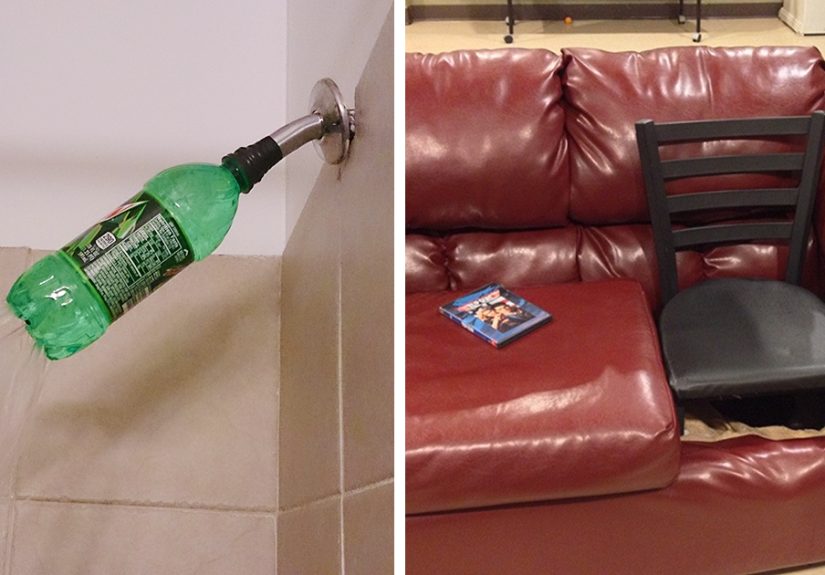
That is why these creative DIY repairs are so entertaining. They look like tiny battles between human creativity and common sense. A shower head replaced with a plastic bottle? Technically, water comes out. A car mirror replaced with a hand mirror? Technically, reflection achieved. A chair leg stabilized with a stack of books? Technically, gravity has been negotiated with.
These examples are not models for professional repair. They are snapshots of improvisation. They remind us that people are wildly inventive when they face a small daily annoyance. The results can be clever, chaotic, or both. In the world of funny engineering fails, “both” is usually where the magic lives.
The Real Engineering Principle Behind the Madness
Real engineering begins with identifying a problem, defining constraints, brainstorming ideas, testing a prototype, learning from failure, and improving the design. That sounds fancy, but it also describes what happens when someone fixes a loose charger by building a homemade holder out of whatever is within arm’s reach.
Good engineering asks several questions:
- What exactly is broken?
- Why did it fail?
- What materials are available?
- How long does the fix need to last?
- What could go wrong if the fix fails?
- Is this a temporary patch or a permanent repair?
The funniest fixes usually answer only the first three questions. That is why they make great internet content but questionable building codes.
106 Fixes, One Big Theme: Resourcefulness
The title “106 Engineers Who Totally Fixed Things” works because it captures a universal experience. Everyone has tried to extend the life of something that was already halfway to the recycling bin. Maybe you taped your phone charger at an angle so it would keep charging. Maybe you used a spoon as a cabinet handle. Maybe you balanced a fan on a pile of books and called it “airflow optimization.”
These repairs fall into several familiar categories. Each category reveals something different about how people solve problems when the official replacement part is too expensive, too far away, or too boring.
1. The Duct Tape Department
Duct tape has become the unofficial mascot of emergency repair. It seals, binds, patches, reinforces, and gives every object the visual charm of a roadside survival kit. In funny engineering fixes, duct tape often appears on car bumpers, cracked plastic, broken furniture, and electronics that should probably be unplugged immediately.
Used correctly, tape can be helpful for temporary labeling, bundling, or light-duty holding. Used incorrectly, it becomes a silver warning label that says, “Please do not inspect this too closely.”
2. The Zip Tie Institute
Zip ties are simple, cheap, and surprisingly strong for their size. That makes them beloved by mechanics, event workers, cable managers, gardeners, and people who have lost all the screws that came with the product.
In the world of “totally fixed” engineering, zip ties become hinges, handles, belt loops, pipe holders, bumper supports, and emergency luggage surgery. The funniest zip tie repairs are the ones that look absurd but somehow work better than expected. Still, a zip tie is not a structural beam. It is a helpful fastener with limits, not a miracle in plastic form.
3. The Cardboard Prototype That Never Retired
Cardboard is a fantastic prototyping material. Engineers and designers use it to test shape, fit, scale, and user experience before building something stronger. The problem begins when the prototype becomes the permanent solution.
A cardboard laptop stand? Great for testing angles. A cardboard shelf holding heavy equipment? That is not a shelf; that is a countdown. Funny DIY fixes often include cardboard because it is everywhere, easy to cut, and willing to participate in bad ideas.
4. The Household Object Reassignment Program
One of the best parts of creative repairs is watching an object get promoted into a completely new career. A fork becomes a latch. A broom becomes a curtain rod. A binder clip becomes a cable organizer. A pool noodle becomes edge protection. A rubber band becomes a tensioning system.
This is where cleverness shines. Repurposing objects is not automatically silly. Many excellent repairs start with seeing a material’s hidden function. The key difference between smart repurposing and a future insurance claim is whether the object can handle the load, heat, movement, moisture, or stress involved.
Why People Love “Trust Me, I’m an Engineer” Humor
Engineering humor works because it sits between genius and disaster. We admire the confidence while quietly stepping backward. A funny repair can be impressive, especially when it solves a real problem with limited resources. But it can also be a reminder that confidence is not the same as competence.
People love these images and stories because they are relatable. We have all been there. Something breaks at the worst possible moment. The proper fix requires a tool we do not own, a part we cannot find, or a professional appointment available sometime between next Tuesday and the heat death of the universe. So we improvise.
The result may not be beautiful, but it carries emotional power. It says, “I refused to be defeated by a cabinet hinge.” That is not just repair. That is character development.
When a Weird Fix Is Actually Good Engineering
Not every unusual repair is bad. Some odd-looking fixes are brilliant because they meet the real goals: safe, stable, affordable, reversible, and effective. A solution does not need to be pretty to be smart.
A good emergency fix usually has these qualities:
- It solves the immediate problem without creating a bigger danger.
- It is clearly temporary if it is not built to last.
- It does not hide damage that needs professional attention.
- It uses materials within their safe limits.
- It can be inspected, removed, or upgraded later.
For example, using a binder clip to keep cables from sliding off a desk is clever. Using a binder clip to hold together a cracked electrical plug is not clever; it is a tiny audition for a fire investigation documentary.
When “Fixed” Really Means “Please Stop”
Some repair categories should be treated with caution. Electrical wiring, gas lines, major plumbing, structural supports, vehicle braking systems, and anything involving high heat or pressure are not ideal places for comedy engineering. If failure could cause fire, shock, flooding, poisoning, injury, or a vehicle accident, it is time to call a qualified professional.
Temporary wiring should not become permanent wiring. Extension cords should not replace proper outlets. A wobbly stair railing should not be “fixed” with tape. A leaking gas appliance should not be negotiated with. Some problems are not puzzles; they are warnings.
The funniest engineering fails are best enjoyed as entertainment, not instructions. Laugh at the shower head made from a soda bottle. Do not install one unless your goal is to make every morning feel like camping in a sitcom.
The Repair Culture Behind the Laughs
Beyond the jokes, there is a serious cultural shift happening around repair. Many people are tired of throwing away products that could be fixed. The right-to-repair movement argues that consumers and independent shops should have fair access to tools, parts, manuals, and diagnostic information. That matters because repair can save money, reduce waste, extend product life, and keep useful items out of landfills.
This is where funny DIY repair content connects to something bigger. A homemade fix may be silly, but the desire behind it is reasonable. People want objects that can be maintained. They want appliances, electronics, furniture, bicycles, and tools that do not become useless because one small part failed.
Good design supports repair. Screws instead of glue, replaceable batteries, available parts, clear instructions, and modular components all make fixing easier. When products are designed to be repaired, people do not have to choose between expensive replacement and questionable improvisation.
Lessons From 106 “Totally Fixed” Things
After looking at enough creative fixes, patterns emerge. These lessons apply whether you are repairing a chair, troubleshooting a laptop, maintaining equipment, or designing a product from scratch.
Lesson 1: The Best Fix Starts With the Real Problem
A broken handle may not be the problem. The problem may be weak mounting points, repeated stress, poor material choice, or misuse. Engineers call this root-cause thinking. Everyone else calls it “figuring out why this thing keeps breaking every three weeks.”
Lesson 2: Temporary Repairs Need Expiration Dates
A temporary repair is not shameful. In fact, temporary fixes are often necessary. The danger begins when temporary becomes forever. Write down what needs to be replaced, schedule the real repair, and do not let “good enough for tonight” quietly become “still there four years later.”
Lesson 3: Materials Matter
Plastic, wood, metal, rubber, tape, cardboard, and fabric all behave differently. They respond differently to weight, moisture, heat, friction, and vibration. Many funny engineering fixes fail because the material was convenient, not appropriate.
Lesson 4: Safety Is Part of the Design
A repair that works but injures someone is not a success. Safety is not an annoying extra step. It is the line between “creative solution” and “why is there smoke?”
Lesson 5: Ugly Can Be Useful
Some repairs look strange because they prioritize function. That is fine. A workshop jig, a prototype, or an emergency brace may not win a design award, but it can still be smart. The question is not “Is it pretty?” The question is “Is it safe, stable, and suitable?”
Specific Examples of Everyday “Engineering” Fixes
Think of the classic loose charger problem. The wrong way is forcing the cable until the port gets worse. A better approach is to identify whether the issue is the cable, port, connector angle, debris, or internal damage. A temporary support may reduce strain, but the long-term answer may be cleaning, replacing the cable, or repairing the port.
Consider a broken door with a hole in it. A funny fix might turn the damage into wall art. A proper repair would depend on the door type. Hollow-core doors can sometimes be patched cosmetically, while larger damage may justify replacing the slab. The creative version gets laughs; the practical version restores function.
Take the famous “book in the bathtub” problem. A child inventing a bath reading holder may look adorable, but it also demonstrates real design thinking: identify a problem, create a support, keep the book dry, and improve the user experience. That is engineering in miniature, with bubbles.
Why Bad Fixes Go Viral
Bad fixes go viral because they tell a story instantly. One image can reveal the problem, the personality of the fixer, the materials available, and the level of risk involved. The viewer understands everything in two seconds and then spends the next five wondering, “Did that actually work?”
These posts also invite judgment, and the internet loves judgment the way garages love mystery screws. Viewers debate whether a fix is genius, dangerous, lazy, brilliant, or all of the above. The comment section becomes a public engineering review board, except with more sarcasm and fewer hard hats.
How to Make Your Own Fix Less Ridiculous
If something breaks and you want to repair it properly, start small and think clearly. Document the problem with photos. Look for the model number. Search for a manual. Check whether replacement parts exist. Watch several repair demonstrations, not just one. Read safety warnings. Use the right tools. Stop if the repair involves hazards you do not understand.
For household repairs, know your limits. Patching drywall, tightening a loose handle, replacing a simple furniture part, lubricating a squeaky hinge, or organizing cables may be reasonable DIY tasks. Rewiring a panel, modifying gas appliances, repairing structural beams, or improvising vehicle safety components is a different universe.
The smartest fixer is not the person who insists on doing everything alone. The smartest fixer knows when to troubleshoot, when to replace, and when to call someone with training, insurance, and a truck full of tools you definitely do not own.
The Beauty of Imperfect Problem-Solving
The appeal of 106 Engineers Who Totally Fixed Things is not perfection. It is the opposite. It is the charm of imperfect problem-solving. These fixes are funny because they reveal human creativity in its most unfiltered form. Someone had a problem. Someone had limited resources. Someone decided that a spoon, a rubber band, and a heroic amount of confidence might be enough.
Sometimes they were right. Sometimes they were very, very not right. Either way, the result is memorable.
Real engineering has standards, calculations, testing, peer review, and responsibility. Funny engineering has tape, optimism, and a suspiciously tilted shelf. Both begin with the same spark: “There has to be a way to fix this.”
Experience Section: What These 106 Fixes Teach Us in Real Life
After spending time with the strange, clever, and occasionally alarming world of “engineers who totally fixed things,” one experience stands out: almost every repair tells you more about the person than the object. A neat repair suggests patience. A wildly overbuilt repair suggests someone who owns too many tools and has been waiting for this moment. A chaotic tape-covered repair suggests urgency, panic, or a personality that treats warning labels as light reading.
In real life, the best repair experiences usually begin with humility. The object is broken, and you do not yet know why. That mindset matters. When people rush straight to a solution, they often patch the symptom instead of solving the cause. A door that will not close may not need more force; it may need hinge adjustment. A noisy appliance may not need replacement; it may need cleaning, leveling, or a small part. A loose cable may not need tape; it may need strain relief or a new connector.
The funniest fixes also teach the value of observation. Many successful repairs happen because someone simply looked carefully. They noticed where pressure was applied, where a part rubbed, where water collected, where weight shifted, or where a screw had backed out. Observation is the unglamorous superpower of repair. It costs nothing and prevents many mistakes.
Another practical lesson is that tools change behavior. When you own only tape, every problem looks tape-shaped. When you have a basic toolkitscrewdrivers, pliers, adjustable wrench, measuring tape, utility knife, level, flashlight, safety glasses, and a few fastenersyou make better choices. The right tool does not just make repair easier; it makes reckless improvisation less tempting.
There is also a sustainability lesson. Repairing things can be satisfying because it pushes back against throwaway culture. Fixing a chair, restoring a lamp, replacing a worn cable, or repairing a drawer slide can save money and reduce waste. Even when the repair is small, it builds confidence. You begin to see products as understandable systems rather than mysterious objects that must be discarded the moment they misbehave.
Still, the biggest experience-based takeaway is knowing when not to fix something yourself. That may sound unheroic, but it is the difference between wisdom and a viral photo captioned “What could possibly go wrong?” Electrical hazards, gas leaks, structural damage, serious vehicle issues, and anything involving fire risk deserve respect. Calling a professional is not defeat. It is often the most engineered solution available.
The best spirit of 106 Engineers Who Totally Fixed Things is not “make any repair with anything nearby.” It is “stay curious, be resourceful, test your assumptions, and do not let small problems intimidate you.” Laugh at the ridiculous fixes. Appreciate the clever ones. Learn from the dangerous ones. And the next time something breaks, take a breath before reaching for the duct tape. Unless it is truly a duct problem. In that case, congratulationsyour moment has arrived.
Conclusion
106 Engineers Who Totally Fixed Things is more than a parade of funny DIY repairs. It is a reminder that creativity often appears when convenience disappears. The best fixes balance imagination with safety, while the worst fixes become internet legends for reasons their creators probably did not intend. Whether you are a careful DIYer, a professional engineer, or someone who once fixed a chair with a shoelace and confidence, the lesson is the same: solve the real problem, respect the risks, and never underestimate the educational power of a repair that looks like it was designed by a raccoon with a deadline.