Table of Contents >> Show >> Hide
- 1. Choose the Right Type of Small Pool for Your Yard
- 2. Place the Pool Where It Improves the Whole Layout
- 3. Use a Narrow or Geometric Shape to Save Space
- 4. Build a Deck That Doubles as Outdoor Living Space
- 5. Add Built-In Seating Inside and Outside the Pool
- 6. Use Landscaping to Create Privacy Without Crowding the Yard
- 7. Think Vertically With Walls, Screens, and Trellises
- 8. Keep the Pool Equipment Quiet, Hidden, and Accessible
- 9. Add a Pool Cover to Save Water, Heat, and Cleaning Time
- 10. Use Lighting to Make the Pool Feel Bigger at Night
- 11. Build Safety Into the Design From the Start
- Bonus Ideas for Making a Small Pool Feel Luxurious
- Common Mistakes to Avoid With Small Backyard Pools
- Real-Life Experience: What It Is Actually Like to Live With a Small Backyard Pool
- Conclusion
A small backyard does not have to mean giving up on the dream of a pool. It simply means the pool has to earn its keep. In a compact outdoor space, every square foot has a job: the pool cools you off, the deck becomes a lounge, the fence becomes privacy, the plants soften hard edges, and the lighting makes the whole thing feel less like “tiny yard problem” and more like “boutique hotel, but without the resort fees.”
The best small pool ideas are not about squeezing a giant swimming pool into a yard that clearly said no. They are about choosing the right scale, shape, materials, and features so the pool feels intentional. A plunge pool, cocktail pool, spool, stock tank pool, narrow lap pool, or compact above-ground pool can transform a modest backyard into a stylish outdoor retreat when it is designed with smart circulation, safety, maintenance, and comfort in mind.
Below are 11 practical ways to make a small pool work in your backyard, inspired by real-world backyard design principles, pool safety guidance, water-efficiency practices, and the kind of clever home improvement thinking that makes a little space feel much bigger than it is.
1. Choose the Right Type of Small Pool for Your Yard
The first secret to a successful small backyard pool is admitting that not every pool needs to be Olympic-size. Unless you are secretly training for the 200-meter freestyle while the neighbors grill burgers, a smaller pool may be more than enough.
A plunge pool is ideal for cooling off, lounging, and light exercise. These pools are usually deeper than they are long, making them perfect for compact yards. A cocktail pool offers a similar footprint but often includes seating ledges, jets, or heating features. A spool, which combines the qualities of a spa and pool, can be heated in cooler months and chilled down in summer. For budget-conscious homeowners, a stock tank pool or stylish above-ground pool can deliver serious charm without the excavation drama.
Example
If your backyard is only 20 feet wide, a rectangular plunge pool tucked along one side may work better than a round pool in the center. The side placement leaves room for a walkway, lounge chair, and landscaping, instead of turning your yard into one big obstacle course with chlorine.
2. Place the Pool Where It Improves the Whole Layout
In a small backyard, pool placement matters more than pool size. A pool dropped randomly in the middle of the yard can make the space feel chopped up. A pool placed thoughtfully can make the entire backyard feel organized and luxurious.
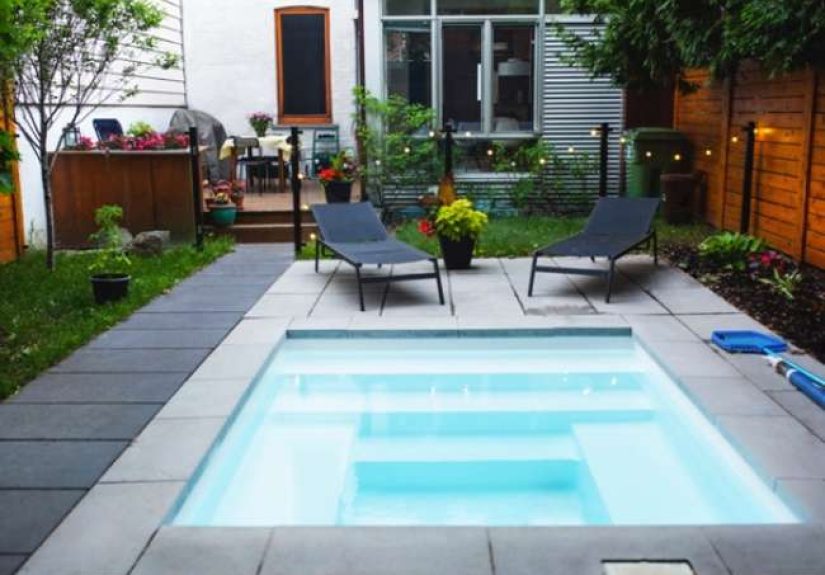
Consider placing the pool along a fence, near an existing patio, or parallel to the back of the house. This creates a clean visual line and keeps traffic flowing naturally. If you have sliding doors, French doors, or a kitchen window facing the yard, use that sightline. A small pool that looks beautiful from inside the house adds value even when no one is swimming.
Before committing, walk the yard at different times of day. Notice where the sun hits, where shade falls, where neighbors can see in, and where water might splash near doors or outdoor furniture. The perfect spot is not just the place where the pool fits; it is the place where the pool makes the whole backyard work better.
3. Use a Narrow or Geometric Shape to Save Space
Curvy pools can be beautiful, but clean geometric shapes often work better in small spaces. Rectangular, square, and narrow lap-style pools are easier to align with fences, patios, decks, and garden beds. They also create a modern look that feels crisp rather than crowded.
A narrow pool can run along the side of a backyard like a ribbon of water. Even if it is too short for real lap swimming, it can still offer room for floating, relaxing, or doing resistance exercises with swim jets. A square plunge pool can fit into a courtyard-style backyard and become the focal point of the entire space.
Geometric pools also make covers, decking, and hardscaping easier to plan. That may not sound glamorous, but future-you will be thrilled when the pool cover actually fits and does not require a wrestling match every Tuesday.
4. Build a Deck That Doubles as Outdoor Living Space
A small pool needs more than water; it needs a landing zone. A surrounding deck or patio gives swimmers a safe place to enter and exit, creates room for seating, and visually connects the pool to the rest of the backyard.
Wood, composite decking, concrete pavers, porcelain tile, and natural stone can all work, but the surface should be slip-resistant and comfortable under bare feet. In tiny yards, avoid oversized patio layouts that swallow the space. Instead, design a deck that does double duty: steps into the pool, a bench along the edge, hidden storage under built-in seating, or a narrow ledge for towels and drinks.
Smart Design Tip
Use the same decking material from the back door to the pool edge to create one continuous outdoor room. When materials change too often in a small yard, the space can feel busy. When the materials are consistent, the backyard feels larger and calmer.
5. Add Built-In Seating Inside and Outside the Pool
Small pools are usually better for soaking than splashing, so lean into comfort. Built-in benches, tanning ledges, corner seats, and wide entry steps make a compact pool feel more useful. They give adults a place to sit with feet in the water, kids a shallow area to play under supervision, and everyone a reason to hang out longer.
Outside the pool, built-in benches can reduce the need for bulky patio furniture. A bench along a fence or retaining wall can provide seating without blocking circulation. Add weather-resistant cushions, and suddenly your small pool area feels like a private lounge instead of a place where folding chairs go to retire.
For a cocktail pool or spool, consider hydrotherapy jets, a heated seating area, or a small spillover feature. These upgrades can make the pool usable beyond hot summer afternoons and increase the return on your investment.
6. Use Landscaping to Create Privacy Without Crowding the Yard
A small backyard pool feels much better when it feels private. The challenge is creating privacy without planting a jungle so dense that you need a machete to reach the skimmer basket.
Choose pool-friendly plants that are attractive, relatively tidy, and suited to your climate. Ornamental grasses, dwarf palms, compact evergreens, clumping bamboo in controlled planters, hibiscus, agave, and tropical-looking perennials can soften the edges of the pool area. Avoid trees that drop messy fruit, large leaves, needles, or flowers directly into the water. A beautiful tree is less charming when it turns your pool into soup.
Layer plants by height: low groundcovers or stones near the pool, medium shrubs behind them, and taller screening plants near fences. This creates depth without taking up too much floor space. In very tight yards, use raised planters or narrow planting beds along the perimeter.
7. Think Vertically With Walls, Screens, and Trellises
When the ground is limited, the walls become valuable. Vertical design is one of the best ways to make a small pool area feel finished. A plain fence can become a design feature with horizontal slats, climbing vines, outdoor art, wall planters, or a textured privacy screen.
A trellis with jasmine or climbing roses can add fragrance and softness. A modern slatted screen can hide pool equipment or block a neighbor’s view. A stucco or stone accent wall can create a resort-like backdrop for a plunge pool. Even a compact mural or tile feature can add personality without using a single extra square foot of ground.
Just be careful with materials near water. Choose finishes that can handle moisture, sun exposure, and occasional splashes. Outdoor-rated materials may cost more upfront, but they will not peel, warp, or throw a tantrum after the first humid week.
8. Keep the Pool Equipment Quiet, Hidden, and Accessible
Pool equipment is necessary, but that does not mean it deserves center stage. Pumps, filters, heaters, valves, and cleaning tools should be placed where they are accessible for maintenance but not visually dominant.
In a small backyard, equipment can often be tucked behind a screen, inside a ventilated enclosure, beside a garage wall, or behind landscaping. The key word is accessible. Do not bury equipment behind a hedge so dense that a technician needs hiking boots and emotional support to service it.
Variable-speed pumps, efficient heaters, and properly sized filters can help reduce energy use and improve performance. A smaller pool usually requires less water, fewer chemicals, and less heating energy than a full-size pool, but only if the system is designed correctly. Work with a qualified pool professional to match equipment to the pool’s volume and features.
9. Add a Pool Cover to Save Water, Heat, and Cleaning Time
A pool cover may not be the most exciting backyard accessory, but it is one of the most useful. Covers help reduce evaporation, retain heat, keep leaves and debris out of the water, and may reduce chemical demand. In a small pool, a cover is often easier to manage because the surface area is smaller.
Options include solar covers, manual safety covers, automatic covers, and custom covers for plunge pools or spools. If your pool is heated, a cover becomes even more valuable because it helps hold warmth when the pool is not in use. That means less energy waste and more comfortable water when you are ready to swim.
For best results, choose a cover that fits the pool shape and is easy enough to use regularly. The best pool cover is not the one with the fanciest brochure. It is the one you will actually put on the pool instead of leaving it in the garage next to the holiday decorations from 2018.
10. Use Lighting to Make the Pool Feel Bigger at Night
Lighting can completely change the mood of a small backyard pool. During the day, a compact pool may look simple. At night, with the right lighting, it can become the glowing centerpiece of the yard.
Use underwater LED lights, low-voltage path lights, wall sconces, string lights, or step lights to create layers. Avoid one harsh floodlight that makes the backyard feel like a parking lot with floaties. Soft, indirect lighting is more flattering and more relaxing.
Place lights where they improve safety: steps, edges, pathways, gates, and changes in elevation. Then add atmosphere with uplighting on plants, a glow beneath a bench, or a lantern near the seating area. Good lighting extends the hours you can enjoy the pool and makes even a small space feel polished.
11. Build Safety Into the Design From the Start
A small pool is still a pool, and safety should be part of the design from day one. Local codes may require fencing, gates, alarms, barriers, approved drain covers, electrical protections, and specific setbacks. Requirements vary by city, county, and state, so check local rules before construction begins.
A secure barrier with a self-closing, self-latching gate is one of the most important safety features for residential pools. Pool covers, door alarms, gate alarms, non-slip surfaces, visible depth markers, and proper lighting can also help reduce risks. If children visit the home, establish clear pool rules and require active adult supervision. “I thought someone else was watching” is not a safety plan; it is the opening line of a preventable accident.
Also think about safe behavior. Small plunge pools are often too shallow for diving, so make that clear to guests. Keep furniture and climbable objects away from fences. Store chemicals safely, test water regularly, and keep rescue equipment nearby. A stylish pool is wonderful, but a stylish and safe pool is the one people can enjoy with peace of mind.
Bonus Ideas for Making a Small Pool Feel Luxurious
Once the essentials are handled, small upgrades can make a compact pool feel high-end. Try waterline tile in a rich blue, green, or patterned design. Add a narrow water feature for sound and movement. Use matching outdoor furniture to create a cohesive look. Install an outdoor shower to reduce grass and dirt tracked into the pool. Add a pergola for shade, or use a cantilever umbrella that can rotate over both the water and the seating area.
If your pool is very small, avoid clutter. One beautiful lounge chair is better than five chairs crammed together like they are waiting for a backyard bus. A small side table, rolled towels, a few planters, and warm lighting can do more than a pile of accessories.
Common Mistakes to Avoid With Small Backyard Pools
Choosing a Pool That Is Too Big
The pool should not consume the entire yard. Leave space for walking, seating, planting, maintenance access, and safety barriers.
Ignoring Maintenance Access
Even small pools need skimming, testing, cleaning, and equipment service. Make sure there is room to work around the pool.
Using Slippery Materials
Glossy tile may look beautiful in photos, but around a pool it can become a slip-and-slide with better branding. Choose textured, outdoor-rated surfaces.
Forgetting Shade
A pool in full sun may be great for swimming, but the seating area needs relief. Umbrellas, pergolas, shade sails, and trees placed at a smart distance can help.
Skipping the Budget Buffer
Excavation, permits, fencing, drainage, electrical work, plumbing, landscaping, and decking can add up. A small pool can cost less than a large pool, but it is still a serious home improvement project.
Real-Life Experience: What It Is Actually Like to Live With a Small Backyard Pool
Living with a small backyard pool is a little different from imagining one while scrolling through glossy design photos. In the fantasy version, the water is always sparkling, the towels are always rolled, and no one ever asks where the skimmer net is. In real life, a small pool is still a pool, but the good news is that the smaller size often makes the daily routine much more manageable.
One of the biggest advantages is how quickly a small pool becomes part of everyday life. With a large pool, swimming can feel like an event. With a plunge pool or spool, it feels easier to step outside for 15 minutes, cool off, and go back to your day. Homeowners often find that they use a small pool more casually and more often because it does not require the same level of preparation. It becomes less of a weekend production and more of a daily reset button.
Maintenance also feels less intimidating when the pool is compact. Skimming leaves takes a few minutes. Brushing the walls is faster. Covers are easier to pull across the surface. Water testing is still important, and the chemistry still needs attention, but the overall scale feels less overwhelming. That said, small pools can change temperature and chemistry faster than large pools because there is less water volume. After a storm, heavy use, or a very hot day, it is smart to test the water rather than assume everything is fine.
Another real-world lesson is that the area around the pool matters as much as the pool itself. A tiny pool with a comfortable deck, shade, lighting, and privacy can feel far more enjoyable than a larger pool surrounded by bare concrete and awkward furniture. People do not just swim; they sit, talk, snack, supervise kids, dry off, read, and stare peacefully into the water while pretending not to think about email. Plan for those moments.
Noise is another detail worth considering. Pumps, heaters, water features, and neighbors all affect the experience. If the equipment is too close to the seating area, the backyard may sound less like a resort and more like a hardworking appliance. Thoughtful equipment placement, acoustic screening, and low-noise systems can make a major difference.
Privacy often becomes more important than expected. Even confident swimmers do not necessarily want to make eye contact with the neighbor while climbing onto a pool float shaped like a taco. Screens, hedges, umbrellas, and pergolas help the pool area feel personal and relaxing. The best privacy solutions look intentional rather than defensive.
Finally, a small pool teaches restraint. You cannot fit every feature into a compact yard, and that is perfectly fine. Pick the features that match how you actually live. If you love evening soaks, prioritize heat and lighting. If kids will use the pool, prioritize safety, steps, and supervision zones. If entertaining matters most, create seating and a serving surface nearby. A small pool works beautifully when it is designed around real habits instead of fantasy habits borrowed from a luxury hotel commercial.
Conclusion
A small pool can absolutely work in your backyard when the design is thoughtful, safe, and scaled to the space. The key is to stop thinking of a compact pool as a compromise and start treating it as a design opportunity. With the right pool type, smart placement, built-in seating, efficient equipment, privacy landscaping, lighting, and a practical cover, even a modest backyard can become a refreshing outdoor escape.
Whether you choose a plunge pool, cocktail pool, spool, narrow lap pool, stock tank pool, or above-ground pool, focus on how the entire backyard functions. The pool should support the way you relax, entertain, cool off, and enjoy your home. Bigger is not always better. Sometimes better is smaller, smarter, and much easier to clean before guests arrive.
Note: Before installing any backyard pool, confirm local building codes, permit requirements, fencing rules, electrical standards, and safety regulations. For in-ground pools, heated pools, electrical work, plumbing, or structural changes, work with licensed professionals.