Table of Contents >> Show >> Hide
- Table of Contents
- Quick Refresher: Why This Movie Still Rules
- The 15 Most Excellent Facts About Bill & Ted’s Excellent Adventure
- 1) The film’s release day was so “excellent” that Los Angeles literally made it official
- 2) It hit theaters widethen proved it deserved the space
- 3) The movie nearly got derailed by real-world chaos (bankruptcy-level chaos)
- 4) The delay caused a very human post-production problem: the year stopped matching the dialogue
- 5) The budget was modest, and the box office was (most) triumphant
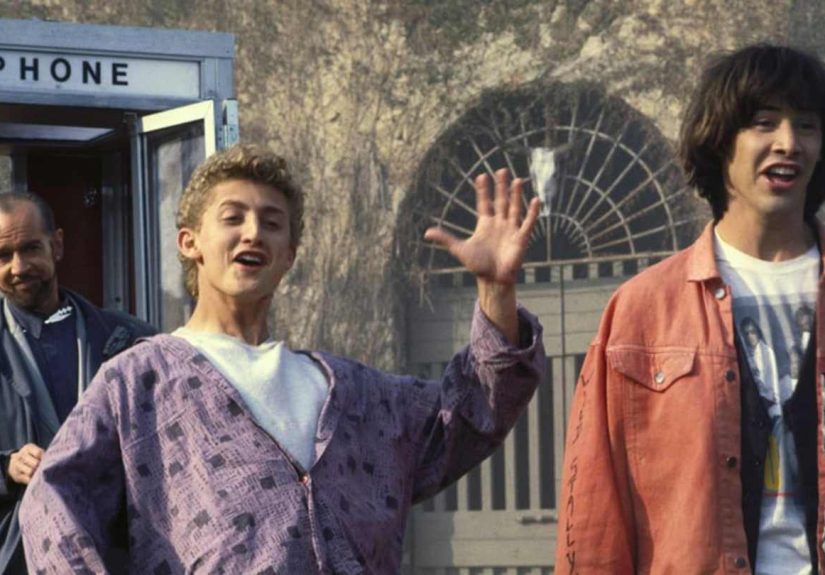
- 6) “San Dimas” is Californiayet much of the movie is unmistakably Arizona
- 7) The Circle K became a pilgrimage sitebecause one line refused to die
- 8) Those “future dudes” at the end are real music-world heavy hitters
- 9) The time machine was originally… not a phone booth
- 10) The finale was originally smallerthen the movie chose spectacle (the smart way)
- 11) Bill and Ted began as improv charactersbefore they became a movie ethos
- 12) There was once a third buddy named “Bob”
- 13) A legendary sci-fi author helped push the story into full-movie territory
- 14) The movie originally had a choreographed opening “rock jam” (yes, really)
- 15) The music wasn’t just a vibeparts of it were literally performed by a real guitar ringer
- Why It Still Works (And Why That Matters)
- Conclusion
- Bonus: of “Excellent Adventure” Experiences (Because the Vibe Deserves It)
Some movies age like milk. Bill & Ted’s Excellent Adventure ages like… a perfectly preserved
cassette tape you find in a shoebox, pop in, and suddenly you’re air-guitaring in your kitchen like you just
discovered electricity. Released in 1989, this time-traveling, history-class-saving, positivity-powered comedy
turned two lovable doofuses into cultural iconsand somehow made “be nice” feel rebellious.
[1]
Below are 15 deeply bodacious, genuinely true, and surprisingly insightful facts about the filmcovering its
release chaos, its Arizona roots, its famous phone booth, and the behind-the-scenes choices that helped it
become a comfort-classic for generations of movie trivia lovers.
Quick Refresher: Why This Movie Still Rules
The setup is gloriously simple: Bill S. Preston, Esq. and Ted “Theodore” Logan are about to flunk history.
If they fail, Ted gets shipped off to military school in Alaska, their band (Wyld Stallyns) collapses,
andminor detailthe future becomes a dumpster fire. Enter Rufus (George Carlin), who arrives in a phone booth
time machine to nudge them toward a report so epic it literally rewires civilization.
The film is a sci-fi comedy, but it’s also a sneaky “how to be a decent human” manifesto. Bill and Ted don’t
win because they’re brilliant. They win because they’re curious, open-hearted, and weirdly committed to
uplifting everyone around themhistorical figures included.
The 15 Most Excellent Facts About Bill & Ted’s Excellent Adventure
1) The film’s release day was so “excellent” that Los Angeles literally made it official
The movie opened on February 17, 1989and in a promotional move that feels like the most 1989 thing ever,
Los Angeles Mayor Tom Bradley proclaimed it “Be Excellent Day.” If your marketing campaign inspires a civic
proclamation, you’re doing something right (or at least something memorably weird).
[1]
2) It hit theaters widethen proved it deserved the space
This wasn’t a tiny platform release that slowly crawled into pop culture. The film opened in 1,190 theaters.
That matters because it shows the studio had real expectationsand the movie had to perform fast to survive.
It did, and it kept building an audience through word-of-mouth and repeat viewing.
[1]
3) The movie nearly got derailed by real-world chaos (bankruptcy-level chaos)
Shortly after principal photography wrapped in 1987, the De Laurentiis Entertainment Group (DEG) went
bankrupt. At one point, the film’s most likely fate was a straight-to-cable releaseuntil Orion Pictures
and Nelson Entertainment acquired the rights and lined up a theatrical release.
In other words: Bill and Ted almost got sent to “Cable School,” and the universe barely survived.
[7]
4) The delay caused a very human post-production problem: the year stopped matching the dialogue
When releases slip, scripts can become accidental time capsules. Because the movie was delayed, some
references to the year had to be dubbed later, creating occasional moments where the audio doesn’t perfectly
match the actors’ mouths. It’s a tiny flaw, but it’s also kind of perfect for a movie about time glitches.
[7]
5) The budget was modest, and the box office was (most) triumphant
Reports place the budget around $8.5–$10 million, while the worldwide box office landed around $40.5 million.
That’s not “largest movie ever” moneybut for a teen sci-fi comedy with a weirdly wholesome philosophy,
it’s a very solid win. It’s the definition of a hit that earns its legacy the long way: people like it,
then tell other people to like it, then it becomes part of the culture.
[1][2][3]
6) “San Dimas” is Californiayet much of the movie is unmistakably Arizona
A large chunk of the film was shot in the Phoenix area, with locations that locals still recognize instantly.
The movie used places like Metrocenter Mall and other Valley landmarks, plus Carefree Studios.
The production also spent time filming in Romebecause if you’re doing a time-travel movie, you might as
well actually go somewhere ancient and dramatic.
[1][4]
7) The Circle K became a pilgrimage sitebecause one line refused to die
“Strange things are afoot at the Circle K” isn’t just a quoteit’s practically a handshake among fans.
The Circle K used in the film was at Hardy Drive and Southern Avenue in Tempe (filmed in 1987),
and it’s one of those movie locations that feels ordinary until you remember it hosted an intertemporal
destiny conversation.
[4]
8) Those “future dudes” at the end are real music-world heavy hitters
The “Three Most Important People in the World” aren’t random extras. They include Clarence Clemons,
Martha Davis, and Fee Waybillcameos that land like a secret wink to music fans. The production even used
pulleys to “float” them, because apparently the future is held together by good vibes and stage rigging.
[1][4]
9) The time machine was originally… not a phone booth
In early versions, Bill and Ted’s time vehicle was a van. Director Stephen Herek pushed for something else,
and the phone booth became the iconic answer. It’s one of those creative pivots that sounds small
(“vehicle, schmvehicle”) but changes everything: the booth is instantly recognizable, visually funny,
and dramatically compactperfect for chaos, quick exits, and the occasional historical figure who did not
consent to modern mall culture.
[6]
10) The finale was originally smallerthen the movie chose spectacle (the smart way)
The version we know ends with an auditorium blowout where the historical figures help sell the report to
a crowd. Originally, the presentation was staged in a classroom, and the script also leaned into a prom
finale with the “princesses.” The switch to the bigger auditorium set-piece gave the movie a true
“we did it!” crescendoand made the history report feel like a rock concert, which is exactly the point.
[6]
11) Bill and Ted began as improv charactersbefore they became a movie ethos
The characters weren’t born from a corporate brainstorming session. They were created in an improv comedy
context, which explains why their dialogue feels loose, musical, and weirdly sincere. Their “dude” energy
isn’t just slangit’s rhythm. And once you understand they started as improv creations, their enduring
spontaneity makes perfect sense.
[7]
12) There was once a third buddy named “Bob”
Early versions of the idea included a third member of the group: Bob. That detail is fun on trivia night,
but it’s also revealing: the final duo dynamic is the engine of the film. Bill and Ted work because they’re
a perfectly matched pairone brain cell, shared custody, maximum optimism. Adding a third wheel would’ve
changed the chemistry in a big way.
[7]
13) A legendary sci-fi author helped push the story into full-movie territory
Chris Matheson’s father was Richard Matheson, a respected writer known for classic genre storytelling.
In interviews, Matheson has credited his dad with pointing out that the time-travel premise wasn’t just
a sketchit was “a whole movie.” That’s one of those behind-the-scenes nudges that changes a career,
and arguably changes pop culture.
[7]
14) The movie originally had a choreographed opening “rock jam” (yes, really)
In 2020, Alex Winter shared behind-the-scenes photos revealing an opening dance number and a bus-stop scene
that didn’t make the final cut. He and Keanu Reeves reportedly rehearsed the routine for weeks.
It’s wild to imagine the film opening with a fully choreographed air-guitar ballet… but it’s also kind of
perfect. Even the deleted material is aggressively committed to joy.
[5]
15) The music wasn’t just a vibeparts of it were literally performed by a real guitar ringer
The soundtrack album (the rock compilation) is a neat 10-track slice of late-’80s energy.
And the movie also hired guitarist Stevie Salas for extra authenticityhe performed the closing solo
associated with Rufus, and his hands appear in the close-up shots. Salas even flipped the guitar and played
left-handed while recording to get the sound they wanted.
[10][11]
Why It Still Works (And Why That Matters)
Here’s the secret sauce: Bill & Ted’s Excellent Adventure is a comedy where kindness is the
superpower. The movie doesn’t treat “being decent” as corny; it treats it as a strategy.
Bill and Ted succeed not by dunking on the world, but by being relentlessly curious about it.
That’s also why the film is evergreen for search traffic and audience interest. People aren’t just looking for
“movie trivia” when they Google Bill & Ted factsthey’re looking for proof that a silly 80s sci-fi comedy can
still feel emotionally safe, funny, and weirdly inspiring. In an era where a lot of pop culture is built on
snark, Bill and Ted remain the rare icons of non-ironic optimism.
And yes, the jokes are simple. But the structure is genuinely clever: the time-travel rules are mostly
consistent, the stakes are clear, and the film uses history as both slapstick and storytelling shortcut.
Napoleon doesn’t need a deep backstory when you can just put him on a modern-day outing and watch him react.
The humor comes from contrastbut the movie never asks you to hate anyone for being different. That’s the
“excellent” part.
Conclusion
If you came here for facts, you got them. If you stayed for the vibe, that tracks too.
Bill & Ted’s Excellent Adventure remains an all-time classic because it’s fun on the surface and
surprisingly thoughtful underneath. It’s a time-travel comedy that accidentally wrote a tiny philosophy book:
be curious, be kind, and when the world gets weird, try being excellent anyway.
Bonus: of “Excellent Adventure” Experiences (Because the Vibe Deserves It)
Watching Bill & Ted’s Excellent Adventure isn’t just “seeing a movie.” For a lot of people,
it’s a small rituallike putting on a favorite band’s album when you need your nervous system to unclench.
The experience tends to come in waves, and each wave hits differently depending on when you meet the film.
The first-time experience is usually about speed and surprise. You’re not prepared for how quickly the movie
commits to its own ridiculousness: the phone booth arrives, the mission is explained, and suddenly you’re
watching two teens try to solve academic probation with history’s greatest guest list. The joy is that the film
doesn’t waste time pretending it’s “above” its premise. It leans in so hard that you end up leaning with it.
And once you’re leaning, you start noticing how the comedy is powered by sincerity rather than cruelty.
The rewatch experience is where the movie becomes a comfort object. You start quoting it without trying.
You notice the small beats: the way Bill and Ted respond to new eras with curiosity instead of fear, or how the
film treats “learning” as something physical and messynot a lecture, but a full-body event. Rewatches also
make the structure pop. You can see how the story keeps tightening the clock, turning a goofy premise into a
clean, energetic chase where every detour still feeds the final report.
Then there’s the “watch it with other people” experience, which is basically the movie’s final form.
The film is a social comedy: it’s built to be shared, quoted, and passed around like a good meme before memes
had Wi-Fi. Put it on with friends or family, and you’ll see how it bridges generations. Older viewers laugh
at the late-80s texture (the mall culture, the hair, the earnest rock-posturing). Younger viewers laugh because
it feels fresh in a way modern comedies sometimes don’t: it isn’t trying to be edgy, it’s trying to be fun.
There’s also a strangely personal experience many fans report: the movie becomes a little “reset button.”
On a rough day, Bill and Ted’s worldview can feel like permission to be softer. Not naïvejust less armored.
Their catchphrase is basically a micro-therapy session disguised as a dude joke. “Be excellent to each other”
works because it’s actionable and small. You can’t fix the universe in an afternoon. But you can be decent at
the Circle K of your own life: the grocery store, the group chat, the work meeting, the traffic jam.
If you want to make your own “Excellent Adventure” experience even better, try this: watch it as a double
feature with something far more cynical, then notice how your mood shifts. The contrast highlights what makes
Bill and Ted special. The movie isn’t pretending the world is perfect; it’s offering a choice about how you
show up anyway. And honestly, that choice still feels pretty radical. Party on, indeed.