Table of Contents >> Show >> Hide
- Why Kitchen Window Treatments Matter
- 16 DIY Kitchen Window Treatments That Block Sun and Add Style
- 1. DIY Café Curtains for Soft Privacy
- 2. No-Sew Roman Shades
- 3. Bamboo or Woven Wood Shades
- 4. Peel-and-Stick Frosted Window Film
- 5. Cordless Roller Shades
- 6. DIY Fabric Valance
- 7. Half-Window Roller Shade
- 8. DIY Shutters
- 9. Lightweight Linen Curtain Panels
- 10. DIY Tension Rod Curtain
- 11. Layered Blinds and Curtains
- 12. Patterned Fabric Panels
- 13. DIY Cornice Board
- 14. Washable Faux Wood Blinds
- 15. DIY Stenciled Roller Shade
- 16. Indoor Awning-Style Fabric Shade
- How to Choose the Best DIY Kitchen Window Treatment
- DIY Installation Tips for a Better Finish
- of Real-Life Experience: What Actually Works in a Busy Kitchen
- Conclusion
Kitchen windows are wonderful until the afternoon sun turns your countertop into a griddle and your basil plant starts questioning its life choices. The good news? You do not need custom drapery, a designer invoice, or a mysterious “consultation fee” to fix the problem. With the right DIY kitchen window treatments, you can soften harsh sunlight, protect cabinets from fading, add privacy, and make the room look intentionally styled instead of “we hung a towel there during one desperate July.”
The kitchen is a tricky place for window coverings because it is sunny, steamy, splashy, and full of smells that cling to fabric like gossip in a small town. That means the best ideas are practical first and pretty secondbut the magic happens when they are both. Think washable café curtains, cordless Roman shades, bamboo blinds, frosted privacy film, shutters, roller shades, valances, and clever layered combinations that give you control over light without making your kitchen feel like a cave.
Below are 16 DIY kitchen window treatment ideas that block sun and add style, with tips on where each works best, what materials to choose, and how to avoid common mistakes.
Why Kitchen Window Treatments Matter
A kitchen window treatment does more than cover glass. It controls glare when you are chopping vegetables, reduces heat near breakfast nooks, protects wood floors and painted cabinets from UV exposure, and gives privacy when the window faces a neighbor, sidewalk, or driveway. It also adds softness to a room filled with hard surfaces like tile, stone, metal, and cabinetry.
Before choosing a DIY option, consider three things: sun direction, cleaning needs, and window location. A west-facing window usually needs stronger sun control than a north-facing one. A sink window needs materials that can handle moisture. A window near the stove should avoid long, loose fabric. Style matters, of course, but in a kitchen, practicality gets the first chair at the table.
16 DIY Kitchen Window Treatments That Block Sun and Add Style
1. DIY Café Curtains for Soft Privacy
Café curtains cover only the lower half of the window, making them perfect for kitchens that need privacy without sacrificing natural light. They are charming, budget-friendly, and easy to sewor fake-sew with iron-on hem tape if your sewing machine has become decorative furniture.
Use cotton, linen blends, gingham, ticking stripe, or washable performance fabric. Mount a slim tension rod inside the window frame for a no-drill project, or use a small brass or black rod for a more polished look. Café curtains work especially well over a sink, in a breakfast nook, or on street-facing windows where you want daylight above and privacy below.
2. No-Sew Roman Shades
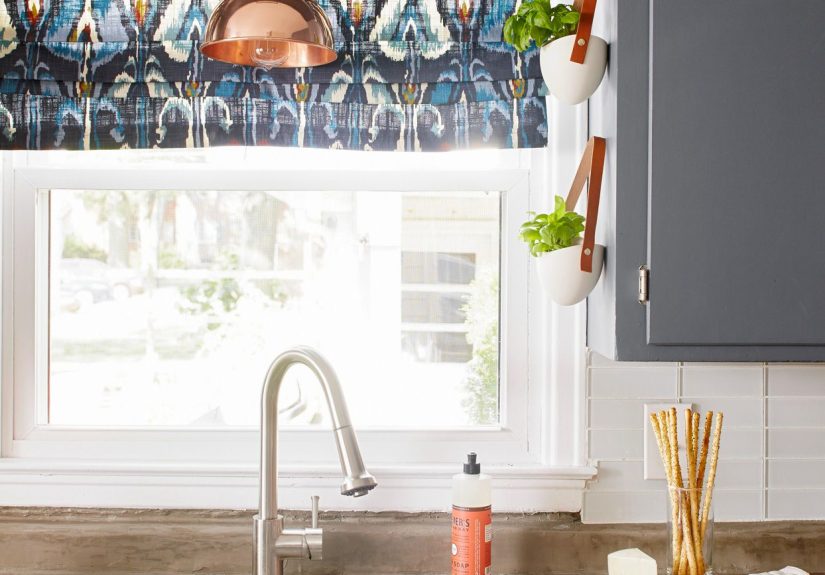
Roman shades offer a tailored look that feels more finished than a simple curtain panel. A DIY no-sew Roman shade can be made with fabric, fusible bonding tape, dowels, rings, and a basic shade kit. For a simpler version, some DIYers attach fabric to an existing mini blind frame after removing most of the slats.
Choose a medium-weight fabric that holds its shape. Patterns like stripes, small florals, block prints, or subtle geometrics can turn a plain kitchen into something with personality. Roman shades are excellent for blocking direct sun because they cover the entire window when lowered while still folding neatly when raised.
3. Bamboo or Woven Wood Shades
Bamboo and woven wood shades add texture, warmth, and a relaxed natural look. They are especially beautiful in white kitchens, coastal kitchens, farmhouse kitchens, and modern organic spaces. Because woven shades can filter light rather than fully block it, consider adding a privacy or light-filtering liner if the window gets strong sun.
For a DIY-friendly project, buy ready-made woven shades and cut them to size only if the product allows trimming. Another easy trick is to mount them outside the window frame. An outside mount can hide old trim, make a small window appear larger, and reduce light gaps along the sides.
4. Peel-and-Stick Frosted Window Film
Window film is the hero for renters, small budgets, and anyone who wants privacy without fabric. Frosted, reeded-glass, rice-paper, or geometric films can be applied directly to clean glass using water, a squeegee, and patience. It is not glamorous work, but neither is squinting at your cereal every morning.
Privacy film is best for windows where you do not need to open and close a covering daily. It diffuses harsh light, softens glare, and keeps the window visually clean. Use it on lower panes, sidelights, or full glass panels. For kitchen style, reeded or fluted designs feel current and architectural.
5. Cordless Roller Shades
Roller shades are simple, clean, and extremely practical. They disappear when rolled up and provide full coverage when lowered. In kitchens, they work well because they do not collect as much dust and grease as heavy drapes.
Look for cordless roller shades in light-filtering, solar, or room-darkening fabrics. Solar roller shades are especially helpful for glare because they reduce brightness while preserving some outward visibility. White or linen-look roller shades create a minimal style, while patterned versions can add a cheerful design note without overwhelming the room.
6. DIY Fabric Valance
A valance does not block much sun by itself, but it adds style and hides hardware when paired with blinds or shades. It is a great DIY kitchen window treatment when you already have a functional shade but the top of the window looks unfinished.
You can make a simple box valance with plywood, batting, fabric, and a staple gun. For a softer version, sew or hem a short fabric panel and hang it from a small rod. Valances work well in traditional, cottage, and farmhouse kitchens, especially when made with stripes, checks, or floral prints.
7. Half-Window Roller Shade
A half-window shade is a clever option for kitchens that need privacy at eye level but still want sunlight from the upper pane. Instead of covering the whole window, mount a roller shade or fabric panel to cover only the lower portion.
This treatment works beautifully for windows facing a sidewalk or neighbor’s house. It keeps the room bright while blocking direct views. Use a neutral fabric if you want a modern look, or choose a subtle pattern for a softer cottage feel.
8. DIY Shutters
Shutters are classic, sturdy, and excellent at controlling light. While custom shutters can be expensive, a simple DIY version can be made from lightweight wood boards or purchased unfinished panels. Paint them the same color as your trim for a built-in look, or use a contrasting color for a cheerful accent.
Shutters are a smart choice near sinks because they are easier to wipe clean than fabric. Café-style shutters that cover only the lower half of the window are especially practical in kitchens. They block low-angle sun and protect privacy while leaving the top of the window open.
9. Lightweight Linen Curtain Panels
Linen and linen-look curtain panels bring softness to a kitchen without feeling too formal. They are best for larger kitchen windows, patio doors, or breakfast areas where there is enough wall space for panels to hang safely away from cooking surfaces.
For sun control, choose lined linen panels or layer them over roller shades. Hang the rod wider than the window so panels can stack outside the glass when open. This makes the window feel larger and keeps the kitchen brighter during the day.
10. DIY Tension Rod Curtain
The tension rod curtain is the easiest DIY kitchen window treatment on the list. No drill, no drama, no “where is the stud?” debate. Place a tension rod inside the window frame and hang a hemmed fabric panel with clip rings or a rod pocket.
This is ideal for renters or anyone who likes to change décor seasonally. Use washable cotton in spring, breezy linen in summer, warm plaid in fall, and maybe something festive in December if your kitchen enjoys wearing a holiday sweater.
11. Layered Blinds and Curtains
Layering is one of the best ways to combine function and style. A blind or shade handles sun control, while a curtain or valance adds softness. For example, pair bamboo shades with white café curtains, or use a simple roller shade beneath patterned side panels.
This approach is especially useful for west-facing kitchen windows. During the day, lower the shade to reduce glare. In the evening, pull the curtains for privacy. The result looks more custom than either treatment alone.
12. Patterned Fabric Panels
If your kitchen is mostly white, gray, or wood-toned, patterned panels can wake it up fast. Try block prints, small-scale florals, classic stripes, gingham, or modern geometric designs. The key is scale. A tiny pattern can look busy from across the room, while a very large pattern may feel overwhelming on a small window.
Use patterned panels where they will not be splashed constantly. Breakfast nooks and windows away from the stove are ideal. If the fabric is washable, even better. Kitchens are not gentle environments, and marinara sauce has ambition.
13. DIY Cornice Board
A cornice board is a structured top treatment that gives a window architectural polish. It is similar to a valance but usually cleaner and more tailored. You can build one from plywood or foam board, wrap it with batting and fabric, then mount it above the window.
A cornice is especially useful when you want to hide the hardware for a roller shade or blind. It can also make a small window feel taller when mounted several inches above the frame. Choose a fabric that coordinates with seat cushions, cabinet colors, or kitchen towels for a pulled-together look.
14. Washable Faux Wood Blinds
Faux wood blinds are practical for kitchens because they resist moisture better than real wood and are easy to wipe clean. They offer strong light control because the slats can tilt throughout the day as the sun moves.
For a DIY update, replace older corded blinds with cordless faux wood blinds. White blinds blend with trim and cabinets, while warm wood tones add contrast. Measure carefully before buying, especially if you want an inside mount. A snug fit looks custom; a bad fit looks like the window is wearing borrowed pants.
15. DIY Stenciled Roller Shade
A plain roller shade can become a custom-looking feature with paint and a stencil. Choose a light-filtering shade in a solid color, then add a border, botanical pattern, or small repeating motif using fabric-safe paint.
This project works best when the design is simple. Too much paint can stiffen the shade or interfere with rolling. Test the paint on a hidden area first, and keep the pattern aligned by marking light pencil guides. The result is affordable, personal, and much less risky than painting your cabinets lime green at midnight.
16. Indoor Awning-Style Fabric Shade
An indoor awning-style shade adds vintage charm and blocks sun from the top of the window. It works especially well over a sink or breakfast nook. You can create the look with a short fabric panel mounted on a small rod at the top and secured slightly away from the wall with side brackets or decorative hooks.
Use striped canvas, ticking fabric, or outdoor-rated fabric for structure. This style does not fully cover the window, so it is best for reducing overhead glare rather than providing complete privacy. It adds personality and a café-like mood, which is always welcome unless your kitchen already has a line of people asking for oat milk lattes.
How to Choose the Best DIY Kitchen Window Treatment
Match the Treatment to the Sun Problem
If the problem is glare, solar roller shades, lined Roman shades, or faux wood blinds are strong choices. If the problem is heat, cellular shades and layered treatments can help make the window more comfortable. If privacy is the issue, café curtains, shutters, and frosted film are excellent options.
Choose Kitchen-Friendly Materials
Kitchens create steam, grease, and splashes, so materials should be washable or wipeable. Cotton, linen blends, polyester blends, faux wood, vinyl, and treated bamboo are practical choices. Avoid heavy, dry-clean-only fabrics near sinks or stoves unless you enjoy creating chores for your future self.
Use Cordless Designs When Possible
Cordless window coverings look cleaner and are safer in homes where children or pets may be present. They also feel more modern and reduce visual clutter around the window. If you are replacing older blinds, cordless versions are a worthwhile upgrade.
Think About Mounting Style
Inside mounts look crisp and let trim show. Outside mounts block more light around the edges and can make windows appear larger. If your window frame is shallow, uneven, or not particularly attractive, an outside mount is often more forgiving.
DIY Installation Tips for a Better Finish
Measure twice, then measure again after coffee. For inside mounts, measure the width at the top, middle, and bottom of the frame because windows are not always perfectly square. Use the narrowest measurement. For outside mounts, add extra width on both sides to improve privacy and light control.
Keep fabric away from open flames, stove burners, and high-splatter areas. Use washable fabrics when possible, and prewash cotton or linen before hemming to prevent surprise shrinkage. If you are hanging curtains over a sink, keep them short enough that they do not touch the faucet or counter.
Hardware matters more than people think. A flimsy rod can make even nice fabric look temporary. Choose hardware that matches your kitchen finishes, such as matte black for modern spaces, brass for warm traditional kitchens, or brushed nickel for a clean transitional look.
of Real-Life Experience: What Actually Works in a Busy Kitchen
After living with different kitchen window treatments, the biggest lesson is simple: the prettiest option is not always the one you will love six months later. Kitchens are active rooms. Steam rises, oil travels, fingerprints appear from nowhere, and someone will eventually splash dishwater in a direction that seems physically impossible. A good kitchen window treatment has to survive real life, not just look charming in a photo.
Café curtains are one of the most satisfying DIY options because they offer instant charm and are easy to remove for washing. They are especially useful when the kitchen faces a neighbor’s window or a street. The upper glass stays open, so the room still feels bright, but the lower half gives enough privacy to make morning coffee without feeling like the star of an accidental neighborhood documentary. The trick is choosing fabric with enough weight to hang nicely. Very thin fabric can look limp, while heavy fabric may block too much light.
Roman shades are beautiful, but they need careful fabric selection. A crisp cotton or linen blend works better than anything too stretchy or slippery. If the shade is above a sink, a washable or stain-resistant fabric is worth the extra effort. Patterned Roman shades are great for kitchens because they add design without taking up wall space. A small blue stripe, green botanical print, or warm neutral check can make the kitchen feel decorated even if the counters are holding yesterday’s mail and one lonely banana.
For intense afternoon sun, roller shades are hard to beat. They are not the most romantic choice, but they are practical, clean, and easy to operate. A light-filtering roller shade can soften glare while keeping the kitchen usable. In a hot kitchen, this matters. Nobody wants to make dinner while being personally attacked by the sunset. If the room feels too plain with roller shades alone, add a fabric valance or side panels. That combination gives the function of a shade and the warmth of fabric.
Window film is another underrated winner. It is affordable, easy to clean, and perfect for privacy. The most important part is installation. Clean the glass thoroughly, use enough water during application, and push bubbles slowly toward the edges. Rushing the job almost guarantees little trapped bubbles that will stare at you every time you wash dishes. Frosted film looks calm and simple, while reeded-glass film can make a basic window look more architectural.
One mistake people often make is choosing a treatment before watching the sun for a full day. Morning light is different from afternoon light. A window that seems harmless at 9 a.m. may become a laser beam at 4 p.m. Spend one day noticing when the glare hits, where privacy is needed, and whether the window is near water or heat. That small observation step helps you choose the right solution the first time.
The best DIY kitchen window treatment is the one that solves a real problem while making the room feel more like you. Maybe that means cheerful café curtains, simple bamboo shades, sleek roller shades, or a layered look with blinds and fabric. Whatever you choose, keep it washable, safe, properly measured, and suited to the way your kitchen actually works. Style is wonderful, but in the kitchen, style that can be wiped clean deserves a standing ovation.
Conclusion
DIY kitchen window treatments can completely change how your kitchen looks and feels. The right choice can block harsh sunlight, reduce glare, protect finishes, improve privacy, and add personality without a major renovation. Café curtains bring charm, Roman shades add polish, woven shades introduce texture, roller shades control sun, shutters feel classic, and window film offers privacy with almost no visual clutter.
Start with the problem you need to solve, then choose the style that fits your kitchen. For strong sun, look to lined shades, solar rollers, faux wood blinds, or layered treatments. For privacy, try café curtains, shutters, or frosted film. For pure style, add a valance, cornice, patterned shade, or fabric panel. With a few careful measurements and smart material choices, your kitchen window can go from “too bright and bare” to “sun-filtered, stylish, and ready for its close-up.”
Note: This article is original, written for web publication, and based on practical home design, safety, and energy-efficiency principles. No source links or unnecessary citation placeholders are included in the HTML content.