Table of Contents >> Show >> Hide
- What Is Nature Learning in Elementary School?
- Why All-Season Nature Learning Matters
- Spring Nature Learning: Growth, Renewal, and Muddy Shoes
- Summer Nature Learning: Heat, Habitats, and Outdoor Exploration
- Fall Nature Learning: Change, Harvest, and Colorful Curiosity
- Winter Nature Learning: Quiet Science in the Cold
- How Teachers Can Plan Nature Learning Across the Year
- Nature Learning Across Subjects
- Making Nature Learning Inclusive
- Common Challenges and Practical Solutions
- Experience Section: Real-Life Nature Learning Moments in Elementary School
- Conclusion
Nature learning in elementary school is not just “going outside because the classroom got too noisy.” It is a powerful, year-round teaching approach that turns leaves, clouds, puddles, seeds, birds, snow, mud, shadows, and even one very suspicious-looking worm into living lesson materials. When students learn from nature in all seasons, science becomes touchable, math becomes measurable, writing becomes more vivid, and curiosity gets a much-needed pair of sneakers.
For elementary students, the natural world offers something a worksheet cannot: surprise. A child may forget a vocabulary list, but they are unlikely to forget the day they measured a tree shadow, watched ants cooperate like tiny construction workers, or discovered that winter trees are not “dead,” just quietly busy. Seasonal outdoor learning helps children observe change over time, build environmental awareness, strengthen problem-solving skills, and connect academic content to real life.
The best part? Nature learning does not require a mountain trail, a national park, or a schoolyard that looks like a postcard. A sidewalk crack with a determined plant growing through it can launch a science discussion. A rainy window can inspire poetry. A school garden, playground tree, patch of grass, or courtyard can become a four-season classroom if teachers approach it with intention.
What Is Nature Learning in Elementary School?
Nature learning is an educational approach that uses the natural environment as a teaching partner. Students learn by observing, asking questions, collecting data, drawing, writing, comparing, building, testing ideas, and reflecting on what they notice outdoors. It can happen in a forest, garden, playground, schoolyard, local park, or even indoors using natural materials such as leaves, stones, seeds, pinecones, feathers, and soil samples.
In elementary school, nature learning works especially well because young children are naturally curious. They want to know why worms come out after rain, why leaves change color, why some birds leave in winter, and why mud is apparently more interesting than any expensive classroom supply ever invented. A well-planned outdoor lesson channels that curiosity into academic growth.
Nature Learning Is More Than Recess
Recess is important for movement, play, and social development, but nature learning has a different purpose. It connects outdoor experiences to learning goals. Students may still move, explore, and laugh, but they are also practicing observation, classification, measurement, reading, writing, collaboration, and scientific thinking.
For example, instead of simply playing near a tree, students might adopt that tree for the year. They can measure its trunk, sketch its leaves, record seasonal changes, write descriptive paragraphs, calculate its shadow length, observe wildlife around it, and discuss how it contributes to the school ecosystem. Suddenly, one tree becomes a science lab, writing prompt, art subject, math station, and quiet mentor with bark.
Why All-Season Nature Learning Matters
Many schools take students outside in spring and fall, when the weather is friendly and the bugs have not fully organized their summer campaign. But nature learning becomes far richer when it happens across all four seasons. Seasonal learning helps children understand cycles, patterns, adaptation, and change. It also teaches patience. A seed does not become a sunflower because a student checks it every twelve seconds, although many students will certainly try.
All-season nature learning supports academic, physical, social, and emotional development. Outdoor lessons can improve student engagement, help children focus, encourage physical activity, and create memorable learning experiences. Nature-based instruction also gives students a stronger sense of place. They begin to see their schoolyard not as empty space between buildings, but as a living system filled with clues.
It Builds Better Observers
Observation is one of the most important skills in elementary education. Students who regularly observe nature learn to slow down and notice details. They compare leaf shapes, listen for bird calls, track weather patterns, watch insects, and notice how shadows move during the day. These habits support science learning, but they also improve writing, art, and critical thinking.
It Makes Abstract Lessons Concrete
Children understand concepts more deeply when they can see and touch examples. Weather, erosion, habitats, life cycles, measurement, fractions, patterns, cause and effect, and interdependence all become easier to grasp outdoors. A lesson about evaporation becomes clearer when students compare puddles in sun and shade. A lesson about symmetry becomes more exciting when students examine leaves, flowers, and butterfly wings.
It Encourages Environmental Responsibility
Students are more likely to care about nature when they know it personally. A child who has watched a seed sprout, cared for a pollinator garden, or tracked the same tree through winter may better understand why clean water, healthy soil, and wildlife habitats matter. Environmental responsibility grows from connection, not lectures that sound like a disappointed recycling bin.
Spring Nature Learning: Growth, Renewal, and Muddy Shoes
Spring is a natural starting point for outdoor learning. Plants emerge, birds return, insects become active, and the schoolyard suddenly looks like it has had a strong cup of coffee. Students can investigate growth, weather changes, plant life cycles, pollination, and animal behavior.
Spring Science Activities
One simple activity is a “signs of spring” observation walk. Students look for buds, new leaves, nests, insects, worms, puddles, and changes in temperature. They can record findings in a nature journal and revisit the same route each week. Over time, they see that spring does not arrive all at once. It tiptoes in, then suddenly throws flowers everywhere.
Another powerful spring lesson is seed starting. Students plant fast-growing seeds such as beans, radishes, lettuce, or sunflowers. They measure growth, compare plants in different light conditions, write predictions, and discuss what plants need to survive. If the school has a garden, students can transfer seedlings outdoors and observe how real weather affects growth.
Spring Math and Writing Connections
Spring offers endless math opportunities. Students can graph daily temperatures, measure rainfall, count flower petals, compare seedling heights, and calculate the growth rate of plants. For writing, they can create “spring field reports,” poems about rain, or persuasive letters explaining why their class should protect a garden bed from being trampled by enthusiastic feet.
Summer Nature Learning: Heat, Habitats, and Outdoor Exploration
Many elementary schools are not in session for the full summer, but summer learning can still happen through school programs, take-home activities, reading challenges, garden clubs, and family nature assignments. Summer is ideal for studying insects, soil, water use, shade, plant maturity, and ecosystems at their busiest.
Summer Learning Ideas for Schools and Families
Teachers can send students home with a simple summer nature bingo card. Squares might include “watch a cloud for five minutes,” “find three kinds of leaves,” “draw an insect,” “listen for birds,” “observe the moon,” or “notice where shade falls in the afternoon.” These activities keep learning active without turning summer into Homework: The Sequel.
For schools with gardens, summer maintenance can become a community project. Families, staff, and volunteers can water plants, harvest vegetables, and document changes with photos. When students return in fall, they can compare what the garden looked like before and after summer break.
Summer Safety and Comfort
Summer outdoor learning should include practical safety habits. Students need water, shade, sunscreen when appropriate, and clear expectations. Outdoor lessons do not need to be long to be meaningful. A ten-minute observation in a shady spot can be more effective than a long, overheated lesson where everyone slowly turns into a wilted lettuce leaf.
Fall Nature Learning: Change, Harvest, and Colorful Curiosity
Fall may be the superstar season of elementary nature learning. Leaves change color, seeds scatter, animals prepare for winter, and the air becomes crisp enough to make students suddenly interested in walking in lines. Fall is excellent for lessons about adaptation, decomposition, weather, migration, plant structures, and seasonal patterns.
Fall Science Activities
A leaf investigation is a classic for a reason. Students collect fallen leaves, sort them by shape, size, color, or texture, and identify patterns. They can create leaf rubbings, compare margins, measure length and width, and discuss why leaves fall from many deciduous trees. This lesson easily connects to vocabulary words such as classify, compare, observe, pigment, decay, and cycle.
Another engaging activity is a decomposition study. Students place leaves in a small outdoor observation area and check them weekly. They record how the leaves change and discuss the role of fungi, insects, worms, moisture, and soil organisms. It is a slightly messy lesson, but elementary students tend to respect science more when it comes with a tiny bit of “eww.”
Fall Literacy and Art Connections
Fall is perfect for descriptive writing. Students can write sensory paragraphs about the sound of crunching leaves, the smell of damp soil, or the colors of the schoolyard. They can also create seasonal nature art using fallen leaves, twigs, acorns, and seed pods. The goal is not to produce museum-ready masterpieces. The goal is to help students look closely and express what they notice.
Winter Nature Learning: Quiet Science in the Cold
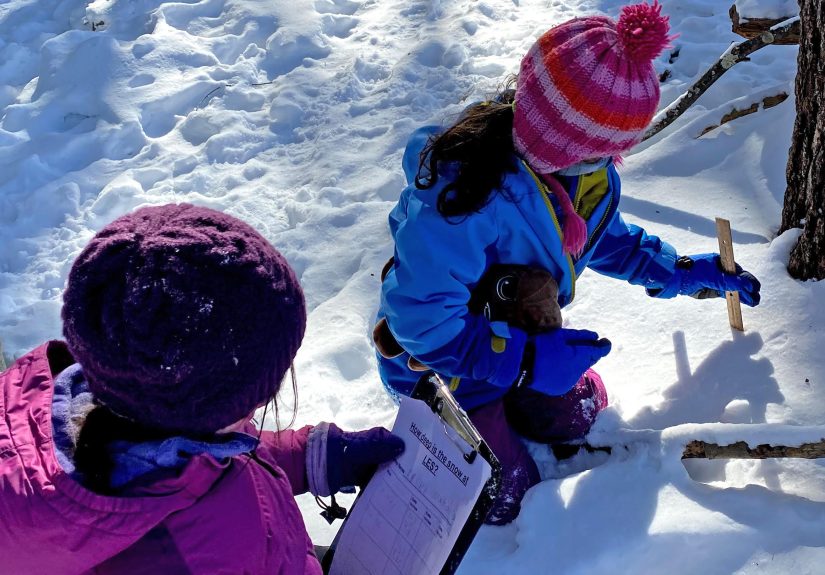
Winter is often treated like the off-season for outdoor learning, but it may be the most underrated classroom of all. In winter, students can observe animal tracks, evergreen plants, bare tree structures, frost, ice, clouds, shadows, wind, and survival adaptations. Nature is not gone; it is simply wearing fewer accessories.
Winter Science Activities
Students can study trees in winter by comparing bark texture, branch patterns, buds, and evergreen needles. Without leaves, tree shapes become easier to see. Students can sketch silhouettes, describe bark, and learn that many plants are dormant rather than dead.
Another winter activity is a temperature investigation. Students measure temperatures in sun and shade, near buildings and open areas, or on different surfaces such as grass, pavement, and soil. They can discuss why some places feel warmer and how animals might use sheltered spaces to survive.
Indoor Nature Learning During Harsh Weather
When weather is unsafe, nature learning can move indoors. Students can examine pinecones, feathers, rocks, seed pods, shells, soil samples, or photographs from previous outdoor observations. They can maintain classroom plants, build bird observation charts from window views, or analyze weather data. Indoor nature learning is not a failure; it is simply nature learning with fewer frozen fingers.
How Teachers Can Plan Nature Learning Across the Year
Successful nature learning does not require teachers to redesign the entire curriculum. It works best when it supports existing standards and routines. The key is to start small, repeat often, and build a predictable structure.
Use a Nature Journal
A nature journal is one of the most useful tools for all-season learning. Students can draw, label, measure, write questions, record weather, create charts, and reflect on changes. Over time, the journal becomes evidence of learning. It also shows students that observation improves with practice.
Adopt a Place
Teachers can choose one outdoor spot for repeated visits: a tree, garden bed, fence line, courtyard, or patch of grass. Students visit the same place in different seasons and record what changes. This routine helps them understand patterns over time and reduces the chaos of exploring a new area every lesson.
Build Clear Outdoor Expectations
Outdoor learning needs structure. Students should know where to stand, what tools to use, how to handle living things, when to talk, and how to respond to safety signals. A simple rule works well: observe gently, move carefully, and leave nature better than you found it.
Nature Learning Across Subjects
Nature learning is often placed under science, but it belongs across the curriculum. The schoolyard can support reading, writing, math, art, social studies, health, and social-emotional learning.
Science
Students can study life cycles, habitats, weather, soil, erosion, plant needs, food chains, pollination, and animal behavior. Outdoor investigations help students practice asking questions, collecting data, and forming explanations.
Math
Nature is full of numbers. Students can measure plant growth, graph weather, count birds, compare leaf sizes, calculate perimeter for garden beds, estimate tree height, and identify patterns. Math becomes less mysterious when it is attached to real objects.
Language Arts
Outdoor experiences improve writing because students have something real to describe. They can write poems, field notes, stories, opinion pieces, and informational paragraphs. A student who struggles to write about “a nice day” may suddenly produce three sentences about a beetle moving like it is late for a meeting.
Art
Students can sketch plants, create seasonal color palettes, make temporary land art, study texture, and practice close observation. Nature art teaches students that beauty is not always neat or symmetrical. Sometimes it is a curled leaf with bite marks and personality.
Social-Emotional Learning
Nature learning can support calm, cooperation, patience, and confidence. Students work together to solve problems, share tools, make observations, and care for living things. Outdoor routines can also give children a healthy break from screens and indoor overstimulation.
Making Nature Learning Inclusive
Every student should be able to participate in nature learning. Teachers can offer multiple ways to engage: looking, listening, touching safe materials, drawing, measuring, photographing, writing, or discussing. Students with mobility needs can observe from accessible paths, use raised garden beds, or work with portable nature trays indoors.
Inclusive nature learning also means recognizing that not all students have the same comfort level outdoors. Some children love bugs. Others react to a ladybug as if it has filed a personal complaint. Teachers can build confidence slowly by setting clear boundaries and offering choices.
Common Challenges and Practical Solutions
“We Do Not Have a Forest.”
You do not need one. Use what you have. A tree, sidewalk, school garden, drainage area, planter box, or sky view can support meaningful learning. Urban schoolyards are full of nature if students learn how to look closely.
“Outdoor Lessons Feel Uncontrolled.”
Begin with short lessons. Use clear signals, defined boundaries, and simple tools. Repeat the same routine until students know what to expect. Outdoor learning becomes smoother when it is normal, not a rare event that makes everyone act like they have been released into the wild forever.
“The Weather Is Not Perfect.”
Perfect weather is not required. Safe weather is. Students can learn in cool, cloudy, windy, or damp conditions with proper clothing and planning. When conditions are unsafe, bring nature indoors through samples, photos, journals, and weather data.
Experience Section: Real-Life Nature Learning Moments in Elementary School
One of the most memorable experiences in all-season nature learning happens when students adopt a single tree for the school year. At first, many children see the tree as just “the tree near the playground.” In September, they sketch its leaves, measure its trunk with string, and write down what animals or insects they notice nearby. Some students focus carefully. Others mostly announce that ants are “everywhere,” which is not scientifically precise but does show engagement.
By late fall, the same students return and notice changes. The leaves are different colors. Some have fallen. The tree casts a longer shadow. The ground feels cooler. A few students begin asking better questions: Why did this tree lose leaves before that one? Are the buds already there for spring? What happens to all the leaves after they fall? These questions show a shift from casual looking to real observation.
In winter, the adopted tree becomes even more interesting. Without leaves, students see the structure of branches. They notice bark patterns, broken twigs, nests, or signs of animals. Some are surprised to learn that the tree is still alive. A teacher might invite students to place their hands near the bark, look for buds, and compare evergreen and deciduous plants. The lesson is quiet, but powerful. Students begin to understand that nature is active even when it appears still.
Spring brings the big payoff. Students return to find buds opening, insects moving, birds visiting, and new growth appearing. Because they observed the tree all year, the changes feel personal. The tree is no longer background scenery. It is a familiar living thing with a story. Students can use their journal entries to create a year-long report, timeline, poem, or illustrated book about seasonal change.
Another meaningful experience comes from school gardens. When elementary students plant seeds, they learn quickly that nature does not operate on a “click to refresh” schedule. They water, wait, check, worry, cheer, and occasionally overwater with the enthusiasm of tiny firefighters. Through gardening, students learn responsibility, patience, measurement, nutrition, weather awareness, and teamwork. A lettuce leaf grown by the class may become more exciting than a cafeteria dessert, at least for six proud minutes.
Nature walks also create unforgettable learning moments. A five-minute walk after rain can lead to observations about worms, puddles, clouds, water flow, soil texture, and reflections. A windy day can become a lesson on seed dispersal and air movement. A cold morning can inspire questions about frost. These small experiences build a habit of noticing. Over time, students begin bringing observations back to class without being asked. They report bird sightings, strange leaves, mushrooms, tracks, and weather changes like junior field scientists with backpacks.
The greatest value of these experiences is not that every student becomes a botanist, meteorologist, or wildlife biologist. The value is that students learn to pay attention. They discover that their local environment is worth studying. They practice curiosity, patience, care, and evidence-based thinking. In a world where children are often rushed from screen to screen and task to task, all-season nature learning gives them something rare: time to notice the living world and their place in it.
Conclusion
Nature learning in all seasons in elementary school transforms ordinary outdoor spaces into meaningful classrooms. Spring teaches growth, summer encourages exploration, fall reveals change, and winter proves that quiet does not mean empty. With simple routines like nature journals, adopted places, school gardens, weather observations, and seasonal walks, teachers can connect academic standards to real-world experiences students remember.
The goal is not to make every lesson outdoors. The goal is to make nature a regular part of learning. When children observe closely, ask better questions, measure real things, care for living systems, and write from experience, education becomes deeper and more joyful. Plus, any lesson that can make a third grader voluntarily discuss soil organisms deserves a standing ovation.
Note: This article is original, web-ready educational content based on established outdoor learning, environmental education, school garden, child development, and physical activity research from reputable U.S. organizations and education resources.