Table of Contents >> Show >> Hide
- What Makes an Outdoor Space “Work” (Even When It’s Not Huge)
- 17 Outdoor Living Spaces to Copy (and Make Your Own)
- 1. The Outdoor Living Room That Feels Like Indoors (But With Better Ventilation)
- 2. A Bistro Nook for Morning Coffee (or Quiet Existential Dread)
- 3. The Outdoor Dining Room for Real Meals (Not Just Chips)
- 4. The Grill Station That Doesn’t Feel Like an Afterthought
- 5. A Real Outdoor Kitchen (Scaled to Your Life and Budget)
- 6. The Fire Pit Conversation Circle
- 7. The Covered Porch Retreat (The MVP of “It Might Rain”)
- 8. The Pergola Lounge (A “Ceiling” Without the Commitment)
- 9. The Shade Sail Chill Zone (Modern, Affordable, and Surprisingly Dramatic)
- 10. The Privacy Patio (Because “Hello, Neighbor” Is Not Always a Joy)
- 11. The Multi-Level Deck That Creates Natural Zones
- 12. The Backyard Movie Night Setup (A Crowd-Pleaser with Minimal Construction)
- 13. The Poolside Hangout (Even If You Don’t Have a Pool)
- 14. The Hot Tub Hideaway (Spa Energy, Not “Parking Lot” Energy)
- 15. The Edible Patio (Herbs, Containers, and “I Grew This” Bragging Rights)
- 16. The Courtyard-Style Patio (Small Space, Big “Secret Garden” Feel)
- 17. The “Front Yard Patio” (Yes, Really)
- Quick Updates That Make Any Patio, Deck, or Yard Feel Finished
- Safety and Planning Notes (Unsexy, but Worth It)
- Conclusion: Build the Outdoor Space You’ll Use, Not the One That “Should” Exist
- Real-World Experiences: What It’s Actually Like Living With an Outdoor “Room” (Extra Insights)
Your outdoor space doesn’t need to be a “perfect backyard.” It just needs to be a place you actually use.
The secret is treating a patio, deck, or patch of yard like an extra roomone that happens to come with fresh air,
bird soundtrack, and that one squirrel who believes your bird feeder is his.
Below are 17 outdoor living spaces that pull their weightwhether you’re working with a tiny balcony,
a basic builder deck, or a yard that currently screams “I own a lawn mower and that’s it.”
Each idea includes practical upgrades you can borrow without rebuilding your whole life.
What Makes an Outdoor Space “Work” (Even When It’s Not Huge)
Before we jump into the inspiration, here’s the quick reality check: the outdoor spaces people love most usually nail
the same fundamentals. If you get these right, almost any stylemodern, cottage, coastal, “I bought it on sale”looks intentional.
- A clear purpose: dining, lounging, cooking, play, or all of the above in zones.
- Comfort first: real seating, shade, and soft touches (pillows, rugs, throws).
- Lighting layers: task + ambient + safety lighting so you’re not eating dinner in the dark like a raccoon.
- Privacy and boundaries: planters, screens, curtains, or clever landscaping.
- Weather smarts: materials that can handle sun, rain, and the occasional spilled lemonade.
- Easy maintenance: storage for cushions, a hose path, and surfaces you can clean without therapy.
17 Outdoor Living Spaces to Copy (and Make Your Own)
1. The Outdoor Living Room That Feels Like Indoors (But With Better Ventilation)
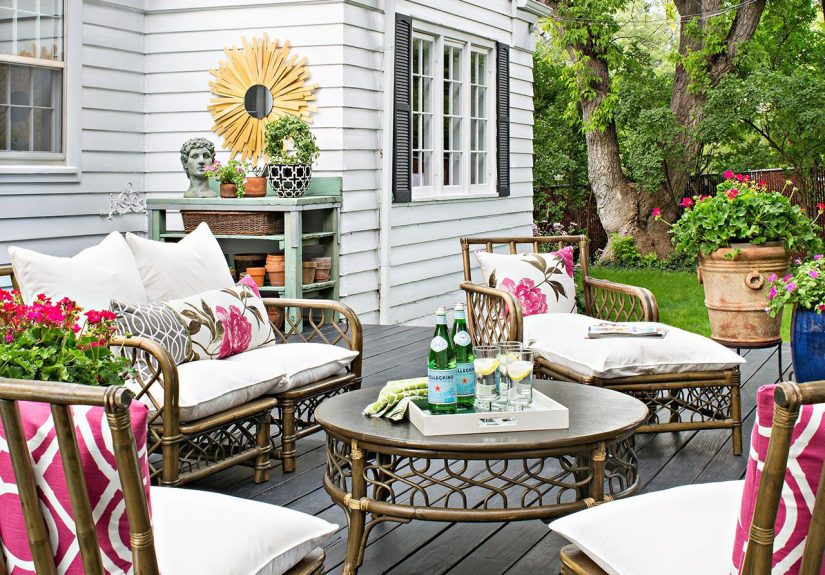
This is the “sofa-and-coffee-table” setup that convinces everyone to stay outside longer. Start with a weather-friendly sectional
or deep lounge chairs, then anchor it with an outdoor rug. Add a low table (or two) so people don’t balance drinks on knees like it’s a circus act.
- Upgrade move: Add a rug + two lanterns (or rechargeable lamps) for instant “room” energy.
- Design tip: Repeat your indoor color palette outside for a seamless indoor-outdoor vibe.
2. A Bistro Nook for Morning Coffee (or Quiet Existential Dread)
A small table and two chairs can transform a corner of a deck, porch, or balcony. Choose slim, foldable furniture if space is tight.
The win here is habit-building: if it’s easy to sit down, you’ll actually go outside.
- Upgrade move: Hang a small plant shelf or add tall planters to frame the nook.
- Bonus: Perfect for apartment patios and “we only have six square feet” situations.
3. The Outdoor Dining Room for Real Meals (Not Just Chips)
A dining zone works best when it’s close to the kitchen door and has lighting overhead or nearby.
If you can, place it on a flat, hard surface (deck boards, pavers, concrete) so chairs don’t wobble like a baby giraffe.
- Upgrade move: Add a shade umbrella or pergola element so lunch doesn’t become a sunburn event.
- Easy style: Outdoor table runner + unbreakable glassware = “host energy” with minimal effort.
4. The Grill Station That Doesn’t Feel Like an Afterthought
Even if you don’t build a full outdoor kitchen, you can make grilling feel polished.
Create a defined area with a grill mat, a small prep cart, and a weatherproof storage cabinet for tools.
Add task lighting so you’re not guessing whether the chicken is “done” or “a medical decision.”
- Upgrade move: Use a rolling cart as a prep zone (and a place to park trays).
- Safety note: Keep grills and open flames away from walls, railings, and anything that burns.
5. A Real Outdoor Kitchen (Scaled to Your Life and Budget)
Outdoor kitchens range from “grill + counter” to “I could host a cooking show here.”
The smartest approach is building in functional zones: prep, cook, serve, and clean.
Prioritize durable materials, weather protection, and a layout that keeps traffic flowing.
- Upgrade move: Start with one countertop run and add components later (sink, fridge, storage).
- Pro tip: Put the kitchen near where people gather so the cook isn’t exiled like a yard goblin.
6. The Fire Pit Conversation Circle
Fire pits create an instant focal point, which is design-speak for “people stop wandering and actually sit down.”
Use comfy chairs arranged in a circle, plus a small side table or two for snacks.
Place the fire feature on a nonflammable base and follow local rules and safety guidance.
- Upgrade move: Add a spark screen and keep water or an extinguisher nearby.
- Comfort hack: Store a basket of blankets in a waterproof deck box.
7. The Covered Porch Retreat (The MVP of “It Might Rain”)
A covered porch is basically cheat mode for outdoor livingshade, shelter, and a natural spot for ceiling fans or pendants.
Lean into it with comfortable seating, layered lighting, and indoor-style accessories that can handle humidity.
- Upgrade move: Swap a basic light fixture for a statement lantern-style pendant.
- Style trick: Add a small outdoor curtain panel for softness and privacy.
8. The Pergola Lounge (A “Ceiling” Without the Commitment)
Pergolas define space and add architectural interest while still feeling airy.
Add climbing plants, fabric panels, or a retractable canopy if you want more shade.
Underneath, create a lounge zone or dining zonepergolas play well with either.
- Upgrade move: Install string lights or a subtle LED strip for evening glow.
- Design tip: Repeat pergola materials (wood tones, metal finishes) in furniture frames for cohesion.
9. The Shade Sail Chill Zone (Modern, Affordable, and Surprisingly Dramatic)
Shade sails are a great option when a pergola feels too big or too pricey.
They’re especially useful over patios, kid play areas, or lounge seating on open decks.
The look is crisp and contemporarylike your yard got a minimalist haircut.
- Upgrade move: Use two overlapping sails for better coverage and a layered design.
- Practical note: Pay attention to water runoff and secure anchoring points.
10. The Privacy Patio (Because “Hello, Neighbor” Is Not Always a Joy)
Privacy changes everything. A space feels more relaxing when you’re not accidentally in a staring contest.
Use vertical solutions: privacy walls, trellises, tall planters, outdoor curtains, or a living screen of shrubs.
- Upgrade move: Build (or buy) a simple slatted screen and add planter boxes at the base.
- Small-space win: Go vertical with climbing vines or wall-mounted planters.
11. The Multi-Level Deck That Creates Natural Zones
If your property slope is already doing the most, a multi-level deck can turn that into a feature.
Use different levels for different activities: dining up top, lounge in the middle, fire pit or hot tub down low.
The height change makes zones feel intentional without needing fences or walls.
- Upgrade move: Add step lights for safety and a “fancy resort” vibe.
- Planning tip: Keep walking paths wide enough for people carrying plates (and dignity).
12. The Backyard Movie Night Setup (A Crowd-Pleaser with Minimal Construction)
You don’t need a permanent theaterjust a reliable screen (or blank wall), a projector, and comfortable seating.
Add soft lighting behind the seating area so people can find snacks without tripping.
- Upgrade move: Use outdoor floor cushions + a low table for a cozy “campfire but make it cinema” layout.
- Pro tip: Include a storage bin for cords, remotes, and bug spray (glamorous, but necessary).
13. The Poolside Hangout (Even If You Don’t Have a Pool)
The poolside look is really about a vibe: loungers, shade, small tables, and towels within reach.
You can fake it with a stock tank pool, a splash pad, or even a strong “cold beverage” strategy.
Add greenery and textured surfaces to make it feel resort-like.
- Upgrade move: Add a cabana umbrella or a pergola corner for shade.
- Material tip: Choose quick-dry cushions and outdoor fabrics that handle splashes.
14. The Hot Tub Hideaway (Spa Energy, Not “Parking Lot” Energy)
Hot tubs feel better when they’re partially enclosed and thoughtfully lit.
Use privacy screens, tall plants, or a pergola to create a cozy enclosure.
Add hooks for towels, a small stool for drinks, and slip-resistant flooring around the perimeter.
- Upgrade move: Add warm, indirect lighting (think low path lights and lanterns).
- Comfort note: Wind protection matters more than people expect.
15. The Edible Patio (Herbs, Containers, and “I Grew This” Bragging Rights)
An outdoor living space can be productive without feeling like a farm.
Use container gardens with herbs, salad greens, peppers, or dwarf citrus (climate permitting).
Place pots near the kitchen door for easy harvestingbecause if it’s inconvenient, it becomes decorative dirt.
- Upgrade move: Add a vertical herb wall or railing planters on a deck.
- Style tip: Use matching pots for cohesion, then let plants bring the color.
16. The Courtyard-Style Patio (Small Space, Big “Secret Garden” Feel)
Courtyard patios shine when you surround them with structurewalls, fencing, hedges, or trellises.
Add a central focal point like a bistro set, small fountain, or statement planter.
This setup is fantastic for townhomes, side yards, and tight urban lots.
- Upgrade move: Use layered plants: low groundcover, medium shrubs, and vertical climbers.
- Lighting tip: Add wall sconces or uplighting to highlight texture at night.
17. The “Front Yard Patio” (Yes, Really)
Outdoor living doesn’t have to hide in the backyard.
A small front patio or porch seating area can build community and add curb appeal.
Make it feel welcoming with comfortable chairs, a side table, and lighting that’s warmnot “interrogation spotlight.”
- Upgrade move: Add planters that create a soft boundary between seating and walkway.
- Practical note: Choose furniture that’s sturdy and easy to secure in windy weather.
Quick Updates That Make Any Patio, Deck, or Yard Feel Finished
Not ready for a full makeover? These smaller changes deliver big impactand they’re often weekend-friendly.
- Layered lighting: Combine string lights, path lights, and a couple of rechargeable lamps.
- Outdoor rugs: They define zones, soften hard surfaces, and make it feel like a real room.
- Portable shade: Umbrellas, curtains, or a shade sail can add comfort fast.
- Greenery at eye level: Tall planters, trellises, and hanging baskets add “wall” energy.
- Storage you’ll actually use: Deck boxes keep cushions dry and your space uncluttered.
Safety and Planning Notes (Unsexy, but Worth It)
A beautiful outdoor space should also be a safe one. Check local codes and HOA rules before building structures,
and follow fire safety guidance for grills, fire pits, and outdoor fireplaces. Keep flames away from structures and combustible materials,
and avoid using unsafe fuels or products that don’t meet recognized safety standards.
Conclusion: Build the Outdoor Space You’ll Use, Not the One That “Should” Exist
The best outdoor living spaces aren’t defined by square footage or price tagsthey’re defined by repeat use.
Start with comfort and function, add shade and lighting, then layer on style through textiles, plants, and thoughtful details.
Whether you’re upgrading a deck, refreshing a patio, or carving a hangout spot from your yard, the goal is simple:
create a place that makes you want to step outside more often (even if it’s just to eat popsicles dramatically).
Real-World Experiences: What It’s Actually Like Living With an Outdoor “Room” (Extra Insights)
Once people create an outdoor living space, the first surprise is how quickly it becomes the default hangout.
Many homeowners expect to use the patio “sometimes,” then realize it’s suddenly the best room in the house from April through October.
Meals migrate outdoors. Phone calls get longer. Even doing nothing feels more impressive when it happens under string lights.
The second surprise? Shade is not optional. The prettiest seating setup in the world still loses to direct afternoon sun.
People often say their biggest “wish we’d done it sooner” upgrade was adding a pergola, umbrella, shade sail, or even outdoor curtains.
Comfort drives usage, and shade is comfort’s best friend.
Lighting is the next lesson. Without it, outdoor life ends early. With it, the space becomes a nighttime magnet.
Homeowners tend to land on a layered approach: something overhead for sparkle, something low for safety, and something portable for flexibility.
It also turns out that warm lighting makes everyone look like they slept eight hours, which is basically a miracle.
Then comes the “where do we put stuff?” moment. Outdoor living creates outdoor clutter: cushions, citronella, kids’ toys, grill tools,
pool towels, and the mysterious extra chair that appears when family visits. The spaces that stay inviting usually include storage:
a deck box, a bench with a lid, or a small cabinet near the grill.
Wind is the underrated plot twist. People plan for sun and rain, but wind will happily redecorate your patio at 2 a.m.
Heavier furniture, secured umbrellas, and sturdy planters help. If your area is breezy, you’ll hear the phrase
“Why is my rug in the yard?” at least once.
Another common experience: once you define zones, everyone intuitively uses them the way you intended.
A rug and coffee table say “sit and talk.” A table and chairs say “eat here.” A fire pit says “tell stories and stare into flames like philosophers.”
Zoning reduces awkward wandering and makes gatherings feel effortless.
People also learn that outdoor materials matterespecially for anything that lives in full sun.
Fading, cracking, and rust are the villains of low-quality buys. The best long-term results come from weather-resistant fabrics,
durable finishes, and cushions that can dry quickly.
Finally, the biggest “aha” is that outdoor living is more about routines than renovations.
A simple bistro set can change mornings. A fire pit can change weekends. A well-lit deck can change weeknights.
When your patio, deck, or yard feels readyclean, comfortable, and easy to useyou’ll find yourself outside more often,
which is the whole point.

![18 Best Types of Charts and Graphs for Data Visualization [+ How to Choose]](https://corkopencoffee.org/wp-content/uploads/2026/05/18-best-types-of-charts-and-graphs-for-data-visualization-how-to-choose-qKM1PBYG-thumb.jpg)