Table of Contents >> Show >> Hide
- Quick Jump
- How to Choose the Right Daffodil Types
- The 17 Types of Daffodils (With Practical Examples)
- 1) Trumpet Daffodils
- 2) Large-Cupped Daffodils
- 3) Small-Cupped Daffodils
- 4) Double Daffodils
- 5) Triandrus Daffodils
- 6) Cyclamineus Daffodils
- 7) Jonquilla Daffodils (Jonquils)
- 8) Tazetta Daffodils
- 9) Poeticus Daffodils
- 10) Bulbocodium (Hoop Petticoat) Daffodils
- 11) Split-Corona Daffodils
- 12) Miscellaneous (The “Plot Twist” Hybrids)
- 13) Species & Wild Daffodils
- 14) Miniature Daffodils (Small But Mighty)
- 15) Pink-Cupped Daffodils (Yes, Pink Is Real)
- 16) Extra-Fragrant Daffodils (For People Who Actually Stop to Smell Flowers)
- 17) Best for Naturalizing (The “Plant It and Let It Multiply” Crew)
- Design Ideas That Make Daffodils Look “Designer”
- Planting & Care Basics (So They Actually Come Back)
- of Real-World Daffodil Experiences (The Stuff You Learn by Doing)
- Conclusion
Daffodils are spring’s most reliable overachievers: they pop up when the weather is still acting shady,
they glow like tiny suns, and they basically refuse to be bothered by deer. If you’ve ever looked at a
daffodil display and thought, “Okay, but which daffodil is that?”welcome to your new favorite rabbit hole.
(Don’t worry, it’s a cheerful rabbit hole with snacks.)
In gardening terms, “daffodil” is the common name for many plants in the Narcissus genus, and there are
thousands of cultivars. The good news: you don’t have to memorize them all to design an amazing spring show.
You just need a smart mix of “types”forms, bloom styles, and specialty picks that fit your yard and your vibe.
How to Choose the Right Daffodil Types
When you’re picking daffodil varieties, focus on four things: form (what the flower looks like),
bloom time (early, mid, late), height (short borders vs. tall drifts),
and purpose (cut flowers, containers, naturalizing, fragrance).
Pro tip: if you want a garden that looks “professionally designed,” don’t plant one lonely bulb type in one spot.
Plant clusters (think 7, 9, 11, or “however many bulbs fit in this hole before I lose patience”).
Mixing early, mid, and late bloomers can stretch daffodil season so your yard stays bright for weeks.
The 17 Types of Daffodils (With Practical Examples)
Many daffodils are categorized by flower form into official “divisions.” That sounds intense, but it’s basically
a fancy way of saying: “How big is the cup, and what’s the overall shape?” Below are the most useful types for
real gardensplus a few specialty categories that make planning easier.
1) Trumpet Daffodils
The classic look: one flower per stem with a long trumpet (the “cup”) that’s as long asor longer thanthe petals.
Trumpet daffodils read bold from across the yard, which is exactly what you want in early spring when everything else
is still waking up.
- Best for: big drifts, borders, cut flowers
- Try varieties like: ‘Dutch Master’, ‘Mount Hood’, ‘King Alfred’
- Style tip: pair yellow trumpets with blue muscari for instant “storybook spring.”
2) Large-Cupped Daffodils
Also usually one flower per stem, but the cup is shorter than a trumpetstill large enough to show off dramatic color
contrasts (white petals + lemon cup, yellow petals + orange rim, and so on). If you want variety without chaos,
large-cupped daffodils are your dependable middle ground.
- Best for: mixed beds, mass planting, dependable performance
- Try varieties like: ‘Ice Follies’, ‘Carlton’
- Style tip: plant them near evergreen shrubs so the flowers “pop” in photos.
3) Small-Cupped Daffodils
The cup is noticeably smaller, so the petals become the main event. This creates a softer, more elegant look
especially in whites and creams. Small-cupped daffodils are like the minimalist friend who still somehow looks
amazing in every picture.
- Best for: naturalistic gardens, cottage borders, refined color palettes
- Try varieties like: ‘Actaea’ (also famous for fragrance), ‘Barrett Browning’
- Style tip: mix with early tulips for a layered, “designer” spring bed.
4) Double Daffodils
Double daffodils have extra petals, extra cup segments, or bothso they look ruffled, fluffy, and slightly dramatic.
They’re the ruffled chips of the bulb world: nobody needs them, but everybody is happy they exist.
- Best for: statement containers, cut arrangements, focal points
- Try varieties like: ‘Tahiti’, ‘Replete’, ‘Rip van Winkle’
- Heads-up: doubles can be heavier; choose a sheltered spot if spring winds are spicy.
5) Triandrus Daffodils
Often with multiple, slightly nodding blooms per stem and petals that reflex (sweep back). Triandrus types feel
airy and gracefulperfect for gardens that lean “woodland” or “soft cottage.”
- Best for: partial shade edges, woodland borders, gentle color schemes
- Try varieties like: ‘Thalia’ (a beloved white), ‘Hawera’
- Style tip: tuck them among ferns or hostas (the leaves emerge later and cover fading foliage).
6) Cyclamineus Daffodils
These have swept-back petals that make the flower look like it’s leaning into the windon purpose. They often bloom
early, and their shape adds motion and personality to the garden.
- Best for: early color, rock gardens, front-of-border planting
- Try varieties like: ‘Jetfire’, ‘February Gold’
- Design move: plant along paths so you notice the playful silhouette up close.
7) Jonquilla Daffodils (Jonquils)
Jonquils often have multiple smaller blooms per stem and are widely loved for their sweet fragrance.
If you want daffodils that smell like “spring is officially happening,” this is your lane.
- Best for: fragrance, warmer regions, naturalized areas
- Try varieties like: ‘Sweetness’, ‘Baby Moon’
- Style tip: plant near patios or windows so the scent has a chance to show off.
8) Tazetta Daffodils
Multi-flowered clusters on a single stem are the signature here. Many tazettas are prized for scent and for indoor
“forcing” (blooming inside when winter is still doing the most). Paperwhites are the famous members of this group.
- Best for: fragrance, mild-winter climates, indoor winter blooms
- Try varieties like: paperwhite ‘Ziva’, ‘Avalanche’, ‘Geranium’
- Heads-up: some tazettas are less cold-hardy than classic garden daffodils.
9) Poeticus Daffodils
White petals, a small cup often edged in red or orange, and a fragrance people wax poetic about (pun absolutely intended).
These tend to bloom later, which is great if you want daffodils to keep going after early types have peaked.
- Best for: late-season sparkle, fragrance, naturalistic plantings
- Try varieties like: ‘Actaea’
- Design move: weave into meadow-style plantings with early perennials.
10) Bulbocodium (Hoop Petticoat) Daffodils
These look like tiny trumpets wearing flared skirtshence “hoop petticoat.” They’re smaller, quirky, and perfect
when you want your garden to have a little personality and not just “yellow flower blob.”
- Best for: rock gardens, containers, collectors, small spaces
- Try varieties like: ‘Golden Bells’
- Tip: give them excellent drainagethink gritty soil or raised areas.
11) Split-Corona Daffodils
Instead of a neat trumpet, the cup splits and flares outward, sometimes resembling a collar or a butterfly.
These look fancy without being fussylike wearing a blazer with sneakers.
- Best for: focal points, mixed borders, “what IS that?” moments
- Try varieties like: ‘Cassata’
- Style tip: plant where you can see the detailsnear paths, entryways, or front beds.
12) Miscellaneous (The “Plot Twist” Hybrids)
Some daffodils don’t fit perfectly into the standard formsor they mix traits in unusual ways. Think of this category as
your permission slip to pick the weird one at the bulb catalog and feel extremely cool about it.
- Best for: collectors, mixed plantings, unique spring accents
- Try looking for: unusual color breaks, ruffled cups, or rare forms at specialty bulb sellers
- Tip: plant these in smaller “showcase” groups so the details don’t get lost.
13) Species & Wild Daffodils
These are closer to the original botanical species (or very close selections). They’re often smaller and excellent at
naturalizing in the right conditions. If you want a spring garden that feels like it “just happens,” species types help.
- Best for: meadows, woodland edges, naturalizing, rock gardens
- Look for: botanical names on labels and smaller bulbs that multiply over time
- Design move: scatter-plant for a more natural effect (like nature did it… but with your help).
14) Miniature Daffodils (Small But Mighty)
Not a single division, but a super-useful garden category. Miniatures are ideal for tight spaces, small borders,
and containers. They also look adorable, which is a legitimate horticultural reason.
- Best for: containers, front borders, rock gardens, small yards
- Try varieties like: ‘Tête-à-Tête’, ‘Minnow’
- Tip: use miniatures along stepping stones for a “spring confetti” vibe.
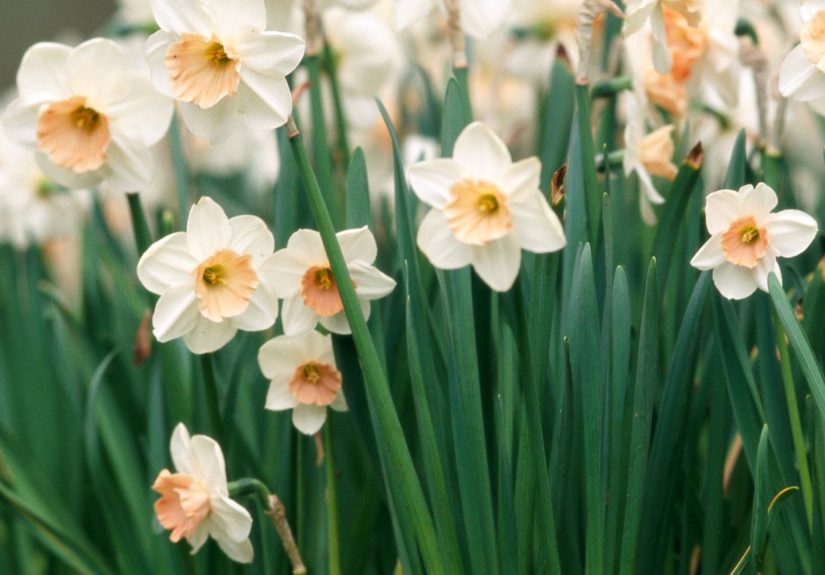
15) Pink-Cupped Daffodils (Yes, Pink Is Real)
Pink daffodils usually mean a blush-to-rose cup with white or pale petals. The color often intensifies as blooms mature,
and it can look different depending on temperature and light. In other words: pink daffodils are moody artists, and we love that.
- Best for: soft color palettes, romantic gardens, “unexpected” spring color
- Try varieties like: ‘Pink Charm’, ‘Precocious’, ‘Salome’
- Style tip: pair with pale tulips and white hyacinths for a pastel spring moment.
16) Extra-Fragrant Daffodils (For People Who Actually Stop to Smell Flowers)
If you want scent as much as color, choose varieties with strong fragranceoften jonquilla, poeticus, or tazetta influence.
This is the category that turns “nice yard” into “why does it smell amazing over here?”
- Best for: patios, entryways, cut bouquets, sensory gardens
- Try varieties like: ‘Sweetness’, ‘Actaea’, paperwhite ‘Ziva’
- Tip: plant near places you lingerbenches, mailboxes, front porches.
17) Best for Naturalizing (The “Plant It and Let It Multiply” Crew)
Naturalizing daffodils are the long-game champions: they return for years and gradually form bigger clumps or drifts.
This is how you get that “golden river of spring” look without replanting every year.
- Best for: lawns (edges), woodland borders, large drifts, low-maintenance gardens
- Try varieties like: ‘Carlton’, ‘Ice Follies’, ‘Mount Hood’, ‘Tête-à-Tête’, ‘Actaea’
- Pro move: pick at least one early and one late naturalizer to extend the show.
Design Ideas That Make Daffodils Look “Designer”
Build a longer bloom season on purpose
To stretch color, mix early-blooming types (often smaller, like cyclamineus and miniatures) with mid-season staples
(trumpet and large-cupped) and finish with late bloomers (often poeticus). The goal is a relay race of blooms instead of
a one-week sprint.
Use the “rule of three heights”
Combine a tall type (trumpet or large-cupped), a mid-height type (small-cupped or double), and a short type (miniature).
This creates depth and makes beds look fullerwithout needing a landscape architect on speed dial.
Hide fading foliage like a pro
After blooming, daffodil leaves need time to feed the bulb for next year. Translation: don’t cut them off immediately.
Instead, plan nearby later-emerging perennialshostas, daylilies, hardy geraniumsso they quietly cover the yellowing leaves
when the daffodils are done showing off.
Go big on repetition (it’s oddly calming)
Repeating the same variety in multiple spots makes a garden feel intentional. Choose one “main character” daffodil
(like a classic trumpet) and repeat it throughout beds, then sprinkle in 2–3 “supporting actors” for variety.
Planting & Care Basics (So They Actually Come Back)
Daffodils are famously low-maintenance, but “low-maintenance” is not the same as “no-maintenance.”
Do these few things and you’ll get better blooms and more reliable return.
When to plant
Plant in fall when the soil has cooled but before the ground freezes. In much of the U.S., that’s generally
September through November (timing varies by region).
Where to plant
- Light: full sun to part shade (they love sun while actively growing)
- Soil: well-drainedbulbs hate soggy feet
- Placement: slopes or raised areas help with drainage; avoid places where water pools
How deep and how far apart
A reliable guideline is planting bulbs about two to three times the bulb’s height. Many standard
daffodil bulbs end up around 6–8 inches deep, with smaller cultivars planted a bit shallower.
Space them so they have room to grow and multiply (often around 4–6 inches apart for many garden plantings).
After blooms fade
- Snip off spent flowers if you want a tidier look.
- Leave the foliage until it yellows and flops naturally (it’s recharging the bulb).
- Divide crowded clumps every few years if blooms shrink or become sparse.
Safety note (pets and kids)
Daffodils are not edible, and all parts can be toxic if ingested. If you have pets that snack on plants (or toddlers
who treat the garden like a salad bar), keep bulbs and cut flowers out of reach.
of Real-World Daffodil Experiences (The Stuff You Learn by Doing)
Gardeners tend to have the same first daffodil experience: you plant a handful of bulbs in fall, forget about them completely,
and thenboomspring arrives with bright blooms like the garden is yelling, “Surprise! I did a thing!” That first success can
make daffodils feel foolproof. And honestly, they’re close. But over time, you also start noticing patterns that don’t show up
on the bulb package.
One of the biggest lessons is that daffodils reward patience and punish panic. After flowering, the foliage can look messy,
and the temptation to trim it “so the bed looks neat” is real. But gardeners who let the leaves fade naturally tend to see better blooms
the next year. Many people end up developing little strategies: weaving the leaves behind nearby perennials, planting daffodils in wider drifts
so the mess reads as “naturalistic,” or pairing them with later-emerging plants that cover the scene like a well-timed costume change.
Another common experience: the first time you plant daffodils in an area with poor drainage, you learn what “bulbs hate wet feet” truly means.
In well-drained soil, daffodils return like clockwork. In soggy soil, you might get a weak showor none at all. Gardeners who’ve had that happen
often become drainage detectives: they start choosing slopes, improving soil texture, or switching to raised beds. Once you see the difference,
it’s hard to unsee it.
People also discover that “type” matters more than they expected. Classic trumpet and large-cupped varieties often feel like the reliable workhorses:
sturdy stems, bold presence, excellent for drifts. Then someone plants a split-corona or a double and realizes daffodils can look downright fancylike
they’re dressed up for a spring wedding. Miniatures, on the other hand, win hearts because they’re charming and easy to place. Gardeners often tuck them
along walkways or in containers, where you notice their detail every day instead of losing them in the distance.
Fragrance can be another “aha” moment. Many folks assume all daffodils smell the same (or smell like nothing). Then a jonquilla, poeticus, or a tazetta
opens up, and suddenly spring has a soundtrack and a perfume. That’s when gardeners start planting scented daffodils where people actually hang out:
by steps, near porches, along patios, and close to windows that get cracked open on the first warm day.
Finally, there’s the long-game joy of naturalizing. The first year looks nice. The second year looks better. By year three or four, you start getting clumps
and little extra shoots that feel like the garden is expanding on your behalf. Gardeners who stick with daffodils often describe it as one of the most satisfying
“set it up once, enjoy it for years” experiences in ornamental gardening. It’s not instant gratificationit’s better: it’s compound interest, but make it flowers.
Conclusion
If you want a brighter spring garden with minimal drama, daffodils are the move. Choose a mix of classic forms
(trumpet, large-cupped), add a few specialty looks (double, split-corona, pink-cupped), and include at least one
dependable naturalizer so your display gets bigger every year. Plant them well, let the foliage recharge the bulbs,
and you’ll have a spring show that looks intentional, joyful, andbest of allrepeatable.