Table of Contents >> Show >> Hide
- Flagstone vs. Gravel vs. Pavers: The Quick Comparison
- How to Choose: 7 Questions That Make the Decision Easy
- Option A: Install a Flagstone Walkway (Dry-Laid, the “Forgiving” Method)
- Option B: Choose Gravel (Fast, Affordable, and Surprisingly Good-Looking)
- Option C: Choose Pavers (The “Looks Great for Years” ChoiceIf the Base Is Right)
- Common Mistakes (AKA “Why Is My Walkway Doing That?”)
- Three “Right Answer” Scenarios (Realistic Examples)
- Conclusion: Pick the Walkway You’ll Enjoy Owning
- of Real-World Experience: Lessons Homeowners Learn After Installation
A walkway is basically your yard’s handshake. It tells guests, “Welcome!” or “Proceed at your own risk; the stepping stones are vibing today.” If you’re deciding between a flagstone walkway, a gravel path, or a paver walkway, you’re really choosing a mix of looks, budget, comfort, and how much future-you enjoys weekend maintenance.
This guide breaks down the pros, cons, and installation realities (the fun kind of “reality,” like compacting gravel until your arms feel like noodles). You’ll get step-by-step installation notes, decision tips for climate and drainage, and real-world lessons so your path doesn’t become an accidental obstacle course after the first rainy season.
Flagstone vs. Gravel vs. Pavers: The Quick Comparison
| Option | Best For | DIY Difficulty | Comfort & Accessibility | Maintenance | Typical Cost Feel |
|---|---|---|---|---|---|
| Flagstone (dry-laid) | Natural look, cottage gardens, curvy paths | Medium (stone “puzzles” take patience) | Good if stones are level; joints can trip if uneven | Moderate (joint weeds, occasional leveling) | $$–$$$ |
| Gravel | Budget-friendly, quick installs, informal paths | Easy–Medium (edging matters a lot) | Can be tough for strollers/wheelchairs unless stabilized | Moderate (raking, top-ups, weeds) | $ |
| Pavers (interlocking) | Clean lines, front walkways, high traffic, snow shoveling | Medium–Hard (base prep is everything) | Excellent when properly compacted/leveled | Low–Moderate (joint sand refresh) | $$–$$$$ |
How to Choose: 7 Questions That Make the Decision Easy
1) What’s your “walkway job description”?
A front entry path that gets daily traffic, deliveries, and maybe snow shoveling needs a stable, consistent surface. Pavers usually win here. A garden path that’s mostly for wandering with coffee can be more forgivingflagstone or gravel can shine.
2) Do you have freeze-thaw winters?
In climates where water freezes and expands, the base matters more than the surface material. A well-draining, properly compacted aggregate base helps reduce shifting and heaving. Flexible systems (dry-laid flagstone, pavers, gravel) generally handle movement better than rigid mortar in the wrong spot.
3) How’s your drainage?
Walkways should shed water away from buildings and avoid low spots where puddles camp out permanently. Gravel is naturally permeable. Flagstone and pavers can also be built to drain well, especially with the right base and slope.
4) Do you need a smooth surface?
If anyone uses a cane, walker, wheelchair, or stroller regularly, you’ll want a firm, stable surface with minimal wobble. Pavers (or carefully set, tightly spaced flagstone) can work well. Loose gravel can be frustrating unless you use stabilizer grids or choose a compactable aggregate like decomposed granite.
5) How much maintenance feels “fun,” realistically?
If you love tidy lines, gravel that migrates into the lawn might become your villain origin story. Pavers are generally neat and predictable. Flagstone can be low-drama too, but joints may need occasional weeding or topping off.
6) What’s your aesthetic?
Flagstone looks organic, timeless, and a little romantic. Gravel feels casual and garden-forward. Pavers can be traditional (brick look) or modern (large-format concrete), and patterns can add serious curb appeal.
7) What’s your budget range?
Gravel is typically the most budget-friendly option. Flagstone varies a lot by stone type and labor. Pavers can be mid-range to premium depending on style, thickness, and whether you DIY or hire out.
Option A: Install a Flagstone Walkway (Dry-Laid, the “Forgiving” Method)
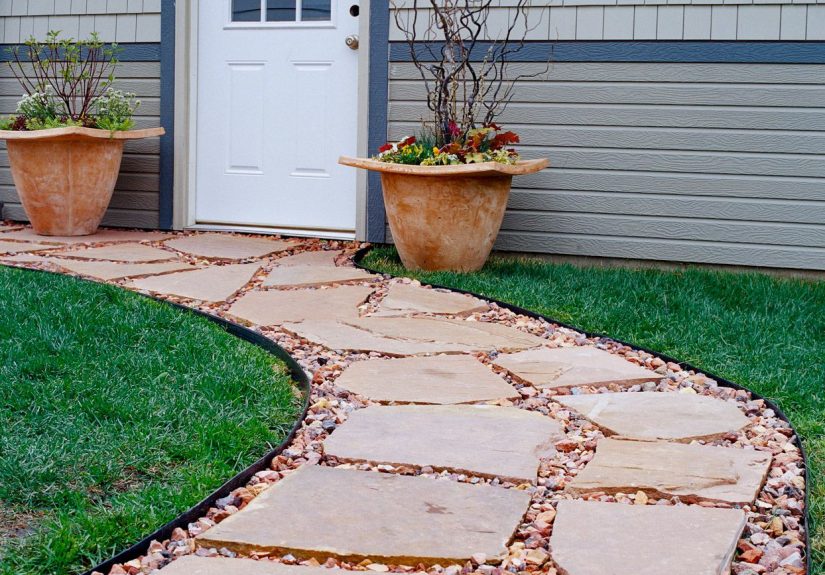
A dry-laid flagstone path sits on a compacted base (crushed stone + sand/stone dust), not mortar. That’s good news: it drains better and can handle small ground movement without cracking like a rigid slab. It’s also easier to repairif a stone settles, you lift it, fix the base, and put it back. Like landscaping LEGO, but heavier.
Tools & materials
- Garden hose or marking paint (layout)
- Shovel, rake, hand tamper or plate compactor
- Landscape fabric (optional but helpful for soil separation)
- Base: compactable crushed stone (often called “3/4" minus”)
- Bedding: coarse sand or stone dust
- Flagstone pieces (similar thickness makes life easier)
- Edging (optional but useful if your joints are wide or your soil is loose)
- Joint fill: stone dust, polymeric sand, gravel, or low groundcover
Step-by-step: the reliable way to set flagstone
- Plan the route and width. Most comfortable paths are about 36 inches wide so two people can pass without doing the awkward sideways shuffle. Use a hose to sketch curves before you dig.
- Excavate the path. Remove grass and organic topsoil (it decomposes and causes settling). Dig deep enough for your base + bedding + stone thickness, aiming for a finished surface that sits slightly above surrounding soil.
- Shape a gentle slope. You don’t need a ski hilljust enough fall to keep water moving off the path and away from foundations.
- Add landscape fabric (optional but recommended in many soils). This helps keep your crushed stone from mixing with soil over time, which is a fancy way of saying “prevents mushy base syndrome.”
- Install the base in lifts and compact. Spread crushed stone in a few thinner layers instead of one big dump. Compact each layer. This is the moment where shortcuts become future regrets.
- Add a 1-inch-ish bedding layer. Screed coarse sand or stone dust to create a smooth setting bed. (If you’ve never screeded before, it’s basically “drag a straight board to level things,” but with more confidence.)
- Place and level flagstones. Fit stones like a puzzle, keeping walking surfaces as even as possible. Tap stones into place with a rubber mallet and adjust the bedding under low spots.
- Fill the joints. For a clean look: stone dust or polymeric sand (if joints are appropriate for it). For a softer, garden-y feel: small gravel or creeping groundcovers (but plan for extra maintenance).
- Final check and tidy edges. Walk it. Literally. If you feel wobble, fix it now. Your ankles will send thank-you notes later.
Flagstone design tips that save headaches
- Keep thickness consistent. Mixed thickness stones are doable, but leveling takes longer.
- Mind the joints. Big gaps look charming, but they can be trip hazards and weed magnets.
- Consider edging. Not always required, but helpful where soil is loose or joints are wide.
Maintenance reality check
Expect occasional joint topping, seasonal weeding, and maybe one or two stones that settle over time. The upside: repairs are usually simple and localno need to redo the entire path.
Option B: Choose Gravel (Fast, Affordable, and Surprisingly Good-Looking)
A gravel walkway can look polished and intentionalif (big if) you contain it with edging and build a stable base. Without edging, gravel will travel. It will also recruit your driveway, your lawn, and your indoor entry mat into the gravel experience.
Pick the right gravel (this matters)
- Pea gravel: Round, comfortable underfoot, but it rolls and migrates more.
- Crushed stone: Angular, locks together better, often more stable for paths.
- Decomposed granite (DG): Can compact well for a firmer surface, depending on fines and moisture.
- Stabilizer grids: Great if you want gravel’s look with less movement (and better accessibility).
Step-by-step: a gravel path that doesn’t look “temporary”
- Lay out the path and mark edges. Hoses, string, spray paintuse whatever makes curves easy to visualize.
- Excavate and remove organic material. Typically several inches deep, depending on your base + gravel depth plan.
- Install edging. Metal, plastic, stone, or paver edgingchoose something that holds shape.
- Add landscape fabric (selectively). It can reduce soil/gravel mixing, but it isn’t magic weed-proofing. Use sturdy fabric for paths, and pin it well so it doesn’t surface later like a surprise bed sheet.
- Build a compacted base. A layer of compactable crushed stone under the gravel improves stability.
- Add your top gravel layer. Spread evenly, rake smooth, and keep it slightly below the top of edging.
- Plan for “gravel drift.” Keep a small pile for seasonal top-ups, especially after heavy rain or snow removal.
Where gravel shines (and where it struggles)
Gravel is fantastic for winding garden paths, side yards, and low-traffic areas with good drainage. It can struggle on steep slopes (it moves downhill), in areas where you need a very smooth surface, and in front walks where you’ll shovel snow often. If you want gravel’s look but need more stability, consider grids or a compactable surface like DG.
Option C: Choose Pavers (The “Looks Great for Years” ChoiceIf the Base Is Right)
A well-built paver walkway is hard to beat: neat edges, comfortable footing, easy to shovel, and repairs are usually modular. The catch is that pavers are honestif the base is sloppy, the pavers will tell on you by shifting, dipping, or forming little ankle-trap lips.
What kind of pavers?
- Concrete pavers: Versatile, widely available, lots of shapes and colors.
- Clay brick pavers: Classic look, great for traditional homes.
- Natural stone pavers: Premium feel, typically higher cost.
- Permeable pavers: Designed to drain through jointsgreat for stormwater-friendly projects.
Step-by-step: the standard paver walkway build
- Plan layout, pattern, and slope. Decide on straight runs vs. curves and choose a pattern (running bond is easiest; herringbone is very stable). Build in a gentle slope away from structures so water doesn’t pool.
- Excavate to depth. You need room for compacted base + bedding sand + pavers. Depth depends on soil, climate, and intended use (a walkway needs less base than a driveway).
- Install fabric (optional) and base aggregate in lifts. Add base in layers and compact each layer thoroughly. This is where long-term performance is born.
- Add bedding sand and screed it level. Keep it consistent and don’t overwork itonce it’s screeded, step lightly and avoid digging footprints.
- Lay pavers and keep lines straight. Start from a straight edge, follow your string lines, and tap pavers gently into place as needed.
- Install edge restraints. This prevents the whole field from slowly “relaxing” outward over time.
- Fill joints and compact. Sweep jointing sand (or polymeric sand where appropriate) into joints. Compact, re-sand, and finish according to product directions.
- Final cleanup and cure. If using polymeric sand, follow moisture timing carefully and clean haze promptly.
Paver walkway maintenance
- Replenish joint sand as needed (especially after pressure washing or heavy rain).
- Spot-treat weeds if they appear (often wind-blown seeds, not “weeds from below”).
- If a section settles, lift pavers, fix base, reinstallusually a surgical repair, not a full redo.
Common Mistakes (AKA “Why Is My Walkway Doing That?”)
Skipping compaction
If you remember one thing, remember this: compaction is not optional. A gorgeous surface on a fluffy base is just a slow-motion disaster.
No edge restraint (for gravel or pavers)
Edging isn’t glamorous, but it’s the difference between “professional hardscape” and “yard sprinkles.” Gravel needs containment. Pavers need restraint to prevent creep.
Using the wrong base material
Round river rock doesn’t compact well. You want angular, compactable aggregate for the base so it locks together.
Forgetting drainage and slope
Flat looks tidyuntil it becomes a puddle. A subtle slope keeps water moving and reduces freeze-thaw trouble in many climates.
Assuming landscape fabric is a weed-proof force field
Fabric can help with soil separation, but weeds often sprout from wind-blown seeds on top. And over time, fine sediments can clog fabric, making drainage worse in some situations. Use fabric strategically, install it correctly, and don’t rely on it as your only plan.
Three “Right Answer” Scenarios (Realistic Examples)
Scenario 1: The front-entry upgrade
You want clean curb appeal, stable footing, and easy snow shoveling. Choose pavers. Use a simple pattern, solid edging, and take base prep seriously. Your future self will high-five you every winter.
Scenario 2: The garden stroll path
You want something that looks like it belongs in a magazine spread with a cup of tea nearby. Choose flagstone. Keep stones level, joints modest, and fill gaps with stone dust or a low groundcover if you don’t mind extra care.
Scenario 3: The side-yard utility lane
You need a simple, affordable path that drains well and goes in quickly. Choose gravel. Add good edging and a compacted base so it doesn’t become a trench during rainy season.
Conclusion: Pick the Walkway You’ll Enjoy Owning
If you want a natural, high-character look and don’t mind a little puzzle-solving, a flagstone walkway is a classic. If you want the fastest, most budget-friendly option, a well-contained gravel path is hard to beat. If you want a smooth, durable, “done once, enjoy for years” surfaceespecially for front entriespavers are the move.
No matter what you choose, the real secret is the part nobody photographs: excavation, base material, slope, and compaction. Nail those, and your walkway won’t just look goodit’ll stay good.
of Real-World Experience: Lessons Homeowners Learn After Installation
Here’s what people tend to discover once the excitement fades, the wheelbarrow is returned, and real life starts walking on the path every day. First: your walkway is a “system,” not a surface. Homeowners who love their paths years later usually did two unglamorous things up front: they dug deep enough and they compacted in layers. The folks who skipped those steps don’t always notice right awayoften the walkway looks amazing for a month, sometimes a season, and then the ground settles just enough to create tiny dips. Those dips collect water, the water softens the base, and suddenly you’ve got a low spot that keeps returning like a sequel nobody asked for.
With flagstone, the most common “aha” moment is that leveling stones is 80% patience and 20% technique. Homeowners often start out trying to make each stone perfect in one go. The smoother workflow is iterative: set a stone, walk it, adjust it, and move on. People who use stones with wildly different thicknesses usually spend the most time fine-tuning, so experienced DIYers often recommend buying (or sorting) flagstone so thickness is consistent. Another lesson: joint fill choice affects your relationship with the path. Stone dust looks tidy and is easy to refresh; groundcover is charming but can invite more weeding and edging cleanup. If you love a lush, garden-forward look, you’ll probably accept that trade happily. If you prefer crisp lines, keep joints tighter and fill with a stable aggregate.
With gravel, the big learning is containment. People who skip edging almost always end up adding edging laterwhich is like deciding you’ll install a seatbelt after the first pothole. Gravel migrates because it’s doing its job: it’s small stones responding to gravity, shoes, paws, rain, and the occasional enthusiastic leaf blower. The best-looking gravel paths usually include a compacted base underneath and edging that sits proud enough to keep gravel where it belongs. Homeowners also learn that gravel choice matters: pea gravel is comfortable but rolls; angular crushed stone feels more stable. If accessibility is important, experienced installers often steer people toward stabilizer grids or a compactable surface (like DG) so wheels don’t sink or skid.
With pavers, the most common “experience-based upgrade” is joint management. Homeowners love the finished look, but they learn that joints are the maintenance lever. Regular joint sand can wash out over time; polymeric sand can hold better if installed correctly, but it’s pickier about weather, cleanup, and water timing. Another repeated lesson: edge restraint isn’t optional. Experienced DIYers say it’s the difference between pavers staying crisp for years and slowly drifting until your pattern looks like it sighed and gave up.
Across all three options, the most satisfying projects share one theme: the builder planned for water. They gave the path a subtle slope, avoided low spots, and used a base that drains instead of trapping moisture. Do that, and you won’t just install a walkwayyou’ll install peace of mind (and fewer weekend repair projects).