Table of Contents >> Show >> Hide
- Why White Kitchen Cabinets Still Work
- 18 Ideas for White Kitchen Cabinets That Will Brighten Your Space
- 1. Layer Different Shades of White
- 2. Add Warm Wood Accents
- 3. Choose a Creamy White Instead of Stark White
- 4. Use Black Hardware for Clean Contrast
- 5. Try Brass or Champagne Bronze Hardware
- 6. Install a Textured White Backsplash
- 7. Pair White Cabinets with a Statement Island
- 8. Mix White Upper Cabinets with Darker Lower Cabinets
- 9. Add Glass-Front Cabinet Doors
- 10. Bring in Open Shelving
- 11. Choose a Countertop with Movement
- 12. Add Color Through the Walls
- 13. Use Lighting to Make White Cabinets Glow
- 14. Add Panel-Ready Appliances
- 15. Update the Cabinet Trim and Molding
- 16. Create a Cottage Look with Beadboard
- 17. Use Patterned Tile for Personality
- 18. Style the Space with Warm, Useful Details
- How to Choose the Right White for Your Kitchen Cabinets
- Best Materials and Finishes to Pair with White Cabinets
- Common Mistakes to Avoid with White Kitchen Cabinets
- Experience Notes: What White Kitchen Cabinets Teach You Over Time
- Conclusion
White kitchen cabinets are the design equivalent of a great white shirt: clean, flexible, always useful, and surprisingly easy to dress up. They can make a small kitchen feel larger, help natural light bounce around the room, and create a neutral backdrop for wood, stone, tile, brass, black accents, colorful dishes, or that one dramatic espresso machine you secretly bought because it looked “professional.”
But here is the trick: a beautiful white kitchen is not just a room where everything is white and then everyone agrees not to spill coffee. The best white kitchen cabinet ideas use contrast, texture, warmth, lighting, and thoughtful finishes to keep the space bright without making it feel cold. Whether your style leans modern farmhouse, coastal, traditional, cottage, transitional, or sleek contemporary, these 18 ideas will help your white cabinets look fresh, inviting, and full of personality.
Why White Kitchen Cabinets Still Work
White cabinets remain popular because they are incredibly adaptable. They pair well with marble, quartz, butcher block, soapstone, stainless steel, wood floors, patterned tile, and nearly every hardware finish. They also allow homeowners to update the kitchen over time without replacing the entire cabinet system. Change the backsplash, swap the pulls, repaint the island, or add warmer lighting, and the whole room can feel new again.
The modern approach is not necessarily an all-white kitchen from floor to ceiling. Today’s best white kitchens feel layered. Designers often mix creamy whites with natural wood, warm metals, earthy wall colors, handcrafted tile, and statement lighting. The result is bright but not sterile, timeless but not boring, and polished without looking like nobody is allowed to make toast.
18 Ideas for White Kitchen Cabinets That Will Brighten Your Space
1. Layer Different Shades of White
One of the easiest ways to make white kitchen cabinets look intentional is to avoid using the exact same white on every surface. Try bright white cabinets with a warmer white backsplash, soft ivory walls, or a light gray-white stone countertop. This tone-on-tone approach creates depth while keeping the kitchen airy. It is especially helpful in open-concept homes where the kitchen needs to blend with nearby living areas.
2. Add Warm Wood Accents
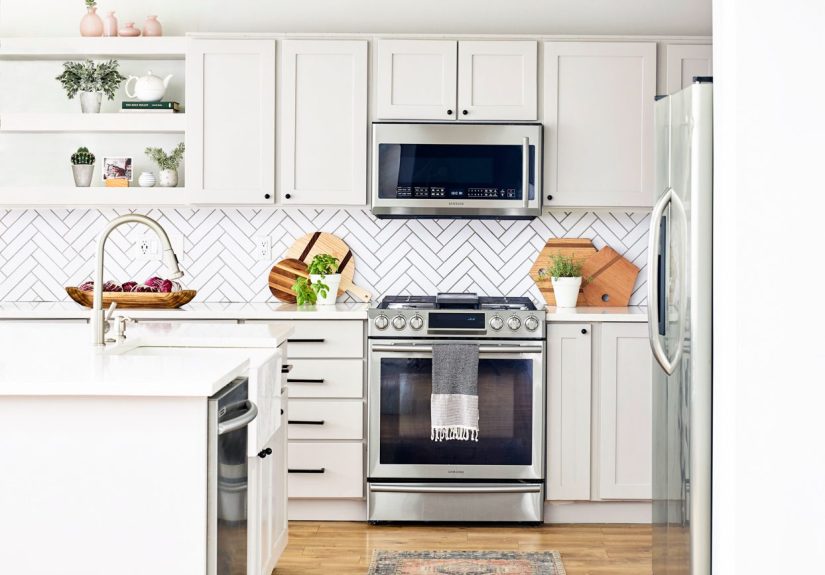
White cabinets love wood. A white kitchen with oak shelves, walnut stools, a butcher-block island, or a wood range hood instantly feels warmer and more lived-in. The contrast softens the crispness of the cabinets and brings in a natural element. For a balanced look, repeat the wood tone at least twice, such as on floating shelves and barstools, so it feels planned instead of accidental.
3. Choose a Creamy White Instead of Stark White
Bright, cool white can look sharp in modern kitchens, but it can also feel chilly in rooms with limited sunlight. A creamy white cabinet color is often more forgiving. Shades with subtle warm undertones pair beautifully with brass hardware, beige stone, wood floors, and soft wall colors. If your kitchen faces north or has small windows, a warm white can prevent the space from feeling flat.
4. Use Black Hardware for Clean Contrast
Black cabinet pulls and knobs create crisp definition against white doors and drawers. This combination works particularly well with Shaker cabinets, slab-front cabinets, and modern farmhouse kitchens. The key is restraint. Matte black hardware, a black faucet, or black pendant lights can anchor the room without making it feel heavy. Think eyeliner, not raccoon mask.
5. Try Brass or Champagne Bronze Hardware
If black feels too bold, brass or champagne bronze hardware adds warmth and elegance. These finishes look especially good with marble-look quartz, creamy white cabinets, and handmade tile. Brass can make a white kitchen feel classic, vintage, or quietly luxurious depending on the shape of the hardware. Slim bar pulls feel modern, while round knobs and cup pulls lean traditional or cottage-inspired.
6. Install a Textured White Backsplash
A white backsplash does not have to be plain. Zellige-style tile, handmade subway tile, herringbone tile, fluted tile, or glossy ceramic tile can add movement while maintaining a bright palette. Texture catches light throughout the day, giving the kitchen subtle variation. This is a smart choice if you love an all-white look but do not want the room to feel like a blank spreadsheet.
7. Pair White Cabinets with a Statement Island
A contrasting island is one of the most effective ways to make white kitchen cabinets feel current. Consider navy, charcoal, sage green, deep blue, warm taupe, or natural wood. The white perimeter cabinets keep the room bright, while the island becomes the focal point. For cohesion, use the same countertop material or repeat the same hardware finish on both the island and perimeter cabinets.
8. Mix White Upper Cabinets with Darker Lower Cabinets
Two-tone cabinetry is practical and stylish. White upper cabinets help the room feel open, while darker lower cabinets hide scuffs and add grounding. This approach works well in busy family kitchens where lower cabinets take more daily abuse. Try white uppers with walnut, navy, forest green, mushroom, or charcoal lowers for a balanced and modern look.
9. Add Glass-Front Cabinet Doors
Glass-front cabinets break up large walls of white cabinetry and give you a place to display pretty dishes, glassware, or cookbooks. Clear glass feels classic, while reeded or frosted glass adds softness and hides a little clutter. If you are not ready to display every mug you own, use glass fronts on just one cabinet section, such as above a coffee bar or near the dining area.
10. Bring in Open Shelving
Open shelves can make white cabinets feel lighter and more relaxed. Wood shelves are a favorite because they add warmth, but white shelves can work in a minimalist kitchen. Use shelves for items you actually use: plates, bowls, glasses, jars, and a few decorative pieces. The secret is editing. Open shelving should say “curated,” not “I lost the cabinet doors.”
11. Choose a Countertop with Movement
White cabinets create a clean frame for countertops with veining, speckling, or soft color variation. Marble, quartzite, granite, soapstone, and marble-look quartz can all add interest. If you prefer a bright kitchen, choose a light countertop with gentle gray, beige, or gold veining. If you want drama, pair white cabinets with dark soapstone or black granite for a classic high-contrast effect.
12. Add Color Through the Walls
White cabinets give you freedom to use color on the walls. Soft blue, pale green, warm taupe, greige, blush, muted clay, or even deep green can look beautiful around white cabinetry. If you want subtle color, paint the walls a shade slightly warmer than the cabinets. If you want more personality, use a deeper wall color to highlight trim, crown molding, or architectural details.
13. Use Lighting to Make White Cabinets Glow
Lighting can make or break a white kitchen. Under-cabinet lights brighten prep zones and make the backsplash shine. Pendant lights over the island add style and focus. Recessed ceiling lights provide general illumination, while a small lamp on the counter can make the kitchen feel cozy in the evening. White cabinets reflect light beautifully, so give them something flattering to reflect.
14. Add Panel-Ready Appliances
For a seamless, built-in look, consider panel-ready appliances that match your white cabinetry. A panel-front dishwasher or refrigerator helps the kitchen feel less visually busy. This idea is especially useful in smaller kitchens where stainless steel appliances can interrupt the flow of white cabinets. The result is clean, quiet, and high-end without shouting about itself.
15. Update the Cabinet Trim and Molding
Sometimes the cabinet color is fine, but the style needs a little help. New crown molding, simple trim, furniture-style feet, or updated end panels can completely change the look of white cabinets. Traditional kitchens can benefit from decorative molding, while modern kitchens look better with cleaner lines. Small trim upgrades can make builder-grade cabinets look more custom.
16. Create a Cottage Look with Beadboard
White cabinets are perfect for cottage, coastal, and farmhouse kitchens. Add beadboard, vintage-style hardware, a farmhouse sink, wood countertops, or soft pastel accents for charm. Beadboard on an island, backsplash, or cabinet end panel adds texture without overwhelming the space. It is a friendly, casual look that says, “Yes, we bake here,” even if the cookies came from the grocery store.
17. Use Patterned Tile for Personality
If your white kitchen feels too simple, patterned tile can bring it to life. Try encaustic-look floor tile, a patterned backsplash behind the range, or a subtle geometric design in neutral tones. White cabinets calm the pattern, so the room still feels balanced. This is a great way to add character without committing to colorful cabinets throughout the kitchen.
18. Style the Space with Warm, Useful Details
Finishing touches matter. Wooden cutting boards, ceramic bowls, small framed art, woven shades, colorful cookbooks, a fruit bowl, fresh herbs, and textured rugs can make white kitchen cabinets feel warm and personal. The goal is not clutter. The goal is life. A white kitchen looks best when it feels like people actually cook, gather, snack, talk, and occasionally debate whether leftovers still count as dinner.
How to Choose the Right White for Your Kitchen Cabinets
Before choosing a cabinet color, study the light in your kitchen. Natural light, artificial lighting, flooring, and countertops all affect how white paint appears. A white that looks crisp in the store may turn blue at home. A creamy white that looks soft online may appear yellow next to cool marble. Always test samples on cabinet doors or large boards and view them in morning, afternoon, and evening light.
For kitchens with warm wood floors, beige stone, brass hardware, or earthy wall colors, creamy whites and soft off-whites often look best. For sleek modern kitchens with stainless steel, cool gray countertops, or black accents, a cleaner white may work better. The right white should connect with the rest of the finishes instead of fighting them like two relatives at a holiday dinner.
Best Materials and Finishes to Pair with White Cabinets
White cabinets are flexible, but the surrounding materials determine the final mood. Marble and marble-look quartz create a polished and classic kitchen. Butcher block adds warmth and casual charm. Soapstone introduces contrast and a historic feel. Light oak flooring creates a soft modern look, while dark wood floors add richness. Stainless steel keeps things professional and practical, while brass, bronze, or copper details add glow.
For cabinet finish, satin and semi-gloss are common choices because they are easier to wipe down than flat paint. High-gloss white cabinets can look striking in modern kitchens, but they also show fingerprints more easily. Matte finishes feel softer and more contemporary, but they require careful cleaning. In a busy household, durability matters just as much as beauty. A kitchen should look good, but it should also survive spaghetti night.
Common Mistakes to Avoid with White Kitchen Cabinets
The first mistake is choosing a white paint without testing it in your own kitchen. Undertones matter. The second mistake is using too many cold surfaces at once, such as cool white cabinets, cool gray counters, stainless steel appliances, and blue-white lighting. That combination can make the kitchen feel sterile. Balance it with wood, warm metal, soft textiles, or a warmer wall color.
Another mistake is ignoring hardware scale. Tiny knobs can disappear on large drawers, while oversized pulls can overpower smaller doors. Measure carefully and choose hardware that matches the cabinet proportions. Finally, do not forget lighting. Even the most beautiful white cabinets can look dull under poor bulbs. Warm, layered lighting helps the space feel bright during the day and welcoming at night.
Experience Notes: What White Kitchen Cabinets Teach You Over Time
Living with white kitchen cabinets is a little like owning white sneakers. They look fantastic when they are clean, they match everything, and they quietly encourage you to become a more responsible adult. The good news is that white cabinets are not as scary as people imagine. Yes, they show splatters, fingerprints, and mystery marks. But that visibility can actually be helpful because you notice messes early instead of discovering six months later that the side of a cabinet has been hosting a tiny sauce festival.
One practical experience is that the cabinet finish matters more than the color. A quality satin or semi-gloss finish is much easier to wipe than a flat finish. Around handles, trash pull-outs, and the cabinet under the sink, smudges appear fastest. A soft cloth and mild cleaner usually handle daily marks. Avoid harsh scrubbing pads because they can dull the paint. The goal is gentle cleaning, not auditioning for a cabinet demolition team.
Another lesson is that white cabinets change with the light. In morning sun, they may look bright and cheerful. At night under cool bulbs, the same cabinets can look slightly blue or gray. This is why warm lighting is so important. Under-cabinet lights, pendant lights, and warmer bulbs can make the cabinets feel softer. A small lamp on the counter may sound like a tiny design detail, but it can make the whole kitchen feel calmer in the evening.
White cabinets also make styling easier. Seasonal decor looks good against them. A bowl of lemons, a wooden board, a vase of branches, blue-and-white dishes, or copper cookware can all stand out beautifully. You do not need much. In fact, white kitchens often look better with fewer, better accessories. When everything is bright, clutter becomes louder. Clear counters, repeated materials, and a few warm accents will do more than a crowd of decorations.
The best long-term advice is to build in contrast from the beginning. If your cabinets, walls, counters, backsplash, and floors are all the same cool white, the kitchen may feel unfinished. Add wood stools, a warmer backsplash, a veined countertop, black or brass hardware, a colorful island, or textured window shades. These layers make the room feel designed rather than simply painted.
White kitchen cabinets are not a magic wand, but they are a very dependable starting point. They brighten the room, adapt to changing styles, and give you the freedom to refresh the kitchen without starting over. With the right undertone, lighting, hardware, and textures, white cabinets can feel classic, modern, cozy, or bold. In other words, they are not boring. They are just waiting for you to give them better supporting actors.
Conclusion
White kitchen cabinets are timeless because they offer both brightness and flexibility. They can make a compact kitchen feel open, give a traditional kitchen a cleaner look, or create a calm foundation for modern design. The secret is not using white everywhere without a plan. The secret is layering white cabinets with texture, warmth, contrast, and practical details that fit your lifestyle.
From creamy paint colors and wood islands to textured backsplashes, brass hardware, patterned tile, and thoughtful lighting, these ideas prove that white kitchen cabinets can be anything but plain. Treat them as a blank canvas, not the whole painting, and your kitchen will feel brighter, warmer, and far more personal.