Table of Contents >> Show >> Hide
- How to Pick Fall-Color Winners (Without Regret in Spring)
- 19 Showstoppers: Trees and Shrubs That Light Up Autumn
- Sugar Maple (Acer saccharum)
- Red Maple (Acer rubrum)
- Blackgum / Black Tupelo (Nyssa sylvatica)
- Sweetgum (Liquidambar styraciflua)
- Sourwood (Oxydendrum arboreum)
- Serviceberry (Amelanchier spp.)
- Flowering Dogwood (Cornus florida)
- Northern Red Oak (Quercus rubra)
- Scarlet Oak (Quercus coccinea)
- Ginkgo (Ginkgo biloba)
- Bald Cypress (Taxodium distichum)
- Common Witch Hazel (Hamamelis virginiana)
- Staghorn Sumac (Rhus typhina)
- Oakleaf Hydrangea (Hydrangea quercifolia)
- Virginia Sweetspire (Itea virginica)
- Black Chokeberry (Aronia melanocarpa)
- Highbush Blueberry (Vaccinium corymbosum)
- Ninebark (Physocarpus opulifolius)
- Bonus Color-Builder: Plant Pairing with Evergreens
- Design Secret: Repeat a Color Three Times
- Design Ideas to Make Autumn Color Look Even Better
- Care Tips That Keep Fall Color Fiery (Not Faint)
- Conclusion
Generated with GPT-5.2 Thinking
Some people wait all year for pumpkin spice. Gardeners wait for the moment their yard suddenly looks like it got a professional color grade.
The secret isn’t “luck” (though weather definitely likes to humble us). It’s choosing plants that reliably turn up the volumereds that look
like embers, oranges that glow at sunset, and golds so bright you’ll swear the tree is lit from inside.
Below are 19 trees and shrubs that bring the drama every autumnplus practical tips so your fall foliage doesn’t fizzle. You’ll get a mix of
big shade trees, smaller statement trees, and shrubs that deliver color at eye level (which, let’s be honest, is where the photos happen).
How to Pick Fall-Color Winners (Without Regret in Spring)
1) Match the plant to your place
“Fiery” doesn’t help if the plant hates your soil, sun, or winter lows. Check your USDA hardiness zone, then pick plants that actually thrive
therehealthy plants color up better and hold leaves longer.
2) Full sun = louder color
Many fall showstoppers get their boldest reds and purples in full sun. Part shade can still work (especially for woodland natives), but if you want
maximum flame, give them light.
3) Plan for the “mess factor”
Some classics come with accessories: sweetgum drops spiky “gumballs,” female ginkgo drops smelly fruit-like seeds, and sumac can spread by suckers.
None of those are dealbreakersjust “know before you plant.”
4) Build a color sequence, not a one-week wonder
The best yards don’t peak on one random Tuesday. Combine early color (like blackgum) with mid-season fireworks (maples, oaks) and late holdouts
(witch hazel, some oaks, sweetspire). That’s how you stretch the show.
19 Showstoppers: Trees and Shrubs That Light Up Autumn
-
Sugar Maple (Acer saccharum)
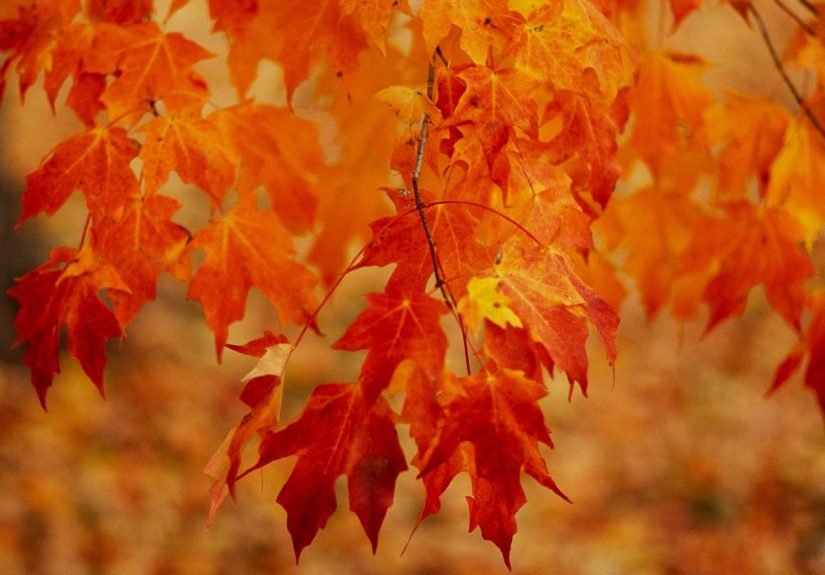
Fall show: Gold, orange, and redoften all on the same tree, like it couldn’t choose a favorite.
Why gardeners love it: Classic Northeast-style color and big shade-tree presence.
Best for: Larger yards with room to spread; cooler climates and well-drained soil.
Tip: Give it space and decent soil moisturestressed trees don’t always “perform.”
-
Red Maple (Acer rubrum)
Fall show: Bright red to orangeone of the earliest trees to get the party started.
Why it works: Adaptable and widely available; cultivars can offer more consistent color.
Best for: Rain-garden edges or spots that stay a bit moist (it handles wet sites better than many maples).
Tip: If you want dependable red, consider named selections rather than seedling “surprises.”
-
Blackgum / Black Tupelo (Nyssa sylvatica)
Fall show: Glossy leaves turning intense scarlet, with extra shades of orange and purple depending on the year.
Why it’s special: Often among the first to color, and the color can look almost unreal in good light.
Best for: Native-plant gardens, wildlife-friendly yards, and anyone who wants early fall color.
Watch-outs: Slow to establishthink “long-term relationship,” not “instant makeover.”
-
Sweetgum (Liquidambar styraciflua)
Fall show: Star-shaped leaves in a whole paletteyellow, orange, red, purplesometimes on one tree at once.
Why gardeners love it: It’s the definition of “kaleidoscope fall.”
Watch-outs: The famous spiky seed pods (“gumballs”) can be annoying on walkways.
Tip: If you want the color without the pod mess, look for low-fruiting or fruitless cultivars where available.
-
Sourwood (Oxydendrum arboreum)
Fall show: Fiery red-orange, often very vivid.
Bonus points: Summer flowers and a graceful form make it a multi-season favorite.
Best for: Acidic soils and gardeners who want a less-common tree with major autumn payoff.
Tip: Treat it like a woodland native: decent moisture, not a baking hot dry site.
-
Serviceberry (Amelanchier spp.)
Fall show: Yellow-orange to redplus spring flowers and edible berries earlier in the year.
Why it’s a smart pick: Smaller size makes it perfect for “regular” yards that can’t host a 70-foot giant.
Best for: Pollinator-friendly and bird-friendly landscapes; excellent ornamental native.
Tip: Use it as a focal point near a patio so you enjoy all four seasons up close.
-
Flowering Dogwood (Cornus florida)
Fall show: Red to reddish-purple foliage, often paired with red berries.
Why it shines: Iconic spring bracts, then a strong fall encore.
Best for: Part sun/part shade, woodland edges, and layered plantings.
Tip: Morning sun with afternoon shade is a sweet spot in many regions.
-
Northern Red Oak (Quercus rubra)
Fall show: Red to russet-red (sometimes reddish-brown)a classic, sturdy autumn look.
Why gardeners plant it: Fast for an oak, great shade, and wildlife value from acorns.
Best for: Big yards and streetscapes where a strong canopy is a feature, not a problem.
Tip: Expect year-to-year variation; oaks can be subtle one fall and spectacular the next.
-
Scarlet Oak (Quercus coccinea)
Fall show: True scarlet redbold and unmistakable.
Why it’s different: Often planted specifically for that bright, fiery fall foliage.
Best for: Drier sites and gardeners who want a “red oak” with extra punch.
Tip: Pair it with evergreens behind it to make the red look even hotter.
-
Ginkgo (Ginkgo biloba)
Fall show: Pure, electric gold. And thendepending on weatherit can drop most leaves in a short window.
Why people love it: Urban-tough, unique fan-shaped leaves, and a show that looks like golden confetti.
Watch-outs: Choose a male cultivarfemale trees drop messy, foul-smelling seeds.
Tip: Plant it where a “golden carpet moment” is welcome (not directly over your favorite white sneakers).
-
Bald Cypress (Taxodium distichum)
Fall show: Rusty orange to copper-brownrare for a conifer, because it’s a deciduous conifer.
Why it’s cool: Feathery summer texture, then warm fall color, plus strong architectural form.
Best for: Wet spots, rain gardens, or anywhere with periodic moisturethough it can adapt to more typical sites once established.
Tip: Give it room and patience; it’s a long-lived “legacy tree.”
-
Common Witch Hazel (Hamamelis virginiana)
Fall show: Clear yellow leavesoften alongside quirky, ribbon-like yellow blooms in fall.
Why it’s fun: It’s one of the few woody plants that can flower as the season winds down.
Best for: Naturalized edges, woodland gardens, and anyone who wants late-season interest.
Tip: Put it near a path so you actually notice the flowers (they’re charming, not gigantic).
-
Staghorn Sumac (Rhus typhina)
Fall show: Scarlet, orange, and yellowbig color on big, tropical-looking leaves.
Bonus: Red fruit clusters can persist and feed birds.
Watch-outs: Spreads by suckers and can form colonies (great for slopes, less great for tiny formal beds).
Tip: Use it where you want a “thicket” effectlike a bold backdrop on the edge of a property.
-
Oakleaf Hydrangea (Hydrangea quercifolia)
Fall show: Wine, mahogany, purple-bronzerich, moody tones that look expensive.
Why it earns a spot: Big summer flower clusters, then dramatic foliage and interesting bark later.
Best for: Part shade to sun; great in woodland-style plantings.
Tip: Don’t prune late summer or fall if you want bloomsmany types bloom on older wood.
-
Virginia Sweetspire (Itea virginica)
Fall show: Copper, orange, gold, and often deep maroonmany cultivars hold color a long time.
Why it’s a landscape MVP: Handles moisture, works in rain gardens, and still looks polished near patios.
Best for: Mass plantings along foundations, slopes, and wet-to-average soils.
Tip: Cultivars like ‘Henry’s Garnet’ are popular for especially showy fall color.
-
Black Chokeberry (Aronia melanocarpa)
Fall show: Glossy red to burgundy foliage, paired with dark berries.
Why gardeners keep planting it: Native, tough, wildlife-friendly, and great in hedges or rain gardens.
Watch-outs: It can sucker and broaden over time (often a plus for screening).
Tip: Use it where you want “pretty but unbothered.” It’s low-fuss once established.
-
Highbush Blueberry (Vaccinium corymbosum)
Fall show: A mix of red, orange, yellow, and purpleplus edible berries in summer.
Best for: Edible landscaping with serious ornamental value.
Watch-outs: Needs acidic soil (often the biggest barrier).
Tip: If your soil runs alkaline, consider raised beds or containers with an acid-loving mix.
-
Ninebark (Physocarpus opulifolius)
Fall show: Many varieties shift toward red-orange in fall, and the peeling bark adds winter interest.
Why it’s reliable: Tough, adaptable, and available in multiple foliage colors (green, gold, purple).
Best for: Hedges, mixed borders, and “I want something hardy” landscapes.
Tip: Prune right after flowering if you want to shape it without sacrificing next year’s blooms.
-
Bonus Color-Builder: Plant Pairing with Evergreens
Not a single species, but a strategy that makes every fiery plant look better: use dark green evergreens (or even a deep green fence line)
behind reds and golds. Contrast is the easiest “design hack” in gardening. -
Design Secret: Repeat a Color Three Times
If you plant one red fall shrub, it’s a nice moment. If you repeat red fall color in three spots (a maple, an aronia hedge, and a sweetspire drift),
your yard suddenly looks intentionally curatedlike it has a stylist.
Quick note: You may have noticed one famous fall shrub missing: burning bush. It can look spectacular, but it’s invasive in many areas.
If you want a similar “fiery” effect without the ecological headache, aronia, sweetspire, oakleaf hydrangea, and ninebark are strong alternatives.
Design Ideas to Make Autumn Color Look Even Better
- Layer heights: big canopy tree + small ornamental tree + shrubs at the front = depth and drama.
- Use water wisely: sweetspire, blackgum, aronia, and bald cypress can handle wetter zones many plants hate.
- Make a “photo corridor”: plant your best fall colors along the path you actually walk (driveway, mailbox route, patio steps).
- Include berries: dogwood, aronia, serviceberry, and sumac add fruit that reads as color even after leaves drop.
Care Tips That Keep Fall Color Fiery (Not Faint)
- Sun matters: more light usually means stronger reds and purples.
- Water during drought: severe stress can cause early leaf dropgreat if you love bare branches in September (said no one).
- Mulch like you mean it: 2–3 inches helps moderate soil moisture and temperature.
- Go easy on late-season nitrogen: pushing lots of tender growth late can reduce fall performance and winter hardiness.
- Choose cultivars for consistency: especially with red maple and some shrubs where named selections outperform seedlings.
Conclusion
A fiery fall landscape isn’t about chasing one “perfect” plant. It’s about building a team: a couple of dependable canopy trees for big color,
a smaller tree or two for closer-up detail, and shrubs that deliver season-long impact right where you live. Do that, and autumn becomes less
“maybe we’ll get color this year” and more “the yard is putting on a show.”
Experience Add-On (About ): What Fall Color Feels Like in Real Gardens
The first thing gardeners learn about fall color is that it’s part science, part surprise party. You can plant the right species and still get a “meh” year
if the weather doesn’t cooperate. Cool nights and sunny days tend to help trees hang onto sugars in their leaves longer, which can intensify reds and purples.
But a sudden heat wave, drought, or early hard freeze can rush the process and cut the show short. That’s why experienced gardeners don’t rely on a single
plant for the whole seasonthey mix early, mid, and late color so something is always peaking.
If you’ve ever stood under a ginkgo in late fall, you know it’s basically a timed event. One day it’s a clean tree with bright gold leaves; shortly after,
the ground can look like it was carpeted overnight. In real life, that’s either magical or mildly annoyingdepending on whether the tree is over your lawn
or your front steps. It’s also why people who love ginkgo often place it where the leaf “golden blanket” can be enjoyed for a day or two before cleanup.
Sweetgum brings a different kind of real-world lesson: incredible color, plus the infamous “gumballs.” In a park or big yard, those seed pods can be easy
to ignore. In a narrow front-yard walkway, they can become nature’s LEGO bricks. Many gardeners solve this by planting sweetgum away from paths (or by seeking
cultivars bred for reduced fruiting). The color is so good that plenty of people decide the pods are a fair tradeas long as they’re not rolling underfoot.
Shrubs teach you how much microclimates matter. Oakleaf hydrangea might turn deep burgundy in one corner of a yard but show more bronze in another. The difference
can be as simple as afternoon sun, reflected heat from a wall, or slightly drier soil. Virginia sweetspire is similar: in mass plantings, you often get a wave
of color that lasts longer than expected, especially when plants receive enough sun to color well but enough moisture to avoid dropping leaves too early.
Edible ornamentals come with their own “double win” moments. Highbush blueberries are famous for summer fruit, but gardeners regularly mention how surprised
they are by the fall foliagereds and purples that look like a boutique hedge. The catch is soil: when blueberries are happy (acidic, well-drained, consistently
moist), they look fantastic. When they’re unhappy, they still turn redbut not always in the “autumn glow” way. Sometimes red leaves are simply the plant waving
a little flag that says, “My conditions could be better.”
Finally, there’s the “personality plant” category. Staghorn sumac is bold, fast, and a little wild. In real gardens, it’s often loved most on slopes, property
edges, or naturalized areas where its suckering habit becomes a feature instead of a fight. In those spots, the fall color can be jaw-droppinglike someone
set the hillside on artistic fire (the safe, pretty kind).