Table of Contents >> Show >> Hide
Fossils are basically Earth’s oldest receipts: proof that something lived here, did its thing, and left behind a
“thank you for shopping” imprint in stone. Whether it’s a dinosaur bone, a leaf pressed into shale, or a muddy
footprint that hardened into history, fossils are one of the best ways we know what the planet looked like long
before humans were even a warm-up act.
This deep-dive is built for curious readers, students, and anyone who’s ever stared at a rock and thought,
“Is that… something?” You’ll get 25 genuinely fascinating fossil facts (not keyword-stuffed filler), a clear look
at how fossilization works, and a bonus section on the real-world experiences people have while learning about and
looking for fossils.
Fossils 101: What Counts as a Fossil?
A fossil isn’t just a bone. In paleontology, fossils include body fossils (actual remains like shells,
bones, teeth, wood, or impressions of them) and trace fossils (evidence of behaviortracks, burrows, bite
marks, nests, and even fossil poop). Fossils show up most often in sedimentary rocks, because sediment can bury
things gently enough for a “stone version” to form.
25 Fascinating Facts About Fossils
-
Fossilization is rarenature has to get oddly lucky.
Most living things decompose, get scavenged, or disappear without a trace. Fossils usually form only when
remains are buried quickly, protected from oxygen and scavengers, and then transformed over long time periods.
That’s why the fossil record is amazing… and also incomplete. -
Most fossils are found in sedimentary rock, not volcanic rock.
Sedimentary rocks form from layers of mud, sand, or siltexactly the kind of material that can bury remains.
Igneous rocks form from heat (bad for preserving a delicate fern), and metamorphic rocks involve heat/pressure
that can distort or destroy fossils. -
Many fossils aren’t “the thing”they’re the shape the thing left behind.
In mold fossils, the organism dissolves away but leaves an impression. If that impression fills with
minerals or sediment and hardens, you get a casta 3D copy made by geology’s slowest 3D printer. -
Petrified wood is a fossil, even though it looks like a rock cosplaying as a tree.
Petrification happens when minerals replace organic material in wood, keeping its structure while turning it
stone-like. In some places, entire log deposits were buried in sediment and then mineralized over time. -
Permineralization can preserve tiny internal details.
In permineralization, mineral-rich water fills pores in bone or wood, and minerals precipitate inside. That
can preserve microscopic spaces and structuresone reason fossils aren’t just “cool”they’re scientifically
valuable. -
Some fossils preserve behavior, not bodies.
Trace fossilslike tracks, burrows, trails, and feeding markscan reveal how an animal moved, hunted, rested,
or lived socially. A footprint can tell you stride length and speed even when the animal itself is long gone. -
Coprolites are fossilized poopand they’re surprisingly useful.
Fossil feces can contain bone fragments, plant bits, scales, and other clues about diet and ecosystems.
Coprolites are also fairly rare because waste normally breaks down quickly, so when they’re found, they’re a
big deal (and also the funniest lab sample label). -
Fossils can preserve ecosystems, not just single species.
Some sites preserve plants, insects, fish, and other organisms together, creating a snapshot of an ancient
environment. These deposits help scientists reconstruct climate, seasons, food webs, and habitats. -
Some fossil deposits are famous because preservation is unreal.
Most fossils are hard partsbones, shells, teeth. But rare “exceptional preservation” deposits can capture
soft tissues, fine textures, and delicate structures like leaves, insects, or even feather impressions. -
Amber is like nature’s tiny time capsule.
Tree resin can trap small organisms and harden into amber. This kind of fossil can preserve insects and small
details incredibly wellsometimes to the point where scientists can examine tiny anatomy that rarely survives
other fossilization paths. -
“Tar pits” aren’t actually tar, and that matters for preservation.
Natural asphalt seeps can trap animals and preserve bones for tens of thousands of years. These sites can also
preserve microfossils like plant material and pollen, helping scientists rebuild Ice Age ecosystems with
impressive detail. -
Fossils can show up in surprising placeslike mountains.
Marine fossils on high ground aren’t proof that fish learned to rock climb. It usually means the area was once
underwater and later uplifted by tectonic forces. Fossils can be clues to ancient seas and shifting continents. -
Microfossils are small enough to need a microscope, but big enough to change science.
Tiny fossilslike pollen, plankton shells, and microscopic remainsare crucial for reconstructing climate,
dating layers, and tracking environmental change. They’re like the planet’s most detailed footnotes. -
Some of the oldest known fossils are microscopic and incredibly ancient.
Evidence for very early life includes microfossils and layered structures formed by microbial communities.
These finds help scientists trace life far back into Earth’s deep history. -
Stromatolites aren’t just ancientthey can still exist today.
Stromatolites are layered structures created by microbial mats trapping sediment. Fossil stromatolites are
among the key lines of evidence for early life, and living examples (in a few special places) help scientists
understand how ancient ones formed. -
Index fossils help date rocks like time stamps in a geology scrapbook.
Some organisms existed for relatively short spans of geologic time but were widespread. When those fossils
appear in a rock layer, they help identify the layer’s relative age and correlate layers across regions. -
Fossils are one reason we can “read” Earth’s history in layers.
Rock layers are more than stacked sedimentthey’re a record of changing environments. Fossils inside those
layers add biological context: who lived then, what the habitat was, and how life shifted through time. -
Not all fossils are mineralizedsome are preserved by being… not allowed to rot.
Unusual conditions like extreme cold, very dry environments, or oxygen-poor settings can preserve remains in
ways that don’t look like classic “turned-to-stone” fossils. -
Many “dinosaur fossils” you see aren’t dinosaursthey’re dinosaur relatives, neighbors, or roommates.
Fossil sites often preserve entire communities: plants, insects, amphibians, reptiles, and mammals. That matters
because dinosaurs didn’t live in a vacuum (and they definitely didn’t live on movie sets). -
Fossils can reveal ancient diets, even without teeth marks.
Coprolites, stomach stones (gastroliths), wear patterns, and chemical clues can hint at what animals ate.
Paleontologists combine multiple lines of evidencebecause one clue alone can be misleading. -
Fossils can preserve colors… sort of.
True color is rare, but some fossils preserve structures that reflect light in ways linked to original color
patterns (especially in certain feathers or shells). Often, though, color in fossils is from minerals introduced
during fossilization. -
Fossil “collecting” and fossil science are not the same thing.
Science depends on careful documentation: exactly where a fossil was found, which layer it came from, and what
else was nearby. Without that context, a fossil can lose much of its scientific valueeven if it looks amazing
on a shelf. -
Fossil preparation is a skillsometimes closer to surgery than rock-smashing.
In museums and labs, technicians remove surrounding rock (“matrix”) using delicate tools and controlled
techniques. The goal is to reveal details without damaging the specimen, which can be fragile or fractured. -
Fossils don’t just tell us what existedthey show what survived change.
By comparing fossils across layers, scientists can see patterns: extinctions, rapid diversifications, gradual
shifts, and how ecosystems respond to climate and environmental change over long time scales. -
Even when a fossil is “just a fragment,” it can still be powerful evidence.
A single tooth can identify a species group. A few pollen grains can reveal a forest. A trail through ancient
mud can show an animal’s movement. Fossils don’t have to be dramatic to be meaningfulthough drama is welcome.
How Scientists Turn Fossils Into a Story
A fossil is a clue, but the real magic is context. Paleontologists combine fossils with geology to answer questions
like: What kind of environment was thisriver, desert, reef, lake? Was the climate warmer or colder? Were these
animals migrating? Was there a sudden disaster, like a volcanic ash fall or a drought?
They also use multiple dating approaches. Relative dating uses rock layers and index fossils to place things in
order. Absolute dating (like radiometric methods on certain materials) can provide numerical ages. Together, these
tools help build a timeline of lifemessy in places, but still the best deep-history detective file we’ve got.
Fossil-Friendly Curiosity: How to Appreciate Fossils Without Wrecking the Record
-
Respect rules and protected land.
Many fossil sites are protected for a reason: once removed without documentation, scientific context is lost.
-
Think “context first.”
Photos, notes, and learning the rock layer story can be as valuable as the object itself.
-
Support museums and educational programs.
Museums don’t just display fossilsthey preserve them, research them, and train the next generation of experts.
Conclusion: Deep Time, Up Close
Fossils are proof that Earth has been reinventing itself for billions of yearsnew species arriving, ecosystems
shifting, and landscapes transforming. The 25 facts you just read all point to the same idea: a fossil isn’t just
an old object. It’s a message from deep time, written in stone, decoded with science, and (sometimes) delivered
with a side of fossilized poop jokes.
Experiences Related to Fossils (Bonus +)
Fossils don’t only live in textbooks and glass cases. People experience fossils in surprisingly human waysthrough
awe, curiosity, patience, and the kind of excitement usually reserved for finding money in a jacket pocket.
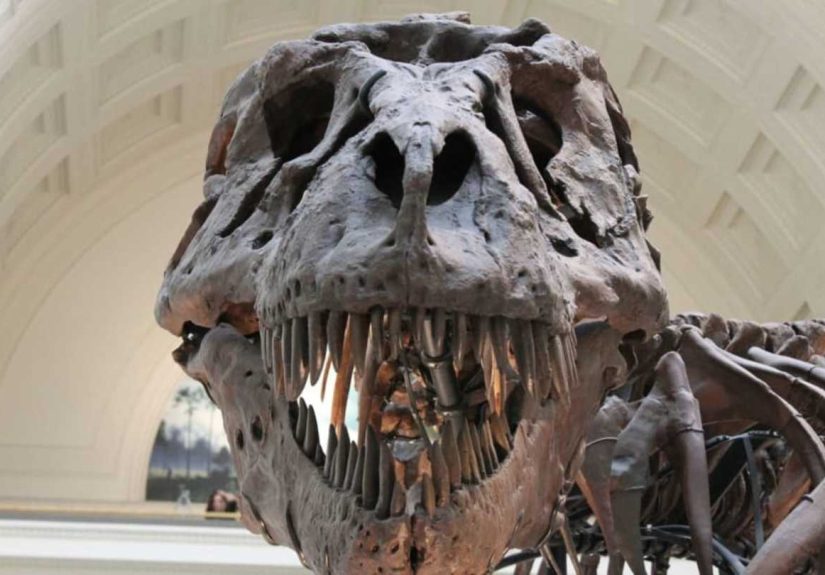
One of the most common “fossil moments” happens in museums: you walk in expecting a few bones, and you walk out
realizing you’ve been staring at time itself. Seeing a massive skeleton mount is impressive, sure, but the quieter
exhibits often hit hardertiny teeth, leaf impressions, and delicate insect fossils that look like they should
crumble if you blink. Those small specimens make deep time feel personal.
For students, fossils often become the first science topic that feels like detective work. Instead of memorizing a
list, you get clues: a shell suggests a shallow sea; ripples in rock hint at water movement; a cluster of footprints
might point to group behavior. Even classroom replicascasts of tracks, molded shells, “fossil” imprints made with
claygive a sense of how evidence is gathered. The experience is less “here’s the answer” and more “build the case,”
which is exactly how real science works.
Many fossil-related experiences are about learning to notice details. A beginner might see “a rock.” A practiced eye
sees a boundary between layers, a subtle symmetry, a repeating pattern, or a texture that doesn’t match the surrounding
stone. That shiftgoing from casual looking to careful observingis a big part of why fossils are so engaging.
It’s also why people love guided fossil walks and interpretive trails: a knowledgeable guide can turn a plain outcrop
into a story about an ancient shoreline or a long-gone forest.
Another common experience is realizing that fossil science rewards patience. Fossil preparation, for example, can be a
slow, delicate processremoving surrounding matrix bit by bit, sometimes under magnification, to avoid damaging what’s
inside. Watching behind-the-scenes videos or lab demonstrations can change how you view museum displays. That skeleton
isn’t just “found.” It’s located, documented, stabilized, prepared, studied, and conservedoften by teams across years.
Finally, fossils create a special kind of perspective shift. People frequently describe feeling “small” in a good way:
not insignificant, but connected to something vast. When you think in millions of years, today’s problems don’t vanish,
but they look differentmore solvable, less permanent, less like the whole universe is personally annoyed with you.
Fossils can also inspire empathy for life’s resilience: extinctions happened, environments changed, and yet life kept
adapting. That mixhumility, curiosity, and hopeis one of the best “takeaways” fossils offer, and it lasts long after
you’ve left the exhibit hall.