Table of Contents >> Show >> Hide
- Before You Start: Set Yourself Up for a Faster “Yes”
- 3 Ways to Start a Complaint Letter (With Copy-and-Use Examples)
- What Your Opening Paragraph Should Include (Quick Checklist)
- How to Keep the Tone Professional (Even If You’re Furious)
- What Comes After the Opener (So Your Letter Doesn’t Stall Out)
- Delivery and Follow-Up Tips That Actually Matter
- Quick Starters You Can Copy (Email + Letter)
- Common Mistakes That Make Complaint Letters Less Effective
- Real-World Experiences: What Usually Happens After You Hit Send (500+ Words)
- Conclusion
Let’s be honest: writing a complaint letter can feel like trying to fold a fitted sheetawkward, emotional,
and somehow you end up with a weird triangle that doesn’t match anything. But a well-written complaint letter
(or complaint email) is one of the fastest, most practical ways to get a real solutionrefund, repair, replacement,
bill correction, or at least a human response that isn’t a copy-paste apology from the year 2011.
The secret isn’t “sounding fancy.” It’s starting strong. Your opening lines do three big jobs:
(1) identify the issue quickly, (2) set the tone (firm, not fiery), and (3) make it easy for the reader to take action.
Consumer agencies and business-letter experts consistently emphasize the same basics: be clear, include key details,
and say what you wantwithout turning the first paragraph into a dramatic monologue. (Save that for your group chat.)
Before You Start: Set Yourself Up for a Faster “Yes”
A complaint letter works best when it reads like a clean case file, not a rant. Before you write the first sentence,
take five minutes to gather the essentials. That “prep time” usually pays for itself in fewer back-and-forth emails.
Collect the key facts (a.k.a. the receipts, literally)
- Purchase/service details: date, location, product/service name, and any serial/model/order numbers.
- Your timeline: what happened, when it happened, and any earlier attempts to fix it (calls, chats, emails).
- Your goal: refund, replacement, repair, credit, cancellation, correction, or another specific remedy.
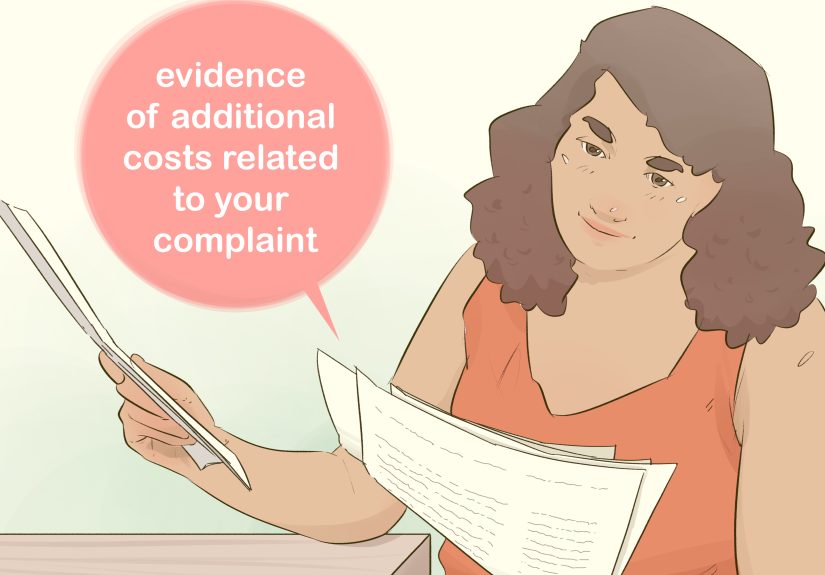
- Proof: copies of receipts, warranties, work orders, invoices, and relevant screenshots (keep originals).
Pick the right recipient (don’t send it into the void)
Aim your letter at someone who can actually solve the problem: a manager, a customer relations team, or a consumer
affairs department. If you have a name and title, use it. If you don’t, use the department name. A complaint letter
is basically a “help me help you” documentmake it easy for the right person to act.
Decide your tone: calm, specific, and impossible to misunderstand
The goal is resolution, not victory in a debate. Avoid sarcasm, threats, or personal insults. You can be firm and
still sound professional. Think: “clear and concise” rather than “and another thing!”
3 Ways to Start a Complaint Letter (With Copy-and-Use Examples)
Below are three reliable complaint letter openings. Each works for a formal letter or a complaint email.
Choose the one that fits your situationand your personalitythen build the rest of the letter around it.
(Yes, you’re allowed to be polite and annoyed at the same time. That’s basically adulthood.)
1) The Direct, Fact-First Opener (Best for most complaints)
This is the “no warm-up, let’s get to it” approach. It’s ideal when you want speed and clarityespecially for
product issues, billing errors, service failures, and deliveries that took a scenic route around the planet.
Why it works: It immediately states what the issue is and anchors it with specific details (date, order number, location). That makes your complaint easier to verify and route to the right team.
Template opener:
-
“I’m writing regarding [product/service] purchased on [date] (Order/Account #[number]).
I’m experiencing [problem], and I’d like to request [resolution].” -
“On [date], I [bought/leased/had serviced] [item/service] at [location].
The issue is [brief problem], and I’m requesting [specific fix].”
Example (product):
“I’m writing regarding the blender I purchased on January 12, 2026 (Order #A18439). After two uses, it began
making a loud grinding noise and stops mid-cycle. I’d like to request a replacement or a refund under the warranty.”
Example (billing):
“On February 1, 2026, I was charged $89.99 for a subscription I canceled on January 20, 2026 (Account #55721).
I’m requesting a reversal of that charge and written confirmation that the account is closed.”
2) The “Friendly Start, Firm Pivot” Opener (Best when you want goodwill)
This opener starts with a brief, genuine positive notethen pivots quickly into the issue. It’s especially useful
when you’ve had a good experience before, you want to preserve a relationship, or the issue could be a one-off mistake.
The key is keeping the “friendly” part short so it doesn’t read like you’re apologizing for complaining.
Why it works: It lowers defensiveness while still staying focused. The reader gets: “This person is reasonable, and they want a fair outcome.”
Template opener:
-
“I’ve been a customer since [year/time] and have usually had a great experience. I’m reaching out because
[issue] happened on [date], and I’d like your help resolving it.” -
“Thank you for your help in the past. I’m writing today about [product/service] because [problem].
I’m hoping we can resolve this with [solution].”
Example (service):
“I’ve always appreciated how quickly your team responds. I’m writing because my recent service appointment on
January 30, 2026 did not resolve the issue, and the problem returned the same day. I’d like to schedule a follow-up
repair at no additional charge.”
Pro tip: Keep the compliment real and specific (“your customer service line usually resolves issues quickly”), not exaggerated (“you are the greatest company in human history”).
3) The Resolution-First Opener (Best when the fix is straightforward)
Sometimes the cleanest start is to lead with what you want. This opener works well when the remedy is obvious
(wrong item shipped, duplicate charge, canceled service still billing, damaged delivery) and you want to direct the
letter toward action immediately.
Why it works: It sets a clear target for the reader, making it easier to escalate internally and approve a specific outcome.
Template opener:
-
“I’m writing to request [refund/replacement/repair/credit] for [product/service] associated with
[order/account]. The issue occurred on [date] and involves [one-sentence summary].” -
“The purpose of this letter is to request [specific resolution]. The basis for my request is
[brief, objective facts].”
Example (wrong item):
“I’m writing to request a replacement for the item shipped under Order #77210. On February 2, 2026, I received
the wrong size and color, and the packing slip does not match what I ordered. Please ship the correct item and provide
a prepaid return label for the incorrect one.”
Example (deadline-friendly):
“I’m requesting a refund for the service billed on January 28, 2026 (Invoice #9102) because the service was not performed
as described in the written estimate. Please respond by February 14, 2026 with confirmation of the refund process.”
What Your Opening Paragraph Should Include (Quick Checklist)
No matter which opener you choose, your first paragraph should do the heavy lifting. A strong complaint letter opening
typically includes:
- What the product/service was (and identifiers like order/account number).
- When and where it happened (date, store location, website, service address).
- What went wrong in one or two sentences (objective facts).
- What you want (refund, repair, replacement, credit, cancellation, correction).
How to Keep the Tone Professional (Even If You’re Furious)
A complaint letter is not the place to “let it all out.” It’s the place to get results. When readers see an angry,
threatening, or sarcastic opening, they often switch into defense modeand defense mode is the enemy of quick resolutions.
Instead, use language that is calm, specific, and focused on the fix.
Swap this… for this
- “This is unacceptable and you people are a joke.” → “I’m disappointed because the service did not match the written estimate.”
- “Fix this now or else.” → “Please respond by [date] with the next steps to resolve this.”
- “I’m never shopping here again!!!” → “I’d like to continue as a customer if we can resolve this fairly.”
What Comes After the Opener (So Your Letter Doesn’t Stall Out)
Think of your complaint letter like a short, well-organized story:
facts → impact → request → deadline → next steps.
Once your opener sets the stage, use the body to support it without turning the letter into a novel.
Suggested structure
- Brief timeline: What happened, in order, with dates and names (if relevant).
- Impact: What it cost you (money, time, inconvenience)keep it specific, not dramatic.
- Your request: Exactly what you want and why it’s reasonable.
- Deadline: A clear response date that gives them time to act (often 10–14 business days works).
- Next steps: What you’ll do if it isn’t resolved (politely stated).
Delivery and Follow-Up Tips That Actually Matter
If you want your complaint taken seriously, treat it like a record. Keep copies of everythingyour letter, receipts,
screenshots, and notes from calls. For mailed letters, many consumer offices recommend certified mail with a return
receipt so you have proof it was delivered. For online submissions, save a screenshot or confirmation page.
Smart follow-up moves
- Follow up once after your deadline passes: short, polite, and referencing your original letter.
- Escalate strategically: manager → corporate/consumer affairs → third-party help (BBB, state/local consumer office).
- Stay consistent: your facts, dates, and requested resolution shouldn’t change every time you contact them.
Quick Starters You Can Copy (Email + Letter)
Subject lines (complaint email)
- “Complaint: Billing Error on Account #[number]”
- “Request for Refund – Order #[number] – [Product Name]”
- “Service Issue on [date] – Request for Resolution”
Opening lines (super short)
- “I’m writing to request a refund for Order #[number] due to [issue].”
- “On [date], I purchased [item/service]. The problem is [issue]. I’m requesting [resolution].”
- “I’m following up on our conversation on [date] regarding [issue] and would like to confirm next steps.”
Common Mistakes That Make Complaint Letters Less Effective
- Starting with a long rant instead of the key facts.
- Not asking for a specific resolution (“I just want you to do the right thing” is vague).
- Missing identifying details (order number, account number, date).
- Sending originals of important documents instead of copies.
- Threatening early (it can reduce cooperation and slow things down).
- Writing like it’s a mystery novel (“Let me start from the beginning…”) when the reader needs the headline first.
Real-World Experiences: What Usually Happens After You Hit Send (500+ Words)
People often imagine a complaint letter as a dramatic “mic drop” moment. In real life, it’s usually more like sending
a carefully packed lunch: if you label everything clearly, it gets to the right place; if you toss everything into one
container, you end up with a soggy mess and nobody’s happy.
One common experience is that the opening lines determine the speed of the response. When the letter starts
with clear detailsdate, order number, the specific problem, and the requested resolutionthe reply is often faster and
more practical. Customer service teams can route it to the right department, verify the transaction, and follow a policy
path that leads to an outcome. In contrast, when a letter begins with an emotional story but delays the actual issue until
paragraph four, the response tends to be slower and more generic. It’s not because the company is “ignoring you”; it’s
because they don’t yet know what bucket your complaint belongs in.
Another real-world pattern: reasonable requests get more traction. When someone asks for a remedy that matches
the situationlike a refund for a canceled service that was still billed, or a replacement for an item that arrived damaged
it’s easier for an employee to say yes. On the other hand, asking for a lifetime supply of free products because shipping was
late tends to trigger a “policy wall.” (Understandable. Even the nicest companies are not running a “minor inconvenience = endless
gifts” program.)
Many people also learn the value of proof and paper trails. When you include copies of receipts, invoices, or
written estimates, your complaint becomes more than a claimit becomes a documented request. Even for email complaints, attaching
a screenshot of the confirmation page or the charge can shorten the back-and-forth. A lot of successful complaints are less about
“winning an argument” and more about “making the decision easy” for the person reading it.
A surprisingly common experience is that the first response might be… underwhelming. Sometimes you’ll get a polite message that
feels like it was written by a very kind robot. This is where your original opener helps you again. If your first paragraph clearly
stated what happened and what you want, you can reply with a short follow-up that reuses your own structure: “Thanks for the response.
To confirm: the issue is [X], and I’m requesting [Y]. Please let me know the next steps by [date].” That kind of follow-up is hard to
dodge because it’s focused, measurable, and time-bound.
People also report that escalation works best when it’s calm. If the business doesn’t respond, a second letter or email
that references your earlier contactplus a clear next stepoften gets attention. “I’m following up on my letter dated [date]. If I don’t
hear back by [new date], I plan to contact a consumer protection office or file a third-party complaint.” This approach isn’t about
threatening; it’s about documenting your process and showing you’re serious. The tone matters: a calm escalation reads as organized,
while an angry escalation reads as unpredictable, and unpredictable tends to get delayed.
Finally, there’s the emotional side: writing a complaint letter can feel uncomfortable because many people worry they’ll sound “mean.”
In practice, a clear, respectful complaint letter is not meanit’s normal. Businesses expect complaints, and many have systems designed
to resolve them. Starting your complaint letter well is like walking into a store with a receipt in hand instead of yelling from the parking lot.
You’re not just expressing frustrationyou’re offering a clear path to a fix.
Conclusion
The best way to start a complaint letter is the one that gets you a resolution. If you want maximum clarity, open with facts and identifiers.
If you want to preserve goodwill, start friendly and pivot firmly. If the fix is obvious, lead with the resolution you want and back it up with
objective details. Keep your tone professional, include the essentials, and make the next step easy for the reader. That’s how complaint letters
go from “I’m upset” to “Here’s the refund confirmation.”