Table of Contents >> Show >> Hide
- Why Bad Cooking Advice Refuses to Die
- 30 Bad Cooking Tips People Ignore at All Costs
- 1. “Sear meat to lock in the juices.”
- 2. “Wash raw chicken before cooking it.”
- 3. “Thaw meat on the counter all day.”
- 4. “Let hot leftovers cool completely before refrigerating.”
- 5. “You can tell meat is done by color alone.”
- 6. “Only flip steak once.”
- 7. “Never pierce meat with a fork or all the juices will run out.”
- 8. “Never salt eggs before cooking them.”
- 9. “Add oil to pasta water so the noodles won’t stick.”
- 10. “Always rinse pasta after draining.”
- 11. “Throw pasta at the wall to see if it’s done.”
- 12. “Never salt beans until the end.”
- 13. “Fresh is always better than frozen.”
- 14. “Never wash mushrooms because they soak up water.”
- 15. “Boil vegetables until they’re very soft.”
- 16. “You can crowd the pan and still get a good sear.”
- 17. “Use screaming high heat for everything.”
- 18. “Season only at the end.”
- 19. “Never open the oven door.”
- 20. “All baking ingredients must always be room temperature.”
- 21. “The more you mix batter, the smoother and better it gets.”
- 22. “Measuring flour by cups is precise enough.”
- 23. “Ingredient substitutions in baking are no big deal.”
- 24. “Just keep adding flour until sticky dough behaves.”
- 25. “You must sift flour every single time.”
- 26. “Never use soap on cast iron.”
- 27. “You can’t cook acidic foods in cast iron.”
- 28. “Hot leftovers will ruin your refrigerator.”
- 29. “More butter, cheese, or garlic will automatically fix bad cooking.”
- 30. “Viral kitchen hacks are better than tested cooking methods.”
- What Smart Home Cooks Do Instead
- Kitchen Experience: What People Learn After Ignoring Bad Cooking Tips
- SEO Tags
Every kitchen has one. A mysterious rule passed down from a relative, a TV chef, a viral video, or that one friend who once burned water and still speaks with suspicious confidence. Bad cooking tips have a strange superpower: they sound smart, they spread fast, and they make perfectly capable home cooks second-guess themselves.
The problem is that outdated kitchen advice can do more than waste time. It can ruin texture, flatten flavor, make dinner unnecessarily stressful, and in some cases create real food safety issues. That is why so many experienced home cooks say they now ignore certain pieces of “wisdom” at all cost. Not because they are rebels in aprons, but because they learned the hard way that some cooking myths deserve a one-way trip to the trash.
This guide breaks down 30 bad cooking tips that people happily ignore, along with what actually works better. Some are old-school myths, some are internet-fueled kitchen hacks, and some are the culinary equivalent of “trust me, bro.” Together, they reveal a bigger truth: good cooking is less about blindly following rules and more about understanding heat, seasoning, timing, texture, and common sense.
Why Bad Cooking Advice Refuses to Die
Cooking myths stick around because they usually contain a tiny grain of truth wrapped in a whole loaf of nonsense. “Never open the oven door,” for example, becomes popular because temperature drops matter in baking, but then it mutates into a dramatic commandment that makes people stare helplessly through oven glass like they are visiting a casserole in prison.
Real cooking is more nuanced than that. Some rules are helpful in one context and silly in another. Others were built around older equipment, older assumptions, or plain old guesswork. The best cooks are not the ones who memorize the most rules. They are the ones who learn which advice deserves respect and which deserves a polite, well-seasoned eye roll.
30 Bad Cooking Tips People Ignore at All Costs
1. “Sear meat to lock in the juices.”
This is probably the king of cooking myths. Searing adds flavor and color through browning, which is wonderful, but it does not create a magical moisture force field. Ignore this tip and sear for taste, not fantasy.
2. “Wash raw chicken before cooking it.”
Nope. Rinsing raw chicken can spread bacteria around your sink, counter, and nearby tools. The heat of proper cooking handles the safety part. The sink splash party does not help anybody.
3. “Thaw meat on the counter all day.”
This is less a cooking tip and more a bacterial internship program. Safe thawing takes patience, usually in the refrigerator or with other controlled methods. Counter thawing is the kind of shortcut that loves consequences.
4. “Let hot leftovers cool completely before refrigerating.”
People still act like putting warm food in the fridge will destroy civilization. It will not. Waiting too long to refrigerate leftovers is the bigger risk. Give food a sensible head start if needed, then chill it promptly.
5. “You can tell meat is done by color alone.”
Color can mislead you. Chicken can look done before it reaches a safe temperature, and some meats stay pink even when fully cooked. A thermometer is not cheating. It is called winning dinner.
6. “Only flip steak once.”
This advice has been repeated with the confidence of ancient prophecy. In reality, flipping more often can help meat cook more evenly. The steak does not keep score, and it will not file a complaint.
7. “Never pierce meat with a fork or all the juices will run out.”
Home cooks sometimes treat a fork like a medieval weapon. In normal cooking, a quick poke is not the end of tenderness. Temperature, timing, and overcooking matter far more than a single tiny puncture.
8. “Never salt eggs before cooking them.”
This one sounds scientific, which is exactly why it fooled so many people. Early salting does not ruin scrambled eggs. In fact, it can help them stay tender. The real villain is harsh heat, not the salt shaker.
9. “Add oil to pasta water so the noodles won’t stick.”
What the oil really does is float on top, look busy, and later make it harder for sauce to cling to the pasta. Stirring the noodles during the first minutes works much better than making your sauce slide off like it is avoiding commitment.
10. “Always rinse pasta after draining.”
For hot pasta dishes, rinsing washes away starch that helps the sauce stick. There are exceptions, like cold pasta salads, but rinsing everything by default is a fast way to create bland, slippery noodles.
11. “Throw pasta at the wall to see if it’s done.”
It is funny exactly once. After that, it is just a weird cleaning project. Taste the pasta instead. Your mouth is a better testing tool than your backsplash.
12. “Never salt beans until the end.”
Many cooks were taught that early salt makes beans tough. In practice, salting during cooking can improve flavor and even help beans cook up more pleasantly. Waiting until the end often gives you bland beans with a salty surface.
13. “Fresh is always better than frozen.”
Frozen vegetables and fruit are not culinary failures. They are often processed at peak ripeness and can be fantastic in soups, smoothies, stir-fries, and sauces. “Fresh” is not automatically superior if it has spent a week looking tired in your crisper drawer.
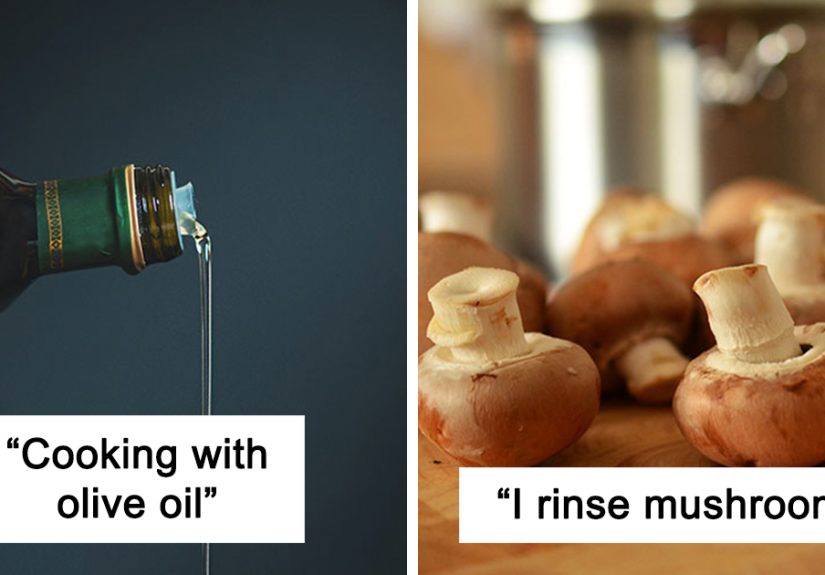
14. “Never wash mushrooms because they soak up water.”
Mushrooms are not tiny bath sponges with identity issues. A quick rinse is fine. The bigger issue is cooking technique, not a brief encounter with water.
15. “Boil vegetables until they’re very soft.”
This advice has traumatized generations of broccoli. Overboiled vegetables lose color, texture, and personality. Roast, steam, sauté, or blanch them instead and let them keep some dignity.
16. “You can crowd the pan and still get a good sear.”
What you get is steam. A packed pan traps moisture, which means pale food and disappointment. Give ingredients space if you want browning instead of a soggy support group.
17. “Use screaming high heat for everything.”
Some online cooking advice treats high heat like a personality trait. But not every ingredient wants that kind of chaos. Gentle heat can be the difference between caramelized and cremated.
18. “Season only at the end.”
Good cooks season in layers. Salting only at the table often gives you food that tastes flat inside and salty outside. Flavor builds better when it is added thoughtfully throughout cooking.
19. “Never open the oven door.”
Yes, opening the oven too often can mess with baking. No, opening it briefly when needed does not trigger a dessert apocalypse. Use judgment. Check doneness with purpose, not panic.
20. “All baking ingredients must always be room temperature.”
Sometimes yes, sometimes absolutely not. Pie dough loves cold butter. Biscuits often do too. Some cakes prefer room-temperature ingredients for smoother mixing, but turning every recipe into a countertop waiting game is unnecessary.
21. “The more you mix batter, the smoother and better it gets.”
That logic sounds reasonable right up until your cake turns dense and your muffins chew like punishment. In many batters, overmixing develops too much structure. Smooth is not always the same thing as tender.
22. “Measuring flour by cups is precise enough.”
It can be close, but it can also be wildly inconsistent depending on how the flour is packed. That is why so many baking disasters begin with a very innocent-looking measuring cup and end with a brick-shaped loaf.
23. “Ingredient substitutions in baking are no big deal.”
Baking is more chemistry than freestyle jazz. Some swaps work beautifully, but others change moisture, structure, sweetness, or rise. Replacing three ingredients and acting surprised when the cake becomes a philosophy lesson is not ideal.
24. “Just keep adding flour until sticky dough behaves.”
This is how promising dough turns into dry sadness. Sticky does not always mean wrong. Many doughs and batters need time, rest, or proper handling rather than a blizzard of extra flour.
25. “You must sift flour every single time.”
Sifting can be useful, especially for certain delicate bakes or cocoa-heavy mixtures, but treating it as mandatory in every recipe is old kitchen theater. Sometimes you need precision. Sometimes you just need to get on with it.
26. “Never use soap on cast iron.”
Modern soap is not the cast-iron supervillain it is made out to be. A little soap, quick washing, thorough drying, and light oiling are usually just fine. Your pan is seasoned, not emotionally fragile.
27. “You can’t cook acidic foods in cast iron.”
A well-seasoned cast-iron pan can handle acidic ingredients better than many myths suggest. Long simmers of highly acidic foods may affect seasoning, but quick tomato-based cooking is not a felony.
28. “Hot leftovers will ruin your refrigerator.”
This tip has inspired generations of people to leave soup out far too long. Large, steaming stockpots may need sensible handling, but the idea that warm leftovers automatically break the fridge belongs with floppy disk etiquette.
29. “More butter, cheese, or garlic will automatically fix bad cooking.”
Rich ingredients can help, but they are not miracle workers. If food is underseasoned, overcooked, watery, or poorly balanced, burying it under dairy confetti is just a more expensive way to stay confused.
30. “Viral kitchen hacks are better than tested cooking methods.”
Some internet hacks are clever. Others are content first and food second. If a trick looks designed mainly to get views, not results, it probably deserves suspicion. Tested technique still beats performative chaos.
What Smart Home Cooks Do Instead
The best replacement for bad cooking advice is not perfection. It is attention. Taste as you go. Use a thermometer when safety matters. Salt in stages. Give food enough space in the pan. Learn what texture you are aiming for. Notice what happens when heat is too high, too low, or too rushed. That is how real kitchen confidence is built.
Most importantly, good cooking gets better when you stop worshipping rigid rules. Great meals usually come from tested basics, thoughtful adjustments, and a willingness to say, “Actually, that tip is nonsense, and I am not doing it.”
Kitchen Experience: What People Learn After Ignoring Bad Cooking Tips
Ask enough home cooks about bad cooking tips, and the stories start sounding wonderfully familiar. Someone spent years rinsing pasta, only to realize their sauce never really hugged the noodles. Someone else washed raw chicken because a relative insisted on it, then later discovered the practice created more mess and more risk than actual benefit. Another person followed the “never use soap on cast iron” rule so strictly that they were basically preserving old grease like it was a family heirloom.
One of the most common experiences is the moment people realize how much stress bad advice adds to cooking. Instead of focusing on flavor, they start performing rituals. They panic if they open the oven. They feel guilty if they flip a steak twice. They assume a sticky dough is broken and bury it in extra flour until the final bread could double as home security equipment. Then one day they try the calmer, more sensible approach and discover dinner suddenly becomes easier.
There is also a confidence shift that happens when cooks stop treating myths like laws. A person who once boiled vegetables into gray surrender tries roasting broccoli and suddenly understands why people claim to love it. A skeptical cook salts beans early and gets a better pot. Someone uses frozen peas instead of sad “fresh” ones that have been sitting in the refrigerator for a week, and the result tastes brighter, not worse. These are small moments, but they add up fast.
Another big lesson is that a lot of bad cooking tips survive because they sound disciplined. They make people feel serious. But serious is not the same thing as useful. “Never do this” and “always do that” can make a cook feel in control, even when the rule itself is outdated or exaggerated. Real experience teaches that context matters more. The right answer often depends on what you are making, what texture you want, and how your equipment behaves.
People also learn that food is more forgiving than myths suggest. A steak does not collapse because it was flipped more than once. A mushroom does not become a sponge because it got rinsed. A cake does not file for divorce because you briefly opened the oven to check it. Once cooks see that the kitchen is not a minefield of instant disaster, they relax. And relaxed cooks usually make better food.
In the end, the most valuable experience is not memorizing 10,000 rules. It is learning which advice deserves trust. Home cooks who ignore bad cooking tips at all cost are not reckless. They are practical. They pay attention to flavor, temperature, timing, and texture instead of kitchen folklore. And that is usually the difference between food that merely follows rules and food that actually tastes good.