Table of Contents >> Show >> Hide
- Why Bed Swapping Matters More Than It Sounds
- How a Magazine-Fed Automated Bed Swapping System Works
- Why Not Just Use a Belt Printer?
- The Real Engineering Challenges Behind the Cool Demo
- Where This Concept Fits in the Bigger 3D Printing Market
- Real-World Experiences and Lessons From Automated Bed Swapping
- Conclusion
Every 3D printing fan eventually discovers the same cruel truth: the printer may be automated, but the workflow is not. A beautiful part finishes at 2:13 a.m., the machine sits there doing absolutely nothing, and the next job waits patiently for a human to stumble over, peel the print off the bed, recheck the surface, and hit start again. In other words, the printer is fast, but the handoff is gloriously prehistoric.
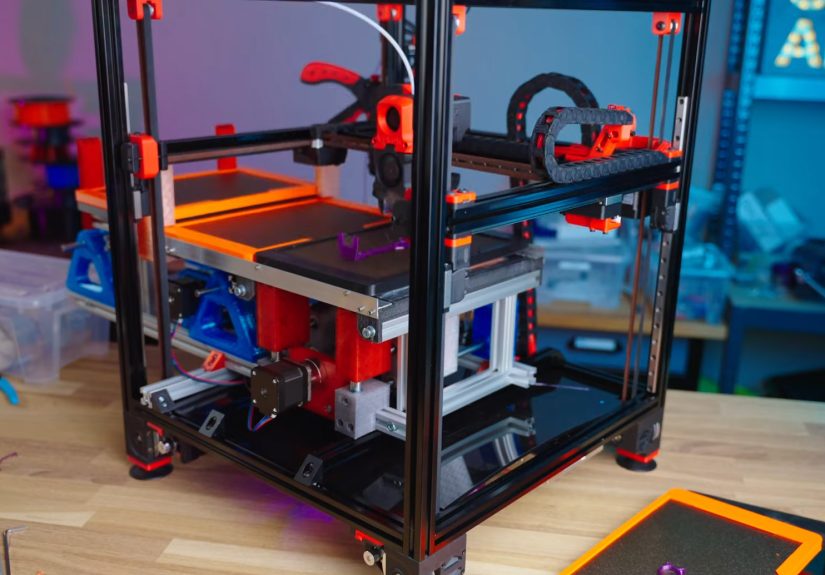
That is exactly why the idea behind a 3D printer automated bed swapping system that loads from a magazine is so clever. Instead of asking one print bed to do everything, this concept uses a stack or rack of removable build plates. When one print is done, the machine ejects the finished plate, grabs a fresh one from a “magazine,” and immediately starts again. It is the additive manufacturing version of a diner cook swapping clean pans without breaking rhythm.
The concept gained attention through a widely discussed prototype built by Thomas Sanladerer and covered by maker media, but the bigger story is not one machine. It is the growing push toward continuous 3D printing, print farm automation, and lights-out manufacturing. From flexible PEI spring-steel plates and auto-ejection tools to software-managed fleets and machine-tending systems, the industry is inching toward a future where desktop 3D printers behave less like needy hobby tools and more like tiny production cells.
Why Bed Swapping Matters More Than It Sounds
On paper, removing a finished print looks like a minor task. In practice, it is one of the biggest hidden bottlenecks in FDM production. A print may take four hours, but if it waits another six before someone clears the bed, the machine just lost most of a work shift. Multiply that across a print farm, and the “small” task becomes a serious productivity tax.
That is why automation in additive manufacturing has shifted from being a cool party trick to a serious business conversation. Industrial and prosumer workflows are now focused on reducing printer idle time, minimizing operator touches, and improving repeatability. A magazine-fed bed swapping system attacks exactly that problem. It keeps the print engine running while turning bed handling into a scheduled, mechanical operation instead of a human interruption.
This matters even more because modern print farms are often limited by labor, not by nozzle count. Plenty of shops can afford another machine. What they cannot always justify is another person whose job is basically “build plate valet.” That makes automated build plate handling one of the most logical upgrades in the march toward scalable desktop manufacturing.
How a Magazine-Fed Automated Bed Swapping System Works
At its core, the system is surprisingly straightforward. Instead of printing directly onto a fixed platform that must be manually cleared, the printer uses removable print surfaces mounted in carriers or frames. Those frames sit in a magazine beside the machine, ready to be loaded one after another.
1. The printer finishes a part on a removable build plate
The print happens on a real, rigid print surface rather than on a belt or conveyor. That is important. Rigid surfaces help preserve flatness, improve first-layer consistency, and support common materials without introducing the geometry compromises belt systems sometimes require. In other words, the printer still behaves like a normal FDM machine while the automation happens around it.
2. The heated magnetic bed moves out of the way
In the prototype that popularized this idea, the printer uses a magnetic heated bed that drops down before the plate exchange. That motion matters because it releases the removable plate so a pusher or loader can move it without fighting magnetic holding force. It also helps maintain repeatable alignment once a fresh plate is loaded back into position.
3. A mechanism pushes the finished plate out and pulls in a new one
This is the headline move: a completed plate gets slid out of the print zone, and a new plate from the magazine is inserted into place. It is less glamorous than a robot arm and more elegant than a scraper. Think “tool changer for build surfaces.” The mechanical trick is not speed alone; it is consistent positioning. If the new plate lands even slightly off, the nozzle-to-bed relationship changes, and the next first layer can go from perfect to tragic in seconds.
4. The printer re-establishes print readiness and starts again
Once the new plate is seated, the machine can heat up, verify bed status, and begin the next job. In a polished commercial version, this step would ideally include automatic checks for alignment, temperature, and queue management. That is where hardware and software have to shake hands instead of arguing in separate corners.
Why Not Just Use a Belt Printer?
Belt printers are the obvious comparison, because they also promise continuous 3D printing. Their conveyor-style bed lets finished parts roll off while new ones start automatically. That sounds fantastic, and in some applications it absolutely is. But belt printing comes with trade-offs that explain why a magazine-fed bed swapping system is still attractive.
First, belt printers do not behave like conventional Cartesian printers. They often require a tilted print orientation, different slicing logic, and careful design choices to prevent sagging or geometry issues. Second, some users report that the flexible belt surface can create adhesion and flatness challenges for certain parts. If your priority is printing long brackets or high volumes of simple shapes, belts shine. If your priority is preserving a familiar rigid build surface and broad material compatibility, the belt may feel more like a compromise than a solution.
A magazine-fed system aims to keep the best parts of a traditional printer: a rigid bed, familiar slicing, common materials, and predictable first layers. It says, in effect, “What if we keep the normal printer and automate the annoying human step around it?” That is a wonderfully practical question.
There are other alternatives too. Some systems use a scraper or nozzle-driven pusher to knock finished parts off the bed. Others rely on cooled PEI surfaces that release parts so they can be ejected mechanically. Still others combine auto-door mods, queue software, and specialized bed surfaces to turn enclosed desktop printers into semi-autonomous farm nodes. These methods can work well, but they are often best for parts that are small, sturdy, and easy to detach. A magazine-fed plate swapper is more flexible because it does not force part removal inside the machine at all; it removes the whole print surface and lets humans deal with parts later.
The Real Engineering Challenges Behind the Cool Demo
This is where the idea stops being “neat video” and becomes real engineering. An automated bed swapping system lives or dies on precision and reliability. It is not enough to swap plates. The machine must swap them the same way every time, without introducing new failure points.
Alignment and repeatability
The fresh plate must sit in exactly the right place. A few tenths of a millimeter can wreck a first layer, especially with tight Z-offsets. That means the carrier frame, docking geometry, and magnetic interface all need to be designed for predictable seating. This is not a place for “close enough.”
Heat management
Bed swapping sounds simple until you remember the build surface is hot. Materials used in the plate carriers, guides, and magazine must tolerate repeated thermal cycles. In the prototype discussed by maker media, ASA frames were used because they could handle the temperatures involved. That detail may sound boring, but boring thermal decisions are often what keep exciting machines from becoming melty regrets.
Build surface strategy
Modern 3D printing increasingly depends on textured PEI flex plates and magnetic spring-steel sheets because they offer strong adhesion while warm and easier release when cooled. That is great for automation, but not all materials behave politely. PETG, TPU, and similar filaments can bond too aggressively if Z-height is off, which means a swapped plate could return from a job damaged, warped, or carrying the scars of overenthusiastic first layers. Automation does not remove the need for good calibration; it just punishes bad calibration faster.
Software and queue control
A plate-swapping machine is only as smart as the workflow around it. The printer needs to know which job comes next, whether the correct plate is loaded, and what to do if a print fails midway. Industrial additive systems have been moving toward software-integrated workflow control for exactly this reason. The future is not just a mechanical magazine; it is a connected print queue that can manage jobs, surfaces, operator intervention, and maintenance with fewer surprises.
Failure recovery
Automated systems have a special talent for failing impressively when one small thing goes wrong. A crooked plate, a warped frame, a stringy blob on the nozzle, or a print that detached early can all cascade into the next cycle. That is why the strongest automation strategies include monitoring, standardized setup, and routines for inspection. The machine can be brave, but it should not be reckless.
Where This Concept Fits in the Bigger 3D Printing Market
The most interesting thing about a magazine-fed build plate changer is that it sits in a sweet spot between hobby innovation and industrial logic. It is not just a garage hack, and it is not a million-dollar cell either. It belongs to the fast-growing middle ground where desktop and prosumer machines are being pushed into real production roles.
You can see the market moving in that direction everywhere. Some print farm systems now advertise automated bed removal and material handling. Other companies focus on auto-ejection, fleet software, or low-touch workflows. Resin manufacturers have built ecosystems around automated part removal, queue management, and pump-fed materials to reduce operator labor and keep printers running around the clock. Even large fleet case studies show that layout, storage, queue discipline, and standardized operator routines matter almost as much as machine specs.
The desktop side of the market is also telling. Modern printers increasingly ship with magnetic PEI plates, auto calibration, better sensing, and networked controls. Those quality-of-life upgrades are not random. They are the foundational pieces needed for unattended operation. Before you can automate plate swapping, you need a printer that can consistently find the bed, trust its surface, and behave like an adult.
So, no, a magazine-fed bed swapping system is not a weird niche. It is a logical next step in the evolution of automated 3D printing. It turns removable beds from a convenience feature into a production strategy.
Real-World Experiences and Lessons From Automated Bed Swapping
The most useful way to think about this technology is not as a flashy one-off machine, but as a collection of lessons learned from makers, print farms, and production teams that keep trying to remove human friction from additive manufacturing.
One of the clearest lessons is that manual bed clearing scales terribly. It feels manageable with one printer. With five printers, it becomes a routine. With fifty, it becomes a staffing model. And with hundreds, it becomes the difference between profit and chaos. Real-world print farms have shown that once machine counts rise, labor is consumed by repetitive tasks: removing plates, checking adhesion, swapping filament, sorting parts, and restarting jobs. That is why even large operations with many printers can still have surprisingly manual workflows. The machines are productive, but the handoffs are stubbornly human.
Another lesson is that the build plate itself is part of the product strategy. Shops that treat build surfaces as disposable afterthoughts usually discover that surface condition, cleanliness, and material compatibility decide whether unattended printing is realistic. A magazine-fed swapper only works well when every plate in the stack behaves predictably. If one plate is scarred, greasy, or slightly bent, it becomes the weak link in an otherwise automated chain. In a production setting, that means plates need tracking, inspection, and retirement schedules, not just wishful thinking and a bottle of isopropyl alcohol.
There is also a practical human lesson here: automation changes where people spend their time. It does not eliminate people. Instead of standing around waiting to pop prints loose, operators move upstream and downstream. They inspect parts, maintain plates, refill material, manage queues, review failures, and package output. That is a much healthier use of skilled labor than sprinting across a shop to babysit a finished print before the machine takes a nap.
Teams experimenting with unattended printing also tend to report the same emotional arc. First comes excitement: “Look, it swapped plates!” Then comes humility: “Why is the third plate always off by a hair?” After that comes the grown-up phase, where success depends on fixtures, tolerances, repeatable calibration, and boring maintenance checklists. This may not sound romantic, but it is actually the best sign that a concept is maturing. When the conversation shifts from hype to reliability, the idea is getting closer to real adoption.
Perhaps the biggest takeaway is that automated bed swapping works best when it is part of a whole workflow. A plate magazine alone is helpful, but a plate magazine plus job queueing, error handling, consistent first-layer calibration, clean materials, and organized plate storage is where the magic happens. That is why the most compelling examples in the market are not just mechanical hacks. They combine hardware, software, and process discipline.
In plain English, the best experience with a system like this is not “my printer became a robot overlord.” It is “my printer stopped wasting half its life waiting for me.” That is a much more useful promise, and honestly, a more believable one. For makers running Etsy batches, labs producing functional parts, or farm operators trying to squeeze more output from the same square footage, that kind of reliability is the real prize.
So the experience story around a 3D printer automated bed swapping system that loads from a magazine is not just about clever mechanics. It is about reclaiming lost hours, making removable plates earn their keep, and nudging desktop additive manufacturing one step closer to true continuous production. Not bad for a machine that, at first glance, appears to be merely very good at handing itself fresh trays.
Conclusion
A magazine-fed automated bed swapping system is one of the most promising ideas in desktop 3D printing because it solves a very real bottleneck with surprisingly elegant logic. It preserves the familiar benefits of rigid build plates, works with the trend toward magnetic PEI surfaces, and fits neatly into broader efforts around print farm automation, software-controlled queues, and lower-touch manufacturing.
It is not the only path to continuous printing, and it is not magically immune to calibration, adhesion, or reliability issues. But it is a smart path. Instead of redesigning the entire printer around a conveyor or relying on aggressive part ejection, it turns removable beds into a repeatable workflow asset. That makes it one of the most practical and exciting ideas in modern additive manufacturing. The magazine, it turns out, may be the missing chapter in the story of unattended FDM production.